

Ch.12.3/12.4

Presentation
•
Social Studies
•
8th Grade
•
Practice Problem
•
Easy

Lindsay Whyte
Used 1+ times
FREE Resource
20 Slides • 7 Questions
1

Nature
Shaping a
Worldview
12.3
The Beauties of Nature
2

The Beauties of
Nature
Rituals - important to
Japanese life - mark the
changing of the seasons
Significance of the cherry
blossoms - most beloved
flower in the country
3

● Japanese poem about cherry blossoms - haiku (Japanese
poetry) by Basho in the 1600s
Temple bells die out
The fragrant blossoms remain
A perfect evening!
● Cherry blossoms represent - new beginnings, beauty,
shortness of beauty and life.
What seasonal changes are symbolic for you?
4
Open Ended
What seasonal changes are symbolic for you?
5


Nature and the
Ainu
Ainu (eye-noo) - Japan’
Indigenous people
Regard things like: fire, water,
wind, thunder, animals, and
plants are gods called kamuy
(ka-moo-ee)who visit Earthly
world
6


Our First Nations...
Similarities with the Ainu -
The four elements: earth, air, wind, fire,
are considered to be the four elements
of life by the Oglala Lakota Nation of
South Dakota.
Land is the place where life comes
from, water is the liquid that sustains
life, fire gives heat and energy to
sustain life, and air is essential to life
7
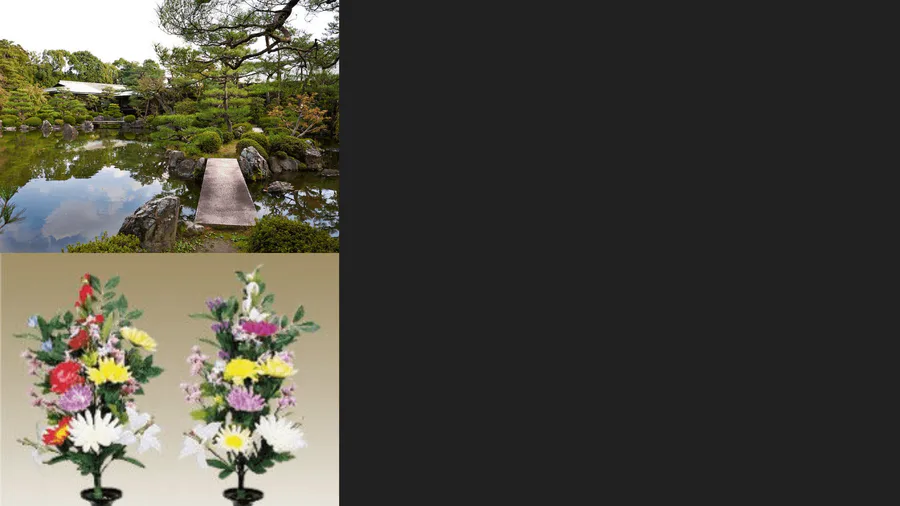
Shinto: The Way of the
Spirit
●The ancient religion of Japan
●Love of nature is the most important aspect of
Shinto
●Flower arranging and garden design based on
Shinto ideal of harmony with nature
●Shinto has no founder and there are no religious
laws
●Shinto borrows aspects of faith from China:
Buddhism and Confucianism
8


Kami - sacred spirit
taking the form of
objects in nature
such as mountains,
trees, stones
9

●Humans become kami when they die
●Amaterasu is considered to be the most important kami
●Celebrations - matsuri (muhts-ree) - held throughout the year to please and celebrate
the kami
●The spring and fall festivals are considered to be the most important
●Many people in Japan today do not consider Shinto as a “religion” the way the word is
understood in North America, rather a harmonious way of living with nature
10
Multiple Choice

Do people in Japan consider Shinto to be a religion?
No, it is not a religion; it is a harmonious way to live with nature
No, it is not a religion; it is the way of the Samurai
Yes, it is a religion
Yes, it is the largest type of religion in Asia.
11


The Dark Side of
Nature
●Natural disasters as a way of life…
●Japan is located in an area where continental and oceanic
tectonic plates meet
●This results in earthquakes which can also cause
tsunamis
●In the late summer/fall, parts of Japan can also be struck
by typhoons, (violent tropical storms like hurricanes)
12

Stoicism - people became
resilient to natural disasters and
learned to rebuild and move on.
13


Fukushima
Disaster
You have been assigned a document
that has you follow along as we watch
a short documentary on the
Fukushima disaster in Japan.
*Throughout the video, think about
what we learned about stoicism and
how this way of thinking is
demonstrated in the video.
14
Word Cloud

Choose two words that describe how 'stoicism' was demonstrated in the video
15


SHINTO
16

A
Self-Sufficient
Country
12.4
Resources & Climate
17


A self-sufficient country
Compared with the countries of Renaissance Europe,
Japan had relatively little trade with other countries
before 1853. Yet, the country survived and prospered.
Japan’s farmers and fishers provided sufficient food to
feed the people. Wood for building and for fuel came
from the abundant forests. Silkworms and cotton plants
provided material for clothing. Clever artisans made use
of the available metals. As a result, Japan was a
self-sufficient country.
How was this achieved, considering how little land there
was available for agriculture in Japan’s mountainous
landscape?
A temperate climate, steady rainfall (long growing season), short winter
(food could be grown to last throughout)
18
Multiple Select

How did Japan achieve self-sufficiency in regards to important resources, considering how little land there
was available for agriculture in Japan’s mountainous
landscape?
Choose 3 correct answers
A temperate climate
Nature compensated for the little amount of arable land it had
Steady rainfall (long growing season), short winter (food could be grown to last throughout)
Used chinampas to create more arable land
19


The History of Japanese Houses
“In ancient Japan, there were
essentially two different types of
houses. The first was what is known as
a pit-dwelling house, in which columns
are inserted into a big hole dug in the
ground and then surrounded by grass.
The second was built with the floor
raised above the ground. The style of
house with an elevated floor is said to
have come to Japan from Southeast
Asia, and this type of building was
apparently used to store grain and
other foods so that they wouldn't spoil
from heat and humidity.”
20


Rice: Symbol of a Country
Rice was the main food in Japan. Although the
poorest Japanese could afford rice only
occasionally, it was—and remains—the food most
associated with Japan and its culture. Even today,
the emperor tends a few rice plants, symbolically
nurturing the Japanese culture and its people.
Growing rice is labour intensive. This means that it
requires a lot of time and person power. Rice also
depends on the right amount of moisture, which is
brought by the monsoon winds and deposited as
rain. In the past, when the monsoons failed to
appear, rice crops failed and famine followed. This
caused disruption and turmoil in the country.
For centuries, rice was also the Japanese money system.
For tax purposes, the value of land was determined by
the estimated amount of rice that it could produce. A
person’s worth was determined by rice production. A
lord’s rank and wealth related to the total rice production
of his territory.
21


Other foods
The sea provided fish, which is one of
the main sources of protein for the
Japanese. Another Japanese staple
food harvested from the sea is
seaweed, which is high in vitamins and
mineral salts. The sea and its food
became central to the Japanese way of
life.
22
Categorize
Archipelago
Pacific Ocean
Typhoons
kami
Amaterasu
Shinto
Nature
Community
Assimilation of Ainu
Sushi
Seaweed
Fish
23


Homogenous Society
General definition:
What is a homogeneous society?
“One in which the citizens are like-minded, speak the
same language, are born into the same culture, have
similar cultural norms and values, and generally trust
one another.”
The rugged mountains that run down the middle of
Japan form a natural barrier to travel. Also, the kinds
of rivers that encouraged trade and communication in
Renaissance Europe do not exist in Japan; the
swift-flowing mountain rivers of Japan are generally
not navigable.
The geographic factor that contributed to this aspect
of Japanese society was the sea. Most of the
population lived along the coast and the sea
provided a communication and trading corridor for
them. Ideas, beliefs, and values as well as goods
were exchanged.
24


Comparing Societies
“Japanese think of their own society as “unique”
is to emphasize the homogeneity of Japanese
society, and indeed by lots of comparisons,
Japan is certainly a much more homogeneous
society than say the United States. There are
relatively few linguistic differences between
different parts of the country. In terms of social
class, peoples’ lifestyles are quite similar. The
degree to which rich people and poor people
are differentiated from one another
economically is much less than in the United
States. Ethnically, Japan is also more racially
homogenous than countries like Canada and the
United States.”
25


A Distinct People
The Ainu lived in the northern part of Japan for several thousand years in an
area the Japanese called Ezochi, Land of the Ezo (Ainu). The word ainu means
“human” in the Ainu language.
Eventually the Japanese began to take over the Ainu lands. The Ainu fought
several wars of resistance against Japanese control, but each time they were
defeated.
The Japanese began a program of assimilation of the Ainu people. They
were forbidden to speak their language or practise many of their customs,
and were restricted to living in areas the government provided for them. They
were given land to farm, even though they were traditionally a hunting and
fishing society.
26
Match
Match the following
Homogenous
Heterogenous
Linguistics
Differentiated
Assimilation
Similar
Different
Languages
Diverse
To make similar
Similar
Different
Languages
Diverse
To make similar
27
Poll

I feel like I know the content so far
Yes
No
Sort of
Nature
Shaping a
Worldview
12.3
The Beauties of Nature
Show answer
Auto Play
Slide 1 / 27
SLIDE
Similar Resources on Wayground

23 questions
Sectionalism Compromises
Presentation
•
8th Grade
21 questions
The Industrial North
Presentation
•
7th - 8th Grade
18 questions
American Revolution and Georgia
Presentation
•
8th Grade
22 questions
Beginning of the Civil War
Presentation
•
7th - 8th Grade
22 questions
Chapter 17: Lesson 2
Presentation
•
8th Grade
20 questions
Basic Economic Questions
Presentation
•
8th Grade
22 questions
Hamilton & National Finances
Presentation
•
8th Grade
23 questions
Thomas Jefferson
Presentation
•
8th Grade
Popular Resources on Wayground
10 questions
HCS SCI 03 Summer School Review 4

Quiz
•
3rd Grade
11 questions
HSMS - Standard Response Protocol
Quiz
•
6th - 8th Grade
16 questions
1.1-1.2 Quiz Review
Quiz
•
9th - 12th Grade
12 questions
Exponent Expressions
Quiz
•
6th Grade
20 questions
Adding and Subtracting Integers
Quiz
•
6th - 7th Grade
11 questions
Northeast States
Quiz
•
3rd - 4th Grade
10 questions
Characterization
Quiz
•
3rd - 7th Grade
10 questions
Common Denominators
Quiz
•
5th Grade