Search Header Logo
Heat Transfer

Heat Transfer

Assessment

Presentation

Chemistry

10th Grade

Medium

NGSS
MS-PS1-4, MS-PS3-3, MS-ESS2-6

+5

Standards-aligned

Created by

Kyle Pearson

Used 13+ times

FREE Resource

4 Slides • 12 Questions

1

Heat Transfer

Heat flows from HOT to COLD. The bigger the temperature difference, the more heat moves.


BUT the heat needs a ride--either conduction through a solid (or unmoving fluid), convection through a moving gas or liquid, or radiation using visible or invisible light.


media

2

Multiple Choice

Question image

In heat transfer, heat always flows from the _______________ substance to the _______________ substance.

1

hotter to colder

2

colder to hotter

3

hotter to hotter

4

colder to colder

3

Conduction

  • Heat transferred in a solid or between two things that are touching.

  • Good conductors like METAL move a lot of heat quickly, like a cooking pot or a cold lamp post.

  • Things that DON'T transfer heat quickly are called insulators. It can be hot on one side of an insulator and cold on the other side without too much heat transferring.

  • Your coat is a good example of an insulator.

4

Multiple Choice

Which is an example of heat being transferred by conduction?

1

a furnace blowing hot air through vents

2

an ice cube melting in a person’s hand

3

boiling water transferring heat to noodles

4

the sun heating water in a swimming pool

5

Multiple Choice

Question image
Which direction will the heat flow while this person holds a hot cup of tea?
1
from the cup to her hand
2
from her hand to the cup
3
no heat is transferred

6

Multiple Choice

Question image

If I want two things to stay different temperatures from each other, I need to:

1

Maximize heat Transfer

2

Minimize heat transfer

3

Make them touch a lot

4

Blow on both with a fan

7

Convection

  • Moving Air, or another liquid or gas can move lots of heat with it.

  • A fan or pump can FORCE convection

  • But warm air rises, so even with no fan, air will move given the chance.

  • Cold air sinks--thats why those open freezers at the grocery store do OK with no lid.

media

8

Multiple Choice

Question image

Near the ceiling of a room the air is warmer. The warm air rises because of ________.

1

conduction

2

convection

3

radiation

9

Multiple Choice

Which best describes the process of convection?
1
Convection is the primary way  heat travels  through rays.
2
Convection is the primary way heat travels  through metals.
3
Convection is the primary way heat travels  through appliances.
4
Convection is the primary way heat travels  through liquids and gasses.

10

Radiation

  • EVERYTHING is glowing

  • Humans emit Infrared light

  • Hotter things (600 c) glow red and radiate more

  • 900 c things glow orange, and radiate a ton.

  • 1200 c things glow WHITE

  • Past that you start to get more UV light.

media

11

Multiple Choice

Question image

When I emit (send out) IR radiation, my body gets:

1

Hotter

2

Cooler

3

Stays the Same

4

Humans don't emit radiation

12

Multiple Choice

Question image

The heat transferred from the Sun to the Earth by waves is called ________.

1

conduction

2

radiation

3

convection

13

Multiple Choice

Question image

The baby chickens kept warm by the heat lamps. This is an example of ________.

1

conduction

2

convection

3

radiation

14

Multiple Choice

Question image

A cat is hanging out several feet from a fire in a fireplace. This causes the kitty cat to get warm. The kitty cat is warm because of...

1

Convection

2

Conduction

3

Radiation

4

The fur sweater he's wearing!

15

Multiple Choice

Question image

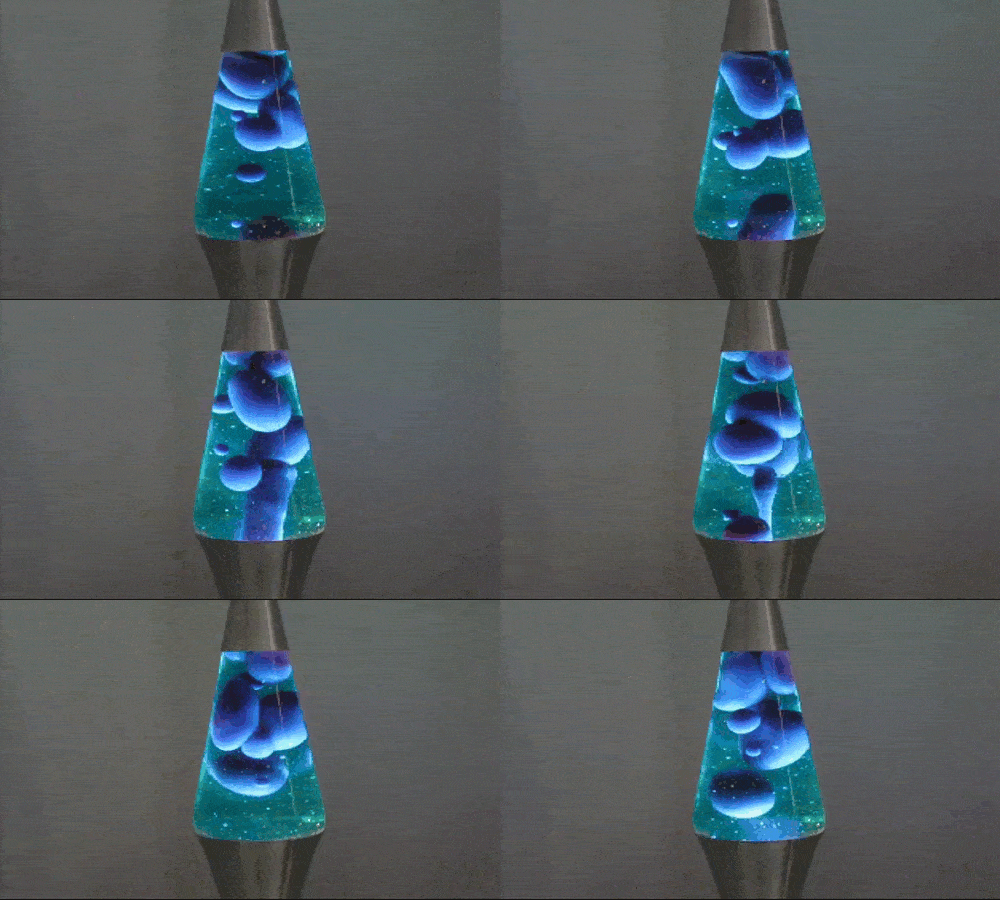
A certain type of decorative lamp contains colored liquids. These liquids form globs that break off and rise to the top of the liquid. The globs rise due to

1

Convection

2

Conduction

3

Radiation

4

Globulation

16

Multiple Choice

What is energy?

1

the ability to do work

2

the ability to move electrons

3

the ability to see light

4

the movement of atoms

Heat Transfer

Heat flows from HOT to COLD. The bigger the temperature difference, the more heat moves.


BUT the heat needs a ride--either conduction through a solid (or unmoving fluid), convection through a moving gas or liquid, or radiation using visible or invisible light.


media

Show answer

Auto Play

Slide 1 / 16

SLIDE