
Origin of Life review

Presentation
•
Science
•
9th - 12th Grade
•
Practice Problem
•
Medium
+11
Standards-aligned

Billie Jent
Used 8+ times
FREE Resource
7 Slides • 12 Questions
1




Origin of Life on Earth
-Theories
2




LUCA
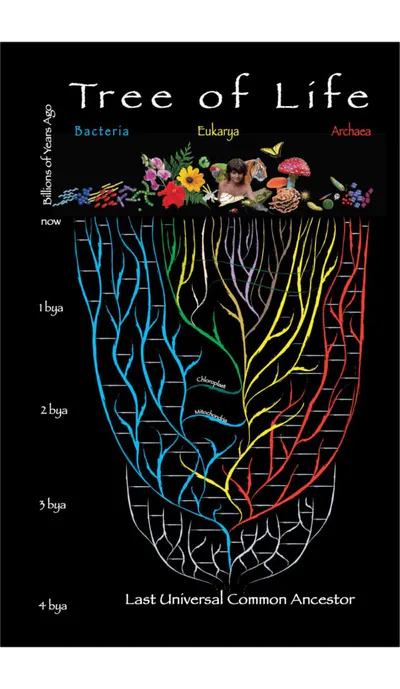
All living creatures are composed of organic
matter ("organic" in the sense that it is made of carbon), and the origins of life on Earth is really a question of where did organic molecules come from?
The prevailing theory is that all life on Earth originated from a last universal common ancestor (LUCA).
3
Drag and Drop
4
Multiple Choice
What does LUCA stand for?
Last Universal Common Ancestor
Last University Common Ancestor
Last Universal Calm Ancestor
Last Universal Common Ancestry
5




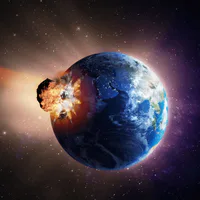
Extraterrestrial Life
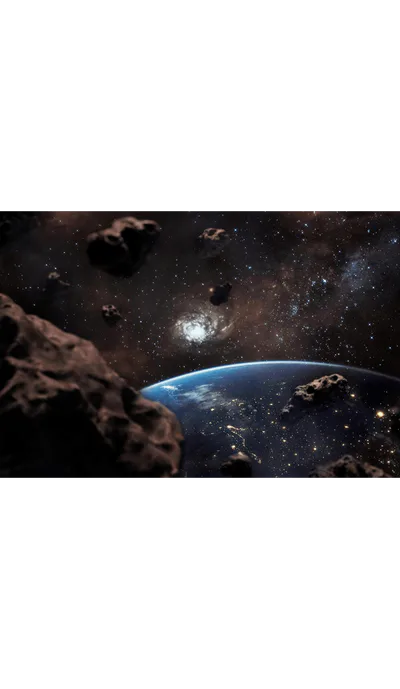
The theory that life originated from an extraterrestrial
source is called panspermia.
A convenient theory that argues life on earth originated from a meteorite, comet, or other space rock landing and bringing life to Earth.
6
Multiple Choice
What is the theory called that suggests life originated from an extraterrestrial source?
Exogenesis
Abiogenesis
Panspermia
Astrobiology
7
Multiple Choice
According to the theory of panspermia, how is life proposed to have been brought to Earth?
Through alien intervention
Via solar winds
Through interstellar dust
From a meteorite, comet, or other space rock
8



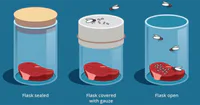
Spontaneous Generation and Biogenesis
From the time of Aristotle, people believed that organisms could arise from non-living matter. Like bugs appearing on rotting meat.
Louis Pasteur disproved this theory, and started the theory of biogenesis-life comes from life.
9
Multiple Choice
What theory did Louis Pasteur disprove which claimed that organisms could arise from non-living matter?
Biogenesis
Panspermia
Spontaneous generation
Abiogenesis
10
Multiple Choice
What was the common belief about the origin of organisms before Louis Pasteur's experiments?
They could spontaneously generate from non-living matter
They originated from existing life forms
They were created by cosmic events
They evolved from simpler chemical structures
11



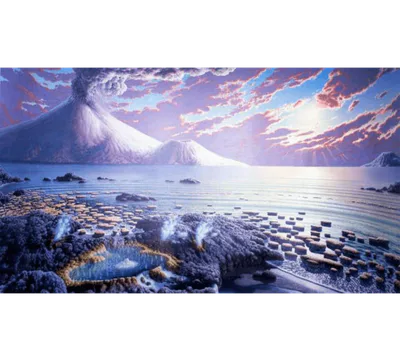
Charles Darwin shared his controversial idea that all living things evolved from a
last universal common ancestor.
Later, Alexander Oparin introduced this idea as primordial soup.
He suggested that the non-living
chemicals in the ocean and atmosphere could react to form more complex
compounds to build life
Primordial Soup
12
Dropdown
13
Multiple Choice
According to the primordial soup theory, what compounds reacted to potentially form life?
Gases in the Earth's core
Non-living chemicals in the ocean and atmosphere
Living organisms in freshwater
14




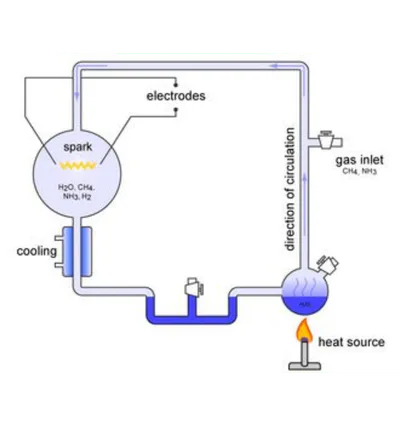
Miller-Urey Experiment
One of the most famous experiments on the origin of life. The simulated early earth’s atmosphere with gases like: methane, ammonia, hydrogen, and water vapor. They used a spark to simulate lightning. And they condensed the water vapor to recreate “precipitation.”
In this simulation-they created the building blocks of life-amino acids.
15
Multiple Choice
Which gases were used in the Miller-Urey Experiment to simulate early Earth's atmosphere?
Oxygen, Carbon Dioxide, and Nitrogen
Helium, Argon, and Neon
Methane, Ammonia, and Hydrogen
Carbon Monoxide, Sulfur Dioxide, and Radon
16
Multiple Choice
What role did the "spark" play in the Miller-Urey Experiment according to the description?
It cooled the gases
it simulated lightning to initiate chemical reactions
It heated the water
It was used to measure the temperature of the gases
17
Fill in the Blanks
The outcome of the Miller-Urey Experiment was
18



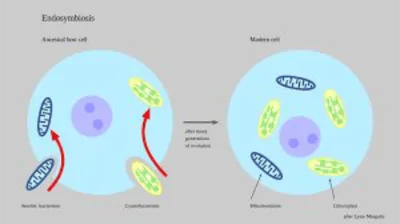
Eukaryotic cells formed from a endosymbiotic relationship with prokaryotic cells.
Evidence: Both the mitochondria and chloroplast have similar features to free-living bacteria.
1.
They both contain DNA
2.
They replicate and divide in a similar way to bacteria.
Endosymbiotic Theory
19
Multiple Choice
What does the Endosymbiotic Theory suggest about eukaryotic cells?
They are found outside the cell nucleus.
They both contain DNA and replicate similarly to bacteria.
They consume the cell's nutrients.
They are unable to reproduce.
Origin of Life on Earth
-Theories
Show answer
Auto Play
Slide 1 / 19
SLIDE
Similar Resources on Wayground

18 questions
Blood Spatter
Presentation
•
9th - 12th Grade
18 questions
Disease District Assessment Review 25/26
Presentation
•
9th - 12th Grade
18 questions
Plants
Presentation
•
6th - 8th Grade
13 questions
PBS DNA Structure Part 2
Presentation
•
9th - 12th Grade
17 questions
Water Pollution
Presentation
•
9th - 12th Grade
11 questions
Earth Sciences: Earth's Spheres
Presentation
•
9th - 12th Grade
16 questions
ACT Science Mastery Lesson 13
Presentation
•
9th - 12th Grade
17 questions
Composition and Physiology of Blood
Presentation
•
9th - 12th Grade
Popular Resources on Wayground
6 questions
PRIDE Always and Everywhere
Presentation
•
12th Grade
20 questions
Lab Safety Quiz

Quiz
•
6th Grade
26 questions
KOR Review Kahoot Questions
Quiz
•
8th Grade
21 questions
Continents and Oceans
Quiz
•
6th Grade
12 questions
Unit Zero lesson 2 cafeteria
Presentation
•
9th - 12th Grade
20 questions
Parts of Speech
Quiz
•
5th Grade
10 questions
Riddles Riddles fun Riddles
Quiz
•
6th - 12th Grade
16 questions
Subject & Predicate
Quiz
•
5th Grade
Discover more resources for Science
10 questions
Scientific Method (The scientific method)

Interactive video
•
9th Grade
10 questions
Exploring Chemical and Physical Changes
Interactive video
•
6th - 10th Grade
10 questions
Exploring the States of Matter
Interactive video
•
6th - 10th Grade
20 questions
Atomic Structure
Quiz
•
9th Grade
30 questions
Atomic Structure and Periodic Table Review
Quiz
•
10th Grade
9 questions
Exploring the Steps of the Scientific Method
Interactive video
•
6th - 10th Grade
16 questions
Identify Key Characteristics of Living Organisms
Quiz
•
9th - 12th Grade
20 questions
Photosynthesis
Quiz
•
9th Grade