Search Header Logo
EOC Review: Struggling topics

EOC Review: Struggling topics

Assessment

Presentation

Science

9th - 12th Grade

Easy

Created by

Harriette Ceballos

Used 7+ times

FREE Resource

43 Slides • 25 Questions

1

media

​EOC Review

2

media

Haploid vs. Diploid

media

Haploid Cell

Has one copy of a chromosome

Diploid Cell
has two copies of a chromosome

3

media

Mitosis vs. Meiosis

media

4

Multiple Choice

Which process of cell division do gamete cells undergo?

1

Mitosis

2

Meiosis

3

Duplication

5

Multiple Choice

What type of cell has one copy of each chromosome?

1

Haploid

2

Diploid

6

Multiple Choice

How many daughters cells are produced from Mitosis?

1

2

2

4

3

6

4

8

7

Multiple Choice

How many daughter cells are produced from Meiosis

1

2

2

4

3

6

4

8

8

Multiple Choice

Question image

An organism that LACK a NUCLEUS (NO NUCLEUS)

1

Eukaryote

2

Prokaryote

3

Heterotroph

4

Autotroph

9

media

10

media

11

media

12

media

13

media

14

media

15

media

16

media

17

media

18

Multiple Choice

Which Domain/Kingdom is capable of living in EXTREME ENVIRONMENTS like hot springs, geysers, or very salty waters?

1

Bacteria

2

Eukarya

3

Archaea

19

media

20

Multiple Choice

The correct order of classification from the BROADEST group to the most narrow is:

1

Species, Genus, Family, Order, Class, Phylum, Kingdom

2

Kingdom, Phylum, Class, Family, Order, Genus, Species

3

Domain, Kingdom, Family, Order, Phylum, Class, Genus, Species

4

Domain, Kingdom, Phylum, Class, Order, Family, Genus, Species

21

Multiple Choice

What is the smallest and most specific group in the classification system?

1

species

2

domain

3

kingdom

4

Genus

22

Multiple Choice

What is the largest and most general group that an organism is classified into?

1

Domain

2

Kingdom

3

Species

4

Family

23

media

Properties of water:

Cohesive behavior
Ability to moderate temperature
Expansion upon freezing
Versatility as a solvent

24

media

25

Multiple Choice

What property of water in which it bonds to other water molecules?

¿Qué propiedad del agua en la que se une a otras moléculas de agua?

1

Adhesion

2

Cohesion

3

Expansion

4

Versatility

26

Multiple Choice

What property of water in which it bonds to other molecules?

¿Qué propiedad del agua en la que se une a otras moléculas?

1

Adhesion

2

Cohesion

3

Expansion

4

Versatility

27

media

Properties of water:

Cohesive behavior
Ability to moderate temperature
Expansion upon freezing
Versatility as a solvent

28

media

29

media
media

Temperature moderation in the environment

Large bodies of water are slow to
change temperature (such as lakes and
oceans) which is good for the
organisms living in them.

Due to their high water content, the
bodies of organisms are also slow to
change temperature

this makes maintaining a stable
body temperature easier.

30

media

Properties of water:

Cohesive behavior
Ability to moderate temperature
Expansion upon freezing
Versatility as a solvent

31

Multiple Choice

Throw it back: The 2-part naming system developed by Linneus is known as:

1

Dichotomous key

2

Binomial nomenclature

3

Taxonomy

4

Classification

32

Multiple Choice

Throw it back: The study of how things are classified is known as:

1

Binomial nomenclature

2

Taxonomy

3

A dichotomous key

33

media

34

media

Expansion and the
Environment

35

media

Properties of water:

Cohesive behavior
Ability to moderate temperature
Expansion upon freezing
Versatility as a solvent

36

media
media

Remember…

37

media

38

media

39

media

40

media

41

media

42

Multiple Choice

Which biomolecule do enzymes belong to?

1

Carbohydrate

2

Lipid

3

Nucleic acid

4

Protein

43

Multiple Choice

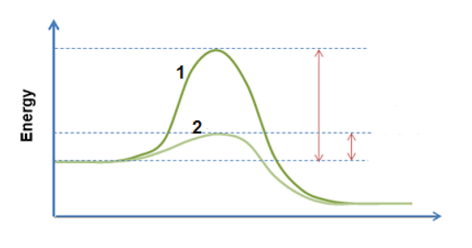
Enzymes are capable of increasing the rate of a chemical reaction within a living cell.  Enzymes accomplish this through which of the following means?
1
reducing the number of products   
2
reducing the activation energy
3
increasing the temperature of the cell
4
increasing the concentration of reactants 

44

media

45

media

46

Multiple Choice

Question image
Which line represents an enzyme-catalyzed reaction? 
1
Line 1
2
Line 2

47

Multiple Choice

Question image

Under which set of conditions would this enzyme produce the most product?

1

Temp: 20

pH: 4

2

Temp: 36

pH: 6

3

Temp: 50

pH: 10

4

Temp: 36

pH: 8

48

Multiple Choice

Question image
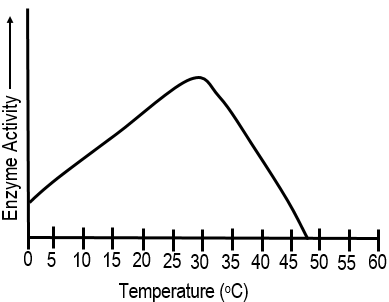
Based on the graph, what is the optimal temperature for this enzyme? 
1
15oC
2
40oC
3
30oC
4
35oC

49

Multiple Choice

Question image

What does a protein structure look like?

1
2
3
4

50

Match

Question image

Match the structure to the biomolecule

Nucleic acid

Carbohydrate

Protein

Lipid

51

​Punnett Squares

​Punnett squares are used to make predictions about which traits offspring will get from their parents.

​It is important to remember that Punnett squares are theoretical; they show us the probability of offspring inheriting a particular trait. The proportions predicted using Punnett squares may or may not happen in any particular family.

media

52

media

53

media

54

Inheritance : Dominance

​There are three (3) types of dominance:

Complete Dominance: dominant trait masks the recessive

media

55

Inheritance : Dominance

​There are three (3) types of dominance:

Codominance: both alleles equally show dominance for a trait

media

56

Inheritance : Dominance

​There are three (3) types of dominance:

Incomplete Dominance: both alleles equally show dominance for a trait

media

57

media

58

media

59

media

60

media

61

Fill in the Blank

Question image

What two letters go in the box highlighted yellow?

62

media

63

Multiple Choice

Question image

According to this Punnett Square, what is the percent chance of the offspring having the genotype Mm?

1

0%

2

25%

3

50%

4

75%

5

100%

64

media

65

media

66

Multiple Choice

Question image

According to the Punnett Square, what is the percent chance of the offspring being homozygous dominant?

1

0%

2

25%

3

50%

4

75%

5

100%

67

Multiple Choice

Question image

According to the Punnett Square, what is the percent chance of the offspring being heterozygous?

1

0%

2

25%

3

50%

4

75%

5

100%

68

Multiple Choice

Question image

According to the Punnett Square, what is the percent chance of the offspring being homozygous recessive?

1

0%

2

25%

3

50%

4

75%

5

100%

media

​EOC Review

Show answer

Auto Play

Slide 1 / 68

SLIDE