
DNA Replication Lecture and Questions

Presentation
•
Biology
•
9th Grade
•
Practice Problem
•
Easy
Standards-aligned

Charmella Roark
Used 5+ times
FREE Resource
11 Slides • 11 Questions
1

DNA REPLICATION
2

DNA REPLICATION
→DNA makes two exact copies of
itself
→ The copies are then passed
along to new cells
3

WHY does DNA need
to replicate?
This ensures that each daughter cell gets a copy of the genome, and therefore, successful inheritance of genetic traits.
4
Multiple Choice
Why does DNA replicate?
ensures that there is not a copy of genetics, so the inheritance of genes do not occur.
ensures that each daughter cell gets a copy of the genome and successful inheritance of genetic traits
Does not copy genes
5

WHEN in the cell’s life cycle
(think
back to mitosis) does the DNA
replicate?
6
Multiple Choice
When in the cell's life cycle does DNA Replicate?
S Phase
M phase
Prophase
7

REPLICATION PROCESS
1. UNZIP!
• DNA Helicases (enzymes)- unwind the DNA
molecule and break the weak hydrogen bonds
– The two sides of DNA unwind and
separate.
• each side will serve as a template for a
new/ opposing strand of DNA
• Replication fork (2) – points at which the 2 sides
(strands) of DNA separate
8
Multiple Choice
What is the first step in DNA Replication?
Proofread
Duplicate
Unzip
9
Multiple Choice
Within the Replication process, what UNWINDS the DNA molecule and break the hydrogen bonds?
Replication Fork
DNA Helicase
Proofread
10
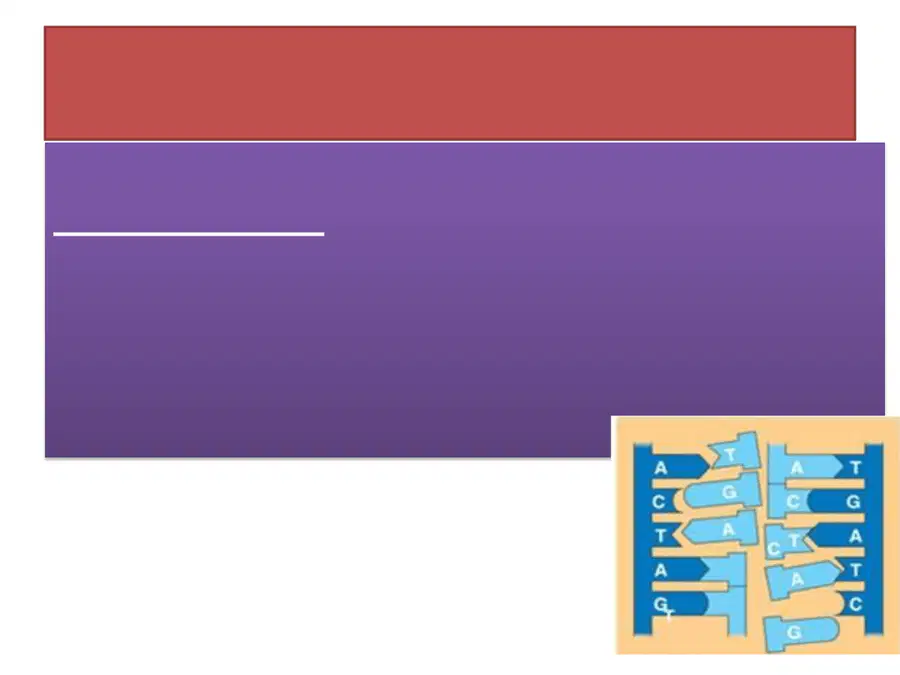
REPLICATION PROCESS
2. DUPLICATE!
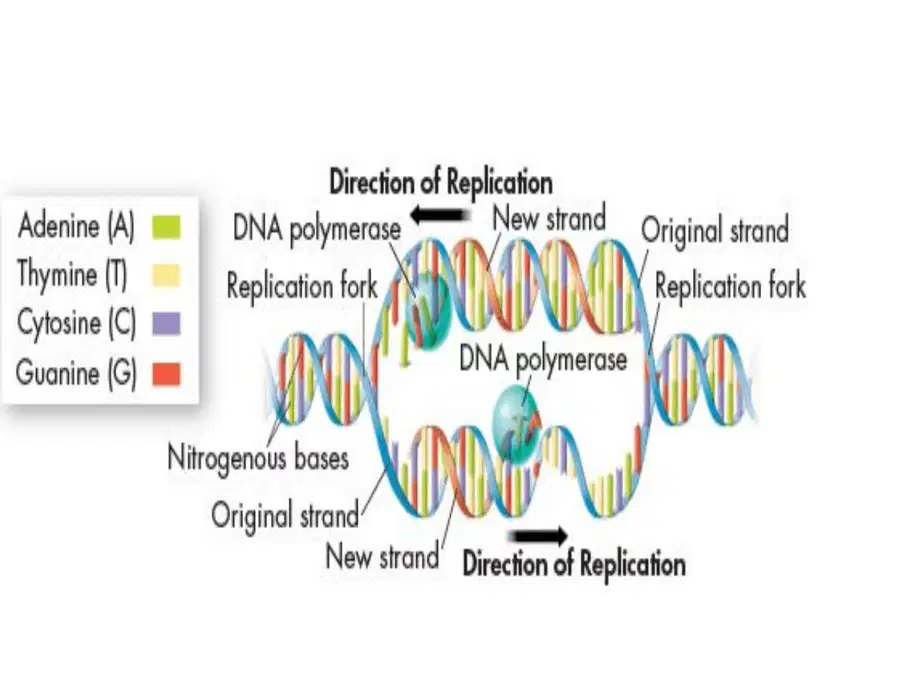
DNA polymerase (another enzyme)binds (adds)
new nucleotides to old (original/exposed)
nucleotide sequence.
• Move in different/ opposite directions up and
down original strands of DNA
11
Multiple Choice
What is the second phase in the replication process?
Unzip
Replication Fork
Duplicate
12
13

REPLICATION PROCESS
3. Proofread
DNA polymerases checks the two copies
of DNA for mistakes (mutations)
14
Multiple Choice
What is the 3rd step of the Replication Process?
Proofread
Duplicate
Unzip
15
Multiple Choice
True or False: Proofread checks copies of DNA for mistakes.
True
False
16

MUTATIONS
● ANY changes in a nucleotide sequence
(order or pairing or nitrogen bases)
● Are NOT always harmful- mutations can
create genetic diversity & drive evolution!
● Causes:
○ Viruses
○ Chemicals
○ UV radiation
○ Extreme temperatures
17
Multiple Choice
An example of a cause of mutations is/are________________
stomach Ulcers
The common cold
viruses
18
Multiple Choice
True or False: Mutations are ALWAYS Harmful and create genetic separation.
True
False
19
Multiple Choice
What are mutations?
When the nucleotide sequence remains the same
Changes in a nucleotide sequence
When the nucleotides split
20
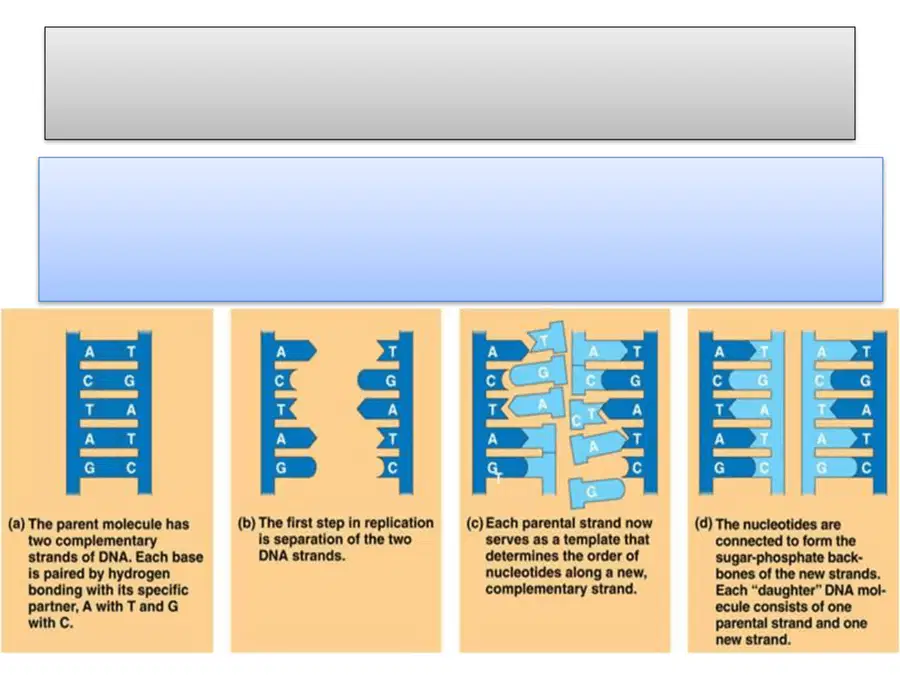
Final result
• Two identical copies of DNA
• One side is new, one side is old
21
Multiple Choice
The final result of DNA Replication produces: _____________
3 identical copies
4 identical copies
no copies are made
2 identical copies
22

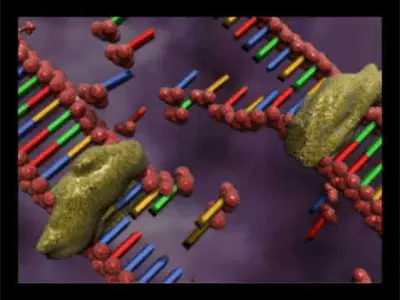
DNA REPLICATION
Show answer
Auto Play
Slide 1 / 22
SLIDE
Similar Resources on Wayground

15 questions
Scientific Investigation
Presentation
•
9th - 10th Grade
21 questions
Climate Change
Presentation
•
9th Grade
17 questions
3/25 Lesson- Viruses
Presentation
•
9th Grade
18 questions
2/07 Monday Lesson
Presentation
•
9th Grade
20 questions
Reteach Origin of Life
Presentation
•
9th - 10th Grade
19 questions
Evolutionary Trees
Presentation
•
9th Grade
19 questions
Ecology Review
Presentation
•
9th Grade
20 questions
G9 Chap 1.2 Nature of Science
Presentation
•
9th Grade
Popular Resources on Wayground
10 questions
How much do you know about our Portrait of an Eagle?

Quiz
•
10th Grade
10 questions
Fast Food Slogans
Quiz
•
6th - 8th Grade
21 questions
Continents and Oceans
Quiz
•
6th Grade
20 questions
Parts of Speech
Quiz
•
5th Grade
16 questions
Subject & Predicate
Quiz
•
5th Grade
25 questions
Multiplication Facts
Quiz
•
5th Grade
12 questions
Map Skills
Quiz
•
3rd Grade
22 questions
Continents and Oceans
Quiz
•
5th Grade
Discover more resources for Biology
20 questions
Characteristics of Life
Quiz
•
9th - 10th Grade
10 questions
Exploring the 4 Major Macromolecules and Their Functions

Interactive video
•
9th - 12th Grade
20 questions
Cell Transport
Quiz
•
9th - 12th Grade
25 questions
photosynthesis and cellular respiration
Quiz
•
9th Grade
16 questions
Population Ecology
Quiz
•
9th - 12th Grade
20 questions
Cell Organelles
Quiz
•
9th Grade
18 questions
Water Properties
Quiz
•
9th Grade
36 questions
U3 Review Cell Cycle and Specialization Quiz
Quiz
•
9th Grade