Heat, Energy, and Temperature
Presentation
•
Chemistry, Physics, Science
•
9th - 12th Grade
•
Practice Problem
•
Hard
Javi Murillo
FREE Resource
10 Slides • 98 Questions
1
Multiple Choice
2
Multiple Choice
3
Multiple Choice
4
Multiple Choice
5
Multiple Choice
6
Multiple Choice
7
Multiple Choice
8
Multiple Choice
9
Multiple Choice
10
Multiple Choice
Determine the heat energy needed to heat the water in the pot to boiling.
11
Multiple Choice
The temperature of a sample of water increases from 20°C to 46°C as it absorbs 5650 joules of heat. What is the mass of the sample? (Specific heat of water is 4.18 J/g°C.)
51.98 g
65.3 g
51.99 g
12
Multiple Choice
A 4.50 g coin of copper absorbed 254 Joules of heat. What was the change in temperature of the copper? The specific heat of copper is .385 J/goC.
210 oC
146.61 oC
244.8 oC
13
Multiple Choice
Which will heat up faster?
copper
granite
iron
basalt
14
Multiple Choice
Which will heat up slower?
water
lead
granite
iron
15
Multiple Choice
16
Multiple Choice
Which of the following best explains why the sand at the beach is hotter than the water?
Sand has a higher specific heat than water.
Sand has a lower specific heat than water.
There is more water than sand at the beach.
There is more sand than water at the beach.
17
Multiple Choice
The amount of energy required to raise the temperature 1ºC for every gram is called____?
Thermal Energy
Specific Heat
Temperature
Kinetic Energy
18
Multiple Choice
19
Multiple Choice
20
Multiple Choice
21
Multiple Choice
The diagrams shown represents two solids and the temperature of each. What occurs when the two solids are placed in contact with each other?
Heat energy flows from solid A to solid B.
Heat energy flows from solid A to solid B. Solid A increases in temperature.
Heat energy flows from solid B to solid A. Solid B decreases in temperature.
Heat energy flows from solid B to solid A.
22
Drag and Drop
60°C
70°C
80°C
23
Multiple Choice
Which term represents a form of energy?
heat
degree
kilocalorie
temperature
24
Multiple Choice
Which form of energy is converted to thermal energy when propane burns in air?
electromagnetic
nuclear
electrical
chemical
25
Multiple Choice
26
Multiple Choice
27
Multiple Choice
28
Multiple Choice
29
Multiple Choice
30
Multiple Choice
31
Multiple Choice
C
32
Multiple Choice
33
Multiple Choice
34
Multiple Choice
According to the ESRT, which material would require the most heat energy to increase the temperature of 1 gram of the material one Celsius degree?
Ice
Water
Basalt
Granite
35
Multiple Choice
Which material would require the greatest amount of heat energy to raise its temperature from 5oC to 10oC? [Refer to the Earth Science Reference Tables.]
Iron
Lead
Granite
Dry Air
36
Multiple Choice
If the same amount of heat is added to each sample, the smallest change in temperature will occur in the
Iron
Dry Air
Granite
Water
37
Multiple Choice
What would heat up the fastest if left out in the sunlight on a clear, summer day?
Liquid Water
Dry Air
Lead
Granite
38
Multiple Choice
Why does water heat heat up and cool down VERY SLOWLY?
High Specific Heat
Low Specific Heat
It's solid
It's always cold
39
Multiple Choice
40
Multiple Choice
41
Multiple Choice
Heat ALWAYS moves from
Low to High Temperature
High to Low Temperature
It doesn't move
High to Low Pressure
42
Multiple Choice
Specific Heat is....
The speed of the particles in a substance
The temperature of the substance
How much energy it takes to heat something up
Heat
43
Multiple Choice
When heat is absorbed by a substance, what happens to the temperature of the substance?
it increases
it stays the same
it decreases
it depends on the substance
44
Multiple Choice
When heat is released by a substance, what happens to its temperature?
it increases
it stays the same
it decreases
it depends on the substance
45
Multiple Choice
46
Multiple Choice
47
Multiple Choice
48
Multiple Choice
49
Multiple Choice
50
Multiple Choice
51
Multiple Choice
52
Multiple Choice
The unit for temperature is
K or °C
J
J/gC
g or kg
53
Multiple Choice
What letter do we use to represent mass?
Q
m
c
ΔT
54
Multiple Choice
What does ΔT represent?
tf −ti
ti −tf
t - celsius
celsius - t
55
Multiple Choice
When is your answer negative?
When the sample is cooled or loses heat energy.
When the sample heats up or gains heat energy.
When the sample absorbs heat energy.
56
Multiple Choice
57
Multiple Choice
58
Multiple Choice
59
Multiple Choice
60
Multiple Choice
61
Multiple Choice
62
Multiple Choice
63
Multiple Choice
64
Multiple Choice
65
Multiple Choice
66
Multiple Choice
67
Multiple Choice
68
Multiple Choice
A material was cooled from 100ºC to 40ºC. What is the temperature change? (Remember: Change in temperature = T final - T initial )
60ºC
40ºC
-60ºC
-40ºC
69
Multiple Choice
70
Multiple Choice
71
Multiple Choice
Observe the diagram. Which statement is true about the kinetic energy of the molecules in the containers?
The molecules are moving faster in Diagram A
The molecules are moving slower in Diagram A
The molecules are moving at the same rate in both diagrams
72
Multiple Choice
73
Multiple Choice
74
Multiple Choice
75
Multiple Choice
Thermal energy
Temperature
Heat
Convection
76
Multiple Choice
Identify the variables in this problem.
Find the specific heat of a substance that releases 7852 J when 532g cools from 80°C to 70°C.
q = 10°C, m = 532g
q = 7852J, ΔT = 10°C
q = 10°C, m = 532g, ΔT = 80°C
77
The cool thing is, this is the only formula you need!
q = mcΔT
78
Multiple Choice
79
Multiple Choice
80
Multiple Choice
81
Multiple Choice
82
Multiple Choice
83
Multiple Choice
84
Multiple Choice
85
Multiple Choice
Is this reaction endothermic or exothermic?
86
Multiple Choice
Is this reaction endothermic or exothermic?
87
Multiple Choice
88
Multiple Choice
→
89
Multiple Choice
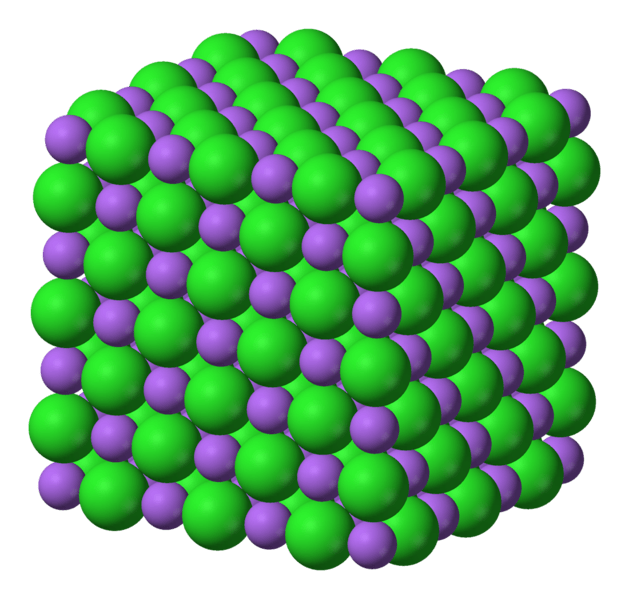
Which state of matter does this picture show?
Solid
Liquid
Gas
90
Multiple Choice
When particles are heated they,
expand and move apart
expand and move together
contract and move apart
contract and move together
91
Multiple Choice
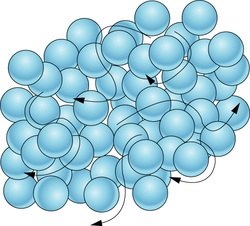
What state of matter does this picture show?
Solid
Liquid
Gas
92
Multiple Choice
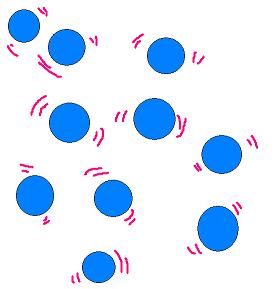
Which state of matter does this picture show?
Solid
Liquid
Gas
93
Multiple Choice
What is happening in this picture of water boiling?
Molecules are speeding up
Molecules are slowing down
94
Multiple Choice
What is happening in this picture of water boiling?
Molecules are speeding up
Molecules are slowing down
95
Multiple Choice
96
97
98
Multiple Choice
Increasing the mass of an object will increase its temperature
True
False
99
Multiple Select
Which of the following will increase the thermal energy of an object. (May be more than one answer)
increasing the temperature
increasing the mass
reducing the mass
reducing the temperature
100
101
102
103
104
105
Match
Specific Heat Capacity
Temperature
Thermal Energy
Convection
Conduction
the amount of energy it takes to raise the temperature of a substance
the average amount of kinetic energy in particles
the total amount of kinetic energy in particles
the movement of fluids (gases and liquids) due to temperature differences
the transfer of thermal energy through collisions of particles when objects touch
the amount of energy it takes to raise the temperature of a substance
the average amount of kinetic energy in particles
the total amount of kinetic energy in particles
the movement of fluids (gases and liquids) due to temperature differences
the transfer of thermal energy through collisions of particles when objects touch
106
107
Fill in the Blanks
Type answer...
108
How much heat is needed to raise a 0.30 kg piece of aluminum from 30℃ to 150℃?
Formula: Q = mcΔT
Solving Specific Heat Problems
Some text here about the topic of discussion
Show answer
Auto Play
Slide 1 / 108
MULTIPLE CHOICE

Similar Resources on Wayground
103 questions
Evolution EOC Review
Presentation
•
9th - 12th Grade
101 questions
Chapter 13- Medical Math
Presentation
•
9th - 12th Grade
106 questions
All subject quiz
Presentation
•
8th Grade - University
101 questions
El Pretérito 2023
Presentation
•
10th - 12th Grade
99 questions
Test de Posit Vente Commerce Niveau 4
Presentation
•
KG
101 questions
WAVES
Presentation
•
9th - 12th Grade
100 questions
Unit 2 Notes Alterations of Ecosystems
Presentation
•
9th - 12th Grade
104 questions
Chemistry Semester 1 Credit Recovery
Presentation
•
10th - 12th Grade
Popular Resources on Wayground
20 questions
STAAR Review Quiz #3
Quiz
•
8th Grade
20 questions
Equivalent Fractions
Quiz
•
3rd Grade
6 questions
Marshmallow Farm Quiz
Quiz
•
2nd - 5th Grade
20 questions
Main Idea and Details
Quiz
•
5th Grade
20 questions
Context Clues
Quiz
•
6th Grade
20 questions
Inferences
Quiz
•
4th Grade
19 questions
Classifying Quadrilaterals
Quiz
•
3rd Grade
12 questions
What makes Nebraska's government unique?
Quiz
•
4th - 5th Grade