Nuclear Physics Introduction
Presentation
•
Physics
•
11th Grade
•
Easy
Standards-aligned
Heather Walls
Used 11+ times
FREE Resource
13 Slides • 21 Questions
1
2
3
Multiple Choice
Which of the following best describes an electron?
it has a positive charge smaller than a proton
it has no charge smaller than a proton
it has a negative charge smaller than a proton
it has a negative charge same size as proton
4
Multiple Choice
Which part of an atom always tells you the identity or name of the element?
protons
neutrons
electrons
protons and neutrons
5
Multiple Choice
An atom with atomic number 6 would have how many protons?
6
7
8
Drag and Drop
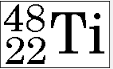
22 electrons
mass number of
9
Drag and Drop
10
11
12
Multiple Choice
Which has the LONGEST wavelength and, therefore, the LOWEST frequency/energy
Gamma Rays
Ultraviolet
Visible Light
Infrared rays
13
Multiple Choice
Which of the following statements can be concluded from the table?
X-Ray waves have a lower frequency than infrared waves.
Microwaves have a smaller wavelength than visible light.
The speed of all electromagnetic waves are equal.
The frequency and wavelengths are equal for each type of radiation.
14
Multiple Choice
Which of the following are in correct order from greatest to least energy?
microwaves, infrared, ultraviolet, x-rays
microwaves, x-rays, infrared, ultraviolet
x-rays, ultraviolet, infrared, microwaves
infrared, ultraviolet, x-rays, microwaves
15
16
17
18
19
20
Multiple Choice
When a nucleus undergoes gamma decay, the atomic number of the element....
remains the same
decreases by one.
increases by one.
increases by two.
21
Multiple Choice
22
Multiple Choice
23
Multiple Choice
24
Multiple Choice
Which type of nuclear radiation is being emitted here?
Alpha
beta
gamma
none
25
Multiple Choice
In order of most to least penetrating radiation we have
26
27
Multiple Choice
Radiometric dating is possible because the rates of decay of radioactive isotopes _____.
28
Multiple Choice
The time it takes for 50% of the nuclei in a radioactive sample to decay to its stable isotope is called _____.
29
Multiple Choice
The graph shows the radioactive decay of a 50-gram sample of a radioactive isotope.
According to the graph, what is the half-life of this isotope?
30
31
Multiple Choice
What process describes two small nuclei combining into a larger nucleus?
fission
fusion
alpha decay
beta decay
32
Multiple Choice
What process is described by the splitting of a nucleus into smaller nuclei?
fusion
fission
half-life
gamma radiation
33
Multiple Choice
What nuclear process is shown in the picture?
alpha decay
gamma emission
fusion
fission
34
Multiple Choice
Which nuclear process if shown in the picture?
alpha decay
beta decay
fusion
fission
Show answer
Auto Play
Slide 1 / 34
SLIDE

Similar Resources on Wayground
23 questions
Torque and Rotation Review
Presentation
•
11th Grade
24 questions
Taxonomy and Classification
Presentation
•
11th Grade
26 questions
Newton's Second Law
Presentation
•
11th Grade
26 questions
Preterite vs Imperfect
Presentation
•
11th Grade
25 questions
Vector Addition Review
Presentation
•
11th Grade
22 questions
P.7C Transverse vs Longitudinal Behaviors Part 1
Presentation
•
11th Grade
25 questions
Wednesday 4/3 Check In: Parts of an Atom
Presentation
•
11th Grade
26 questions
4.1 Nature & Properties of Waves
Presentation
•
10th Grade
Popular Resources on Wayground
10 questions
5.P.1.3 Distance/Time Graphs
Quiz
•
5th Grade
10 questions
Fire Drill
Quiz
•
2nd - 5th Grade
20 questions
Equivalent Fractions
Quiz
•
3rd Grade
22 questions
School Wide Vocab Group 1 Master
Quiz
•
6th - 8th Grade
20 questions
Main Idea and Details
Quiz
•
5th Grade
20 questions
Context Clues
Quiz
•
6th Grade
20 questions
Inferences
Quiz
•
4th Grade
12 questions
What makes Nebraska's government unique?
Quiz
•
4th - 5th Grade