

Lesson 9 Lesson 6

Presentation
•
English
•
3rd Grade
•
Practice Problem
•
Hard
Standards-aligned

Cathy Thompson
Used 2+ times
FREE Resource
75 Slides • 0 Questions
1

UNIT 9 –
LESSON 6
Francisco
Vasquez de
Coronado
Early Exploration of
North America
2

● I can listen to “Francisco Vasquez de Coronado”
and summarize facts about his explorations. [SL.3.4]
● I can identify areas Francisco Vasquez de
Coronado explored. [RI.3.7]
● I can categorize and organize facts about the
Spanish explorers based on reading and notes.
[W.3.8]
● I can write words using spelling patterns and rules
for words with the /oo/ sound. . [L.3.2f]
Today’s Learning Targets:
3

SPEAKING &
LISTENING
Lesson 6: Francisco Vasquez De
Coronado
4

We have been learning all about
early explorers and the lands that
they came upon, the people they
encountered, and the things they
found or were looking for.
Before we begin today, let’s review
what we’ve been learning so far.
Before Reading: Francisco Vasquez de Coronado
5

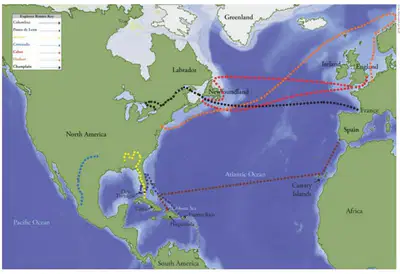
Before Reading: Francisco Vasquez de Coronado
Trace the
voyage of
Hernando de
Soto (yellow
dots) and name
the places
along the
journey.
6

What are some disastrous events that have taken
place on the different expeditions so far?
the many conflicts with the different native
populations, resulting in many deaths on both
sides; mutinies taking place
Keeping in mind that the goal of the Spanish was to
conquer new lands, what have they conquered in
their explorations so far?
Even though the conquistadors were searching
for gold and found little to no gold, they claimed
a lot of land in honor of Spain and explored
areas that many Europeans had never before
seen.
Before Reading: Francisco Vasquez de Coronado
7

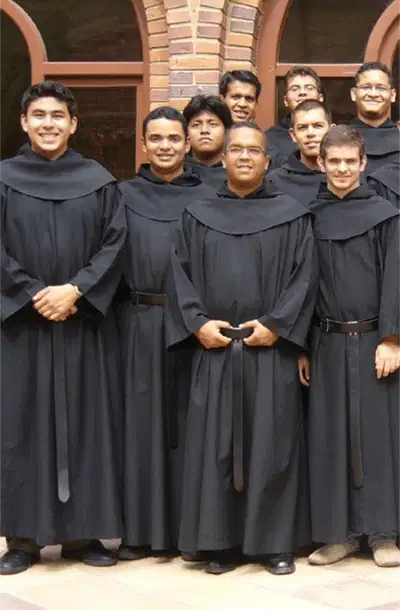
In today’s read-aloud, you are going to
hear about a friar who traveled alongside
two explorers of the Southwest. A friar is a
man who is a member of a Christian
religious group, and who goes out into the
world to teach others about his beliefs. As
exploration continued and moved
westward on the North American
continent, explorers often recruited priests
and/or friars to come along with them on
their expeditions.
Before Reading: Francisco Vasquez de Coronado
8

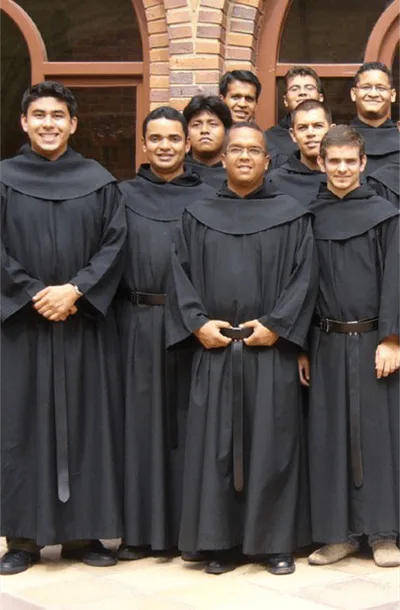
In previous lessons you learned that a priest is
a leader in the Christian religion. Usually, the
kings and queens who sponsored the explorers
or settlers in a colonization effort expected the
travelers to make an effort to change the
religious beliefs of the Native Americans to
Christianity. This was usually a part of the
sponsorship agreement. The Spanish believed
that teaching the Native Americans about
Christianity was helping them, but it was also a
way to gain control of them.
Before Reading: Francisco Vasquez de Coronado
9

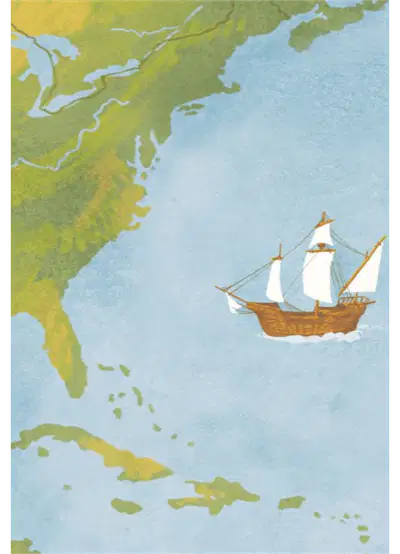
You will learn more about how
Europeans were bringing
changes to Native American ways
of life in the next read-aloud.
In today’s read-aloud, they are
also going to hear about an
explorer named Francisco
Vasquez de Coronado.
Before Reading: Francisco Vasquez de Coronado
10

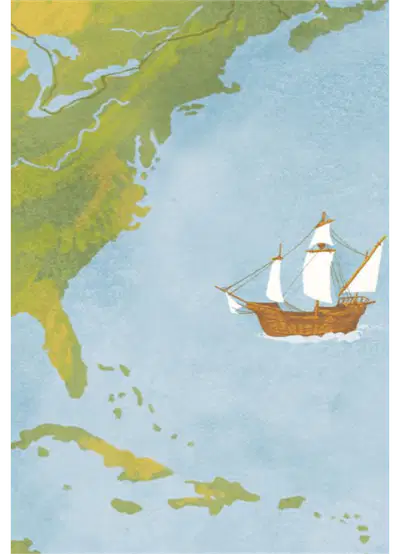
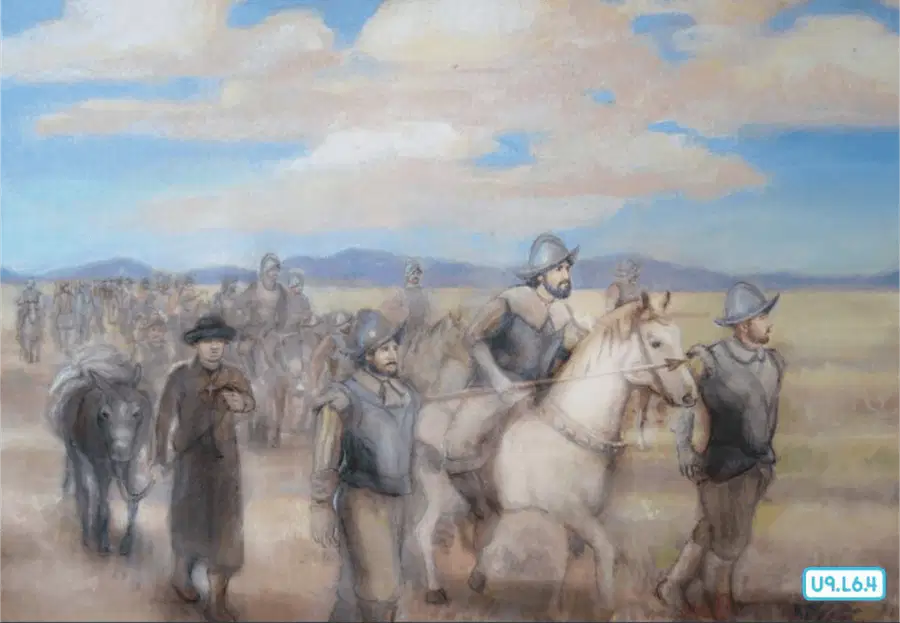
Coronado and his crew
trekked approximately 4,000
miles in the southwestern
region of what is now the
United States, searching for
gold. It was a long, hard,
frustrating search.
Before Reading: Francisco Vasquez de Coronado
11

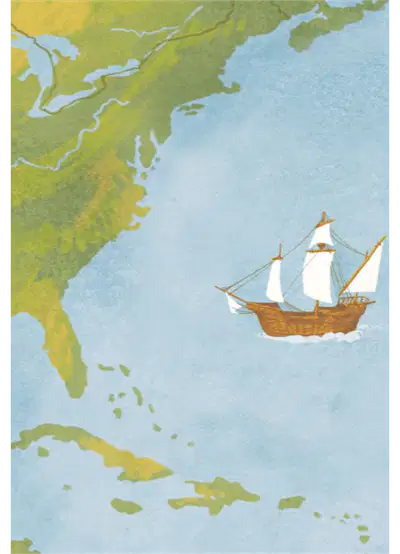
What do you think made Coronado
think there was gold in this part of
North America?
You will learn more about this in the
read-aloud, but one important thing
to remember is that Coronado
believed there was even more gold in
this territory than in the Aztec Empire.
Before Reading: Francisco Vasquez de Coronado
12

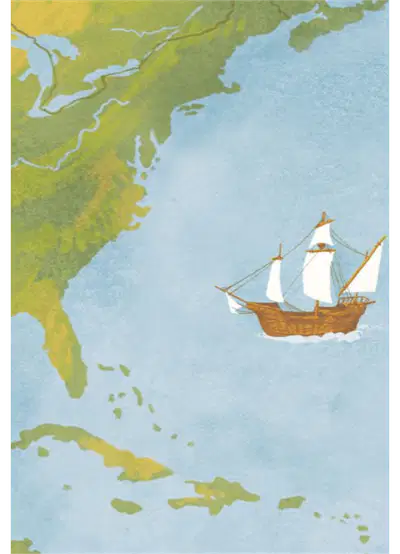
At the time Spanish
conquistadors came to the
Americas, this vast empire was
led by Moctezuma II (/mäk*t *zoo*m /),
emperor of the Aztec people. He
lived in an immense palace in the
city of Tenochtitlan (/t *näch*t¯et*län/),
the capital of the Aztec empire.
Before Reading: Francisco Vasquez de Coronado
13

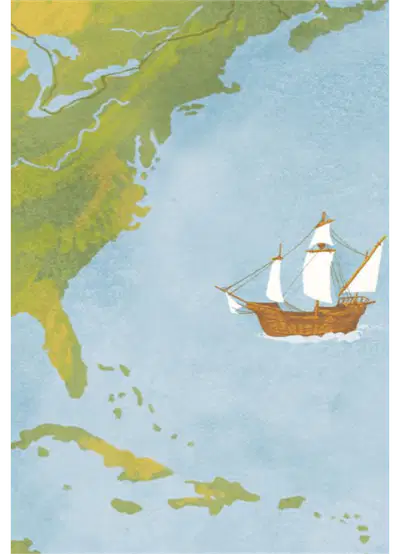
Let’s preview some of
the vocabulary that
we will be reading
before we begin.
Before Reading: Francisco Vasquez de Coronado
14

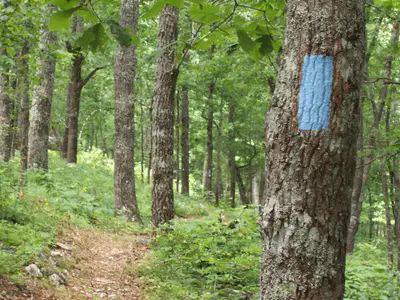
blazed -
marked or shown
by marking a path
or route
Before Reading: Francisco Vasquez de Coronado
15

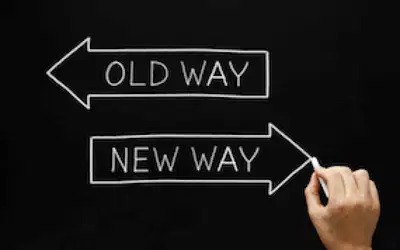
convert -
to change from one
form to another; to
change from one
religion to another
Before Reading: Francisco Vasquez de Coronado
16


stunned -
very surprised or
shocked; can
sometimes mean
upset
Before Reading: Francisco Vasquez de Coronado
17

suspicious -
without trust;
causing questions or
doubt
Before Reading: Francisco Vasquez de Coronado
18

As I read, listen carefully to
listen carefully to find out
why Francisco Vasquez de
Coronado may have thought
there was gold in the
southwest region of North
America.
Before Reading: Francisco Vasquez de Coronado
19

20

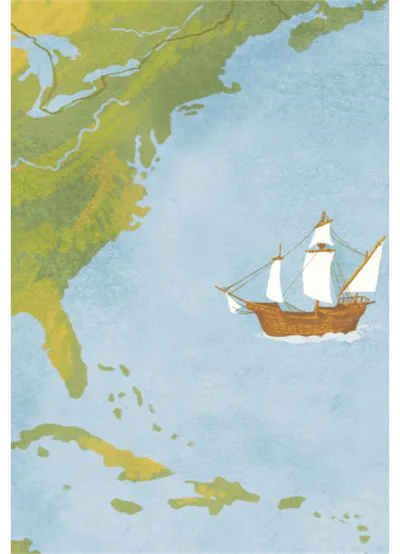
Check for Understanding:
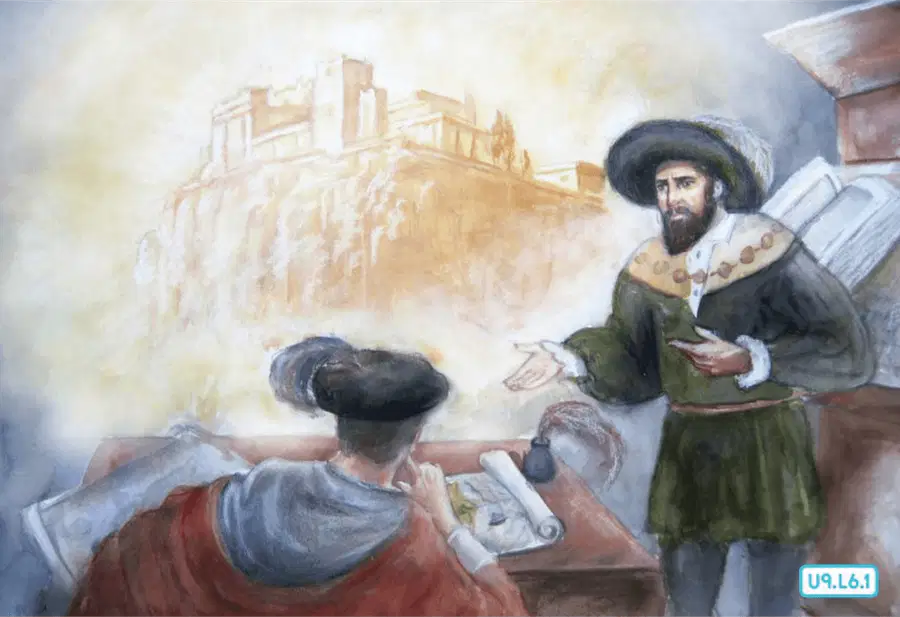
Who can tell me what a viceroy is?
a ruling representative for a king or
queen
Who remembers what happened
on the disastrous Narváez
expedition?
Exploring Florida, only 4 men out of
600 made it back to Mexico.
21

22

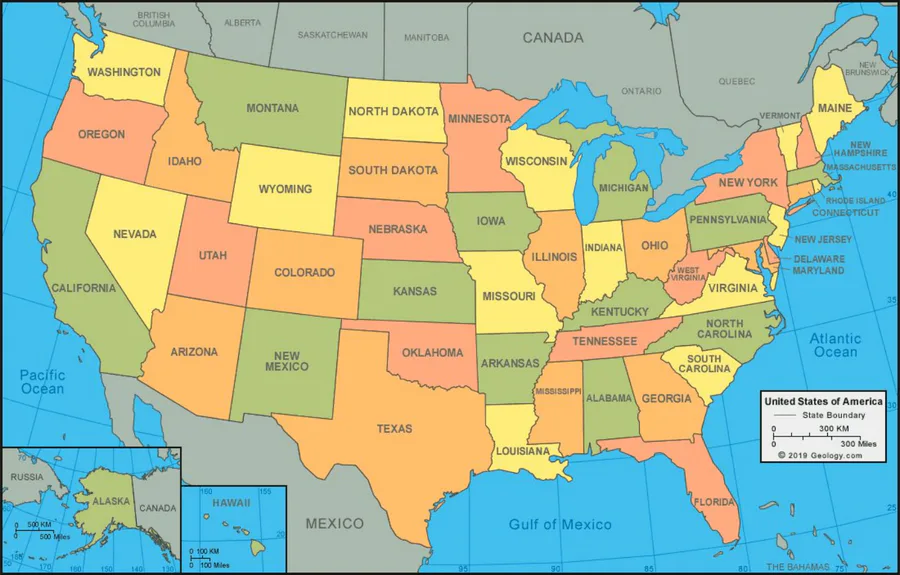
Check for Understanding:
Here is the
state of
new Mexico
on a U.S.
map
23


24


25

26

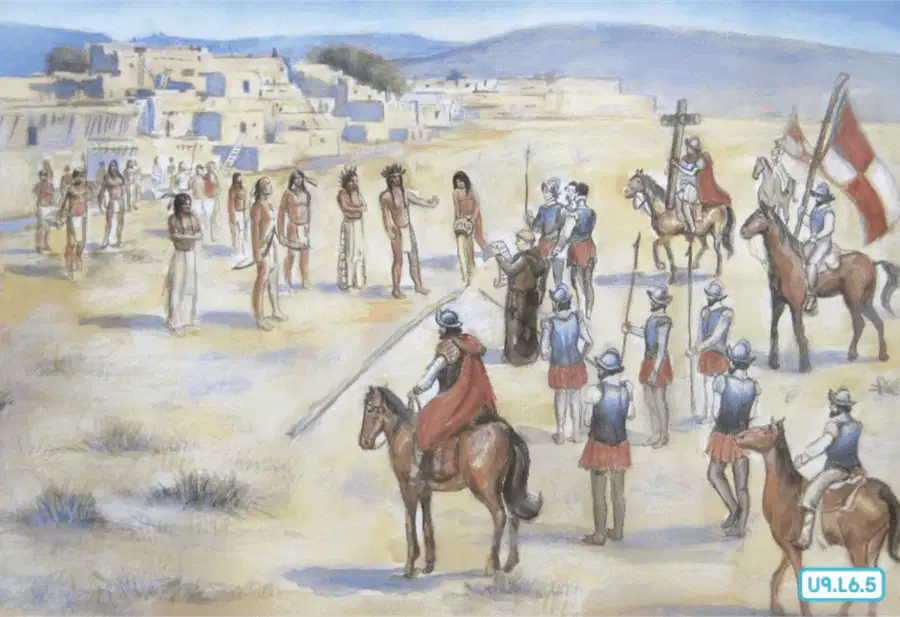
27

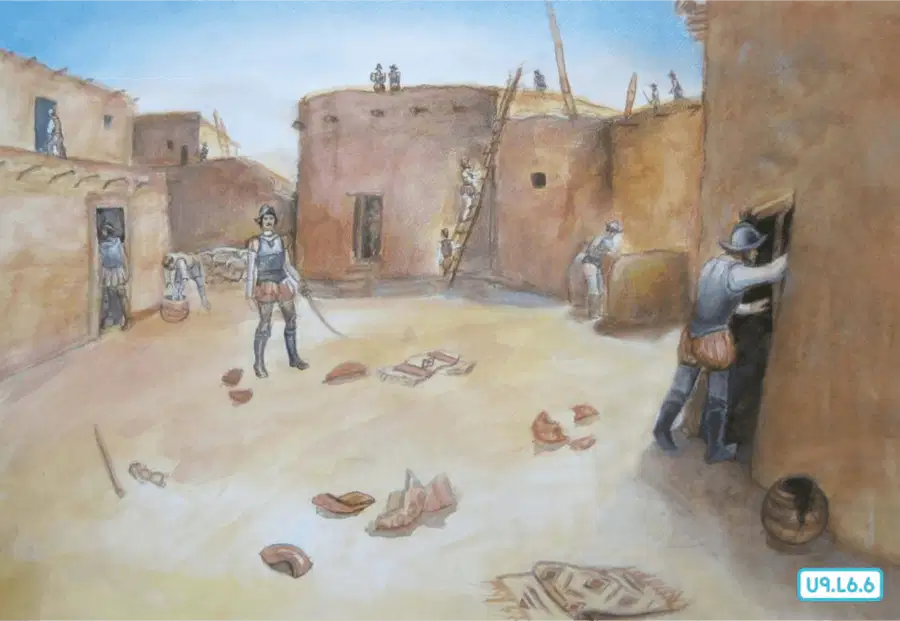
28

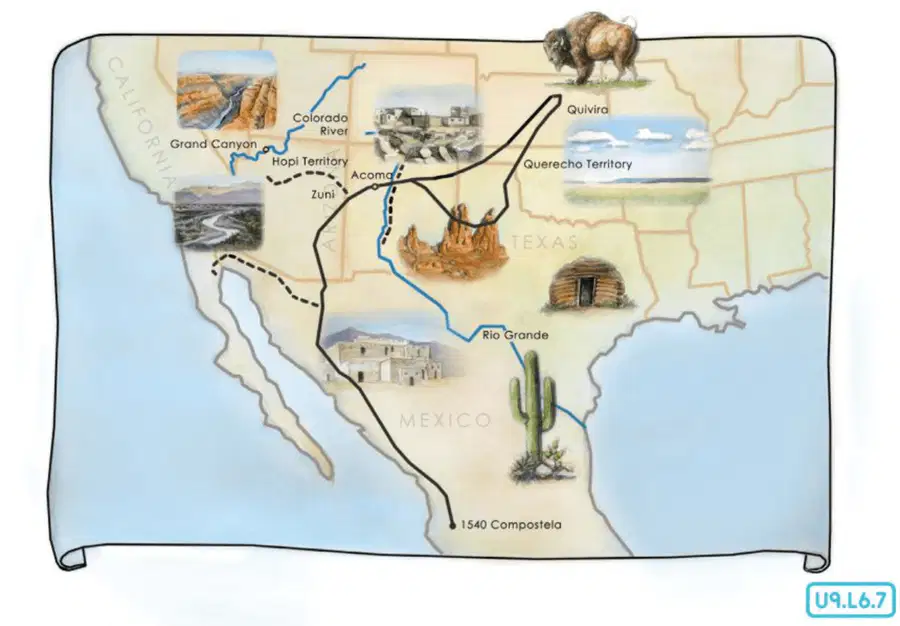
29

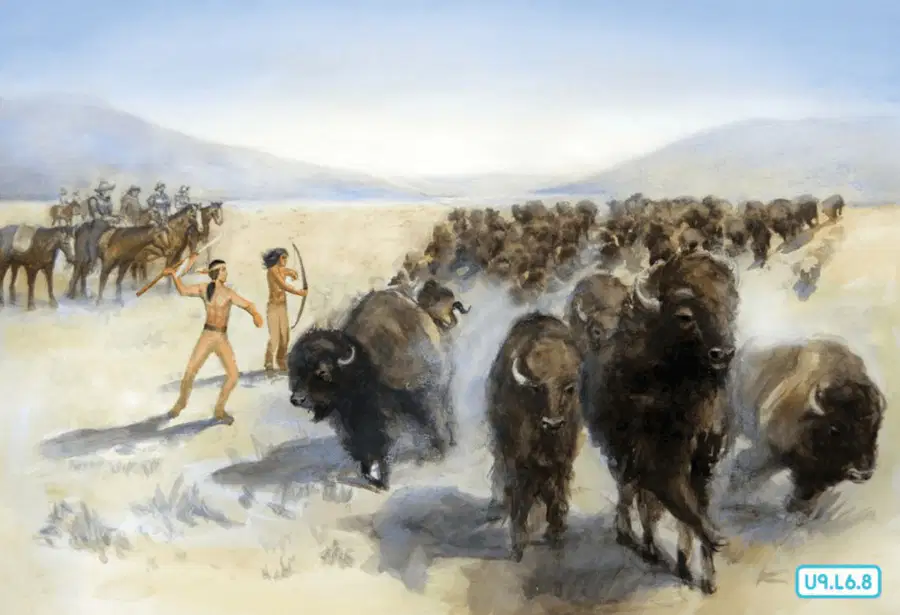
30

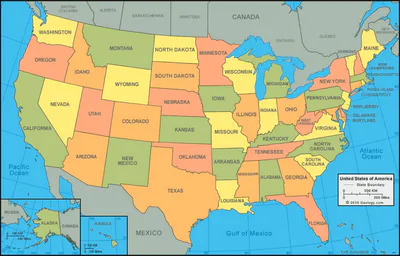
Check for Understanding:
Who can
point to the
state of
Texas on
the map?
31

32

33

Check for Understanding:
Which sentence is the best summary of today’s
lesson?
a.
Searching for golden cities, Coronado led an
expedition to the Americas, yet after
attacking the natives, he instead
“discovered” the Grand Canyon and the Rio
Grande.
b.
Coronado and his men admired the buffalo
on the Plains.
c.
Coronado lost a large sum of money that he
had invested in the expedition.
Answer: a
34

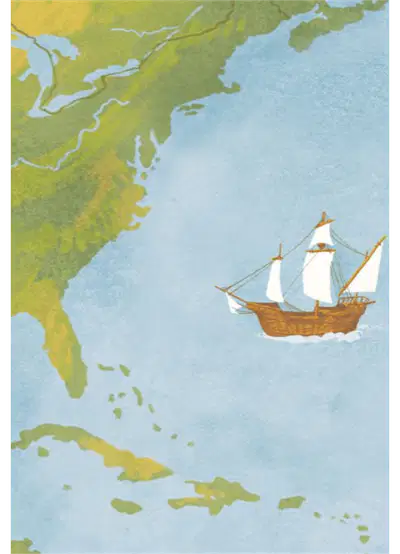
Were your predictions
correct about why
Francisco Vasquez de
Coronado went on an
expedition and where he
went? Why or why not?
After Reading: Francisco Vasquez de Coronado
35

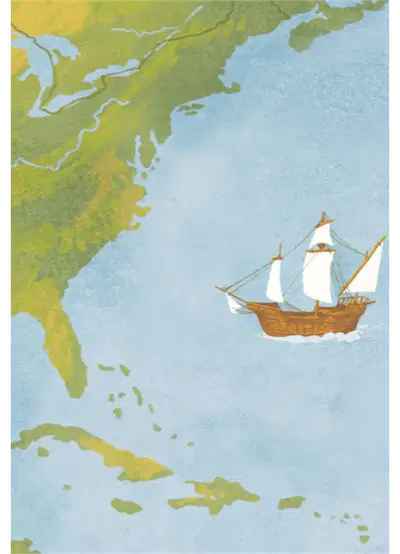
Describe the events as they occurred in this
read-aloud.
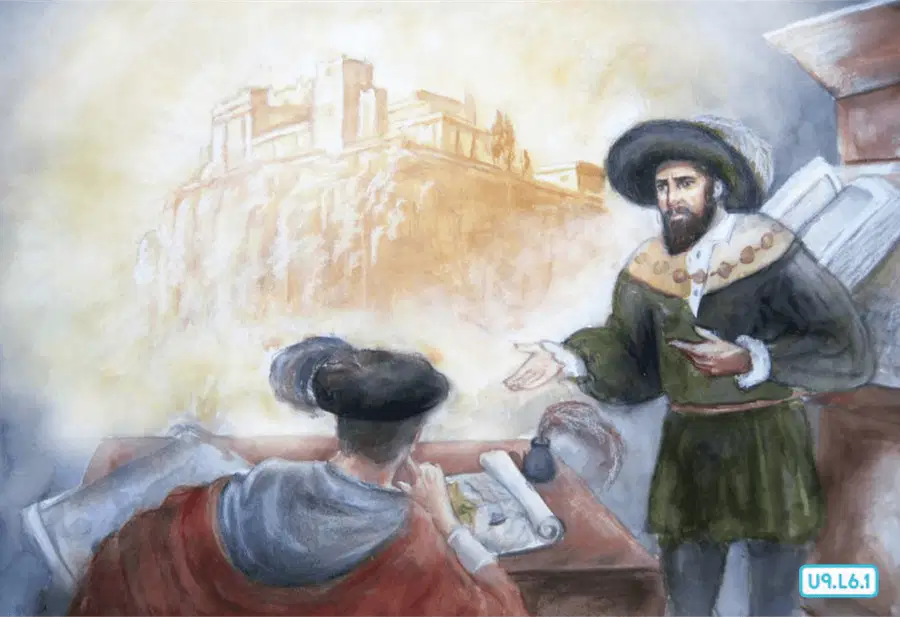
First, de Vaca told the viceroy, Mendoza, of the Seven
Cities of Cibola. Then, Mendoza sent Friar Marcos and
Estéban on an expedition. Estéban and Marcos
separated. Estéban ended up being killed and Marcos
returned to Mexico, claiming there was a city of gold,
but he lied about having seen it with his own eyes.
Coronado set off on his expedition 1 year later. On
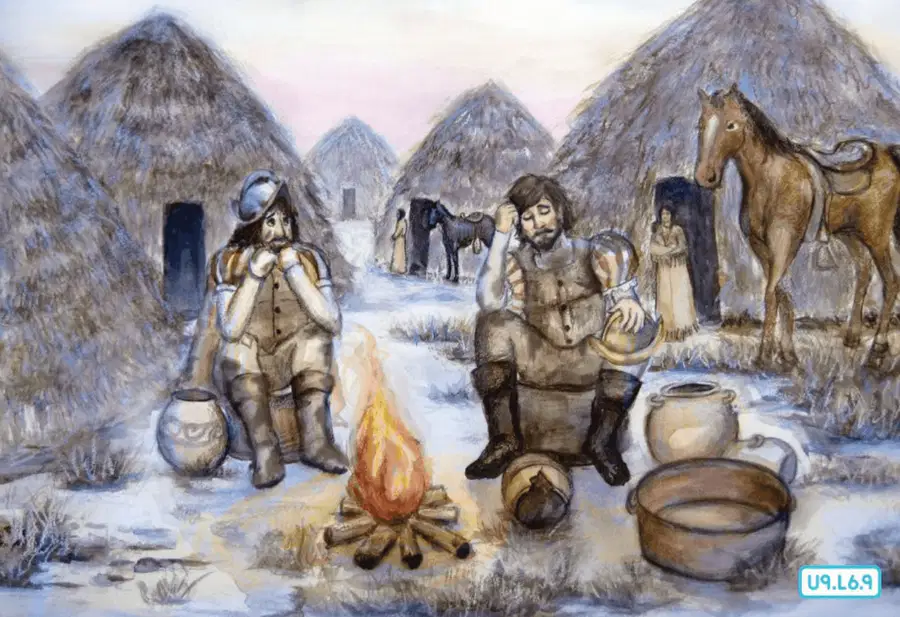
Coronado’s long expedition, he and his men had
conflicts with natives, came across the massive Grand
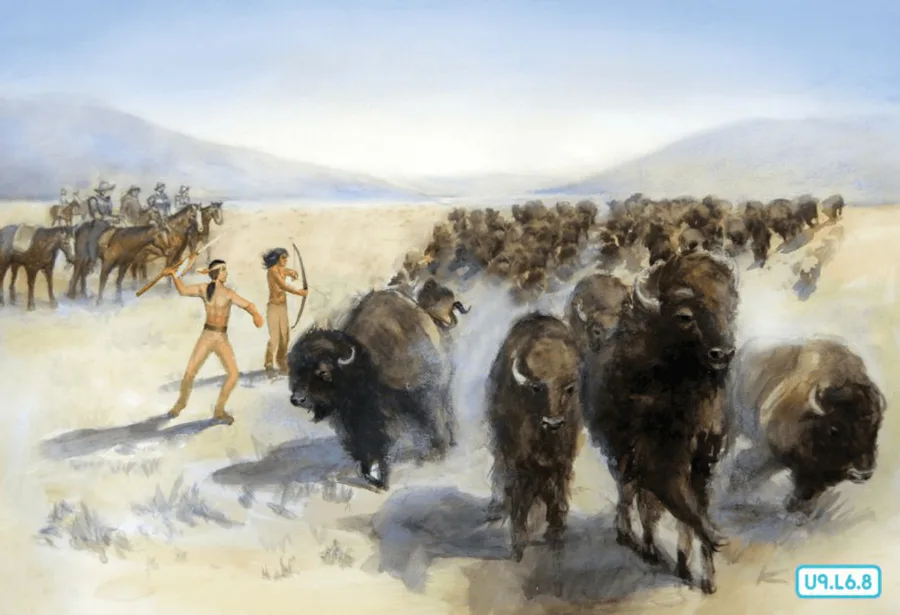
Canyon, and saw the Great Plains with huge herds of
buffalo. In the end, the men of Coronado’s expedition
never found gold.
After Reading: Francisco Vasquez de Coronado
36

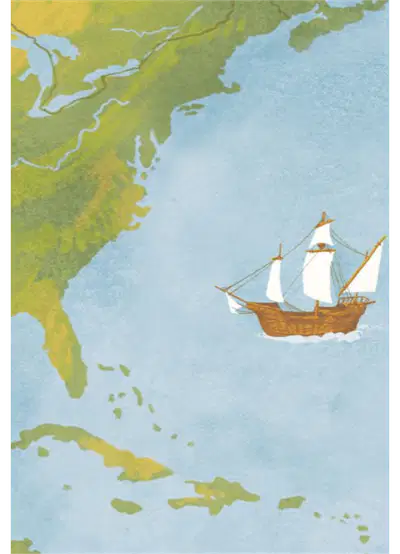
What would you say were Coronado’s
most important discoveries?
He and his men were the first
known Europeans to see the Grand
Canyon, explore the area along the
Colorado River, cross the Rio
Grande, and see the Great Plains
and the roaming buffalo.
After Reading: Francisco Vasquez de Coronado
37

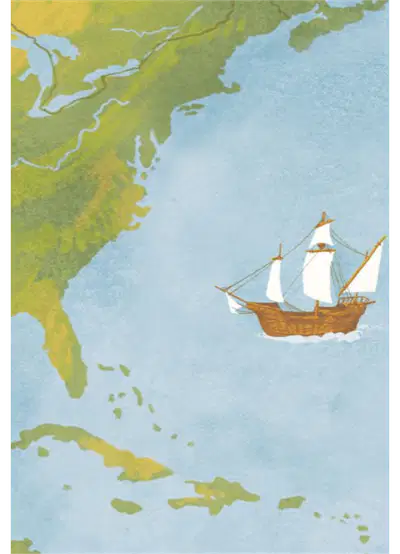
Expedition Log
We learned that explorers created
expedition logs of their journeys. In
the previous lesson, you created
your expedition log on different
explorers. Today your expedition log
will be about Francisco Vasquez de
Coronado’s expedition.
After Reading: Francisco Vasquez de Coronado
38

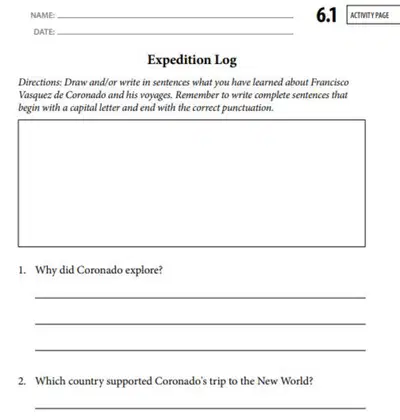
Activity Page 6.1
Use the information heard in the
read-aloud and the images from
the read-aloud to help you
remember details about
Francisco Vasquez de Coronado
and answer the questions on the
page independently. After you
write, you will draw a picture to
illustrate the information.
After Reading: Francisco Vasquez de Coronado
39

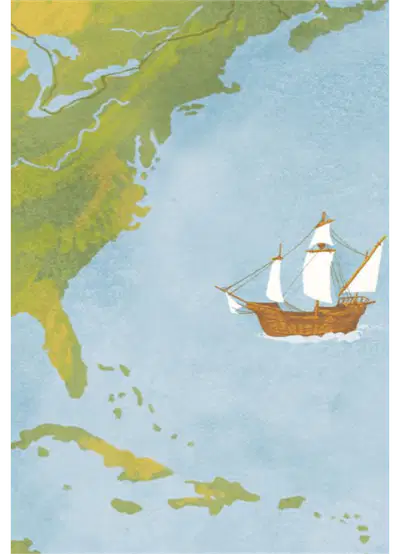
Word Work: Investigative
In the read-aloud you heard,
“In addition, a man named
Estéban, a slave who had
traveled with Cabeza de
Vaca . . . was recruited to go
along as a guide and
translator on their
investigative travels north.”
40

Word Work: Investigative
In the read-aloud you heard,
“In addition, a man named
Estéban, a slave who had
traveled with Cabeza de
Vaca . . . was recruited to go
along as a guide and
translator on their
investigative travels north.”
41

Word Work: Investigative
The word investigative
relates to a search for
information
Zhou’s natural curiosity
makes her a good
investigative reporter.
42

Word Work: Investigative
Have you ever taken part in
an investigative activity?
What was it? What
information were you trying
to find?
Be sure to use the word
investigative when you tell about it.
43

Word Work: Investigative
What part of speech is our
word?
investigative
Noun or Adjective
44

Word Work: Investigative
Sharing Activity
Turn to a partner and take turns
sharing ideas about what situations
might require you to use
investigative skills. I will call on one
or two of you to share your answers
with the class. Be sure to use the
word investigative in a complete
sentence when you share.
45

READING
Chapter 6: Coronado
Reports to the King
46

Before Reading: Coronado Reports to the King
Now you will be reading
Chapter 6, “Coronado Reports
to the King” in small groups or
partners.
Before we start reading let’s
review some of the vocabulary
that we will be reading in this
chapter.
47

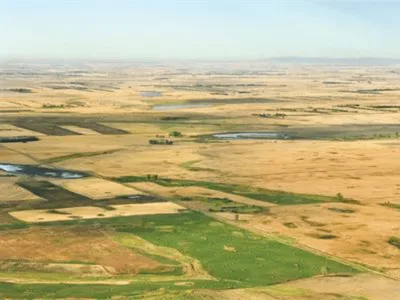
plain -
a large, flat area of
land with no trees
Before Reading: Coronado Reports to the King
48

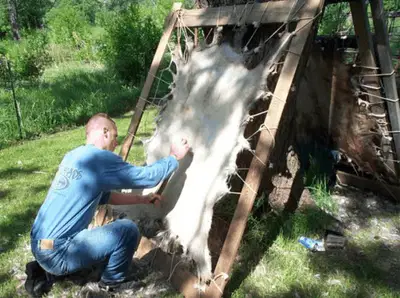
tan -
to turn animal skin
into leather using a
specific process
Before Reading: Coronado Reports to the King
49

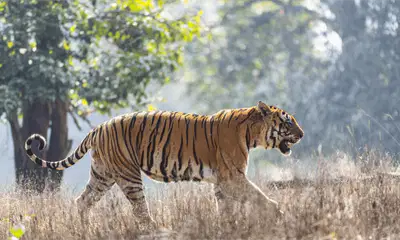
barbarous -
wild, sometimes
violent
Before Reading: Coronado Reports to the King
50

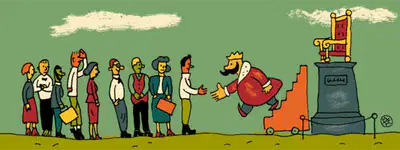
humble -
respectful; not
thinking you are
better than others
Before Reading: Coronado Reports to the King
51

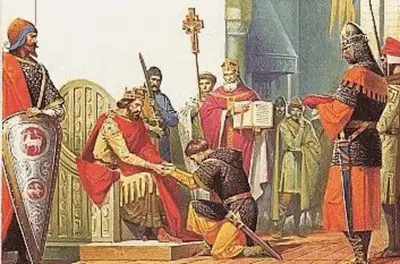
vassal -
a person who is
loyal and serves a
lord or king
Before Reading: Coronado Reports to the King
52


Before Reading: Coronado Reports to the King
Student Reader’s
1.
Now we will be rereading Chapter 6,
Coronado Reports to the King.
2.
Go to your table of contents and find
our reading for today and turn to it in
our books.
3.
You will be working through this
chapter and activity page Activity
Page 6.2 with a partner or small
group. We will discuss the chapter as
a whole group after reading.
53

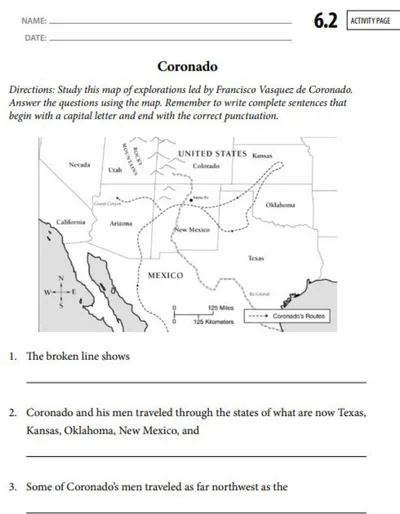
Activity Page 6.2
As you are reading
with your partner or
group, complete the
activity page.
Reading: Coronado Reports to the King
54

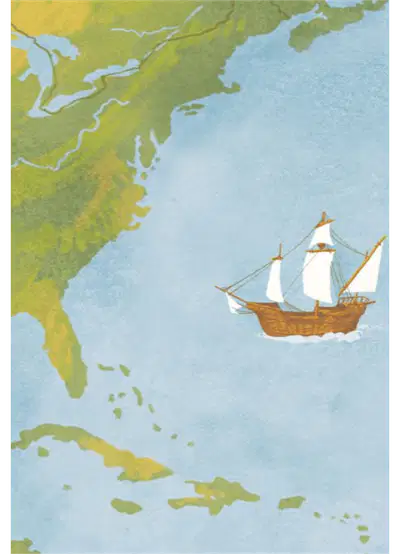
In his letter to the king, Coronado says,
“The plains were full of cows.” What
animal were they actually?
buffalo
What did Coronado observe about the
natives called “Querechos”?
that they do not plant crops, but travel with the
buffalo; that they eat buffalo and make clothes
from the buffalo skin, and also live in tents
made of buffalo hide
After Reading: Coronado Reports to the King
55

What observation does Coronado share
with the king about the land in Quivira?
that it is the best he’s seen for producing
crops, and that it is well watered by springs
and rivers
Why do you think Coronado shares this
information with the king?
possibly to suggest that the Spanish colonize
the land to plant crops such as prunes,
grapes, mulberries, and nuts
After Reading: Coronado Reports to the King
56

WRITING
Lesson 6: Exploration
Chart
57


Activity Page 6.3
Let’s read the
directions together
and then go over the
headings for each
column.
Writing: Exploration Chart
58


Activity Page 6.3
Under the “Motivation”
column, answer one or both of
the questions that are
applicable:
● “Why did they explore?”
● “What were they looking
for?”
Writing: Exploration Chart
59


Activity Page 6.3
Under the “Interactions”
column, answer one or both of
the questions that are
applicable:
● “How did they treat the
natives?”
● “How did they treat their
crew?”
Writing: Exploration Chart
60


Activity Page 6.3
Under the e
“Achievements” column,
answer the question:
● “What were their
greatest
achievements?”
Writing: Exploration Chart
61


Activity Page 6.3
Now that you have all of
the parts completed,
share your answers with
a partner. Add any new
information that you
might not have had.
Writing: Exploration Chart
62


Activity Page 6.3
Compare and contrast
the explorers.
What did they have in
common?
How were they different?
Writing: Exploration Chart
63


Activity Page 6.3
We will be using this
activity page again in
the next lesson to
help you write your
opinions about the
explorers.
Writing: Exploration Chart
64

LANGUAGE
Lesson 6: Spelling
65

Language: Spelling
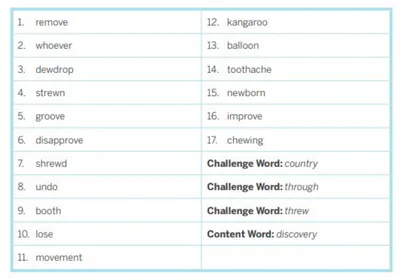
Today, you will be assigned
our next spelling words.
This week's words will be
reviewing the /oo/ sound
spelled ‘oo’, ‘eo’, ‘o’,and ‘o_e.’
Let’s read through our new
spelling words.
66

Language: Spelling
67

Language: Spelling
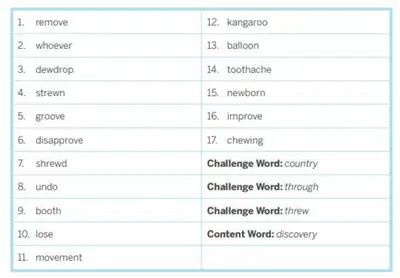
We have three
challenge words this
week! These are
words that are
“tricky” words. They
are used a lot but
don’t always follow
regular spelling
patterns.
This means that you
need to memorize
how they are spelled.
68

Language: Spelling
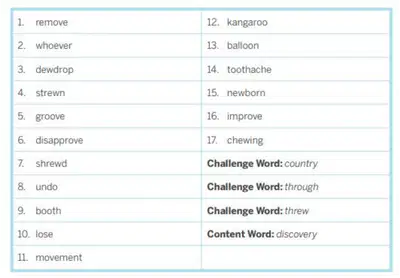
We have another
content word. This is
a word that is a little
harder than other
words and relates to
the content we are
learning about.
You are not
penalized for
spelling this word
incorrectly on the
test.
69

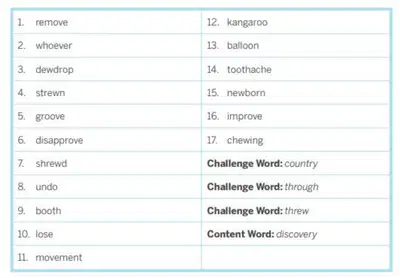
Language: Spelling
Now let’s go
through each word
and identify the
letters that make
the /oo/ sound .
and circle it in each
word.
On the next page
we will sort them
into their groups.
70

Language: Spelling
Find the ‘oo’ column and tell me a spelling word that has the
/oo/ sound spelled as ‘oo’.
‘oo’ > /oo/
‘ew’ > /oo/
‘o’ > /oo/
‘o_e’ > /oo/
groove
booth
kangaroo
balloon
toothache
71

Language: Spelling
Find the ‘ew’ column and tell me a spelling word that has the
/oo/ sound spelled as ‘ew’.
‘oo’ > /oo/
‘ew’ > /oo/
‘o’ > /oo/
‘o_e’ > /oo/
groove
booth
kangaroo
balloon
toothache
dewdrop
strewn
shrewd
newborn
chewing
threw
72

Language: Spelling
Find the ‘o’ column and tell me a spelling word that has the
/oo/ sound spelled as ‘o’.
‘oo’ > /oo/
‘ew’ > /oo/
‘o’ > /oo/
‘o_e’ > /oo/
groove
booth
kangaroo
balloon
toothache
dewdrop
strewn
shrewd
newborn
chewing
threw
whoever
undo
73

Language: Spelling
Find the ‘o_e’ column and tell me a spelling word that has
the /oo/ sound spelled as ‘o_e’.
‘oo’ > /oo/
‘ew’ > /oo/
‘o’ > /oo/
‘o_e’ > /oo/
groove
booth
kangaroo
balloon
toothache
dewdrop
strewn
shrewd
newborn
chewing
threw
whoever
undo
remove
disapprove
lose
movement
improve
74

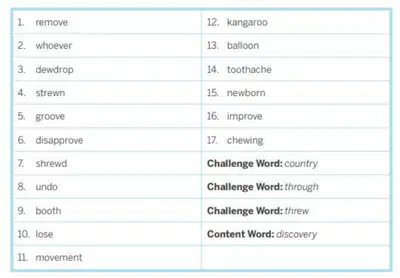
Language: Spelling
Let’s practice!
I will call on a
person to read
any word on the
table. They have
to use the word in
a sentence. We’ll
keep going until
all words have
been used.
75

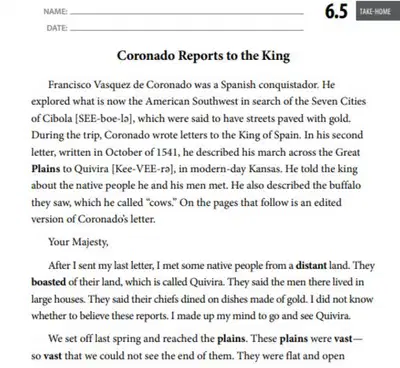
Take Home
Activity
Take home Activity
Page 6.4 to share
with a family member
and 6.5 to read to a
family member
UNIT 9 –
LESSON 6
Francisco
Vasquez de
Coronado
Early Exploration of
North America
Show answer
Auto Play
Slide 1 / 75
SLIDE
Similar Resources on Wayground

65 questions
Fiction 2
Presentation
•
4th Grade
67 questions
Informative Writing and Writing Process
Presentation
•
3rd Grade
68 questions
INTO MATH LESSON 1 & 2
Presentation
•
3rd - 4th Grade
66 questions
UFLI Lesson 66
Presentation
•
2nd Grade
64 questions
5.3.1
Presentation
•
3rd Grade
70 questions
Grammar Lesson
Presentation
•
5th Grade
73 questions
Jaxtina - S - Activity Book - Lesson 2
Presentation
•
5th Grade
60 questions
Happy Sounds 3 Lesson 1
Presentation
•
KG
Popular Resources on Wayground
10 questions
Safety Day 2026 – Student Review

Quiz
•
9th Grade
21 questions
Continents and Oceans
Quiz
•
6th Grade
20 questions
Parts of Speech
Quiz
•
5th Grade
16 questions
Subject & Predicate
Quiz
•
5th Grade
25 questions
Multiplication Facts
Quiz
•
5th Grade
12 questions
Map Skills
Quiz
•
3rd Grade
22 questions
Continents and Oceans
Quiz
•
5th Grade
15 questions
Rounding Decimals
Quiz
•
5th Grade
Discover more resources for English
13 questions
Subjects & Predicate
Quiz
•
3rd Grade
10 questions
Main Idea and Supporting Details
Quiz
•
3rd - 6th Grade
20 questions
Main Idea
Quiz
•
3rd Grade
20 questions
Find the Main Idea and Supporting Details
Quiz
•
3rd Grade
20 questions
Similes & Metaphors
Quiz
•
3rd - 5th Grade
19 questions
Irregular Plural Nouns
Quiz
•
3rd Grade
20 questions
Inferences
Quiz
•
3rd Grade
20 questions
Cause and Effect
Quiz
•
3rd Grade