
Ionic & Covalent Bonding Review
Presentation
•
Chemistry
•
9th - 12th Grade
•
Practice Problem
•
Easy
+3
Standards-aligned
Denise Molina
Used 21+ times
FREE Resource
9 Slides • 37 Questions
1
Electrons are the Key
If valence electrons are shared by atoms, it is called COVALENT bonding
If valence electrons move freely between atoms, it is called METALLIC bonding
If valence electrons are transferred from one atom to another, it is called IONIC Bonding
2
Two nonmetals
Electron(s) are
shared
Between a metal and nonmetal
Electrons are transferred from a metal to a nonmetal
3
Ionic Bonds
Form Crystalline Lattice (crystals)
Have high melting and boiling points
Hard
Brittle
Conduct electricity when dissolved in water
4
What you need to remember...
Metals + Nonmetals
Make IONIC bonds
Transfer electrons
High electronegativity difference
5
Covalent Compounds
Have Lower melting and boiling points
Tend to be flammable
When dissolved in water they do not conduct electricity
Soft or brittle solid
Can also form crystals
6
What you need to remember
Nonmetal + Nonmetal
Make COVALENT bonds
Share electrons
Low electronegativity difference
7
ELECTRONEGATIVITY
DEN Range is the difference in electronegativity values between atoms
Determines the type of bond
Covalent bonds have similar electronegativities
Ionic bonds have different electronegativities
8
Metallic Bonds
good conductors of heat and electricity
malleable and ductile
lustrous
opaque
9
What you need to remember
Metal ions near each other share valence electrons
These valence electrons flow freely between all of the ions
These delocalized electrons are why metals conduct heat and electricity
It is also why metals are malleable and ductile
10
Multiple Choice
Why do all bonds form?
so the number of protons equals the number of electrons
so an atom can become unstable
to fill the outermost energy level
11
Multiple Choice
Valence electrons are found
in the innermost energy level of an atom
in the middle energy levels of an atom
in the outermost energy levels of an atom
12
Multiple Choice
13
Multiple Choice
14
Multiple Choice
15
Multiple Choice
16
Multiple Choice
17
Multiple Choice
18
Multiple Choice
19
Multiple Choice
20
Multiple Choice
21
Multiple Choice
22
Multiple Choice
23
Multiple Choice
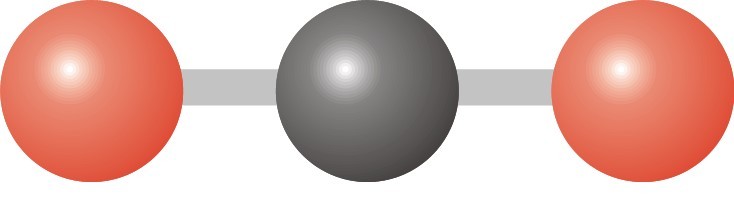
Which is the correct molecular structure for carbon dioxide?
24
Multiple Choice
25
Multiple Choice
What do atoms that form positive ions tend to do?
lose electrons
gain electrons
lose protons
gain protons
26
Multiple Choice
27
Multiple Choice
28
Multiple Choice
What is the correct Lewis Structure for the bond between Mg and Cl?
A
B
C
D
29
Multiple Choice
What is the correct Lewis Structure and chemical formula for an ionic bond between Aluminum and Oxygen?
A
B
C
D
30
Multiple Choice
What is the chemical formula for Sodium Chloride?
NaCl
Na2Cl
NaCl2
Na2Cl2
31
Multiple Choice
What is the chemical formula for water?
H2O
HO2
OH2
HHO
32
Multiple Choice
The chemical formula for carbon dioxide is
C2O
(CO)2
CO(II)
33
Multiple Choice
Al2O3 is
Aluminum oxide
Dialuminum trioxide
Aluminum trioxide
Aluminum (III) oxide
34
Multiple Choice
Cl2
Ionic Bond
Covalent Bond
35
Multiple Choice
CaCl
Ionic Bond
Covalent Bond
36
Multiple Choice
NH3
Ionic Bond
Covalent Bond
37
Multiple Choice
NaO
Ionic Bond
Covalent Bond
38
Multiple Choice
NaO
Metal with Nonmetal
Nonmetal with Nonmetal
39
Multiple Choice
40
Multiple Choice
41
Multiple Choice
42
Multiple Choice
43
Multiple Choice
44
Multiple Choice
45
Multiple Choice
Which Lewis Dot Model drawing correctly shows an O2 molecule?
46
Multiple Choice
Electrons are the Key
If valence electrons are shared by atoms, it is called COVALENT bonding
If valence electrons move freely between atoms, it is called METALLIC bonding
If valence electrons are transferred from one atom to another, it is called IONIC Bonding
Show answer
Auto Play
Slide 1 / 46
SLIDE

Similar Resources on Wayground
40 questions
Chemical Bonding
Presentation
•
8th - 11th Grade
41 questions
Chemistry Midterm Review
Presentation
•
9th - 12th Grade
40 questions
Naming Polyatomic Ionic Compounds
Presentation
•
9th - 12th Grade
40 questions
Polyatomic Nomenclature and Formula
Presentation
•
9th - 12th Grade
40 questions
Naming Ions
Presentation
•
9th - 12th Grade
38 questions
Final Review #1
Presentation
•
10th - 12th Grade
44 questions
Acids & Bases
Presentation
•
9th - 12th Grade
42 questions
Introduction to Solutions
Presentation
•
8th - 12th Grade
Popular Resources on Wayground
20 questions
"What is the question asking??" Grades 3-5
Quiz
•
1st - 5th Grade
20 questions
“What is the question asking??” Grades 6-8
Quiz
•
6th - 8th Grade
10 questions
Fire Safety Quiz
Quiz
•
12th Grade
20 questions
Equivalent Fractions
Quiz
•
3rd Grade
34 questions
STAAR Review 6th - 8th grade Reading Part 1
Quiz
•
6th - 8th Grade
20 questions
“What is the question asking??” English I-II
Quiz
•
9th - 12th Grade
20 questions
Main Idea and Details
Quiz
•
5th Grade
47 questions
8th Grade Reading STAAR Ultimate Review!
Quiz
•
8th Grade
Discover more resources for Chemistry
15 questions
Balancing and Reaction Types
Quiz
•
10th Grade
22 questions
Solubility Curve Practice
Quiz
•
10th Grade
16 questions
STAAR Review Quizziz 5
Quiz
•
10th Grade
20 questions
Types of Chemical Reactions
Quiz
•
9th - 12th Grade
5 questions
DOL REC: pH and pOH Calculations
Quiz
•
10th - 11th Grade
11 questions
Balancing Chemical Equations
Presentation
•
9th Grade
20 questions
Naming & Writing Chemical Formulas
Quiz
•
10th Grade
5 questions
DOL PreAP: pH and pOH Calculations
Quiz
•
10th Grade