Search Header Logo
Chemical Bonding

Chemical Bonding

Assessment

Presentation

•

Science, Chemistry

•

8th - 11th Grade

•

Practice Problem

•

Medium

•
NGSS
HS-PS1-1, HS-PS1-2, HS-PS1-3

+2

Standards-aligned

Created by

Mike Newsome

Used 78+ times

FREE Resource

13 Slides • 27 Questions

1

Chemical Bonding

media

2

media

3

media

4

media

5

6

Multiple Choice

Question image
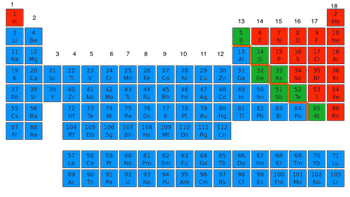
Where are metals located on the periodic table?
1
Blue
2
Green
3
Red

7

Multiple Choice

Question image
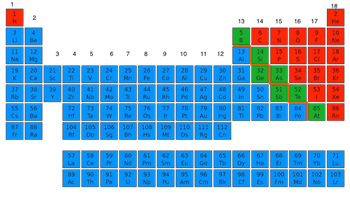
Where are the nonmetals located on the periodic table? 
1
Blue
2
Red
3
Green

8

Multiple Choice

Why do elements bond?
1
To be friends
2
To create a new element
3
To become stable

9

Multiple Choice

Atoms that gain electrons become...
1
negatively charged
2
positively charged
3
remain neutrally charged
4
21

10

Multiple Choice

How are ionic bonds formed?
1
Transfer of electrons
2
Sharing of electrons

11

Multiple Choice

Ionic bonds form between two ions that have...
1
ionic compounds
2
negative charges
3
positive charges
4
opposite charges

12

Multiple Choice

Ionic bonds are between...
1
Metal and Non-metal
2
Non-metal and Non-metal
3
Metal and Metal

13

media

14

15

Multiple Choice

What can be generalized about covalent bonds?
1
Electrons will be exchanged.
2
Electrons will be transferred.
3
Electrons will be given and taken.
4
Electrons will be shared.

16

Multiple Choice

What two types of atoms make a covalent bond?
1
2 Nonmetals
2
1 Nonmetal & 1 Metal
3
2 Metals
4
2 Noble Gases

17

media

18

19

Multiple Choice

A metallic bond is a bond between ________.

1

nonmetals

2

metals

3

transition metals

4

metalloids

20

Multiple Choice

Question image

What do we call electrons that move freely in a metallic bond?

1

sea of electrons

2

lone electrons

3

unpaired electrons

4

covalent electrons

21

Multiple Choice

What is meant by the term "sea of electrons"?

1

It's what we call all the free floating electrons in a metal.

2

It's what we call electrons that are floating in a liquid.

3

It's the total number of electrons in a metal atom.

4

It's the total number of electrons in the ocean.

22

media

23

media

24

Multiple Choice

Question image
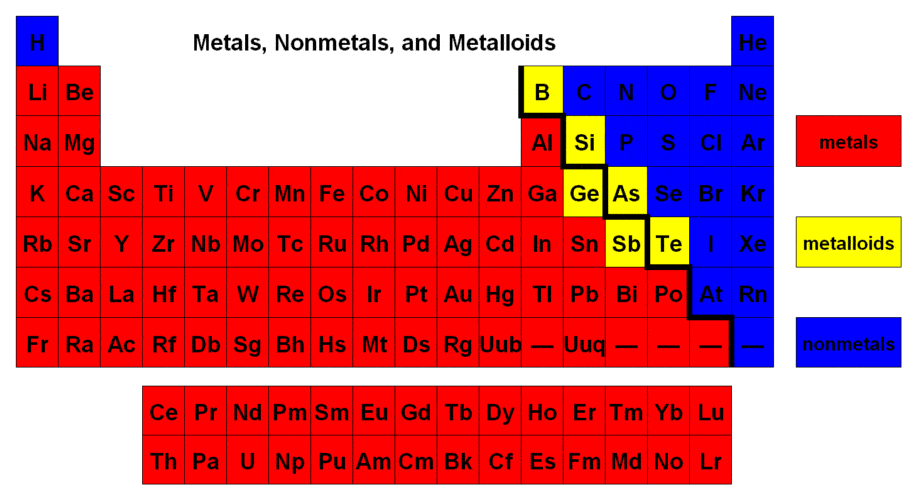
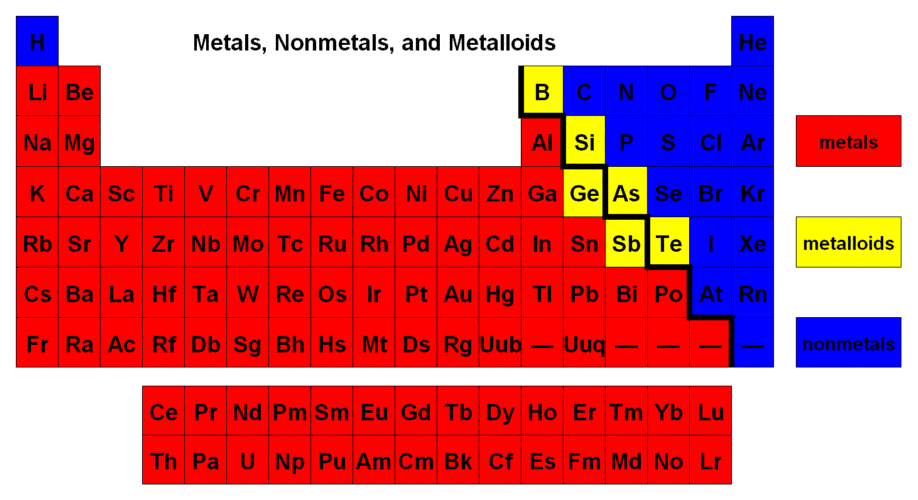
What elements generally make an ionic bond?
1
metal and nonmetal
2
2 or more nonmetals
3
metal
4
none of the above

25

Multiple Choice

Question image
What elements generally make a covalent bond?
1
metal and nonmetal
2
2 or more nonmetals
3
metal
4
none of the above

26

Multiple Choice

Predict the bond that will form between Be and F.
1
Ionic
2
Covalent

27

Multiple Choice

Predict the bond that will form between Sr and S.
1
Ionic
2
Covalent

28

Multiple Choice

Predict the bond that will form between Se and Cl.
1
Ionic
2
Covalent

29

30

Multiple Choice

What type of chemical bond is NaCl?

1

Ionic

2

Covalent

3

Metallic

31

Multiple Choice

What type of chemical bond is H2O?

1

Ionic

2

Covalent

3

Metallic

32

Multiple Choice

What type of chemical bond is CO2?

1

Ionic

2

Covalent

3

Metallic

33

Multiple Choice

What type of chemical bond is KCl?

1

Ionic

2

Covalent

3

Metallic

34

Multiple Choice

What type of chemical bond is Li2S?

1

Ionic

2

Covalent

3

Metallic

35

Multiple Choice

What type of chemical bond is NH3?

1

Ionic

2

Covalent

3

Metallic

36

Multiple Choice

What type of chemical bond is BaS?

1

Ionic

2

Covalent

3

Metallic

37

Multiple Choice

What type of chemical bond is CCl4?

1

Ionic

2

Covalent

3

Metallic

38

Multiple Choice

What type of chemical bond is CaCl2?

1

Ionic

2

Covalent

3

Metallic

39

Multiple Choice

What type of chemical bond is MgO?

1

Ionic

2

Covalent

3

Metallic

40

Take a SCREENSHOT of you SCORE and SUBMIT on CANVAS

media

Chemical Bonding

media

Show answer

Auto Play

Slide 1 / 40

SLIDE