Search Header Logo
Energy and Energy Transformations Review

Energy and Energy Transformations Review

Assessment

Presentation

Physics, Science

8th - 10th Grade

Medium

NGSS
MS-PS3-2, MS-PS3-5, MS-PS3-4

+11

Standards-aligned

Created by

Kelly Harrison

Used 17+ times

FREE Resource

14 Slides • 24 Questions

1

Energy and Energy Transformations Review

by Kelly Harrison

2

7 Forms of Energy - MR. CENTS​

  1. Mechanical (KE and PE)

  2. ​Radiant (Electromagnetic)

  3. ​Chemical

  4. ​Electrical

  5. ​Nuclear

  6. ​Thermal (Heat)

  7. ​Sound

3

​Mechanical Energy (KE and PE)

Mechanical energy is the sum of the kinetic and potential energy of a system. It is the energy resulting from the movement or physical location of an object. Either the kinetic or potential energy may be zero at any given time.

Example: A car driving up and down a hill has both kinetic and potential energy. The car gains potential energy as it nears the top of the hill. Unless the brakes are applied, it gains kinetic energy as it goes down the hill.

4

media

5

media

6

media

​PE is maximum

​at the top

of the hill.

​​KE is maximum

​at the bottom of

the hill.

7

media

8

media

9

Multiple Choice

Question image
At which point is potential energy greatest?
1
W
2
X
3
Y
4
Z

10

Multiple Choice

Question image

At which point is kinetic energy greatest?

1
W
2
X
3
Y
4
Z

11

Multiple Choice

Question image

Which letter Y or Z has more PE?

1
Y
2
Z

12

​Radiant (Electromagnetic) Energy

Electromagnetic energy is also called radiant energy. It is energy from light, magnetism, or electromagnetic radiation.

Examples: Any portion of the electromagnetic spectrum has energy, including radio, microwaves, visible light, x-rays, gamma radiation, and ultraviolet light.

Electromagnetic energy can travel through space and does not require matter to travel through.

13

Chemical Energy

Chemical energy is energy released or absorbed by chemical reactions between atoms and molecules.

Examples:

A glowstick releases light from a chemical reaction.

A battery generates electrical energy from a chemical reaction.

​A match has chemical energy that can be converted into radiant and thermal energy.

​Food and gasoline are also forms of chemical energy.

14

Electrical Energy

​Electrical energy is the energy associated with the movement of electrons

Any time you plug in an appliance or use a battery, you’re encountering an example of electrical energy.

Examples:

Electrical energy also results from the conversion from another type of energy.

For example, solar cells change sunlight into electrical energy and wind turbines turn kinetic energy into electrical energy.

15

Nuclear Energy

Nuclear energy is the energy of the atomic nucleus. It may be released by nuclear reactions or other changes in the nucleus.

Examples: Radioactive decay, nuclear fission, and nuclear fusion are examples of nuclear energy. Other examples include nuclear power and energy released by an atomic explosion.

​The sun uses nuclear fusion to produce energy.

​Nuclear power plants use fission to produce energy for our everyday life.

16

Thermal Energy

Thermal energy is energy associated with heat. Thermal energy reflects the temperature difference between two systems.

Example:

A cup of hot coffee has thermal energy. It releases heat to the environment.

17

Sound Energy

Sound energy occurs when an object vibrates. Sound can travel through solids, liquids and gases but it cannot travel through outer space like electromagnetic energy.

Noise, whether within the human range of hearing or not, is sound energy.

Examples:

Sonar, ultrasonic (greater than 20 kilohertz) music, speech, and environmental noise are all forms of sound energy.

18

Multiple Choice

Question image

Energy cannot be created or destroyed. It can only be changed from one form to another. This is known as the law of conservation of ___________:

1

mass

2

energy

3

temperature

4

charge

19

Multiple Choice

Question image
Energy stored in an atom's nucleus
1
chemical energy
2
mechanical energy
3
kinetic energy
4
nuclear energy

20

Multiple Choice

A student made a list of activities that involve energy.


1.Swimming in the river

2.Cooking a pizza in the oven

3.Watching TV

4.Climbing a tree

5.Playing soccer


Which activities on the list are examples of the use of mechanical energy?

1

Activities 1, 3, 5

2

Activities 1, 2, 4

3

Activities 1, 4, 5

4

Activities 2 and 3

21

Multiple Choice

Question image
Energy stored in a flexed or compressed object
1
gravitational potential energy
2
mechanical energy
3
kinetic energy
4
elastic potential energy

22

Multiple Choice

Question image

Nuclear fission reactors spit Uranium-235 to form two smaller atoms.  

1

chemical energy

2

thermal energy

3

nuclear energy

4

electrical energy

23

Multiple Choice

Energy in the form of ___________is almost always one of the products of an energy transformation involving mechanical energy.

1

heat

2

light

3

sound

4

chemical energy

5

D

24

Multiple Choice

Question image
Potential energy due to gravity
1
gravitational potential energy
2

electromagnetic energy

3
kinetic energy
4
elastic potential energy

25

Multiple Choice

Question image
Energy in the form of waves that can move through space
1
gravitational potential energy
2
electromagnetic energy
3
sound energy
4
elastic potential energy

26

Multiple Choice

Question image

Energy in the form of waves due to vibrating objects that move through a medium like air or water

1
gravitational potential energy
2
electromagnetic energy
3
sound energy
4
elastic potential energy

27

Multiple Choice

Question image
Energy of moving electrons
1
electrical energy
2
electromagnetic energy
3
sound energy
4
mechanical energy

28

Multiple Choice

Question image

Energy of an object due to the motion of its atoms and molecules; aka heat energy

1
electrical energy
2
thermal energy
3
sound energy
4
mechanical energy

29

Multiple Choice

The faster the particles move in a substance, the ________ its temperature.

1

lower

2

slower

3

higher

4

faster

30

Multiple Choice

Question image
Kinetic energy + potential energy
1
electrical energy
2
thermal energy
3
sound energy
4
mechanical energy

31

Multiple Choice

Question image
Energy stored in the bonds between atoms
1
chemical energy
2
mechanical energy
3
kinetic energy
4
nuclear energy

32

Multiple Choice

Question image

Matches are an example of this kind of energy...

1

electrical

2

nuclear

3

chemical

4

mechanical

33

Multiple Choice

Question image

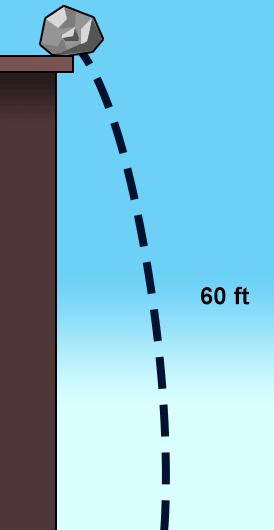
The rock in the picture is pushed over the edge and it begins to fall. Which type of energy conversion is taking place?

1

mechanical to heat

2

sound to mechanical

3

potential to kinetic

4

kinetic to potential

34

Multiple Choice

Question image

A ball is projected into the air. Where is potential energy the greatest?

1

A

2

B

3

C

35

Multiple Choice

Question image

As a roller coaster goes downhill

1

kinetic energy is converted into potential energy.

2

potential energy is converted into kinetic energy.

3

electrical energy is converted into potential energy.

4

potential energy is converted into electrical energy.

36

Multiple Choice

Question image

Muscles convert chemical energy into

1

light energy.

2

nuclear energy.

3

mechanical energy.

4

electromagnetic energy.

37

Multiple Choice

Question image

What form of energy does a compressed spring have?

1

heat energy

2

kinetic energy

3

chemical energy

4

elastic potential energy

38

Multiple Choice

Heat always moves from a substance with a ________ temperature to one with a _______ temperature.

1

slower, faster

2

faster, slower

3

lower, higher

4

higher, lower

Energy and Energy Transformations Review

by Kelly Harrison

Show answer

Auto Play

Slide 1 / 38

SLIDE