

3. Quarter 3 : W 5 & 6_ M3_Learning from Others and Reviewing

Presentation
•
Other
•
11th Grade
•
Medium

Edgar Monte
Used 6+ times
FREE Resource
68 Slides • 76 Questions
1
Quarter 3 : Week 5 & 6 Module 3 Learning from Others and Reviewing the Literature
2
TARGET
After going through this module, you are expected to:
1. selects relevant literature. CS_RS11-IIIfj-1
2. cites related literature using standard style. CS_RS11-IIIfj-2
3. synthesizes information from relevant literature. CS_RS11-IIIfj-3
4. writes coherent review of literature. CS_RS11-IIIfj-4
3
PRE-TEST
Direction: Answer the question that follows. Choose the best answer from among the given choices. Write your answers on a separate sheet of paper.
4
Multiple Choice
To read the literature critically means:
to suggest the previous research was always poorly conducted
skimming through the material because most of it is just covering
evaluating what you read in terms of your own research questions
being negative about something before you read it.
5
Multiple Choice
It entails taking a phrase - either spoken or written - and restating it.
In-text citation
paraphrasing
referencing
synonym
6
Multiple Choice
Which of the following is the primary source of literature?
Essay on artwork gallery
Book analyzing absenteeism
Article critiquing the piece of art
Diary of a working student
7
Multiple Choice
Examining or studying again concepts or ideas related to your research is
Meta-analysis
Significance
Review of Related Literature
Methodology
8
Multiple Choice
One of the important skills that you need to learn in doing a literature review is
called_____________.
Proper location
Proper identification
Proper citation
Proper examination
9
Multiple Choice
This referencing style is mostly used in social sciences
APA
MLA
MPA
Brownian
10
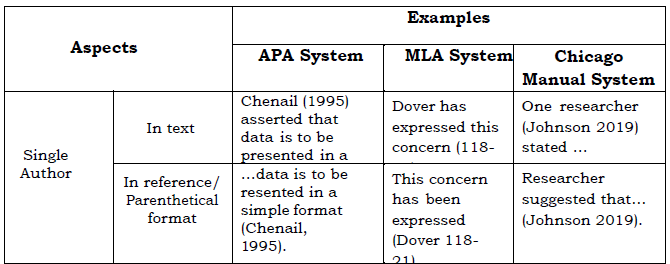
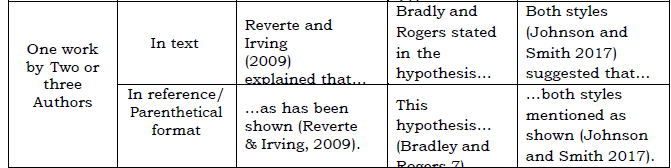
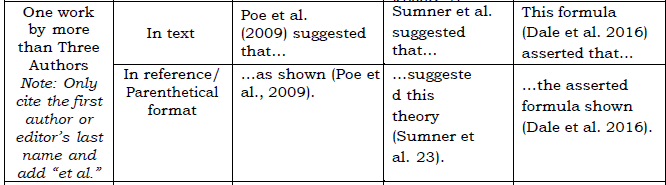
Multiple Choice
Which citation style is applicable in the fields of Psychology, Education, and other
Social Sciences?
American Psychological Association (APA)
Chicago Manual of Style
Modern Language Association (MLA)
All of these
11
Multiple Choice
The following statements describe the significant of citation in research, EXCEPT
Gives credits and acknowledgement to previous literature used.
Avoids plagiarizing someone else’s works.
Does research in unethical way.
Makes research more credible and reliable.
12
Multiple Choice
Which of the following statements is CORRECT?
Synthesizing information from relevant literature does not involve citation.
Integration of materials from several sources that relates to your research
problem is significant.
Making guide matrix, outline or grid is discouraged since it is a waste of time.
The less materials to be use is the better since it allows research to review fewer.
13
Multiple Choice
Which of the following set of tips is encouraged to use in synthesizing
Information from various materials?
Reading, analyzing, and evaluating one to two materials.
Copying statements word for word without citation.
Avoid using citation and referencing in doing literature review.
Using guide matrix, outline, and concept map.
14
Multiple Choice
The following statements show significance of synthesis in review of
literature, EXCEPT________.
Research involves incorporating many sources to understand a research
question.
Sources support subtopics to prove the research problem and/or answer it
Synthesis integrates from two or more sources to demonstrate how
research works together.
Replicate materials as it is helpful and useable in answering research
problems or questions.
15
Multiple Choice
The following statements tell what literature review allows researchers to
do, EXCEPT__________.
Relate previous works in context of their research problem to others.
Copy and replicate someone’s work and research.
Selects necessary materials in designing research methodology.
Compare the various arguments, theories, methods, and findings
expressed in their research.
16
Multiple Choice
The following are the possible literature for the research problem, “Bully vs
Bullied: A qualitative study”, EXCEPT____________.
Diary of a bully
Guidance counselor report on student’s behavior
Books analyzing bullying cases
Journal entry of SSG President
17
Multiple Choice
What style of citation is shown in the quotation below?
Harris & Hathorn quote a study indicating that “86% of junior high students indicated that they had been bullied” (55).
American Psychological Association (APA)
Chicago Manual of Style
Modern Language Association (MLA)
All of these
18
Lesson 1:
Selecting Relevant Literature
19
JUMPSTART
Literature is an oral or written record of man’s significant experiences that are expressed in an ordinary manner. It is conveyed directly or indirectly. Direct expressions is in books, journals, periodic papers, and online reading materials. Indirect expressions are not written or spoken at all but is mirror image of his environment (Ridley 2012).
20
JUMPSTART
The Review of Related Literature is one of the main components of a research study, specifically in the second chapter. It gives an overview of all the writings relative to a specific topic (Prieto, Naval & Carey, 2017). Therefore, selecting the right sources for the literature review is very important in producing a quality research paper.
21
JUMPSTART
In the previous lessons, you learned the importance of understanding the value of qualitative research: its kinds, characteristics, uses, strengths, weaknesses, specificity, and the feasibility of the study. A good introductory page is a baseline statement of what and how a paper should go fluidly. However, a review of related literature will strengthen your claims of a systematic, purposeful, and well-defined research paper. In this part, you will be exploring the process or reviewing related literatures.
22
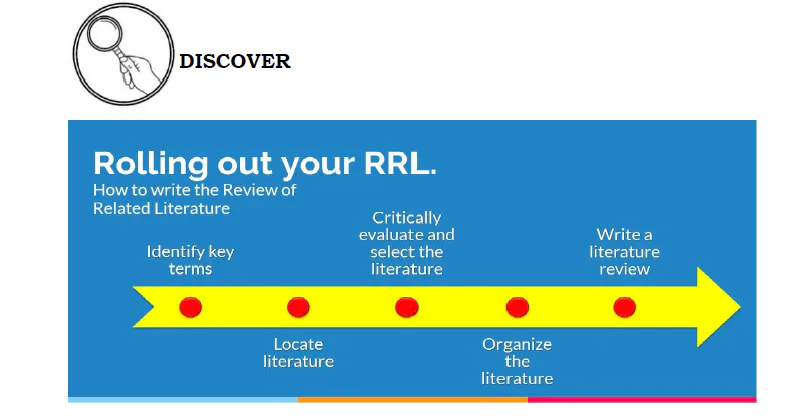
DISCOVER
We are now living in the world bounded by research. As you learned in the previous lessons, research is essential for every field. One vital part of it is review of related literature. Learning how to select relevant literature can give you an overview or act as a steppingstone in doing a research. This comprehensive knowledge of selecting literature review is an essential skill that you need to be equipped with in order to succeed in your research paper.
23
DISCOVER
A review of related literature is the process of collecting, selecting, and reading books, journals, reports, abstracts, and other reference materials. The following information may be collected:
24
1) Background knowledge about the problem and associated ideas.
2) Theories that give details of the presence of the problem and certain variables that is connected to the problem.
3) Data that prove the occurrence and gravity of the problem
4) Detailed and broad results of related studies
5) Gaps and recommendations for additional study specified in related studies
25
The significance and rationale of related literature and studies is to find out the similarities and differences between the past and present studies, to get ideas into the critical and controversial aspects of the problem. It helps recognize and define a research problem. It gives the researcher a background analysis aspect, which have been studied. It guides the researcher on what to do on the mechanism of the research methods; this also provides the thoughts to advance with the study until its conclusion. It avoids redundant duplication of a study. Moreover, reading extensively will enrich your background knowledge on your research topic that will enable you to establish a good groundwork or course of your research endeavor.
26
Provide second-hand data or information. Sources that are non- original. Written about primary sourcese.
Secondary Sources
Provide first-hand information that is closest to the object of the study. Embody all sources that are original
Primary Sources
27
Different Types of Literature by Wallace and Wray (2006, p.92)
Theoretical Literature | describes expected or anticipated relationships about the way things happen |
|---|---|
Research Literature | refers to a report of a systematic investigation that has been undertaken in need to answer a specific problem |
Empirical Research | deals with a research that was done through the observation and measurement of the world around us. |
Practice Literature | written by practitioners about their field of expertise. |
Policy Literature | tells practitioners how to act in a set of circumstances. |
28
Remember Me!
1) A Review of the Related Literature provides a concise summary of information and data findings that describe current knowledge and facts.
2) It provides foundation of knowledge on a topic. It identifies areas of prior scholarship to prevent duplication and give credits to researchers. It helps selects appropriate material in designing your research methodology and find relationship among researches.
29
Remember Me!
3) A good literature involves 5c’s; Cite, Compare, Contrast, Critique and Connect.
4) There are two sources of literature review; the primary sources which contains the first-hand information and the secondary sources which contains non-original information.
5) There are five types of literature. It includes theoretical literature, research literature, empirical research, practice literature and policy literature.
30
EXPLORE
Activity 1.1: Answer Me!
Based on the knowledge you have gained accomplished the activity below.
Directions: Identify which are the examples of primary and secondary sources. Write P for primary sources and S for secondary sources. Write your answer on a separate sheet of paper.
31
Multiple Choice
Letters
Primary
Secondary
32
Multiple Choice
Diaries
Primary
Secondary
33
Multiple Choice
piece of art critique
Primary
Secondary
34
Multiple Choice
Autobiographies
Primary
Secondary
35
Multiple Choice
Artifacts
Primary
Secondary
36
Multiple Choice
Biography
Primary
Secondary
37
Multiple Choice
Book analyzing various cultures
Primary
Secondary
38
Multiple Choice
Interviews
Primary
Secondary
39
Multiple Choice
Article on ethnic group
Primary
Secondary
40
Activity 1.2: Finding My Pair
Listed below are the examples of literature, your task is to find its pair.
Directions: Match the 1st box (Types of Literature) to 2nd box (Examples). Write the letters of the correct answer in the 3rd box (Correct Pairing)
41
Multiple Choice
Theoretical Literature
Classroom Rules and Regulations
Guidance counselor record
Amount of water used in watering plants every day
How long will it take to travel from Roxas to Puerto riding a bicycle?
No direct match provided in the examples
42
Multiple Choice
Research Literature
Classroom Rules and Regulations
Guidance counselor record
Amount of water used in watering plants every day
How long will it take to travel from Roxas to Puerto riding a bicycle?
No direct match provided in the examples
43
Multiple Choice
Empirical Research
Classroom Rules and Regulations
Guidance counselor record
Amount of water used in watering plants every day
How long will it take to travel from Roxas to Puerto riding a bicycle?
No direct match provided in the examples
44
Multiple Choice
Practice Literature
Classroom Rules and Regulations
Guidance counselor record
Amount of water used in watering plants every day
How long will it take to travel from Roxas to Puerto riding a bicycle?
No direct match provided in the examples
45
Multiple Choice
Policy Literature
Classroom Rules and Regulations
Guidance counselor record
Amount of water used in watering plants every day
How long will it take to travel from Roxas to Puerto riding a bicycle?
No direct match provided in the examples
46
Activity 1.3: RELEVANT OR IRRELEVANT
Let us apply your understanding of who am I, my tasks, my good characteristics and sources.
Directions: Written in the box is a sample of qualitative research problem. Below it is a list of possible sources of literature. Your task is to identify which of these samples are RELEVANT and IRRELEVANT to the given research problem.
47
Activity 1.3: RELEVANT OR IRRELEVANT
Bullied vs Bully: A Qualitative Study of Students with Disabilities in Inclusive Settings.
48
Multiple Choice
Journal on the effects of bullying on student’s performance
Relevant
Irrelevant
49
Multiple Choice
Video clip of lived experiences of working students
Relevant
Irrelevant
50
Multiple Choice
Guidance counselors report on student’s behavior
Relevant
Irrelevant
51
Multiple Choice
Yearbook including student awardees
Relevant
Irrelevant
52
Multiple Choice
Thesis on Effects of Teenage Pregnancy
Relevant
Irrelevant
53
DEEPEN
Activity 1.4: Topic That Interest Me
Write on a sheet of paper a topic you are most interested to explore. Enumerate at least three ways on how you will look for the information and data needed about the chosen topic. Share important information that you would like to probe on the chosen subject.
54
DEEPEN
Follow the format below and write your answer on a separate sheet of paper.
55
Open Ended
Introduction: What is the topic of my literature review?
Example: Gender Inequality among Senior HS Learners
Answer:_________________________________
56
Open Ended
Topic Sentence:
Example: The number of learners, quality of work, quantity of work, and types of PPE.
Answer: _____________________________________________________
57
Open Ended
My sources (works to be read, analyzed and cited)
Source 1: ______________________________________________________________________
Source 2: ______________________________________________________________________
Source 3: ______________________________________________________________________
58
Open Ended
Body: What are the main points/arguments of my sources? How are these points supported?
Answer:___________________________________________________
59
Open Ended
Body: Similarities in (comparing) two or more of the articles:
Answer:____________________________________
60
Open Ended
Body: Differences in (contrasting) in two or more of the articles:
Answer:_______________________________________
61
Open Ended
Conclusion: Summarizing
Why is the topic of this literature review important and/or what should be the next step of this study?
Answer:______________________________________________________
62
Lesson 2:
Citing Related Literature Using Standard Style
63
JUMPSTART
There are a lot of ways to bring in the flow of literature review that will help learners develop their research. Frequently asked questions on how to proceed in the conduct of literature review includes: how to look for sources, how many sources should be cited, how to discuss ideas taken from the studies cited, how to cite authors, and further. The aim of this lesson is to present a step-by-step guide in undertaking a review of literature to facilitate your understanding.
64
JUMPSTART
In the previous lesson, you learned the definition, importance, and purpose of literature review. An effective literature review selects the right and specific write ups that give close information to an identified topic, scrutinize, and synthesize content about key themes or issues, cites properly authors of information gathered, identify similarities and differences between chosen literatures and a lot more. Selecting, citing, and synthesizing related literature needs a thorough development of skills in searching, reading, paraphrasing, writing, and even creating your own page of article after reviewing a whole bunch of related sources.
65
DISCOVER
As you do literature review, it is required for you to cite the literature you have used. Learning this skill will allow you do research ethically. Following standard style in citing literature review will help you effectively use sources in your writing. Aside from research, this will also be helpful in other fields such as making a term paper, essays, book review, etc.
66
Always Remember!
All reading materials related to your research that you intend to review or re- examine offer you concepts, ideas, or information belonging to other people. It is a must for you to cite or make a citation, an in-text citation. (Lupogan, 2018)
Proper citation is one of the important skills that you need to learn in doing a literature review. Learning this new skill is one of the ethical standards in research and it will greatly help you to avoid plagiarism in your research.
67
Vocabulary check!
According to the University of Oxford 2020, plagiarism is presenting someone else’s work or ideas as your own, with or without their consent, by incorporating it into your work without full acknowledgment.
“Are you ready to unlock your new skill? If you’re ready, follow me!”
68
In-text citation should be based on the current edition of the American Association (APA), Modern Language Association of America (MLA) or the Chicago Manual of Style and other standards relevant to one’s discipline.

69
Take note that whatever style or system is required in your research, you must make sure that all the sources used and cited in your literature review should appear in the “reference” list for APA and Chicago Manual and “works cited” list for MLA.
70
71
72
73

74
EXPLORE
Activity 2.1: SPOT IT!
Are you overloaded with information or are you confused? Do not worry you will be guided by this activity for you to deepen your understanding about our topic.
Directions: Study the following quotations below, identify what style of citation used.
Write APA, MLA or Chicago Manual System (CMS)
75
Multiple Choice
Significant group of healthy young-old people (World Health Organization 2012) will face at least 20 more years of active life.
APA
MLA
Chicago Manual System
76
Multiple Choice
Venkataraman and Sarasvathy suggest entrepreneurship and
strategy are conceptually inseparable; “two sides of the same coin”, highlighting the complementary or independent nature of the two concepts (651).
APA
MLA
Chicago Manual System
77
Multiple Choice
The importance of becoming entrepreneurs depends upon the willingness and motivation of older people to become entrepreneurs and the existence of efficient policy measures to increase this willingness if it is perceived to be too low (Backman and Karlsson, 2013).
APA
MLA
Chicago Manual System
78
Multiple Choice
Another barrier is ageist attitudes where society upholds the perception regarding “older entrepreneurs in a negative light” (Wainwright et al. 8).Another barrier is ageist attitudes where society upholds the perception regarding “older entrepreneurs in a negative light” (Wainwright et al. 8).
APA
MLA
Chicago Manual System
79
Multiple Choice
Great things happen to those who stop believing, trying, learning, and being grateful (Bennett, T, n.d)
APA
MLA
Chicago Manual System
80
Activity 2.2: Reflection Time
Directions: Reflect on the following questions carefully; write your answer on a separate sheet.
81
Open Ended
Why do always need to write citations when writing or doing a research?
82
Open Ended
Aside from writing or doing a research, in which field or area of learning is citations significant? Why?
83
Open Ended
Activity 2.3: Cite Me!
Based on the topic you are most interested to explore (from your Activity 1.4: Topic That Interest Me!) write the correct APA format of referencing of at least five sources of your RRL.
Source 1:_____________________________________________________________________________
Source 2:______________________________________________________________________________
Source 3:______________________________________________________________________________
Source 4:______________________________________________________________________________
Source 5:______________________________________________________________________________
84
Lesson 3:
Synthesizing Information from Relevant Literature
85

Activity 3.1 Amazing Maze
Directions: Provided below is a maze, you are task to connect the words to form
sentences. Find your way from the beginning of the maze to the end. Write
the sentences in a separate sheet of paper.
JUMPSTART
86
Open Ended
Activity 3.1 Amazing Maze
Directions: Provided below is a maze, you are task to connect the words to form
sentences. Find your way from the beginning of the maze to the end. Write
the sentences in a separate sheet of paper.
87
DISCOVER
After you have collected the articles you intend to use in your literature review, you are ready to analyze each one – break it down and identify the important information in it and synthesize the collection of articles, integrate them and identify the conclusions that can be drawn from the articles as a group.
88
How to make synthesis of literature review?
You must integrate materials from several sources that relate to your research problem. In simple term, you are just like putting puzzles pieces
89
How to synthesize effectively?
An effective synthesis includes strong, clear and precise statements. It must discuss sources in relation to your research problem. When you are using more than one sources make sure to relate or compare with each other. Use more sources, the more sources you must support your claim make your research paper more credible.
90
Types of Synthesis
1) Similarity → demonstrate how two or more sources agree with one another.
2) Contrast → show how two or more sources support a main point in different ways.
3) Accumulation → refers on how one source builds on the idea of another.
4) Causation → demonstrate how one source discusses the effects of another source’s ideas.
91
According to Garrard (2017), your synthesis must demonstrate a critical analysis of the sources/materials you’ve collected as well as your ability to integrate it with your analysis into your own research. He added that collection of materials should be based for its adequacy, appropriateness, and thoroughness. Materials that do not meet these criteria are discouraged to use in your synthesis.
92
Guidelines in Synthesizing Information from Relevant Literature
1) Analyze – skim the articles to get an overview of each one.
2) Based on your overview, group the articles by categories. It is common to group by topic and subtopic and then chronologically within each topic.
3) Take detailed notes on each article. Use a consistent format.
93
Example:
1) Ana. Author:
b. Article Title:
c. Publication Year:
d. Main point of article:
e. Method:
f. Participants: How many were there, what were their demographics, and how were they sampled?
94
Example:
g. Independent Variable (IV) or quasi-IV: Were participants randomly assigned to groups, or divided into groups based on a pre-existing variable? If there was an IV, how was it manipulated?
h. Dependent Variables (DVs): How were they operationalized and measured?
i. Results:
j. Conclusions:
k. Specific details that are especially relevant to your study.
95
4) Look for explicit definitions of key terms in the literature. Note whether different authors use different definitions.
5) Look for key statistics that you might use in your introduction.
6) Identify short notable quotations that might be used sparingly in your review because they make a point very concise.
7) Look for methodological strengths and weaknesses.
8) Distinguish between an author’s assertations and evidence in support of the assertations.
9) Identify gaps in the literature.
10) Identify relationships among studies.
96
How to synthesize effectively?
An effective synthesis includes strong, clear and precise statements. It must discuss sources in relation to your research problem. When you are using more than one sources make sure to relate or compare with each other. Use more sources, the more sources you must support your claim make your research paper more credible.
97
11) Note how closely each article relates to your topic.
12) Evaluate your reference list for currency and coverage.
13) Synthesize – Create an outline that puts your topics and subtopics in a logical order.
14) For each subtopic you identified during your analysis, determine how the articles in that group have in common.
15) For each subtopic you identified during your analysis, determine how the articles in that group differ.
98
16) If there are contradictory findings, you may be able to identify methodological differences that could account for the contradiction (e.g., differences in measurement or participant demographics)
17) Determine what general conclusions you can report about a subtopic, given the entire group of studies related to it.
18) As you begin to write your introduction, follow your outline and remember to use transitions between topics.
Adapted from Galvan, J. L. (2006). Writing Literature reviews (3rd Ed). Glendale, CA: Pyrozak Publishing.
Another tip: When doing synthesis creating a grid, matrix, concept map table or an outline that you will summarize, using the common themes you have identified and the sources you have found are better ways to organize concepts. Whichever method you use, it will help you organize and summarize the content of your literature review.
99
Open Ended

EXPLORE
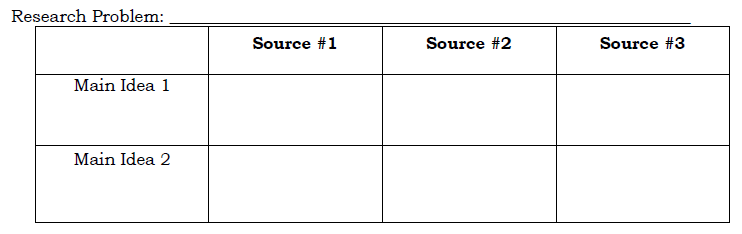
Guide matrix for your synthesis. Keep your head high my dear. Keep on striving!
Research Problem: e.g. Bully vs. Bullied
Label the columns across the top of your chart with the author’s last name or with a few keywords from the title of the work. Then label the sides of the chart with the main ideas that your sources discuss about your topic. As you read each source, make notes in the appropriate column about the information discussed in the work. After your matrix is a complete, notice pattern of information. You may find that your sources, at times, discuss very similar material, or that they sometimes deal with completely different aspects of your topic. These patterns can be useful in creating a thesis statement that can guide your writing and keep you focused as you begin your draft.
100
Open Ended
DEEPEN
Activity 3.1
Directions: Look for literature review material and make your own literature review
synthesis matrix. You can also adapt the given example above. Use your
synthesis matrix to organize and synthesize literature related to your
research problem.
101
Lesson 4:
Writes Coherent Review of Literature
102
JUMPSTART
Review of Related Literature and the purpose it serves in research
This is a written summary of journal articles, books, and other documents that describes the past and current state of information on the topic of your research study.
➢ to justify your choice of research question, theoretical or conceptual framework, and method.
➢ to establish the importance of the topic.
➢ to provide background information needed to understand the study.
➢ to show readers you are familiar with significant and/or up-to-date research relevant to the topic; and
➢ to establish your study as one link in a chain of research that is developing knowledge in your field.
103
104
In writing this section…
o Use the statement of problem as guide to structure and sequence of topics
o Avoid ‘copy/cut and paste; all literature cited must form a coherent whole
o Last part highlights gaps in literature specifically addressed by your study
105
In writing this section…
o Use appropriate format for citations and references
o Cited references should be congruent to bibliography entriestudy
106
How to come up with effective research review?
Copper (1988) suggests that a good research review must have the following characteristics:
1. Focus—concentrate on four foci: research theories, methods, outcomes, and practices and applications
theories helps in looking at the relationships between the variables and concepts being studied with than of the presentBones
methods help in finding the best methodology and the variables looked into
outcomes help in identifying the gaps of information
application and practices is more on the implication of the findings to policy, people, knowledge, education, etc.
107
How to come up with effective research review?
2. Goal--useful in integrating, resolving, bridging and generalizing the theories and concepts under study. Explicate the arguments.
3. Coverage—looks on how wide the study must be by looking at sample/population (central and representative), how exhaustive the sampling was and how they were selected public or for laymen.
108
How to come up with effective research review?
4. Organization or format—helps in designing the presentation of the literature review, which this can be historical in format (development of related concepts, theories, or findings), conceptual in format—that is about the relationship about the concepts that the researcher is looking into, and methodological in format—that is the presentation more focus on the research methods applied
5. Audience—always consider that your research work is intended to fellow researchers, academicians, and professionals, thus avoid writing it for general public or for laymen.
109
Structure of review of literature
Under the APA format, the structure of the literature review must be “continuous in the flow of thought”—that is the different paragraphs or sections must be linked to one another. They may reinforce the previous entries or contradict them. Do not categorize the entries into local, national, or international.
110
Structure of review of literature
It can be composed of the following: introduction, body, and conclusion.
▪ Introduction – give a quick idea of the topic of the literature review as the central theme or organizational pattern.
▪ Body – contains your discussion of sources.
▪ Conclusion – Discuss what you have drawn from reviewing the literature so far. Where might the discussion proceed? Under the conclusion part, establish your reason or point of view about the literature or study, compare and contrast them first and come up with your own point of view why you have included the concept, theory or findings of the reviewed literature.
111

112
How to organize studies:
• Chronological
– By publication date
– By trend
• Thematic
– A structure which considers different themes
• Methodological
– Focuses on the methods of the researcher, e.g., qualitative versus quantitative approaches
113
Making links between studies:
Agreements
• Similarly, author B points to…
• Likewise, author C makes the case that…
• Author D also makes this point…
• Again, it is possible to see how author E agrees with author D…
114
Disagreements
• However, author B points to…
• On the other hand, author C makes the case that…
• Conversely, Author D argues…
• Nevertheless, what author E suggests…
115
Consider the 5C’s in reviewing and writing.
1. CITE by keeping on the primary focus on the literature
2. COMPARE the various arguments, theories, methodologies, approaches and or findings expressed in the literature. What the authors agree on? Who employ similar approaches? What are their findings?
3. CONTRAST the various arguments, themes, methodologies, approaches, and controversies expressed in the literature. What are the areas of major disagreement, controversy, or debate?
116
Consider the 5C’s in reviewing and writing.
4. CRITIQUE the literature. Which argument is more persuasive and why? Which approach, finding or methodology seem the most reliable, valid, or appropriate and why? Pay attention to the verbs you use to describe on what the author says or does?
5. CONNECT the literature to your own research area. How does your own work draw on or depart from the reviewed literature?
BOTTOM LINE: Review of related literature is a discursive prose and not simply describing and summarizing what has been read and written.
117

Some important points to consider
118
EXPLORE
Activity 4.1: Complete Me!
Based on the discussion above, process the methods of selecting, citing, and synthesizing literature review by filling in the blanks provided in each statement.
119
Fill in the Blanks
In selecting sources of related literature, choose articles which are
120
Fill in the Blanks
121
Fill in the Blanks
A
122
Fill in the Blanks
A method of expressing borrowed ideas using different words to give clarity to an idea is called
123
Fill in the Blanks
Using
124
Fill in the Blanks
In making
125
Fill in the Blanks
A/an
126
Fill in the Blanks
127
Fill in the Blanks
It is necessary to acknowledge other people’s intellectual rights to avoid the act of stealing other intellectual properties known as
128
Fill in the Blanks
Referencing within the main body of the text is branded as
129
Open Ended
DEEPEN
Activity 4.2: Applying the 5C’s
DIRECTION: Read other sources of information, at least five, related to your chosen research topic in online libraries, databases, and other sources. Cite portions of the articles that are close to your chosen interest of study. Keep in mind and apply what you have learned about in-text citation and referencing style. List and arrange the sources in alphabetical order to create REFERENCES using the APA Referencing style. Submit a soft copy of your output in MS Word format through Gmail.
130
GAUGE
Direction: Answer the question that follows. Choose the best answer from among the given choices. Write your answers on a separate sheet of paper.
131
Multiple Choice
Probing again themes or ideas related to your research is
Review of Related Literature
Methodology
significance
Meta-analysis
132
Multiple Choice
The most frequently used citation and referencing styles in social sciences.
MLA
APA
Chicago Manual
AMA
133
Multiple Choice
What is the importance and purpose of related literature?
to determine the similarities and differences of the findings between the
past and present studies,
to gain insight into the aspects of the problem that are critical and
controversial.
to collect background information about a topic
all of the above
134
Multiple Choice
Which choice shows a correct reference entry for the journal article based on
APA format?
Ahemad, M. (2015). Enhancing phytoremediation of chromium-stressed
soils through plant-growth-promoting bacteria. Journal of Genetic
Engineering and Biotechnology. https://doi.org/10.1016/j.jgeb.2015.02.001
M. Ahemad. Enhancing phytoremediation of chromium-stressed soils
through plant-growth-promoting bacteria. Journal of Genetic
Engineering and Biotechnology.2015
Ahemad, M. Journal of Genetic Engineering and Biotechnology.
https://doi.org/10.1016/j.jgeb.2015.02.001. Enhancing phytoremediation
of chromium-stressed soils. 2015
M. Ahemad. 2015. Journal of Genetic Engineering and Biotechnology.
Enhancing phytoremediation of chromium-stressed soils through plant-
growth- promoting bacteria
135
Multiple Choice
It involves taking a passage - either spoken or written - and rewording it.
In-text citation
paraphrasing
referencing
synonym
136
Multiple Choice
Which of the following is the correct paraphrase of: “Horses like grasses and hay,
and they can munch through 90 kilos of food a day”.
A horse can eat up to 90 kilos of grass and hay each day.
Grasses is the food of horses
Cows eat grass
Hay must be 90 pounds for horses to consume it.
137
Multiple Choice
Which of the following is the correct paraphrase of: “Symptoms of influenza
include fever and nasal congestion.”
Covid is influenza
Covid has influenza like symptoms
When you have fever and flu, you have covid.
A stuffy nose and high body temperature are signs that you have flu.
138
Multiple Choice
What is plagiarism?
to steal and pass off intellectual properties as one's own
to use someone else’s work without crediting the source
to present as original and novel an idea or invention copied from an
existing source
all of the above
139
Multiple Choice
Which option reveals what should not be integrated in the references?
Author’s name
The dates your copies were published
Titles of the article
Age of the author
140
Multiple Choice
It is a chapter of your research paper wherein it is focused on giving an
overview of all the writings relative to your specific topics.
Introduction
Methodology
Review of Related Literatures
Results and Discussion
141
Multiple Choice
It is a style of citing sources that can be found anywhere in the research paper
in between texts and/or end of each paragraph.
In-text citation
Bibliography
Out-text citation
Referencing List
142
Multiple Choice
Probing again themes or ideas related to your research is
Review of Related Literature
Methodology
Significance
Meta-analysis
143
Multiple Choice
Which among the following is NOT a factor when choosing the type of review
you want to write?
a limit on the number of words and citations.
locale of the study
the nature of the material found
the time available to write the review
144
Multiple Choice
In which part of the book should you investigate when searching for literature
reviews?
bibliography
index
table of contents
All of the above
Quarter 3 : Week 5 & 6 Module 3 Learning from Others and Reviewing the Literature
Show answer
Auto Play
Slide 1 / 144
SLIDE
Similar Resources on Wayground

142 questions
Astrophysics Deep Dive
Presentation
•
11th Grade
137 questions
Sp2- Scrimmage Review 1
Presentation
•
9th Grade - University
133 questions
STAAR Enrichment & Prep
Presentation
•
9th - 12th Grade
135 questions
#13 ~ CH. 12 ~ WWII ~ Gallery Walk U.S. History
Presentation
•
9th Grade - University
133 questions
Anatomy & Physiology 1a: Midterm
Presentation
•
11th Grade
139 questions
Evolution
Presentation
•
9th - 12th Grade
136 questions
Q4_PR1_W5&6_M3_Strategies for Data Collection
Presentation
•
11th Grade
131 questions
The 1960s
Presentation
•
11th Grade
Popular Resources on Wayground
10 questions
Safety Day 2026 – Student Review

Quiz
•
9th Grade
21 questions
Continents and Oceans
Quiz
•
6th Grade
20 questions
Parts of Speech
Quiz
•
5th Grade
16 questions
Subject & Predicate
Quiz
•
5th Grade
25 questions
Multiplication Facts
Quiz
•
5th Grade
12 questions
Map Skills
Quiz
•
3rd Grade
22 questions
Continents and Oceans
Quiz
•
5th Grade
15 questions
Rounding Decimals
Quiz
•
5th Grade
Discover more resources for Other
26 questions
SLIME!!!!!
Quiz
•
KG - 12th Grade
20 questions
Cell Transport
Quiz
•
9th - 12th Grade
20 questions
Budgeting
Quiz
•
9th - 12th Grade
20 questions
Investing
Quiz
•
9th - 12th Grade
8 questions
DNA vs. RNA
Presentation
•
9th - 12th Grade
12 questions
Identify Rigid Transformations
Quiz
•
8th - 12th Grade
10 questions
Complementary, Supplementary, Vertical, and Linear Pairs
Quiz
•
9th - 12th Grade
20 questions
Managing Credit
Quiz
•
9th - 12th Grade