
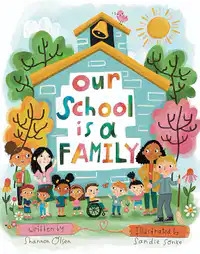
Engaging ESOL Families

Presentation
•
Professional Development
•
1st Grade
•
Practice Problem
•
Easy

Carla Romano
Used 5+ times
FREE Resource
18 Slides • 8 Questions
1
ELP PLC
8/14/2024
Engaging Families of Multilingual Learners
(ESOL Students)

By: Carla Romano, ELP ESOL Teacher
2
Multiple Select

What some of you are probably thinking:
¨Why do I need to know about teaching ESOL students/multilingual learners if I do not have any in my class this year?¨
[Select all that apply.]
Nationally, Georgia is ranked high in the number of ESOL students, and the number has been increasing yearly.
Instructional and engagement strategies that benefit ESOL students tend to benefit most other students as well.
August is National ESOL/Multilingual Learners Month, and Hispanic Heritage Month begins in September.
LCCS is focusing on educating all teachers about the ESOL subgroup to address state findings that Hispanic students were overrepresented in the SWLD subgroup.
3
Fastest Growing School Subgroup
https://assets.remind.com/marketing/pdfs/remind-translate-for-english-learners-and-their-families.pdf
Current ESOL Cluster Classes at ELP:
Kindergarten- Mrs. Nix
1st grade: Mrs. Tucker & Mrs. Couey
2nd grade: Mrs. Covington & Mrs. Belflower
ALL C.A.M.P.S. teachers work with ELs

In LCSS, statewide, and nationwide, the population of multilingual learners (also known as ELs (English learners), ELLs (English language learners), ESL (English as a second language) or ESOL (English for speakers of other languages) students is GROWING exponentially.
4

English Learners in K-12 Education by State
This map and ranked bar chart display the number of English Learners (ELs) enrolled in a kindergarten through a 12th grade class,. In Fall 2021, more than 5.3 million ELs were enrolled in public elementary and secondary schools, representing nearly 11 percent of total K-12 student enrollment.
(Today´s numbers are even higher due to record immigration rates in recent years.)
5

LCSS currently has 150+ ESOL students. These are not all recent immigrants. The majority were born in the U.S.
ELP currently has 26 ESOL students. ELP is second only to SWLE in the number of ESOL students in Laurens County.
6
Building Foundations for Success
It takes on average about seven years to become proficient in academic English (longer for students who are not already literate in their first language). In the meantime, what else can be done to support the success of these students?


Engagement

7
Multiple Choice

Parents must be proficient in academic English in order to support their children´s formal education.
True
False
8
Multiple Select

Which of the following support a child´s education but DO NOT require English proficiency? (select all that apply)
Creating a quiet study/reading area at home with needed school supplies available
Making sure your child arrives at school on time and only misses school due to illness or emergencies
Modeling how to take turns, share, work with others as a team, and problem-solve
Mealtime conversations to discuss accomplishments, concerns, current events
Model using Standard Academic English when speaking at all times
9
Multiple Select

Which of the following support a child´s LITERACY skills but DO NOT require English proficiency? (select all that apply)
Creating a quiet study/reading area at home with needed school supplies available
Modeling reading for enjoyment by reading favorite stories in the home language
Model reading and writing for everyday purposes, such as shopping lists, recipes, family calendars, greeting cards
Correcting your child´s English spelling and grammar in class homework
Sending e-mails, letters, and cards to a relative in another country
10
Multiple Select

Which of the following support a child´s MATH skills but DO NOT require English proficiency?
Teaching a child how to tell time on a clock and show ways we measure time (clock, stop watch, sand timer, calendar)
Writing subtraction word problems in English for your child to solve (without the use of a translator)
Sorting items by size, shape, color, function, etc. and comparing groups using greater than, less than, or equal
Teaching a child to count money and add and subtract money
Showing a child how fractions and different measurements are used in everyday life (home repair, cooking).
11
Multiple Choice

How do I know if a family needs to receive communication in another language?
The student´s birth certificate shows he/she was not born in the U.S.A.
The student qualifies for the Migrant Education Program and gets tutoring from Mrs. Mendoza.
The parent/guardian´s response to the communication preferences question on the Home Language Survey
The student has an ESOL flag in Infinite Campus and has a class with Ms. Romano.
12


13
Multiple Choice

Why should schools have to communicate with families in a language other than English? We are already super busy!
It´s the kind thing to do. (Golden Rule)
Because English and Spanish are now both official languages of the U.S.A.
It´s required by federal law through court cases and executive orders.
Because Dublin is an official ¨Sanctuary City¨
14
Multiple Choice

Technology makes it easier and faster than ever to communicate with parents in other languages.
True
False
15
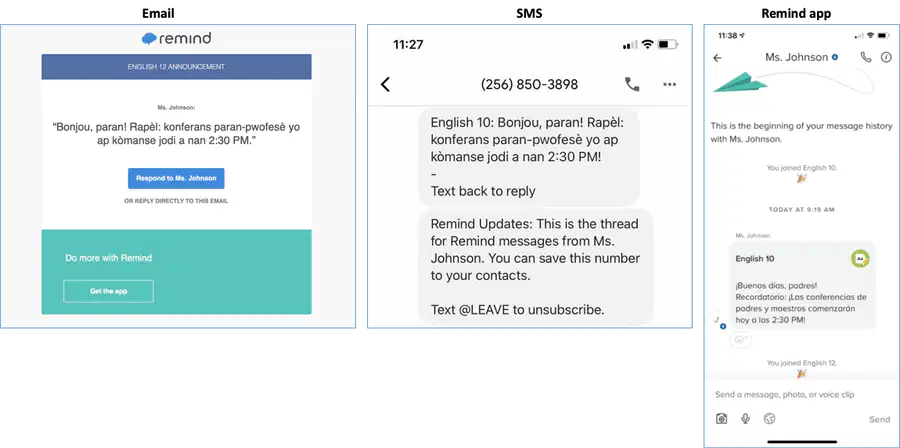
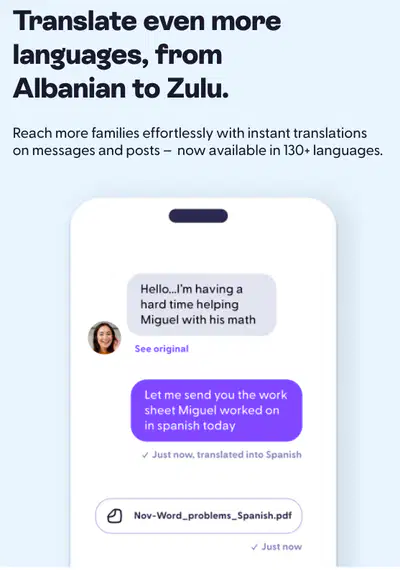
Both Remind and Class Dojo allow teachers and parents to send and receive translated text messages.
To ensure that your messages translate well, try to avoid abbreviations, acronyms, and figurative language.
Add Emojis and other visuals to your messages to increase comprehension.
Ex. Wear orange shirt: 🟧👕
Bring picture money 📸💵
Technology:
https://assets.remind.com/marketing/pdfs/remind-translate-for-english-learners-and-their-families.pdf


16
Google Translate and Canva allow pictures and PDF documents to be uploaded and translated into many languages.
Technology:
https://assets.remind.com/marketing/pdfs/remind-translate-for-english-learners-and-their-families.pdf


17
Practical Communication Tips
https://assets.remind.com/marketing/pdfs/remind-translate-for-english-learners-and-their-families.pdf
Finding out parental communication preferences is a key ingredient for student success, andthere is no ¨one size fits all¨ form of home-school communication for families, including those that speak other languages.
A simple survey to ask parents what their preferred communication method is (voice, electronic messages, translations on paper, etc.), times of the day, and days of the week can benefit everyone involved.
Like all families, keep in mind that non-emergency phone calls may not be allowed at the workplace and transportation may be an issue.
18
Cultural Background Notes
https://assets.remind.com/marketing/pdfs/remind-translate-for-english-learners-and-their-families.pdf
Spanish-speaking cultures traditionally esteem their children´s teachers very highly. Parents teach children that teachers are important authority figures, and teachers even have the right to use corporal punishment in their home countries. As a sign of respect, children are taught to look down rather than looking an adult directly in the eyes while being reprimanded.
Most parents of ESOL students are eager to communicate with the school despite barriers in language, culture, technology, and transportation.
The parents of our ESOL students range from recent immigrants to those who have lived here for decades or were born in the U.S.
Currently, our students have parents with Mexican, Guatemalan, and El Salvadoran heritage.
19
Cultural Background Notes
https://assets.remind.com/marketing/pdfs/remind-translate-for-english-learners-and-their-families.pdf
Keep in mind that some students´ parents received very limited formal education in their home countries and are not fully literate in Spanish.
For these parents, consider voice phone calls in their native language rather than written messages.
Their electronic or handwritten messages may not translate well with technology due to misspelled words.
Try to keep written messages short and simple (simple sentences, concrete language, active voice) and add visuals.
Other parents are more technologically savvy and will frequently use apps such as Remind and Class Dojo.
20
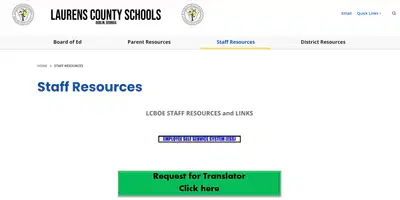
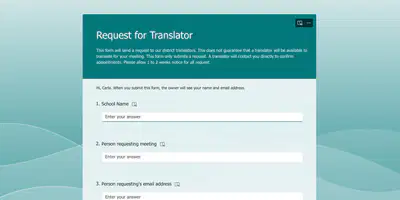
To request Interpreting for a meeting, go to lcboe.net -> Staff Resources -> Green button ¨Request for Translator Click Here¨
You will then fill out a form similar to a technology support ticket form. The form must be submitted 1 to 2 weeks in advance.
As Mrs. Parra serves all Laurens County schools, she can translate district wide and school wide documents, but NOT individual teacher documents such as weekly newsletters, parent absentee excuses, class assignments, etc.
Contact: gracielaparra@lcboe.net, 863.634.8934
21
22
Mrs. Mendoza is our district´s Migrant Education Program (MEP) Student Services Provider (SSP).
She provides Spanish native language support to facilitate instruction of priority for services (PFS) Migrant Ed. students that she tutors.
She can assist in Spanish communication with parents of Migrant Ed. students, including home visits, as needed.
Contact: isabelmendoza@lcboe.net, 478.484.7294
23
ESOL Teachers are trained in ways to leverage a student´s home language (L1) to increase access to the content and create a positive learning environment for multilingual students.
Ms. Romano assists teachers of ESOL students with school-home communications (weekly newsletters, phone calls, parent meetings, etc.) to meet TKES Standard 10: Communication.
Contact: carlaromano@lcboe.net cell: 478.272.9654
24
https://assets.remind.com/marketing/pdfs/remind-translate-for-english-learners-and-their-families.pdf


26
ELP PLC
8/14/2024
Engaging Families of Multilingual Learners
(ESOL Students)
By: Carla Romano, ELP ESOL Teacher
Show answer
Auto Play
Slide 1 / 26
SLIDE
Similar Resources on Wayground

20 questions
Singular and Plural Nouns
Presentation
•
2nd Grade
18 questions
Trait Inheritance and Variation
Presentation
•
1st Grade
18 questions
Demonstrative Pronouns
Presentation
•
1st Grade
18 questions
Polynomials
Presentation
•
1st Grade
17 questions
1 More, 1 Less, 10 More, 10 Less
Presentation
•
1st Grade
20 questions
2D Shapes Review
Presentation
•
2nd Grade
20 questions
Prepositions of place
Presentation
•
KG
20 questions
Hospitality & Tourism Cluster
Presentation
•
KG
Popular Resources on Wayground
21 questions
Continents and Oceans

Quiz
•
6th Grade
20 questions
Parts of Speech
Quiz
•
5th Grade
16 questions
Subject & Predicate
Quiz
•
5th Grade
25 questions
Multiplication Facts
Quiz
•
5th Grade
12 questions
Map Skills
Quiz
•
3rd Grade
22 questions
Continents and Oceans
Quiz
•
5th Grade
15 questions
Rounding Decimals
Quiz
•
5th Grade
20 questions
Brand Labels
Quiz
•
5th - 12th Grade
Discover more resources for Professional Development
15 questions
Addition and Subtraction
Quiz
•
1st Grade
20 questions
Addition and Subtraction facts
Quiz
•
1st - 3rd Grade
20 questions
Place Value
Quiz
•
KG - 3rd Grade
4 questions
K-2 Force and Motion Lesson
Presentation
•
KG - 2nd Grade
10 questions
Fact Families
Quiz
•
1st Grade
10 questions
Identifying Physical and Chemical Changes

Interactive video
•
1st - 5th Grade
15 questions
Place Value tens and ones
Quiz
•
1st Grade
20 questions
Telling Time to the Hour and Half hour
Quiz
•
1st Grade