

Unit 2 L1

Presentation
•
English
•
5th Grade
•
Practice Problem
•
Medium

Stefany Ramirez
Used 2+ times
FREE Resource
62 Slides • 2 Questions
1

45 minutes
2

Grammar Connection
Short Constructed Response:
What is your favorite book or story
and why?
whiteboards
3

What can you tell me
about nonfiction
text?
(turn & talk)
4


5

Preview into the next few weeks
6


Lesson 1 Part 1 Objectives
LO: I am learning about the
beginnings of the Renaissance
movement and using text evidence
to support an appropriate response
5.7C
SC:
● I can use text evidence to identify the factors that
inspired the Renaissance movement.
● I can use text evidence to explain the
relationship between factors that inspired the
Renaissance movement.
7

Academic
Vocabulary
8

concept
a general idea about a
topic
9

convey
to make something
known; to
communicate
10

document
1. an important paper that
provides information (noun)
2. to give evidence of an
event or opinion (verb)
11

factor
cause or reason
12

prose
traditional style of
writing that is not
poetry
13

refer
to call attention to
something; to look at
something for
information
14

Spanish Cognates:
● Concepto
● Documento
● Prosa
● referir
15

“The Renaissance movement was
inspired by a renewed interest in ancient
Greek and Roman culture and learning.”
Our family trip to Japan last summer
inspired my mom to start cooking
Japanese food more often.
Inspire means to “influence or provide an idea
about what to do or create.“
- inspire
16


.
- inspire
Who or what has inspired
you to do well in school? Be
sure to use the word inspire
in your response.
“ _______has inspired me
because . . .”
17

We will be learning about the Renaissance
movement, which happened many years
ago. Today you will learn about what
inspired, or influenced, the start of the
movement.
To make an inference is when a reader
uses what they already know about a
topic combined with what the text says
about the topic to figure out something
that is not explicitly stated.
18


inference
a reasonable conclusion
based on available
evidence
What I learn from
the text
What I already know
My inference
+
=
19

Today you will learn about the
events leading up to the
Renaissance and make
inferences about why they
influenced the start of this
movement. Before jumping into
learning about this topic and
reading the first chapter of the
Reader,we will first review some
things to help you understand the
unit better.
20

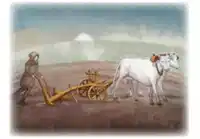
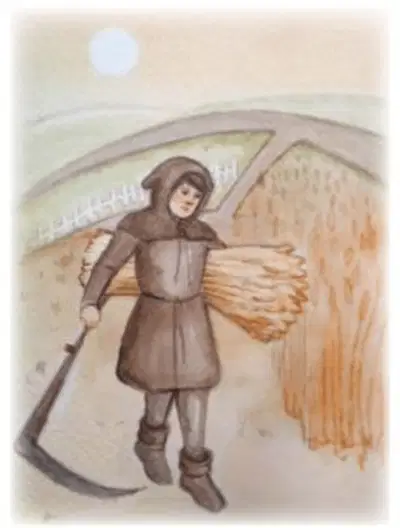
Museum Picture Walk
Background
During the Museum Picture walk, you will walk
around the room to view the posted pictures,
speak quietly, look at but not touch the
displays, and make space for others to see
what is posted, just like when visiting a real
museum.
You will have a minute or two to look at each
picture and discuss with your partner what
you notice about the Middle Ages time period.
21


22


23


24


25

26


27


28

29


30


31


32

Museum Picture Walk
Background
What are some
inferences you made
about the pictures you
viewed? Turn, talk,
share out
33


What is a civilization?
Background
A civilization is a group of
people living together in an
organized way.
34


Components of a Civilization
What is a civilization?
35


Civilizations in the past
Background
36


Timeline
Activity
37

38

39

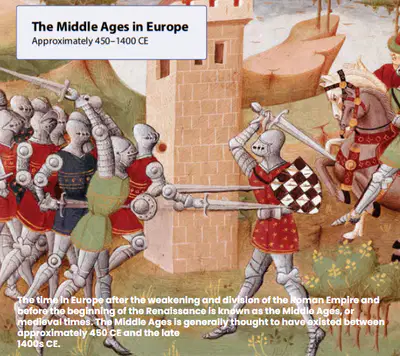
The time in Europe after the weakening and division of the Roman Empire and
before the beginning of the Renaissance is known as the Middle Ages, or
medieval times. The Middle Ages is generally thought to have existed between
approximately 450 CE and the late
1400s CE.
40


BCE stands for “before the Common Era” and refers
to the years that happened a very long time
ago.
CE stands for “of the Common Era,” which refers to
more recent years, including the current year. The
Common Era begins with 1 CE; years prior to that
are referred to as BCE.
41


42

The word Renaissance means rebirth.
The Renaissance movement began
with the rediscovery of old Greek and
Roman manuscripts. People became
interested in art, architecture and
literature again. They wanted to
create new works as magnificent as
the older Greek and Roman ones. The
Renaisssance produced more
celebrated thinkers and artist than
any other time period.
43

You will study the time in
Europe after the Middle
Ages called the Renaissance.
The Renaissance was a
cultural movement in Italy
and other parts of Europe
from roughly the mid-1300s
to the early 1600s.
44


We live in
North
America
The
Renaissance
took place in
Europe
45

Activity Page 1.1
In your books
Background
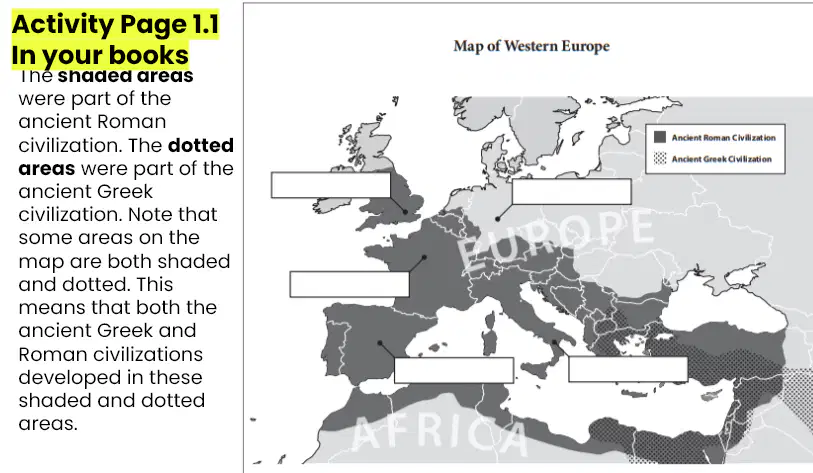
46

Spain
England
Germany
Italy
France
Background
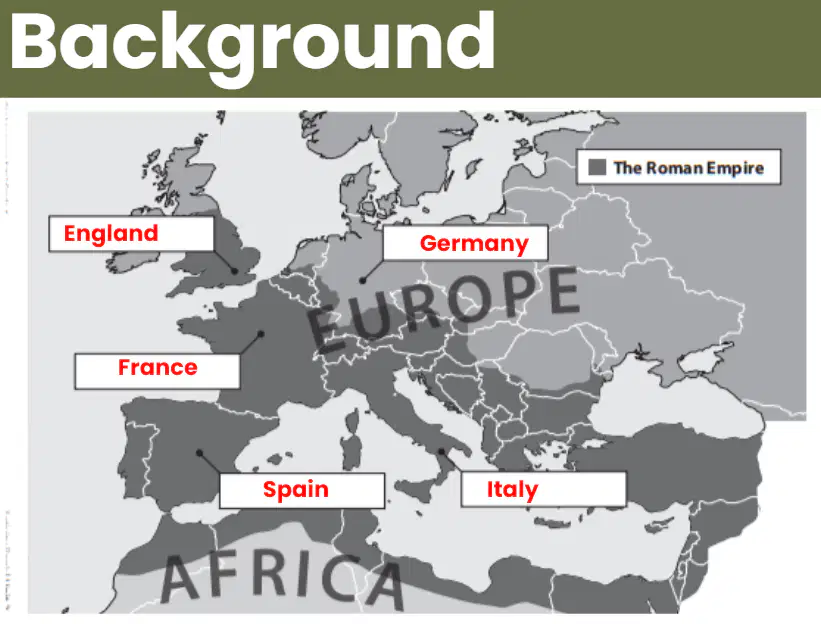
47


During the Renaissance, Italy was
made up of city-states and was not
one unified country as it is today.
The white dotted lines on this map
indicate the boundaries of those
city-states at the time of the
Renaissance. Just like countries,
these city-states sometimes were at
war with each other. This unit also
covers how the Renaissance
movement in Italy affected other
western European countries during
this time period.
Much of this unit will focus on
Italy during the Renaissance.
Background
48


Activity Page 1.2
Excerpt
49

Prep paper for notes
50


51


In paragraph 1,
which sentence
explains how
towns grew?
52


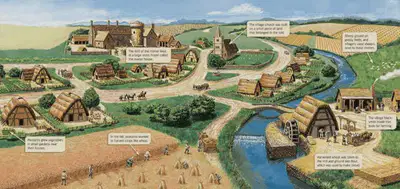
Based on what
you heard and
what you see in
the image ,
describe life in
a town in the
Middle Ages.
*turn & talk
53
Hotspot
Which sentence explains how towns grew
54


In paragraph 2,
what sentence
explains why
there was
“hustle and
bustle”
55
Hotspot
Which sentence shows why there was hustle and bustle?
56


57


What were some
difficulties middle
class people in towns
faced during the
Middle Ages?
turn and talk
58


Positive Ways
Trade Affected Life
Negative Ways
Trade Affected Life
Check for Understanding
59


Positive Ways
Trade Affected Life
Negative Ways
Trade Affected Life
Check for Understanding
● Encouraged the
growth of towns
● The middle class
grew
● Wealthy people
were allowed to
make their own
laws which
changed how
decisions were
made
● Towns and cities
became
overcrowded
● Disease spread
easily
60

WRAP UP QUESTIONS
61

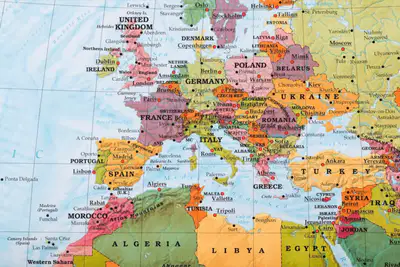
Discussion Questions
What region of the world will we be
studying?
62

Discussion Questions
What is the name of the time period
before the Renaissance
movement?
63

Discussion Questions
What changes affected the middle
class during the Middle Ages?
64

End part 1
45 minutes
Show answer
Auto Play
Slide 1 / 64
SLIDE
Similar Resources on Wayground

59 questions
NIK3 - Unit 11 - Vocabulary 2
Presentation
•
4th Grade
63 questions
Newspaper front pages
Presentation
•
5th Grade
63 questions
Jaxtina - S - Flipped Book - Lesson 4
Presentation
•
5th Grade
59 questions
CEFR Writing Prep - Level 1 (Topic Sentence)
Presentation
•
5th Grade
57 questions
G5-Q2-L1- VERBS
Presentation
•
5th Grade
56 questions
English Week 6 Editorial Cartooning and Express Viewpoints
Presentation
•
5th Grade
56 questions
PA- Letters and Sounds PRACTICE
Presentation
•
KG
57 questions
ESSAY WRITING UPSR
Presentation
•
4th - 6th Grade
Popular Resources on Wayground
10 questions
Safety Day 2026 – Student Review

Quiz
•
9th Grade
21 questions
Continents and Oceans
Quiz
•
6th Grade
20 questions
Parts of Speech
Quiz
•
5th Grade
16 questions
Subject & Predicate
Quiz
•
5th Grade
25 questions
Multiplication Facts
Quiz
•
5th Grade
12 questions
Map Skills
Quiz
•
3rd Grade
22 questions
Continents and Oceans
Quiz
•
5th Grade
15 questions
Rounding Decimals
Quiz
•
5th Grade
Discover more resources for English
20 questions
Parts of Speech
Quiz
•
5th Grade
16 questions
Subject & Predicate
Quiz
•
5th Grade
12 questions
Figurative Language Review

Interactive video
•
5th Grade
20 questions
4 Types of Sentences
Quiz
•
4th - 5th Grade
20 questions
Main Idea and Details
Quiz
•
5th Grade
11 questions
Quiz: Review Simple, Compound, and Complex Sentences
Quiz
•
5th Grade
10 questions
Main Idea and Supporting Details
Quiz
•
3rd - 6th Grade
20 questions
Prepositions and Prepositional Phrases
Quiz
•
5th Grade