Limiting Factors of Photosynthesis
Presentation
•
•
Practice Problem
•
Hard
Rudi Setyawan
FREE Resource
5 Slides • 167 Questions
1
2
3
4
5
Review
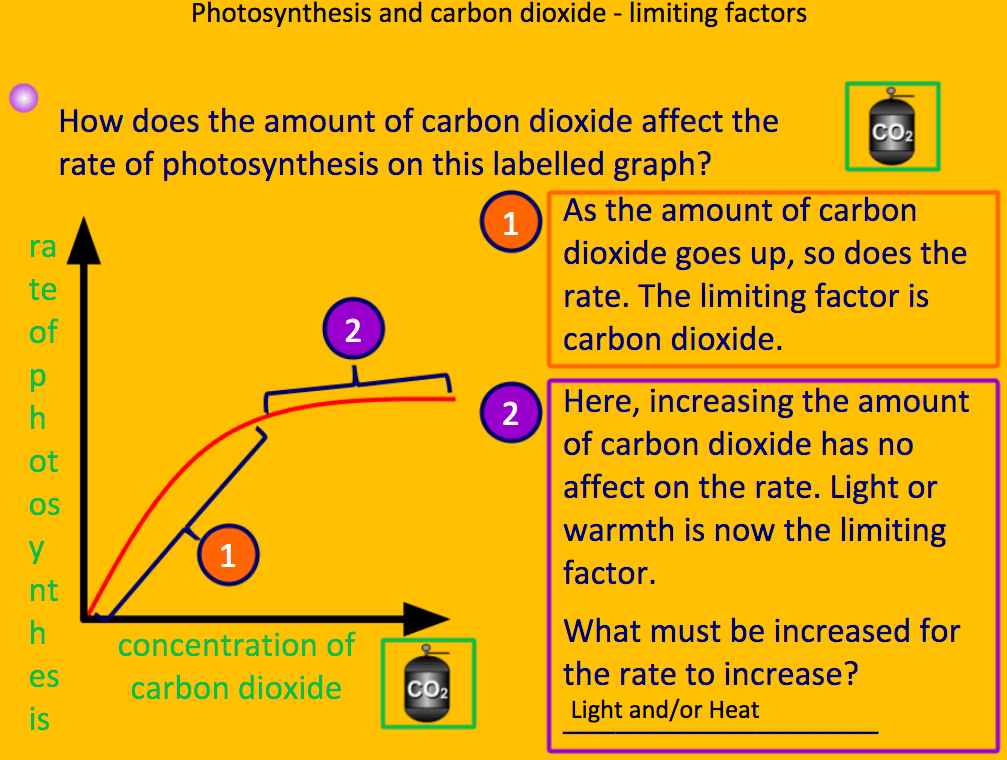
are limiting factors for the rate of photosynthesis. They all affect the rate of the photosynthetic reaction, but in different ways.
A Limiting factor is something present in the environment in such short supply that it restricts processes
Some text here about the topic of discussion
Light intensity, carbon dioxide concentration and temperature
6
Multiple Choice
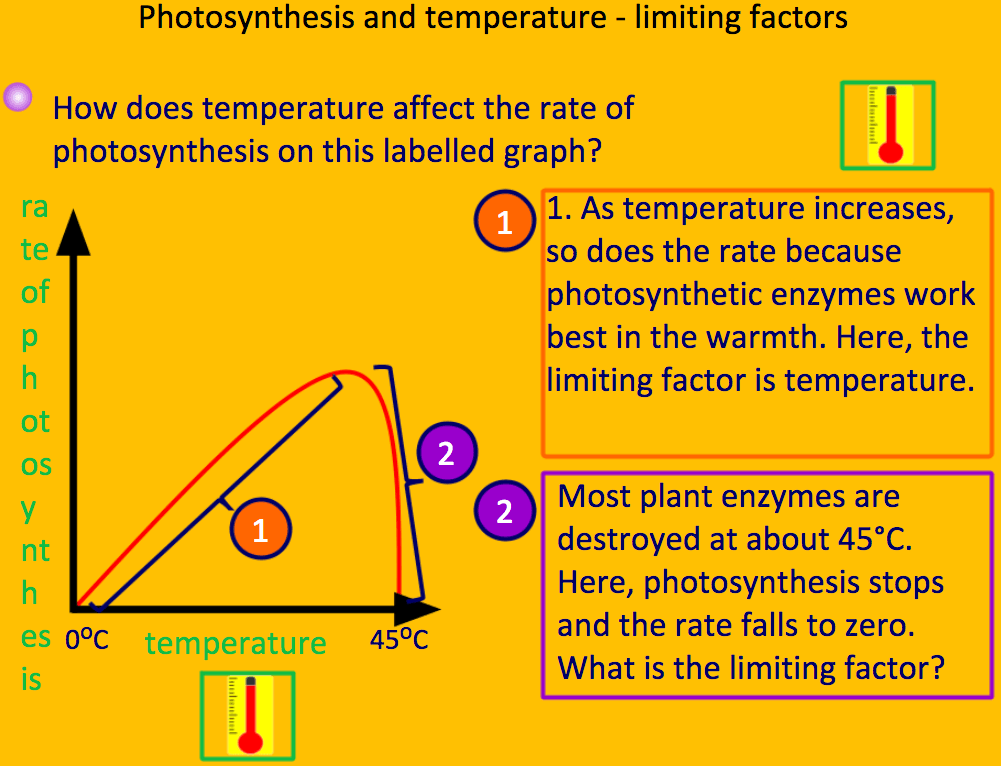
How does temperature affect photosynthesis?
Increases the rate at which enzymes work
Gives the plant energy to perform photosynthesis
Stops certain enzymes that interfere with photosynthesis working
Allows chlorophyll to react
7
Multiple Choice
When it is chilly and raining outside, there is no photosynthesis taking place. What is the limiting factor?
Temperature
Rainfall
Carbon Dioxide
Oxygen
8
Multiple Choice
What is a limiting factor?
The factor which increases the rate of a reaction
The factor that limits the reaction rate
The factor that limits the rate at which an enzyme is destroyed
The factor which decreases the rate of reaction
9
Multiple Choice
10
Multiple Choice
Increasing temperature can increase enzyme activity to a certain point. Then what happens?
The enzymes have completed all the reactions so stop
The enzymes have been denatured or destroyed
Nothing - the rate continues to increase all the time
Nothing - enzymes do not need temperature to work
11
Multiple Choice
If a plant starts to receives more carbon dioxide, what happens to the rate of photosynthesis?
Increases
Decreases
Stays the same
Nothing happens because carbon dioxide is not needed
12
Multiple Choice
13
Multiple Choice
14
Multiple Choice
Look at the diagram. Which gas would most likely be found in the greatest amount in the bubbles?
15
Multiple Choice
A student is collecting the gas given off from a plant in bright sunlight at a temperature of 27°C. The gas being collected is probably ________. To be sure of this gas he will do the _________ test
oxygen, glowing splint test
carbon dioxide, lime water test
ATP, newton meter test
glucose, Benedict test
16
Multiple Choice
17
Multiple Choice
18
Multiple Choice
19
Multiple Choice
Which lettered graph represents the affect of light intensity on photosynthetic rate?
A
B
C
D
20
Multiple Choice
What is the role of chlorophyll in photosynthesis?
To produce sugar
To trap light energy
To trap heat energy
Make plants green
21
Multiple Choice
Which energy conversion occurs as a result of photosynthesis?
Chemical energy to heat energy
Heat energy to light energy
Light energy to chemical energy
Heat energy to chemical energy
22
Multiple Choice
Which lettered graph represents the effect of temperature on photosynthetic rate?
A
B
C
D
23
Multiple Choice
Which word equation correctly describes the process of photosynthesis?
carbon dioxide + oxygen ---> glucose + water
carbon dioxide + water ---> glucose + oxygen
glucose + oxygen ---> carbon dioxide + water
oxygen + water ---> glucose + carbon dioxide
24
Multiple Choice
Which of the following is a limiting factor of photosynthesis?
Availability of carbon dioxide
Availability of oxygen
Availability of sugar
All of these
25
Multiple Choice
Plants undergo both photosynthesis and cellular respiration
true
false
26
Multiple Choice
Which lettered graph represents the effect of carbon dioxide gas on photosynthetic rate?
A
B
C
D
27
Multiple Choice
Which factor would not increase the production of glucose by photosynthesis in plants?
increased sunlight exposure
extra rainfall
increased carbon dioxide levels
freezing temperatures
28
Multiple Choice
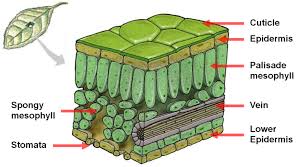
Which part of the leaf has most chloroplasts
epidermis tissue
palisade mesophyll
spongy mesophyll
xylem
29
Multiple Choice
Which part of the leaf are tubes that bring water from the roots
epidermis tissue
palisade mesophyll
spongy mesophyll
xylem
30
Multiple Choice
Which part of the leaf has air spaces to allow carbon dioxide to flow through the leaf and diffuse into cells.
epidermis tissue
palisade mesophyll
spongy mesophyll
xylem
31
Multiple Choice
Which of the following shows the balanced chemical symbol equation for photosynthesis?
A
B
C
D
32
Multiple Choice
What is the main energy change that happens in photosynthesis?
chemical --> light
light --> kinetic
light --> chemical
kinetic --> light
33
Multiple Choice
Where is chlorophyll found in plant cells?
cytoplasm
chloroplast
mitochondria
vacuole
34
Multiple Choice
What substance can glucose be converted to, which is the transport carbohydrate of plants?
starch
cellulose
sucrose
amino acids
35
Multiple Choice
What substance can glucose be converted into, which is the energy storage carbohydrate of plants?
cellulose
sucrose
amino acids
starch
36
Multiple Choice
Which substance can glucose be converted to, which strengthens plant cell walls?
starch
cellulose
amino acids
sucrose
37
Multiple Choice
Which of the following organelles would you not expect to be present in onion root cells?
cell wall
vacuole
chloroplast
mitochondrion
38
Multiple Choice
All of the definitions below are descriptions of a 'limiting factor'.
Which of these is the IGCSE Biology definition?
a factor in the environment that runs out
something present in the environment in such short supply that it restricts life processes
a factor in the environment that is in short supply
something present in the environment in such short supply that it stops life processes
39
Multiple Choice
Click on the picture to make it larger.
Which of the following can you conclude about point X from this graph alone?
I. light intensity limits the rate of photosynthesis
II. as light intensity increases, rate of photosynthesis increases
III. CO2 concentration limits the rate of photosynthesis
I and II only
I and III only
II and III only
I, II and III
40
Multiple Choice
Click on the picture to make it larger.
Which of the following can you conclude about point Y from this graph?
I. light intensity does not limit the rate of photosynthesis
II. the plant has stopped photosynthesising
III. the rate of photosynthesis could be limited by a shortage of water or CO2
I and II only
I and III only
II and III only
I, II and III
41
Multiple Choice
Click on the picture to make it larger.
What do curves C and D suggest is limiting the rate of photosynthesis?
light intensity
carbon dioxide concentration
temperature
water
42
Multiple Choice
Click on the picture to make it larger.
What do curves B and D suggest is limiting the rate of photosynthesis?
light intensity
carbon dioxide concentration
temperature
water
43
Multiple Choice
Supplying extra heat and carbon dioxide is more expensive, but may be worth it if the rate of photosynthesis greatly increases.
Click on the graph to make it larger.
Which of the following would it not be worth doing for a plant grower?
increasing the CO2 from 0.03% to 0.1% at a temperature of 20oC.
increasing the CO2 from 0.03% to 0.1% at a temperature of 25oC.
increasing the temperature from 20oC to 25oC at a CO2 concentration of 0.03%
increasing the temperature from 20oC to 25oC at a CO2 concentration of 0.1%
44
Multiple Choice
Why is the chemical sodium hydrogencarbonate given to water plants in photosynthesis practicals?
it is used to produce chlorophyll
it allows the plant to respire
it supplies the plant with CO2 gas when it dissolves
it is a source of glucose
45
Multiple Choice
All of the statements below are correct definitions of photosynthesis.
Which of these is the IGCSE Biology definition of photosynthesis?
the process that produces glucose and oxygen, using CO2, water, light and chlorophyll
the process that converts light energy into chemical energy
the process by which plants produce carbohydrates from raw materials using light energy
the process that converts inorganic compounds into organic compounds
46
Multiple Choice
Four test-tubes are set up as shown.
Click on the picture to make it larger.
Which test-tube contains the most carbon dioxide after one hour?
A
B
C
D
47
Multiple Choice
The raw materials of photosynthesis.
CO2 and H2O
CO2 and C6H12O6
O2 and H2O
O2 and C6H12O6
48
Multiple Choice
The waste material of photosynthesis.
CO2
H2O
O2
C6H12O6
49
Multiple Choice
50
Multiple Choice
What is an Abiotic Factor?
A NON-living factor that can affect an ecosystem
A living factor that can affect an ecosystem
The carrying capacity of an ecosystem
51
Multiple Choice
What is a Biotic Factor?
The carrying capacity of an ecosystem
A NON-living factor that can affect an ecosystem
A living factor that can affect an ecosystem
52
Multiple Select
Check all of the boxes that show examples of biotic factors.
Rain
Humans hunting
Predators
Wildfire
53
Multiple Select
Check all of the boxes that are examples of abiotic factors.
Prey
Rainfall
A pack of wolves
A tornado
54
Multiple Choice
What is a limiting factor?
Factors that always increase a population
Factors that always decrease a population
Resources that are unlimited
Factors/resources that limit how many organisms can live in an area at the same time
55
Multiple Choice
If humans were to release a pack of wolves into the forest, what type of factor would this be?
Abiotic
Biotic
56
Multiple Choice
57
Multiple Choice
58
Multiple Choice
59
Multiple Choice
60
Multiple Choice
61
Multiple Choice
62
Multiple Choice
63
Multiple Choice
64
Multiple Choice
Look at the diagram. Which gas would most likely be found in the greatest amount in the bubbles?
65
Multiple Choice
66
Multiple Choice
67
Multiple Choice
68
Multiple Choice
69
Multiple Choice
Which lettered graph represents the affect of light intensity on photosynthetic rate?
A
B
C
D
70
Multiple Choice
Which lettered graph represents the effect of carbon dioxide gas on photosynthetic rate?
A
B
C
D
71
Multiple Choice
Which lettered graph represents the effect of temperature on photosynthetic rate?
A
B
C
D
72
Multiple Choice
Which factor would not increase the production of glucose by photosynthesis in plants?
freezing temperatures
extra rainfall
increased carbon dioxide levels
increased sunlight exposure
73
Multiple Choice
74
Multiple Choice
75
Multiple Choice
76
Multiple Choice
77
Multiple Choice
78
Multiple Choice
What is required for photosynthesis to begin?
water and oxygen
oxygen and carbon dioxide
carbon dioxide and water
chocolate and pop
79
Multiple Choice
What is produced during photosynthesis?
water and carbon dioxide
glucose and carbon dioxide
glucose and oxygen
apples and bananas
80
Multiple Choice
Which of the following are required for cellular respiration to begin?
oxygen and glucose
oxygen and water
oxygen and carbon dioxide
apples and bananas
81
Multiple Choice
What is produced during cellular respiration?
oxygen and energy (ATP)
carbon dioxide and oxygen
carbon dioxide and energy (ATP)
noodles
82
Multiple Choice
Plants undergo both photosynthesis and cellular respiration
true
false
83
Multiple Choice
Photosynthesis happens in the chloroplast
true
false
84
Multiple Choice
Cellular Respiration happens in the chloroplast
true
false
85
Multiple Choice
Cellular respiration happens in the mitochondria
true
false
86
Multiple Choice
Where do plants get the carbon needed for photosynthesis
ground
water
air
Target
87
Multiple Choice
The source of energy for photosynthesis is
water
soil
air
the sun
88
Multiple Choice
89
Multiple Choice
90
Multiple Choice
91
Multiple Choice
The graph below shows the rate of photosynthesis of a plant in an experiment. What is the limiting factor of photosynthesis at high light intensity?
Light intensity
carbon dioxide concentration
temperature
92
Multiple Choice
The graph shows the rate of photosynthesis plotted against an unknown factor. What is the factor limiting the rate of photosynthesis as shown in the graph?
carbon dioxide concentration
light intensity
number of chloroplasts
temperature
93
Multiple Choice
The diagram below shows a photosynthesis investigation. The plant has leaves that are green in the middle and white round the edges. Which leaf areas lack only one factor needed for photosynthesis?
1 and 2
1 and 3
2 and 4
3 and 4
94
Multiple Choice
Which of the following equations represents the overall chemical reaction for photosynthesis?
6O2+ 6H2O → C6H12O6+ 6O2
C6H12O6 + 6H2O→ 6O2+ 6O2
6CO2+ 6H2O→ C6H12O6+ 6O2
6O2 + 6H2O→ C6H12O6 + 6CO2
95
Multiple Choice
Which lettered graph represents the affect of light intensity on photosynthetic rate?
A
B
C
D
96
Multiple Choice
97
Multiple Choice
98
Multiple Choice
99
Multiple Choice
100
Multiple Choice
Which lettered graph represents the effect of temperature on photosynthetic rate?
A
B
C
D
101
Multiple Choice
102
Multiple Choice
103
Multiple Choice
104
Multiple Choice
105
Multiple Choice
Which of these pairs represents the reactants of photosynthesis?
Oxygen and water
Glucose and oxygen
Water and glucose
Carbon dioxide and water
106
Multiple Choice
Which of these pairs represents the products of photosynthesis?
Oxygen and water
Glucose and oxygen
Water and glucose
Carbon dioxide and water
107
Multiple Choice
Which of these is NOT needed for photosynthesis to occur
Glucose
Sunlight
Carbon dioxide
Water
108
Multiple Choice
Which of these is a source of carbon used to make glucose?
Oxygen
Sunlight
Carbon dioxide
Water
109
Multiple Choice
110
Multiple Choice
111
Multiple Choice
112
Multiple Choice
113
Multiple Choice
What happens when enzymes are heated to a high temperature?
The enzymes die.
The shape of the enzyme are changed and it denatures
The enzymes' amino acid sequence changes.
The enzymes remain the same
114
Multiple Choice
Which of the following shows the balanced chemical symbol equation for photosynthesis?
A
B
C
D
115
Multiple Choice
What is the main energy change that happens in photosynthesis?
chemical --> light
light --> kinetic
light --> chemical
kinetic --> light
116
Multiple Choice
Where is chlorophyll found in plant cells?
cytoplasm
chloroplast
mitochondria
vacuole
117
Multiple Choice
What substance can glucose be converted to, which is the transport carbohydrate of plants?
starch
cellulose
sucrose
amino acids
118
Multiple Choice
What substance can glucose be converted into, which is the energy storage carbohydrate of plants?
cellulose
sucrose
amino acids
starch
119
Multiple Choice
Which substance can glucose be converted to, which strengthens plant cell walls?
starch
cellulose
amino acids
sucrose
120
Multiple Choice
Which of the following organelles would you not expect to be present in onion root cells?
cell wall
vacuole
chloroplast
mitochondrion
121
Multiple Choice
All of the definitions below are descriptions of a 'limiting factor'.
Which of these is the IGCSE Biology definition?
a factor in the environment that runs out
something present in the environment in such short supply that it restricts life processes
a factor in the environment that is in short supply
something present in the environment in such short supply that it stops life processes
122
Multiple Choice
Click on the picture to make it larger.
Which of the following can you conclude about point X from this graph alone?
I. light intensity limits the rate of photosynthesis
II. as light intensity increases, rate of photosynthesis increases
III. CO2 concentration limits the rate of photosynthesis
I and II only
I and III only
II and III only
I, II and III
123
Multiple Choice
Click on the picture to make it larger.
Which of the following can you conclude about point Y from this graph?
I. light intensity does not limit the rate of photosynthesis
II. the plant has stopped photosynthesising
III. the rate of photosynthesis could be limited by a shortage of water or CO2
I and II only
I and III only
II and III only
I, II and III
124
Multiple Choice
Click on the picture to make it larger.
What do curves C and D suggest is limiting the rate of photosynthesis?
light intensity
carbon dioxide concentration
temperature
water
125
Multiple Choice
Click on the picture to make it larger.
What do curves B and D suggest is limiting the rate of photosynthesis?
light intensity
carbon dioxide concentration
temperature
water
126
Multiple Choice
Supplying extra heat and carbon dioxide is more expensive, but may be worth it if the rate of photosynthesis greatly increases.
Click on the graph to make it larger.
Which of the following would it not be worth doing for a plant grower?
increasing the CO2 from 0.03% to 0.1% at a temperature of 20oC.
increasing the CO2 from 0.03% to 0.1% at a temperature of 25oC.
increasing the temperature from 20oC to 25oC at a CO2 concentration of 0.03%
increasing the temperature from 20oC to 25oC at a CO2 concentration of 0.1%
127
Multiple Choice
All of the statements below are correct definitions of photosynthesis.
Which of these is the IGCSE Biology definition of photosynthesis?
the process that produces glucose and oxygen, using CO2, water, light and chlorophyll
the process that converts light energy into chemical energy
the process by which plants produce carbohydrates from raw materials using light energy
the process that converts inorganic compounds into organic compounds
128
Multiple Choice
Four test-tubes are set up as shown.
Click on the picture to make it larger.
Which test-tube contains the most carbon dioxide after one hour?
A
B
C
D
129
Multiple Choice
The raw materials of photosynthesis.
CO2 and H2O
CO2 and C6H12O6
O2 and H2O
O2 and C6H12O6
130
Multiple Choice
The waste material of photosynthesis.
CO2
H2O
O2
C6H12O6
131
Multiple Choice
132
Multiple Choice
What is an Abiotic Factor?
A NON-living factor that can affect an ecosystem
A living factor that can affect an ecosystem
The carrying capacity of an ecosystem
133
Multiple Choice
What is a Biotic Factor?
The carrying capacity of an ecosystem
A NON-living factor that can affect an ecosystem
A living factor that can affect an ecosystem
134
Multiple Select
Check all of the boxes that show examples of biotic factors.
Rain
Humans hunting
Predators
Wildfire
135
Multiple Select
Check all of the boxes that are examples of abiotic factors.
Prey
Rainfall
A pack of wolves
A tornado
136
Multiple Choice
What is a limiting factor?
Factors that always increase a population
Factors that always decrease a population
Resources that are unlimited
Factors/resources that limit how many organisms can live in an area at the same time
137
Multiple Choice
If humans were to release a pack of wolves into the forest, what type of factor would this be?
Abiotic
Biotic
138
Multiple Choice
139
Multiple Choice
140
Multiple Choice
141
Multiple Choice
142
Multiple Choice
143
Multiple Choice
144
Multiple Choice
145
Multiple Choice
146
Multiple Choice
Look at the diagram. Which gas would most likely be found in the greatest amount in the bubbles?
147
Multiple Choice
148
Multiple Choice
149
Multiple Choice
150
Multiple Choice
151
Multiple Choice
Which lettered graph represents the affect of light intensity on photosynthetic rate?
A
B
C
D
152
Multiple Choice
Which lettered graph represents the effect of carbon dioxide gas on photosynthetic rate?
A
B
C
D
153
Multiple Choice
Which lettered graph represents the effect of temperature on photosynthetic rate?
A
B
C
D
154
Multiple Choice
Which factor would not increase the production of glucose by photosynthesis in plants?
freezing temperatures
extra rainfall
increased carbon dioxide levels
increased sunlight exposure
155
Multiple Choice
156
Multiple Choice
157
Multiple Choice
158
Multiple Choice
159
Multiple Choice
160
Multiple Choice
What is required for photosynthesis to begin?
water and oxygen
oxygen and carbon dioxide
carbon dioxide and water
chocolate and pop
161
Multiple Choice
What is produced during photosynthesis?
water and carbon dioxide
glucose and carbon dioxide
glucose and oxygen
apples and bananas
162
Multiple Choice
Which of the following are required for cellular respiration to begin?
oxygen and glucose
oxygen and water
oxygen and carbon dioxide
apples and bananas
163
Multiple Choice
What is produced during cellular respiration?
oxygen and energy (ATP)
carbon dioxide and oxygen
carbon dioxide and energy (ATP)
noodles
164
Multiple Choice
Plants undergo both photosynthesis and cellular respiration
true
false
165
Multiple Choice
Photosynthesis happens in the chloroplast
true
false
166
Multiple Choice
Cellular Respiration happens in the chloroplast
true
false
167
Multiple Choice
Cellular respiration happens in the mitochondria
true
false
168
Multiple Choice
Where do plants get the carbon needed for photosynthesis
ground
water
air
Target
169
Multiple Choice
The source of energy for photosynthesis is
water
soil
air
the sun
170
Multiple Choice
171
Multiple Choice
172
Multiple Choice
Show answer
Auto Play
Slide 1 / 172
SLIDE

Similar Resources on Wayground
163 questions
5th Computer Fundamentals and Information Processing
Presentation
•
9th - 12th Grade
164 questions
Grade 10 _ WAVE
Presentation
•
10th Grade
171 questions
8.ETS.2-1 Space & Technology
Presentation
•
8th Grade
161 questions
College Board Review
Presentation
•
10th Grade - University
169 questions
Q3 Math 8
Presentation
•
8th Grade
166 questions
B5 L2 READING
Presentation
•
9th Grade
165 questions
Unit 07 Judicial System
Presentation
•
6th - 8th Grade
175 questions
Writing Integers
Presentation
•
7th Grade
Popular Resources on Wayground
20 questions
STAAR Review Quiz #3
Quiz
•
8th Grade
20 questions
Equivalent Fractions
Quiz
•
3rd Grade
6 questions
Marshmallow Farm Quiz
Quiz
•
2nd - 5th Grade
20 questions
Main Idea and Details
Quiz
•
5th Grade
20 questions
Context Clues
Quiz
•
6th Grade
20 questions
Inferences
Quiz
•
4th Grade
19 questions
Classifying Quadrilaterals
Quiz
•
3rd Grade
12 questions
What makes Nebraska's government unique?
Quiz
•
4th - 5th Grade
Discover more resources for
20 questions
STAAR Review Quiz #3
Quiz
•
8th Grade
20 questions
Equivalent Fractions
Quiz
•
3rd Grade
6 questions
Marshmallow Farm Quiz
Quiz
•
2nd - 5th Grade
20 questions
Main Idea and Details
Quiz
•
5th Grade
20 questions
Context Clues
Quiz
•
6th Grade
20 questions
Inferences
Quiz
•
4th Grade
19 questions
Classifying Quadrilaterals
Quiz
•
3rd Grade
12 questions
What makes Nebraska's government unique?
Quiz
•
4th - 5th Grade