Search Header Logo
Atomic Structure and Periodic Table

Atomic Structure and Periodic Table

Assessment

Presentation

Chemistry

9th Grade

Practice Problem

Medium

NGSS
HS-PS1-1, MS-PS1-1, HS-PS1-2

Standards-aligned

Created by

Lane Derrick

Used 41+ times

FREE Resource

10 Slides • 20 Questions

1

media
media
media

Periodic Table Organization

Periods = rows (across)
- # of periods = 7
- Going across a period, the number of protons goes up

Groups = columns (up and down)
- # of groups = 18
- Elements in a group have similar properties

2

media
media

Lanthanide and Actinide Series

Located under the periodic table, but they actually

belong in periods 6 and 7

Lanthanides - period 6
Actinides - period 7

Lanthanides

Actinides

3

media

Expanded periodic table

Why are lanthanides and actinides on the bottom?
So it's easier to fit the periodic table on piece of paper

LANTHANIDES

ACTINIDES

4

Multiple Choice

Question image

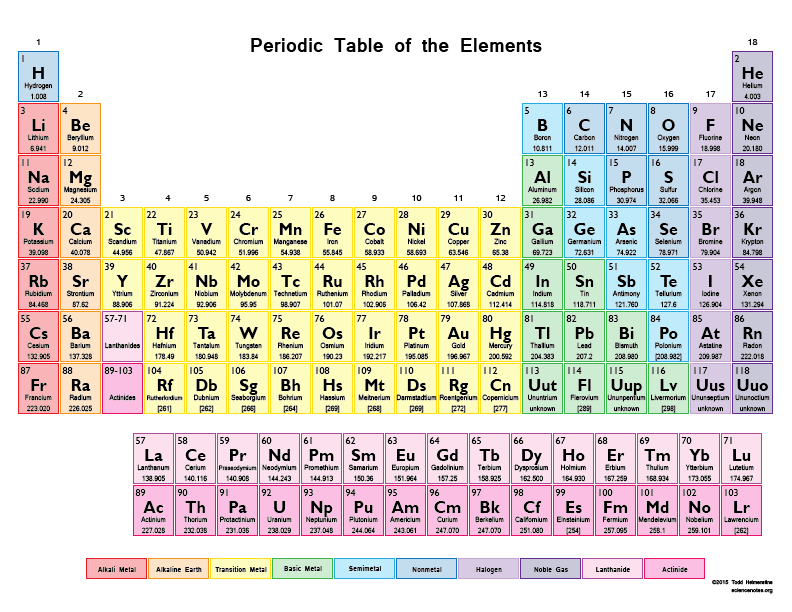
What element is in period 2 and group 13?

1

lithium, Li

2

beryllium, Be

3

boron, B

4

helium, He

5

Multiple Choice

Question image

What element is in period 5 and group 11?

1

Copper, Cu

2

silver, Ag

3

Iron, Fe

4

Vanadium, V

6

Multiple Choice

Question image

What element is in group 17 and period 3?

1
Oxygen
2
Chlorine
3
Sulfur
4
Fluorine

7

media
media

1. Metals

2. Metalloids

3. Nonmetals

Elements are organized into 3 classifications.

8

media
media
media

Label your periodic table (use arrows for metals and nonmetals, lightly shade metalloids)

1. Left side of stairs:

metals

2. Right side of stairs:

nonmetals

3. Touching the stair:

metalloids (B, Si,
Ge, As, Sb, Te, Po?, At?)

Not Aluminum!

METALS

Nonmetals

Metalloids

9

Multiple Choice

Question image

Most of the elements on the periodic table are

1

metalloids

2

metals

3

nonmetals

4

gases

10

media

11

media

12

Multiple Choice

Question image

Which of the following will have a larger radius than Zinc?

1

Gallium

2

Aluminum

3

Magnesium

4

Strontium

13

media

14

Fill in the Blanks

Type answer...

15

Multiple Choice

Which of these elements has a larger atomic radius?

1

Lithium Li

2

Fluorine F

3

Carbon C

16

Valence Electrons

  • These are the number of electrons found on the outermost energy level

  • If you are still confused about valence electrons, watch the 4-minute video which will explain more about valence electrons. You will need to copy and paste the link into another browser tab.

  • https://www.youtube.com/watch?v=0hsh0VoFsts

17

To determine the # of valence electrons we look at the group an element is in.

Groups are the vertical columns within a periodic table. All elements in the same group will have the same number of valence electrons.

18

Multiple Choice

How many valence electrons does C have?

1

2

2

4

3

12

4

14

19

Multiple Choice

How many valence electrons does Ca have?

1

2

2

4

3

12

4

14

20

Multiple Choice

How many valence electrons does Cs have?

1

2

2

55

3

12

4

1

21

Multiple Choice

Which element has the same number of valence electrons as Cl?

1

I

2

Ar

3

Al

4

K

22

Multiple Choice

Which element has the same number of valence electrons as Kr?

1

I

2

Ar

3

Al

4

K

23

Multiple Choice

What is the atomic number?
1
the number of protons
2
the number of protons and neutrons
3
the number of neutrons
4
the number of protons and electrons

24

Multiple Choice

What is the mass number defined as?
1
the number of protons
2
the number of protons and neutrons
3
the number of neutrons
4
the number of protons and electrons

25

Multiple Choice

Question image
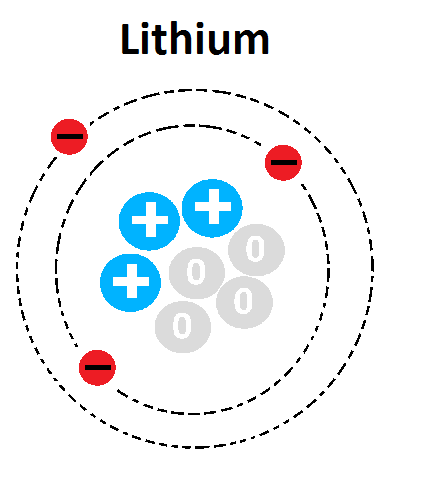
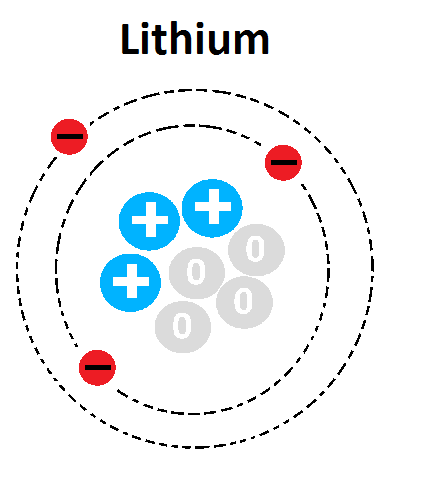
What is the atomic number of this atom?
1
1
2
3
3
4
4
7

26

Multiple Choice

Question image

What is the mass number of this atom?

1

1

2

3

3

4

4

7

27

Multiple Choice

Question image

What is the atomic number of Barium, Ba? (enlarge the periodic table)

1

20

2

38

3

56

4

88

28

Multiple Choice

Question image

What is the atomic number of Nickel? (enlarge the periodic table)

1

110

2

28

3

46

4

78

29

Multiple Choice

In order for an atom to be neutral what has to be true?
1
The atom has more protons than neutrons
2
The atom has more neutrons than protons
3
The atom has the same number of protons and neutrons
4
The atom has the same number of protons and electrons

30

Multiple Choice

Question image
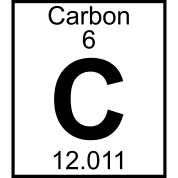
What does the C represent?
1
atomic mass
2
atomic number
3
element name
4
chemical symbol 
media
media
media

Periodic Table Organization

Periods = rows (across)
- # of periods = 7
- Going across a period, the number of protons goes up

Groups = columns (up and down)
- # of groups = 18
- Elements in a group have similar properties

Show answer

Auto Play

Slide 1 / 30

SLIDE