

1.3.4 Emotions

Presentation
•
Science
•
8th Grade
•
Practice Problem
•
Easy
+4
Standards-aligned

Megan Horvat
Used 7+ times
FREE Resource
12 Slides • 3 Questions
1
Emotions

1.3.4
2
Poll
Which Spongebob are you feeling today?
Happy! Today is a good day :)
I'm okay, but I'm hoping the day gets
I'm not doing too good today :/
I'm not having a good day :(
3
Objectives
Learners can:
examine the parts of the brain that compose the limbic system
identify how different parts of the brain respond to different emotions
differentiate between human emotional responses and the emotional responses of other animals
4
brain
cerebrum
neurologist
Prerequisite Vocab
emotion
limbic system
New Vocab
Vocabulary
5
a state of mind based on someone's circumstances, mood, or connection with others
Emotion
a set of structures in the brain that deal with emotions and memory
Limbic System
6

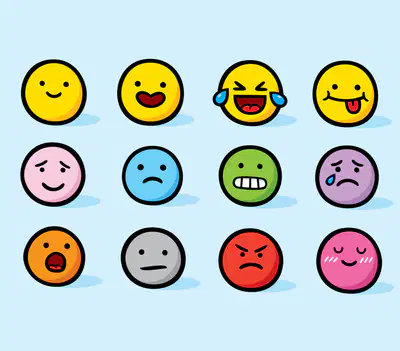
An emotion is a state of mind based on someone's circumstances, mood, or connection with others. Some emotions may be very specific, such as feeling happy or angry toward a particular person or situation. Other emotions may be more general, such as feeling joyful or sad. Humans have as many as 27 different emotions!
Emotions
7
Limbic System
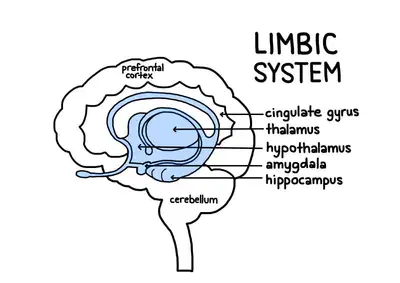
The limbic system is a set of structures in the brain that deal with emotions and memory. The four main parts of the limbic system are:
hypothalamus
amygdala
thalamus
hippocampus
8
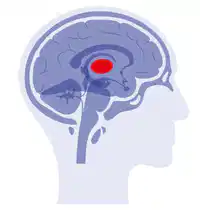
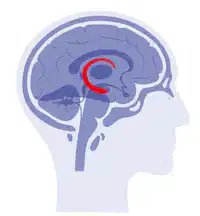
controls unconscious activities
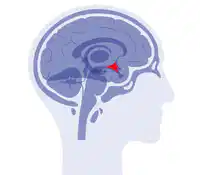
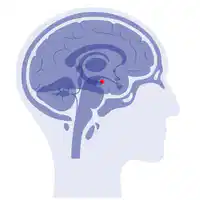
impacts the fight or flight response within an organism.
Hypothalamus
known as the aggression center
feelings like anger, violence, fear, and anxiety come from here
Amygdala
acts as a relay station for sensory signals
like a subway for senses
Thalamus
converts short-term memory to long-term memory
Hippocampus
9
Match
Match the statement with the part of the limbic system that is being described.
hypothalamus
hippocampus
thalamus
amygdala
unconscious functions & fight or flight
stores memory that triggers emotion
routes sensory inputs to the brain
fear, anxiety, and anger start here
unconscious functions & fight or flight
stores memory that triggers emotion
routes sensory inputs to the brain
fear, anxiety, and anger start here
10
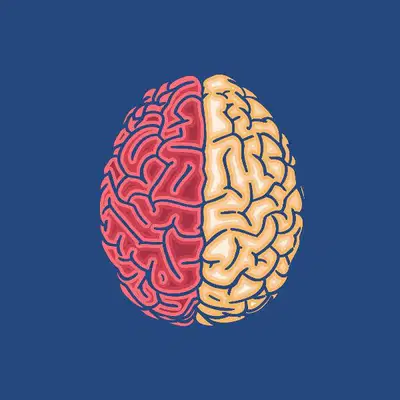
The cerebral cortex is the outer layer of the cerebrum. The cerebral cortex is divided into two halves, called hemispheres. Research has found that positive emotions cause more activity in the left side of the brain, while negative emotions cause increased activity in the right side. This understanding has allowed scientists to better understand how individual personalities may appear in someone.
Cerebral Cortex
11
12
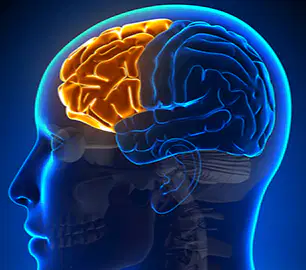
The cerebral cortex can also be divided based on how different areas function. For example, the part of the brain just behind the forehead is called the prefrontal cortex. This part of the brain allows for higher-level thinking, which helps set humans apart from other animals.
Pre-frontal Cortex
13
Human Emotions
The Limbic System
The limbic system is found in the brain of every animal. The system is found in the cerebrum, below the cerebral cortex. In most animals, the amygdala has significant control over the behavior of that organism. This means that most animals will often respond to a situation by exhibiting emotions such as fear or aggression. Humans also have the amygdala structure in the brain and experience these same emotions. However, humans will often not respond to situations the same way an animal does.
14
15
Multiple Choice
Why are humans able to experience an emotional reaction to things such as art and music while other animals cannot?
Humans lack an amygdala that can trigger extreme negative emotions.
Other animals are incapable of experiencing any type of emotion.
Only humans possess the limbic system in their brains to experience an emotional reaction.
Humans have a highly developed brain that connects experiences and emotions.
Emotions
1.3.4
Show answer
Auto Play
Slide 1 / 15
SLIDE
Similar Resources on Wayground

14 questions
Asexual vs Sexual Reproduction
Presentation
•
8th Grade
10 questions
Net Forces Practice
Presentation
•
8th Grade
12 questions
Solutions
Presentation
•
8th Grade
12 questions
Chemical Vs. Physical Changes
Presentation
•
8th Grade
9 questions
Components of the Universe
Presentation
•
8th Grade
13 questions
Law of Conservation of Matter
Presentation
•
8th Grade
13 questions
Scalars vs Vectors
Presentation
•
8th Grade
8 questions
Moon
Presentation
•
8th Grade
Popular Resources on Wayground
16 questions
Grade 3 Simulation Assessment 2

Quiz
•
3rd Grade
19 questions
HCS Grade 5 Simulation Assessment_1 2526sy
Quiz
•
5th Grade
10 questions
Cinco de Mayo Trivia Questions

Interactive video
•
3rd - 5th Grade
17 questions
HCS Grade 4 Simulation Assessment_2 2526sy
Quiz
•
4th Grade
24 questions
HCS Grade 5 Simulation Assessment_2 2526sy
Quiz
•
5th Grade
13 questions
Cinco de mayo
Interactive video
•
6th - 8th Grade
20 questions
Math Review
Quiz
•
3rd Grade
30 questions
GVMS House Trivia 2026
Quiz
•
6th - 8th Grade
Discover more resources for Science
16 questions
Interactions within Ecosystems
Presentation
•
6th - 8th Grade
30 questions
GMAS Physical Science Review
Quiz
•
8th Grade
10 questions
Exploring the Rock Cycle
Interactive video
•
6th - 8th Grade
18 questions
Carbon Cycle
Quiz
•
8th Grade
10 questions
Exploring Earth's Seasons and Their Causes
Interactive video
•
6th - 8th Grade
26 questions
Amplify Chemical Reactions
Quiz
•
6th - 8th Grade
10 questions
Evidence of Evolution
Presentation
•
6th - 8th Grade
20 questions
8th Grade Science NC EOG Review
Quiz
•
8th Grade