

Federalism

Presentation
•
Social Studies, History
•
6th - 8th Grade
•
Practice Problem
•
Medium

Joshua Wright
Used 3+ times
FREE Resource
41 Slides • 51 Questions
1
the sharing of power

2
The framers of the Constitution wanted a strong national government, but they also wanted the states to keep significant powers. They accomplished both goals by creating a federal system of government in which power is shared between the national and state governments.
3
Multiple Choice

A federal system of government in which power is shared between the national and state governments.
Federalism
Communism
Socialism
4
declaring war
making treaties
print and coin money
regulate Commerce with foreign Nations and between states
postal system
military defense
regulate immigration
5
Multiple Choice
Which of the following is a power held only by the national government?
making treaties with foreign countries
taxes
6
Poll
Do you think the national government should have to share power with the states?
Yes
No
Not sure
7
conduct elections
local governments
Schools
Marriage, divorce, adoption
commerce within the state
fire and police
licenses
8
Multiple Choice
True or False: State governments are allowed to have the power to control schools and marriages.
True
False
9
protect Rights of the people
Taxes
public health
courts
punish lawbreakers
borrow money
maintain roads
10
Multiple Choice
True/False:
The national and state governments both have the power to tax and to maintain roads.
True
False
11
A free trade zone between the states.
1. goods and resources could flow more easily across the country, which is important because different regions do different things well.
2. made it easier to create large businesses that crossed state lines
3. helped to create a single national economy.
12
Multiple Choice
An advantage of a common market (free trade) is
it created a single national economy.
it made the president a dictator.
13
Article VI states that the Constitution and the laws flowing from it are the “supreme Law of the Land,” which means that a state's constitution, laws, and judicial decisions must agree with the Constitution and must not conflict with any other federal laws or treaties.
In addition, everyone who holds a state or federal office must promise to support the Constitution.

14
Multiple Choice
True/False:
The Constitution is known as the “supreme Law of the Land,” which means that a state's constitution, laws, and judicial decisions must agree with the Constitution.
True
False
15
Division of power between the states and the national government.

16
They are called Expressed Powers because they are powers directly listed (expressed) in our Constitution
17
Power to lay and collect taxes
Coin (make) money
Establish post offices
Declare war
Raise and support an army and navy
Make laws necessary and proper to carry out the above powers
18
"The powers not delegated to the United States by the Constitution, nor prohibited by it to the States, are reserved to the States respectively, or to the people."
19
The states have any power that the Constitution does not give the federal government
If the Constitution says the national government has a certain power, then a state can't do it-- ex. states can't declare war, states can't print money (those powers belong to the national government).
If it's not on the national government's list-- the states can do it!
20
Multiple Choice
Expressed Powers are...
Federal Powers
State Powers
21
Multiple Choice
Reserved Powers are
Federal Powers
State Powers
22
Multiple Choice
Declaring war is a...
Federal Power
State Power
23
Multiple Choice
Run public schools is a...
Federal power
State power
24
Multiple Choice
Issue licenses is a...
Federal power
State power
25
Multiple Choice
Make rules over trade with foreign countries is a...
Federal power
State power
26
Multiple Choice
Running elections is a...
Federal power
State power
27
Multiple Choice
Provide police and emergency services is a...
Federal power
State power
28
Multiple Choice
Create and provide for an army and navy is a...
Federal power
State power
29
Multiple Choice
Overseeing local governments is a...
Federal Power
State power
30
Multiple Choice
Creating treaties with foreign countries is a
Federal Power
State Power
31
Multiple Choice
Providing for the general welfare
Federal Power
State power
32
Multiple Choice
Add new states to the country
Federal Power
State Power
33
Multiple Choice
Overseeing public health is a...
Federal power
State power
34
Multiple Choice
Challenge Question!!
Creating and providing for the national guard is a...
Hint: Virginia National Guard, North Carolina National Guard...
Federal power
State power
35


36


Federalism: Who does what?
Expressed Powers- Jobs of the Fed.
Gov’t
● Conduct foreign policy (work with other
countries)
● Regulate business within the U.S.
● Provide for national defense (armed
forces)
● Print Money
37
10th amendment grants reserved powers to the state
38


Federalism: Who does what?
Reserved Powers- Jobs of the State
Gov’t
● Promote public health
● Public Schools
● Conduct elections
● Authority for licenses- driving,
jobs
39


Federalism: Who does what?
Concurrent Powers (done by both
federal and state governments)
● Collect Taxes
● Maintain courts
● Roads
40
Multiple Choice
Which amendment gives reserved powers to the states?
1st amendment
7th amendment
10th amendment
15th amendment
41
Multiple Choice
Powers that are not given to the Federal government are _________.
Implied powers
Reserved powers
Expressed powers
Surplus powers
42
Multiple Choice
What are powers called that both federal and state governments do?
Reserved
Express
Concurrent
43

Expressed Powers
(jobs for federal gov.)
Concurrent
Powers
-Foreign policy
-National
defense
(military)
-Print $$$
-Taxes
-Courts
-Roads
-Schools
-Elections
-Licenses
-Public
Health
Reserved Powers
(jobs for state gov.)
44
Multiple Choice
What level of government is responsible for managing schools?
Federal (Expressed)
State (Reserved)
Both (concurrent)
45
Multiple Choice
What level of government funds our national defense?
Federal (Expressed)
State (Reserved)
Both (Concurrent)
46
Multiple Choice
What level of government handles taxes?
State (Reserved)
Federal (Expressed)
Both
(Concurrent)
47
Multiple Choice
What level of government handles driver's licenses and marriage licenses?
Both (Concurrent)
Federal (Expressed)
State (Reserved)
48
49

50

51

52

53

54

55

56

57

58

59

60

61

62

63

64

65

66

67

68

69

70

71
Multiple Choice
5. The Constitution of India
divided powers between centre and states in three lists.
divided powers between centre and states in two lists.
listed the powers of the states and left the undefined powers to the state.
Specified the pow ers of the states and left the residuary powers with the centre.
72
Multiple Choice
In case of a clash between the laws made by the centre and a state on a subject in the concurrent list:
the state law prevails.
the central law prevails.
both the laws prevail within their respective jurisdictions
the Supreme Court has to intervene to decide.
73
Multiple Select
Consider the following statements on the practice of federalism in India. Identify those which hold true for decentralisation after 1992.
Local governments did not have any power or resources of their own.
It became constitutionally mandatory to hold regular elections to local government bodies.
The state governments are required to share some powers and revenue with local government bodies.
No seats are reserved in the elected bodies for scheduled castes, scheduled tribes and other backward
74
Multiple Select
In a ‘Holding together federation’:
The Central government tends to be more powerful vis-a-vis the States.
A large country divides its power between constituent states and the national government.
All the constituent states usually have equal powers.
Constituent states have unequal powers.
75
Multiple Select
What is the basic idea behind decentralization?
Large number of problems and issues are best settled at the local level
People have better knowledge of problems in their localities
It helps to inculcate a feeling of democratic participation
All of the above
76
Fill in the Blanks
When power is taken away from the Central and State governments and given to the local governments, it is called
Type answer...
77
Multiple Choice
How Belgium shifted from a unitary to a federal form of government?
Changes in the Belgian constitution
Regional governments were no longer dependent on the Central government
Reducing the powers of the Central government and giving these to the regional governments
All of the above
78
Multiple Choice
Which form of government existed in Sri Lanka?
Federal form of government
Unitary form of government
Parliamentary form of government
None of these
79
Multiple Choice
What are residuary subjects?
Subjects that do not fall into the category of any three lists
Subjects like computer software
Union government has the power to legislate over these subjects
All of the above
80
Multiple Choice
Which third tier was added later on in the system of Indian government?
Lok Sabha
Panchayats and Municipalities
Centre
States
81
Fill in the Blanks
When a large country decides to divide its power between the constituent states and national government, it is called
Type answer...
82
Multiple Choice
Which subject is not included in the Union List?
Defence
Foreign Affairs
Agriculture
Banking
83
Multiple Choice
What is federalism?
Two or more than two levels of government
Rulers elected by the people
A system where monarch is the head
One man rule
84
Multiple Choice
Example of coming together
USA ,Australia ,Switzerland
Australia,Spain and Switzerland
USA,India ,Spain
85
Multiple Choice
In a Unitary System.......
State government has power of its own
safeguards unity and accommodates regional diversity
one level of government or sub units are subordinate to the central government
86
Multiple Choice
Sources of revenue of each level of government are specified to ensure
regional diversity
administration
financial autonomy
87
Multiple Choice

What form of federalism is practiced in the US
Holding Together
Coming Together
Unitary
88
Multiple Choice
Example of Holding Together is
India,US ,Canada
Spain ,Belgium ,Australia
India,Spain,Belgium
89
Multiple Choice

System of governance where states are weak and centre is strong is .....
Bicameral
Unitary
Federal
90
Multiple Choice
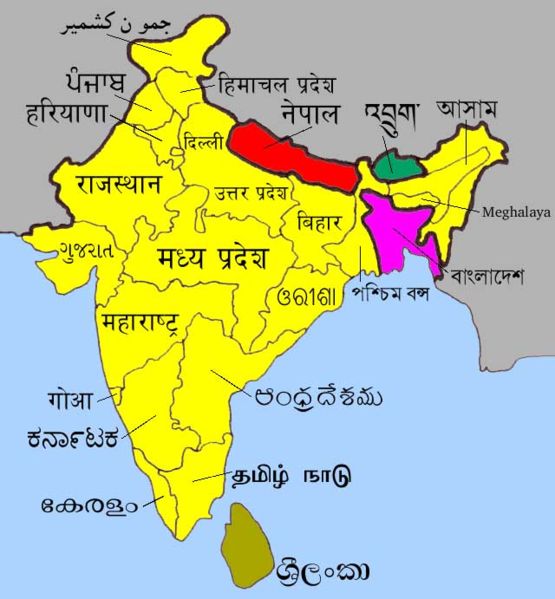
This map of India denotes accommodation based on
Linguistic Diversity
Economic and Social Diversity
System of government
91
Multiple Choice

This is an image of the Indian system which is called
Coming Together
Unitary
Federalism
92
Multiple Choice
This is an image of the Indian system which is called
Coming Together
Unitary
Federalism
the sharing of power
Show answer
Auto Play
Slide 1 / 92
SLIDE
Similar Resources on Wayground

83 questions
F4 Nutrition & Human Digestive System
Presentation
•
7th - 10th Grade
86 questions
Legislative Branch
Presentation
•
10th Grade
82 questions
South/Southeast US Physical/Political Map
Presentation
•
9th - 12th Grade
84 questions
Rise of Stalin
Presentation
•
9th - 10th Grade
83 questions
Ch 22 WWII
Presentation
•
9th Grade
88 questions
Nubia 1b: The Kushites & Meroë Study Guide
Presentation
•
8th Grade
86 questions
Geologic Time Scale
Presentation
•
9th Grade
Popular Resources on Wayground
10 questions
Safety Day 2026 – Student Review

Quiz
•
9th Grade
21 questions
Continents and Oceans
Quiz
•
6th Grade
20 questions
Parts of Speech
Quiz
•
5th Grade
16 questions
Subject & Predicate
Quiz
•
5th Grade
25 questions
Multiplication Facts
Quiz
•
5th Grade
12 questions
Map Skills
Quiz
•
3rd Grade
22 questions
Continents and Oceans
Quiz
•
5th Grade
15 questions
Rounding Decimals
Quiz
•
5th Grade
Discover more resources for Social Studies
19 questions
Foundations of America
Quiz
•
6th - 8th Grade
10 questions
Exploring the Age of Exploration: Key Events and Figures

Interactive video
•
6th - 10th Grade
15 questions
Middle Ages of the Middle East Vocab List (CFA #2)
Quiz
•
6th - 8th Grade
10 questions
Debating the Legacy of Christopher Columbus
Interactive video
•
6th - 10th Grade
53 questions
Otto: Unit 2 American Revolution Review
Quiz
•
6th - 8th Grade
29 questions
Mesopotamia Review
Quiz
•
6th - 8th Grade
70 questions
SWA Govt Review
Quiz
•
6th - 8th Grade
10 questions
Exploring the 13 Colonies Regions
Interactive video
•
6th - 10th Grade