Search Header Logo
Inv 1. Lesson 2 and 3 - Earth's Interior and Plate Tectonics

Inv 1. Lesson 2 and 3 - Earth's Interior and Plate Tectonics

Assessment

Presentation

Chemistry

10th Grade

Medium

NGSS
MS-ESS2-3, HS-ESS1-5, MS-ESS2-2

+3

Standards-aligned

Created by

Theresa Pinkerton

Used 8+ times

FREE Resource

24 Slides • 37 Questions

1

media

2

3

media

4

Drag and Drop

Question image
P-waves can travel through​
and s-waves can travel through​
.
Drag these tiles and drop them in the correct blank above
solids and liquids
solids only
gases only
liquids only

5

media

6

Multiple Select

Select all that determines the density of a substance.

1

chemical composition


2

temperature

3

pressure


4

quantity

7

media

8

Multiple Choice

Earth's physical layers are determined by what?

1

color banding and size

2

density and pressure

3

gravity and no gravity

4

metals or non metals

9

Multiple Choice

What happens to pressure, density, and temperature as you get closer to Earth's core?

1

they all increase

2

they all decrease

3

only pressure increases

10

Categorize

Options (4)

Crust

Mantle

Inner Core

Outer Core

Question image

Which layers are made of rock and which are made of metal?

Rock
Metal

11

Multiple Choice

Question image

What is the correct order of the layers of the Earth starting from the outside to the center of the Earth?

1

crust (lithosphere), core (outer core, inner core) mantle (asthenosphere, mesosphere)

2

mantle (asthenosphere, mesosphere), crust (lithosphere), core (outer core, inner core)

3

crust (lithosphere), mantle (asthenosphere, mesosphere), core (outer core, inner core)

4

core (outer core, inner core), mantle (asthenosphere, mesosphere), crust (lithosphere)

12

media

13

Multiple Choice

What causes the plates to move?

1

Pressure

2

Convection Currents

3

Time

4

Heat

14

Multiple Choice

In which layer of Earth does convection occur?

1

Asthenosphere

2

Oceanic crust

3

Lithosphere

4

Inner core

15

Match

Question image

What type of process occurs at each layer of the earth?

Inner Core

Outer Core

Mantle

Crust

Conduction Only

Conduction and Convection

Primarily Convection

Radiation and Conduction (Advection)

16

media

17

Multiple Choice

What layer of the earth gives off a magnetic charge?

1

Inner core

2

Outer core

3

Crust

4

Mantle

18

Multiple Choice

Explain how the Outer core is different than the Inner core?

1

The outer core is smaller than the inner core

2

The outer core is hotter than the inner core

3

The outer core is liquid and the inner core is solid

19

media

20

Multiple Choice

Question image

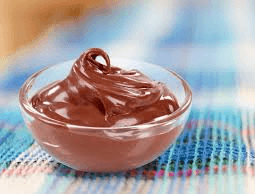
Which layer is made of "flowing" solid rock (think clay or pudding)?

1

crust

2

mantle

3

outer core

4

inner core

21

Multiple Choice

What happens at a convergent boundary?

1

plates pull apart

2

plates collide

3

plates slide past each other

22

media

23

media

24

media

25

Drag and Drop

Upwelling occurs at ​
areas of the mantle where downwelling occurs at​
regions. This heat transfer process is called
resulting in the movement of the Earth's ​
.
Drag these tiles and drop them in the correct blank above
hot
cooler
convection
crust
core
conduction
radiation

26

Multiple Choice

Question image

What geologic feature will occur at a hot spot ?

1

volcano

2

folded mountain

3

deep sea trench

4

crevasse

27

media

28

media

29

Dropdown

Heat is lost from the Earth as ​
is emitted from the lithosphere into​
.

30

media

31

media

32

Multiple Choice

A place where 2 tectonic plates meet

1

Continental drift

2

Plate boundaries

3

inner core

4

outer core

33

Multiple Choice

Question image
What are the two kinds of crust?
1
lithospheric and asthenospheric
2
silicon based and iron based
3
continental and oceanic
4
outer and inner

34

media

35

Open Ended

Question image

List three plates that are colliding.

36

Open Ended

Question image

List three plates that are moving the fastest.

37

media

38

Multiple Choice

Oceanic crust is...

1

thinner, denser, younger

2

thinner, less dense, older

3

thicker, denser, younger

4

thicker, less dense, older

39

Multiple Choice

Which of the following supports the theory of seafloor spreading?

1

Correlation of rock layers

2

Crustal slab pull

3

Magnetic reversals recorded in rocks

4

Continuous mountain chains

40

Multiple Choice

The magnetic pattern of ocean-floor rocks on one side of an ocean ridge is_____________.

1

a mirror image of that on the other side

2

younger than other side

3

much different pattern

4

at right angles to the ridge

41

media

42

Multiple Choice

The name of the supercontinent that included all of the landmasses on Earth that existed 200 million years ago.

1

Pangaea

2

plate boundaries

3

Volcano

4

Earthquake

43

media

44

Multiple Choice

What happens at a convergent boundary?

1

plates pull apart

2

plates collide

3

plates slide past each other

45

Open Ended

What type of features would you expect to find at convergent boundaries?

46

media

47

Multiple Choice

What happens at a divergent boundary?

1

plate pull apart

2

plate collide

3

plate slide past each other

48

Multiple Choice

Crustal plates that pull apart from one another likely form

1

volcanic island arcs

2

strike-slip faults

3

oceanic trenches

4

rift zones

49

media

50

Multiple Choice

What happens at a transform boundary?

1

plates pull apart

2

plates collide

3

plates slide past each other

51

media

52

Multiple Choice

In a region where two continental plates collide, what geological features MOST often forms?

1

an ocean

2

a volcano

3

a river valley

4

a mountain range

53

media

54

Multiple Choice

Question image

Which crust is thicker

1

oceanic

2

continental

3

bread

4

pizza

55

Multiple Choice

Question image

What happens where an oceanic plate converges with a continental plate?

1

The denser oceanic plate slides on top of the less dense continental plate.

2

The denser oceanic plate slides under the less dense continental plate.

3

The less dense oceanic plate slides past the denser continental plate.

4

The less dense oceanic plate slides under the denser continental plate.

56

Multiple Choice

What formations happen at ocean to ocean subduction zones?

1

Deep oceanic trenches

2

Mountain Ranges

3

Coastal Volcanic Mountains

4

Both mountains and volcanoes

57

Multiple Choice

At which boundary is crust DESTROYED (when melting in the mantle!)?

1

Continent- continent Convergent

2

Transform boundaries

3

Subduction zones

4

All convergent boundaries

58

Multiple Choice

At which plate boundaries does a SUBDUCTION zone occur?

1

Continent to continent convergent boundary

2

Ocean- continent convergent boundary

3

ocean- ocean convergent boundary

4

Both Ocean-Ocean and Ocean- Cont. Boundaries

5

Both Ocean- Cont. and Cont- cont. Boundaries

59

Multiple Choice

Which of these plate boundaries are most likely to form a volcano?

1

a continental plate colliding with a continental plate

2

an oceanic plate sliding past a continental plate

3

a continental plate sliding past a continental plate

4

an oceanic plate colliding into a continental plate

60

media

61

Reorder

Place the process of mineral deposit formation that occur at midocean ridges and subduction zones in the correct order.

Water sinks into the crust.

Water is heated by magma.

The minerals dissolve.

The water rises to the surface and cools.

The minerals precipitate out of the water.

1
2
3
4
5
media

Show answer

Auto Play

Slide 1 / 61

SLIDE