Heat Transfer
Presentation
•
Science
•
6th - 8th Grade
•
Medium
+12
Standards-aligned

Benevolence Yangsi
Used 4+ times
FREE Resource
16 Slides • 12 Questions
1
Heat Transfer,
Conduction, Convection
and Radiation
2
Heat Transfer
• Heat always moves from a warmer place to a cooler place.
• Hot objects in a cooler room will cool to room temperature.
• Cold objects in a warmer room will heat up to room temperature
3
What are the different methods of
heat transfer?
• Heat transfers in three ways:
–Conduction
–Convection
–Radiation
4
Conduction The process that moves heat energy from one object to
another when they are touching physically.
It occurs on solid, liquid, and gas.
5
How Conduction happens
When you heat a metal strip at one end, the heat
travels to the other end.
As you heat the metal, the particles vibrate, these
vibrations make the adjacent particles vibrate, and so on
and so on, the vibrations are passed along the metal and
so is the heat. Materials that have this ability are called
thermal conductors
6
Conductors and insulators
Metals: The outer electrons of
metal atoms are free to move.
When the metal is
heated, this ‘sea of
electrons’ gain k_____
energy and transfer it
throughout the metal.
Insulators, such as w___ and p____, do not
have this ‘sea of electrons’ which is why they
do not conduct heat as well as metals.
inetic
ood
lastic
7
Thermal conductors are materials in which thermal energy moves quickly.
Ex. Metal, copper, silver
8
Why does metal feel colder than wood, if they
are both at the same temperature?
Metal is a conductor, wood is an insulator. Metal
conducts the heat away from your hands. Wood
does not conduct the heat away from your hands as
well as the metal, so the wood feels warmer than
the metal.
9
Thermal Insulators are material in which
thermal energy moves slowly.
Ex. Rubber, plastic, clothes
10
Convection
The transfer of thermal energy by the movement of
particles from one part of materials to another. It
occurs in liquids and gases (fluid), but not in solids.
This Photo by Unknown Author is licensed under CC BY-NC-ND
11
How Convection works
What happens to the particles in a liquid or a
gas when you heat them?
The particles spread out and
become less dense.
This effects fluid movement.
What is a fluid?A liquid or gas.
12
Fluid movement
Cooler, more d____, fluids
sink through w_____, less
dense fluids.
In effect, warmer liquids and
gases r___ up.
Cooler liquids and gases s___.
13
Why is it windy at the seaside?
14
Cold air sinks
Where is the
freezer
compartment
put in a fridge?
Freezer
compartment
It is put at the
top, because
cool air sinks,
so it cools the
food on the
way down.
It is warmer
at the
bottom, so
this warmer
air rises and
a convection
current is
set up.
15
Radiation
Transfer of thermal energy from one object to another by
electromagnetic waves.
The transfer of thermal energy can be through matter or through space (no matter exist). The transfers are not in contact. Electromagnetic waves carry thermal energy between objects.
16
How Radiation works
How does heat energy get
from the Sun to the Earth?
There are no particles
between the Sun and the
Earth so it CANNOT
travel by conduction or
by convection.
?
RADIATION
earthwithtilt
17
Multiple Choice
A cat is hanging out several feet from a fire in a fireplace. This causes the kitty cat to get warm. The kitty cat is warm because of...
Convection
Conduction
Radiation
The fur sweater he's wearing!
18
Multiple Choice
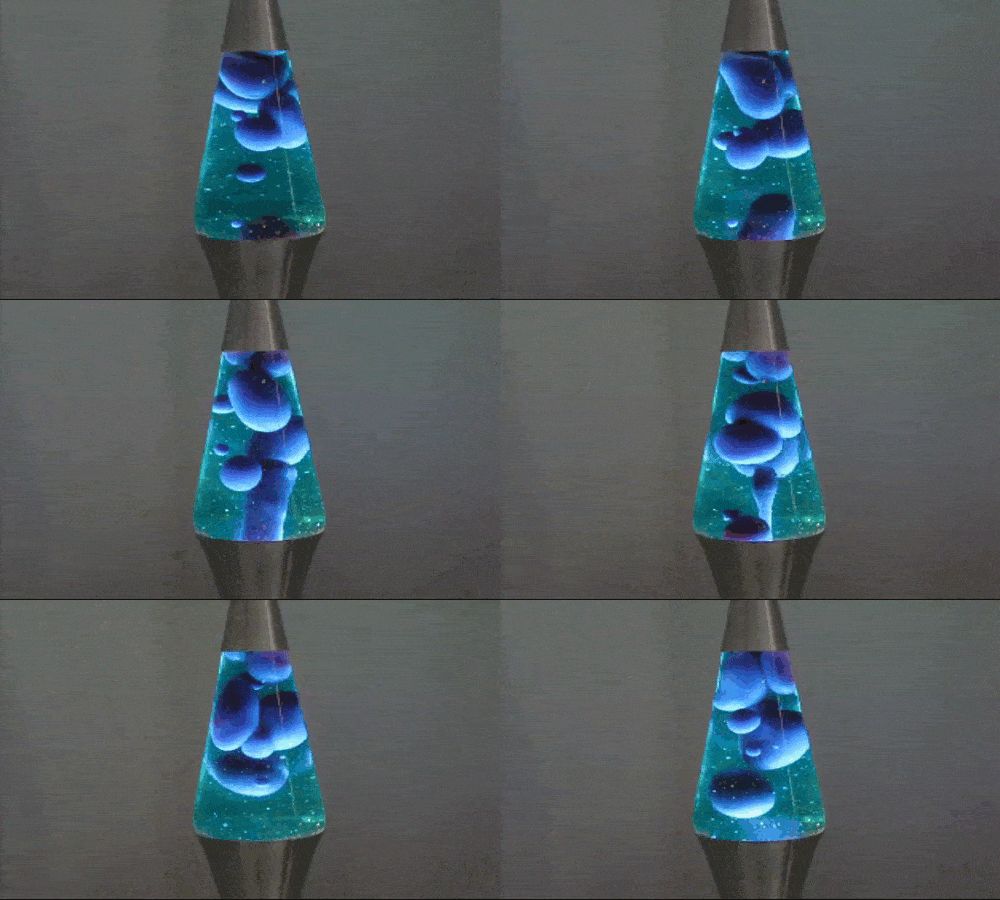
A certain type of decorative lamp contains colored liquids. These liquids form globs that break off and rise to the top of the liquid. The globs rise due to
Convection
Conduction
Radiation
Globulation
19
Multiple Choice
Near the ceiling of a room, the air is warmer. The warmer air is rising because of
Convection
Conduction
Radiation
It was told to by this crazy fool!
20
Multiple Choice
A fireman that is at a building that is on fire feels a door and it is hot. Why does his hand feel hot?
Convection
Conduction
Radiation
The Human Torch was on the other side!
21
Multiple Choice
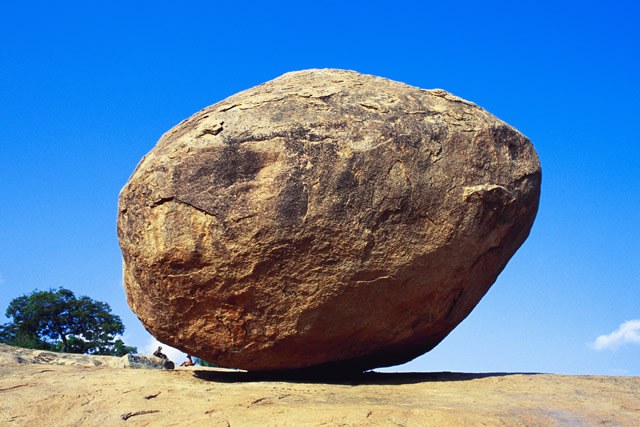
A huge boulder at the state park in Arizona gets so hot during a mid summer's day. This is due to...
Convection
Conduction
Radiation
Boogie Fever
22
Multiple Choice
In heat transfer, heat always flows from the _______________ object to the _______________ object.
hotter / colder
colder / hotter
hotter / hotter
colder / colder
23
Multiple Choice
Which of the following statements is true regarding heat energy?
The quicker a molecule moves, the colder it is.
The slower a molecule moves, the warmer it is.
The quicker a molecule moves, the warmer it is.
The faster you dance, the quicker you get tired.
24
Multiple Choice
25
Multiple Choice
Weather Patterns...
Conduction
Convection
Radiation
26
Multiple Choice
Heat/magma moving under Earth's mantle; hot magma rises and cold magma sinks...
Conduction
Convection
Radiation
27
Multiple Choice
What is the circular motion of hot air rising and cold air sinking?
Radiation
Convection Currents
Electromagnetic Waves
Conduction
28
Multiple Choice
The sun shining...
Heat Transfer,
Conduction, Convection
and Radiation
Show answer
Auto Play
Slide 1 / 28
SLIDE

Similar Resources on Wayground
20 questions
Earth, Moon, and Sun
Presentation
•
6th - 8th Grade
20 questions
Nitrogen Cycle
Presentation
•
6th - 8th Grade
23 questions
Energy Transfer and Temperature
Presentation
•
6th - 8th Grade
22 questions
Types of Living Things
Presentation
•
6th - 8th Grade
22 questions
Adaptations & Variations LT 5
Presentation
•
6th - 8th Grade
22 questions
PMA 3 Review-Earth's Spheres
Presentation
•
6th - 8th Grade
22 questions
Classification
Presentation
•
6th - 8th Grade
22 questions
Earth, Moon, and Sun System
Presentation
•
6th - 8th Grade
Popular Resources on Wayground
10 questions
GPA Lesson
Presentation
•
9th - 12th Grade
7 questions
Albert Einstein
Quiz
•
3rd Grade
31 questions
Bridge A Review
Quiz
•
3rd Grade
6 questions
Blue Sue and Red Ruth
Quiz
•
3rd Grade
8 questions
(Day12 HW) Inverse Trig Ratios
Quiz
•
9th Grade
20 questions
Summer Geometry QUIZ (Week3)
Quiz
•
9th Grade
16 questions
Theme Practice
Quiz
•
7th Grade
20 questions
Taxes
Quiz
•
9th - 12th Grade