

Muscle Wyman

Presentation
•
Science
•
8th Grade
•
Practice Problem
•
Hard

Julian Wyman
FREE Resource
34 Slides • 0 Questions
1

Ranges of Motion
CIRCUMDUCTION:the circular (or “conical”)
movement of a body part, such as a ball-and- socket
joint or the eye; a combination of flexion, extension,
adduction, and abduction; "windmilling" the arms or
rotating the hand from the wrist are examples
OPPOSITION: a motion involving a grasping motion
of the thumb and fingers
REPOSITION: to release an object by spreading the
fingers and thumb
2


MUSCULAR
SYSTEM
Copyright©2013Chris Grayling.
All Rights Reserved.
3


MUSCLE NAMES
Most muscles are named according to their
location, origin/insertion, direction of muscle
fibers, size, shape, type of action produced, or
other criteria, such as nearby bones
4

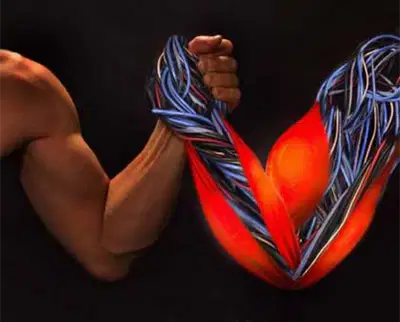
3 Types of Muscle:
1. SKELETAL – ( voluntary/striated); provide
body movement and produce heat
5


3 types of muscle:
2.
SMOOTH – ( involuntary/visceral); found in walls of arteries and veins
and in internal organs (except the heart)
6

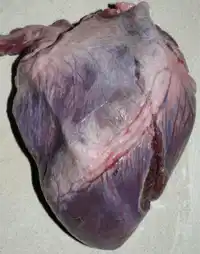
3 types of muscle:
2. CARDIAC – found only in the heart
7

4 Characteristics of Muscles:
1.
EXCITABILITY = the ability to receive and
respond to a stimulus
2.
CONTRACTILITY = the ability to shorten
3.
EXTENSIBILITY = the ability to be stretched
4.
ELASTICITY = the ability to resume normal
length after contraction or
having been stretched
8

Types of Muscle Movement
ISOTONIC - the muscle shortens
ISOMETRIC - tension is increased but the muscle
does not shorten
9


Ranges of Motion
FLEXION: bending a joint to decrease the angle
between two bones or body parts
10

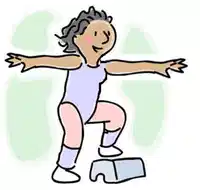
Ranges of Motion
EXTENSION: straightening a joint to increase the
angle between two bones or body parts
11

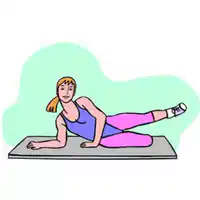
Ranges of Motion
ABDUCTION: moving the body part away from
the midline of the body
12


Ranges of Motion
ADDUCTION: moving the body part toward the
midline of the body
13

Ranges of Motion
ROTATION: moving the body part around its axis
INTERNAL ROTATION: (aka: medial rotation) of the
shoulder or hip would point the toes or the flexed
forearm inwards towards the midline
EXTERNAL ROTATION: (aka: lateral rotation) is the
opposite; it would turn the toes or the flexed
forearm outwards away from the midline.
14

Ranges of Motion
SUPINATION: turning the palm of the hand
upward
PRONATION: turning the palm of the hand
downward
EVERSION: turning the foot (body part) outward
INVERSION: turning the foot (body part) inward
15

Ranges of Motion
Plantar flexion: bending the foot causing the
toes to point downward, as if
pressing an automobile pedal
Dorsiflexion: bending of the foot causing
the toes to point upward
16

Ranges of Motion
CIRCUMDUCTION: the circular (or “conical”) movement
of a body part, such as a ball-and- socket joint or the
eye; a combination of flexion, extension, adduction,
and abduction; "windmilling" the arms or rotating the
hand from the wrist are examples
OPPOSITION: a motion involving a grasping motion of
the thumb and fingers
REPOSITION: to release an object by spreading the
fingers and thumb
17


MUSCLE NAMES
Most muscles are named according to their location, origin/insertion,
direction of muscle fibers, size, shape, type of action produced, or other
criteria, such as nearby bones
18

MUSCLE NAMES
• biceps - two origins
• triceps - three origins
• quadriceps - four origins
• flexor - decreases a joint angle
• extensor - increases a joint angle
• abductor - moves a bone away from the midline
• adductor - moves a bone closer to the midline
• levator - raises or elevates a body part
• depressor - lowers or depresses a body part
cont…..
19

MUSCLE NAMES
• supinator - turns palm up
• pronator - turns palm down
• rotator - rotates a bone around its axis
• minimus - smallest
• minor - smaller
• medius - intermediate
• magnus - large
• major - larger
• maximus - largest
• vastus - huge
cont…..
20

MUSCLE NAMES
• rectus - parallel to midline
• oblique - diagonal to midline
• transverse - perpendicular to midline
• gracilis - slender
• platys - flat
• deltoid - triangular
• orbicularis - circular
• piformis - pear-shaped
• rhomboid - diamond-shaped
cont…..
21

MUSCLE NAMES
• trapezius - trapezoid
• serratus - saw-toothed
• pectinate - comb-like
• quadratus - square, four-sided
• sphincter - decreases the size of an opening
• tensor - makes a body part rigid
22


We’re done with muscle names
23

Terms in this lesson:
1.
fasci/o
2.
kinesi/o
3.
my/o, myos/o, muscul/o
4.
ten/o, tend/o, tendin/o
2 SUFFIXES -kinesia, -tonia
24

fasci/o
fascia - a sheet or band of fibrous connective tissue that
surrounds muscles, groups of muscles, blood vessels and
nerves, sometimes binding them together and sometimes
allowing structures to slide over or around each other
25


kinesi/o
I see “can easy”
Canthis tape
really make
movement easy?
26

kinesi/o = movement
27

my/o
Remember myc/o? Let’s look at that slide
again….
28


my/o = muscle
29

myos/o
Adding an “s”
to my/o
still means muscle
30

musclu/o
And this one
obviously means
‘muscle’ too
31

ten/o, tend/o, tendin/o
These all mean tendon
32

-kinesia
The suffix means the same as the combining form.
“can easy” = -kinesia
= movement
33

-tonia
This one is easy too…
-tonia = tone
34


THE
END
Ranges of Motion
CIRCUMDUCTION:the circular (or “conical”)
movement of a body part, such as a ball-and- socket
joint or the eye; a combination of flexion, extension,
adduction, and abduction; "windmilling" the arms or
rotating the hand from the wrist are examples
OPPOSITION: a motion involving a grasping motion
of the thumb and fingers
REPOSITION: to release an object by spreading the
fingers and thumb
Show answer
Auto Play
Slide 1 / 34
SLIDE
Similar Resources on Wayground

27 questions
Modeling Chemical Reactions
Presentation
•
8th Grade
26 questions
Ocean Zones
Presentation
•
8th Grade
28 questions
Atoms and the Periodic Table Review
Presentation
•
8th Grade
29 questions
Cohesion, Adhesion, and Surface Tension
Presentation
•
8th Grade
25 questions
Properties of Waves
Presentation
•
8th Grade
26 questions
Tropism and Turgor Pressure
Presentation
•
8th Grade
31 questions
EM Spectrum (Waves)
Presentation
•
8th Grade
29 questions
Morse Code
Presentation
•
8th Grade
Popular Resources on Wayground
10 questions
HCS SCI 03 Summer School Assessment 1

Quiz
•
3rd Grade
15 questions
HCS SCI 05 Summer School Assessment 1 Review
Quiz
•
5th Grade
22 questions
Day 9 Equations and Inequalities Review
Quiz
•
9th Grade
10 questions
Writing and Identifying Ratios Practice
Quiz
•
5th - 6th Grade
7 questions
PYRAMID PERSPECTIVES part 1
Presentation
•
9th - 12th Grade
12 questions
Understanding the Fourth of July
Quiz
•
9th Grade
15 questions
Soccer World Cup Quiz Questions
Quiz
•
7th Grade