

Network Protocols and Characteristics

Presentation
•
Computers
•
11th Grade
•
Easy

C N
Used 3+ times
FREE Resource
17 Slides • 16 Questions
1

Networks: GCSE Recap to start
2
Open Ended
What is a network?
3


OCR H046/H466
SLR11 Networks | Network characteristics and protocols
•A single computer not connected to
anything else is known as a
standalone machine.
•Once you connect one computing
device to another, either via cable or wireless, you have a network.
What is a network?
4
Poll
Networks come in all shapes and sizes? Be prepared to give an example
Yes
No
5
OCR H046/H466
SLR11 Networks | Network characteristics and protocols
•A single computer not connected to
anything else is known as a
standalone machine.
•Once you connect one computing
device to another, either via cable or
wireless, you have a network.
•Networks come in all sizes:
oSmall business networks with a
handful of devices.
oLarge corporate networks with
thousands of devices.
oThe largest network in the
world – the internet.
What is a network?
6
Open Ended
Give 2 advantages and 2 disadvantages of being on a network
7

OCR H046/H466
SLR11 Networks | Network characteristics and protocols
Advantages and disadvantages of networks
• Users can share files.
• Users can share peripherals and connections to other networks such as the internet.
• Users can access files from any computer on the network.
• Servers can control security, software updates and backup of data.
• Communication with other people – e.g., email and social networking.
Advantages
• Increased security risks to data.
• Malware and viruses spread very easily between computers.
• If a server fails, the computers connected to it may not work.
• Computers may run slower if there is a lot of data travelling on the network.
Disadvantages
8



OCR H046/H466
SLR11 Networks | Network characteristics and protocols
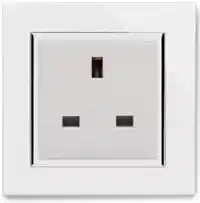
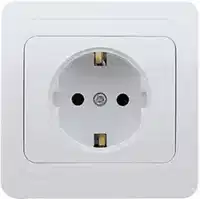
•In the field of computer science,
establishing standards is vital.
•Standards are a set of hardware and software specifications that allow manufacturers to create products and services that are compatible with each other.
•Without standards, most devices wouldn’t be able to interact or
communicate with one another.
The need for standards
9


OCR H046/H466
SLR11 Networks | Network characteristics and protocols
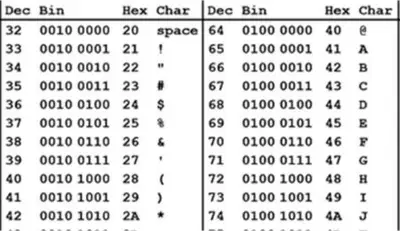
•If one devices recognises the binary
sequence 01000001 as A, we need
other devices to recognise the same
sequence as A too.
Standards in use – Character sets
10


OCR H046/H466
SLR11 Networks | Network characteristics and protocols
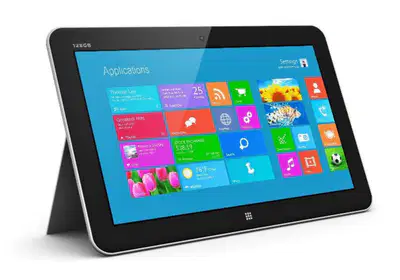
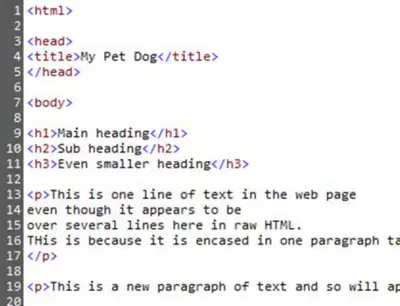
•HTML is an example of an early
standard adopted within the World
Wide Web (WWW) for the display of
web pages in browsers.
Standards in use – Web pages and HTML
11

OCR H046/H466
SLR11 Networks | Network characteristics and protocols
•A key way of ensuring
technology-based standards are
established and adhered to is to use
protocols.
•Much like spoken languages, if two
devices have different protocols,
they cannot communicate.
•However, if two devices share the
same protocol, they can exchange
information – in other words, they
speak the same language.
What is a protocol?
12
Open Ended
List 3 network protocols that you saw at GCSE
13

OCR H046/H466
SLR11 Networks | Network characteristics and protocols
Common protocols
The OCR clarification document states:
“Candidates should be able to discuss examples of protocols
that may be used in a network/the internet (but will not be
asked to recall information about any specific protocol).”
However, they do not go on to list any example protocols.
Based on previous exam papers and other exam board
specifications, we will briefly discuss nine of the most common
that are used for:
• Communication over LAN/WAN
• Web page transfer
• File transfer
• Email
14

OCR H046/H466
SLR11 Networks | Network characteristics and protocols
Common protocols
Protocol acronym
Protocol full name
Area/purpose
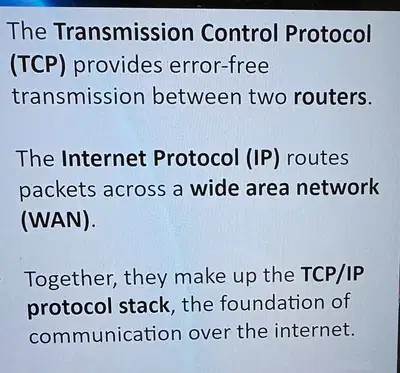
TCP
Transmission Control Protocol
Communication over LAN/WAN
IP
Internet Protocol
Communication over LAN/WAN
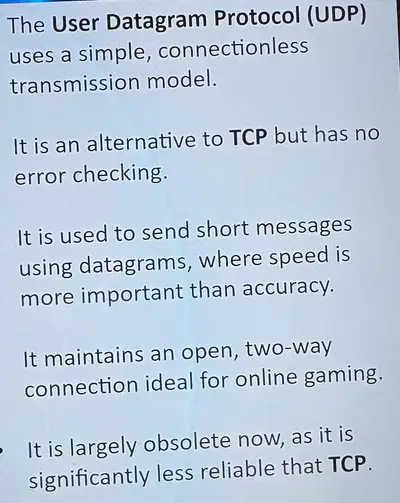
UDP
User Datagram Protocol
Communication over LAN/WAN
HTTP
Hypertext Transfer Protocol
Web page requests
HTTPS
Hypertext Transfer Protocol Secure
Web page requests
FTP
File Transfer Protocol
File transfers
POP
Post Office Protocol
IMAP
Internet Message Access Protocol
SMTP
Simple Mail Transfer Protocol
15
16
17



OCR H046/H466
SLR11 Networks | Network characteristics and protocols
•The Hypertext Transfer Protocol
(HTTP) is a way for a client and
server to send and receive requests
and deliver HTML web pages.
•It is the fundamental protocol of the
World Wide Web (WWW).
•The Hypertext Transfer Protocol
Secure (HTTPS) is effectively the
same as HTTP, except it adds in
encryption and authentication.
•HTTPS should be used whenever a
website deals with sensitive
information such as passwords or
bank account details.
HTTP/HTTPS
18


OCR H046/H466
SLR11 Networks | Network characteristics and protocols
•The File Transmission Protocol (FTP)
is a protocol used for sending files
between computers, normally on a
wide area network (WAN).
•Often people use FTP clients –
software applications that sit on top
of the actual FTPprotocol.
•When you interact with the program,
the client generates and sends the
appropriate FTP commands.
FTP
19


OCR H046/H466
SLR11 Networks | Network characteristics and protocols
POP/IMAP/SMTP
Computer
Mail
server
Mail
server
The
internet
Mail
server
Mail
server
SMTP
SMTP
SMTP
SMTP
SMTP
•Three popular protocols are used in
conjunction with mail servers to deal
with email.
•Mail servers can be thought of as a
virtual post office handling incoming
and outgoing email.
•Simple Mail Transfer Protocol
(SMTP) transfers outgoing emails
between servers and from email
clients to servers.
20








OCR H046/H466
SLR11 Networks | Network characteristics and protocols
POP/IMAP/SMTP
Computer
Computer
Mail
server
Mail
server
The
internet
Mail
server
Mail
server
SMTP
SMTP
SMTP
SMTP
SMTP
POP3
POP3
POP3
POP3
POP3
•Three popular protocols are used in
conjunction with mail servers to deal
with email.
•Mail servers can be thought of as a
virtual post office handling incoming
and outgoing email.
•Simple Mail Transfer Protocol
(SMTP) transfers outgoing emails
between servers and from email
clients to servers.
•Post Office Protocol (POP) retrieves
emails from a mail server and
transfers them to your device,
removing them from the server in
the process.
21


OCR H046/H466
SLR11 Networks | Network characteristics and protocols
•Three popular protocols are used in
conjunction with mail servers to deal
with email.
•Mail servers can be thought of as a
virtual post office handling incoming
and outgoing email.
•Simple Mail Transfer Protocol
(SMTP) transfers outgoing emails
between servers and from email
clients to servers.
•Post Office Protocol (POP) retrieves
emails from a mail server and
transfers them to your device,
removing them from the server in
the process.
•Internet Message Access Protocol
(IMAP) keeps emails on the mail
server, maintaining synchronicity
between devices.
POP/IMAP/SMTP
Computer
Computer
Mail
server
Mail
server
The
internet
Mail
server
Mail
server
SMTP
SMTP
SMTP
SMTP
SMTP
POP3
POP3
POP3
POP3
POP3
IMAP
IMAP
IMAP
IMAP
22
Multiple Choice
Provides the rules for file transfer between computers.
FTP
FPS
HTTP
SMTP
UDP
23
Multiple Choice
Provides the rules to be followed by a web server and a web browser when requesting and supplying data.
FTP
SFTP
HTTP
HTTPS
SMTP
24
Multiple Choice
Ensures that communication between a host and a client are secured by encrypting communications.
FTP
HTTPS
USD
URL
HTTP
25
Multiple Choice
A protocol that downloads emails onto a client computer and removes the mail message from the mail server.
SMTP
SFTP
POP
IMAP
HTTPS
26
Multiple Choice
A protocol that allows email messages to be read and stored on a messaging server.
SMTP
SFTP
POP
IMAP
HTTPS
27
Multiple Choice
Which protocol would be most suitable if you needed to access your emails from multiple devices?
IMAP
POP3
SMTP
FTP
28
Multiple Select
Network protocols allow data to be sent...
Securely
Effectively
Consistently
With no mistakes
29
Multiple Choice
What does TCP stand for?
Transcript Control Protocol
Transition Control Protocol
Transmit Control Protocol
Transmission Control Protocol
30
Multiple Choice
Which protocol holds the email until you actually delete it?
POP3
IMAP
SMTP
FTP
31
Multiple Choice
Which protocol holds the email only until you receive it?
SMTP
FTP
IMAP
POP3
32
Multiple Choice
What is the minimum number of computers needed to create a network?
1
2
3
4
33
Multiple Choice
What is a network protocol?
A shape of a network, such as star
A set of rules for sharing data
The requirements for passwords, such as length
The size of a network, such as WAN
Networks: GCSE Recap to start
Show answer
Auto Play
Slide 1 / 33
SLIDE
Similar Resources on Wayground

22 questions
IELTS Writing Task 1
Presentation
•
11th Grade
30 questions
OCR CS Revision Lesson 1
Presentation
•
11th Grade
22 questions
Formularze
Presentation
•
11th Grade
24 questions
Jaringan Komputer
Presentation
•
10th Grade
27 questions
Unit 2 Data transmission and encryption T4 Encryption
Presentation
•
10th Grade
26 questions
Compression
Presentation
•
11th Grade
25 questions
OSI Layer
Presentation
•
10th Grade
23 questions
Fundamental Network
Presentation
•
11th Grade
Popular Resources on Wayground
20 questions
Math Review

Quiz
•
3rd Grade
15 questions
Fast food
Quiz
•
7th Grade
20 questions
Context Clues
Quiz
•
6th Grade
20 questions
Inferences
Quiz
•
4th Grade
19 questions
Classifying Quadrilaterals
Quiz
•
3rd Grade
20 questions
Figurative Language Review
Quiz
•
6th Grade
20 questions
Equivalent Fractions
Quiz
•
3rd Grade
10 questions
Identify Fractions, Mixed Numbers & Improper Fractions
Quiz
•
3rd - 4th Grade
Discover more resources for Computers
10 questions
Fact Check Ice Breaker: Two truths and a lie
Quiz
•
5th - 12th Grade
10 questions
Video Games
Quiz
•
6th - 12th Grade
15 questions
Memorial Day Trivia
Quiz
•
KG - 12th Grade
12 questions
Name that Candy
Quiz
•
KG - 12th Grade
20 questions
Guess The App
Quiz
•
KG - Professional Dev...
30 questions
K/H Final Review Part 1
Quiz
•
9th - 12th Grade
40 questions
NCFE Earth and Environmental Science Released Test
Quiz
•
9th - 12th Grade
22 questions
Revise and Edit Final Review 3
Quiz
•
8th - 12th Grade