

BIO - Unit 5: Monohybrid & Punnett Square Review

Presentation
•
Science
•
10th Grade
•
Practice Problem
•
Easy
+14
Standards-aligned

Katherine Harnage
Used 4+ times
FREE Resource
13 Slides • 10 Questions
1

Reviewing Monohybrids &
Punnett Squares
2
What is Heredity?
• Heredity is the passing of traits from parents to offspring.
• Inherit: To get traits from parents through their genes.
• Genes: parts of DNA that decide what traits you will have.
• Traits: Features or characteristics you get from your parents.

3
Match
Match the following terms with their definitions.
Inherit
Genes
Trait
to get traits from parents' genes
parts of DNA that code for trait
characteristic you get from your parent
to get traits from parents' genes
parts of DNA that code for trait
characteristic you get from your parent
4

Genes & Alleles
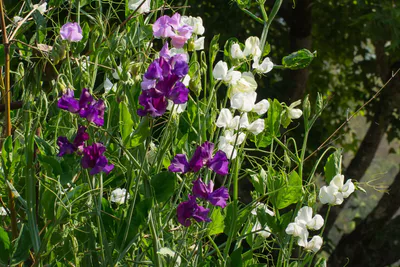
• Genes carry information for a trait, and alleles are different forms of the same gene
• Example: The gene for flower color has different versions/alleles of purple or white.
5

What is a Monohybrid Cross?
• A monohybrid cross examines the inheritance of a single trait.
• Example: Crossing a tall plant with a short plant. This example is focused on the height of the plant.

6

Key Vocabulary
• Dominant Allele: Masks the effect of the recessive allele. Written as an uppercase letter
ex: T
•Heterozygous: Having two different alleles for a particular gene.
ex: Tt
• Recessive Allele: Only seen when both alleles are recessive. Written as a lowercase letter
ex: t
•Homozygous: Having two identify alleles for a particular gene.
ex: TT or tt
7
Match
Match the following term to its example.
Dominant Allele
Recessive Allele
Homozygous Genotype
Heterozygous Genotype
H
g
KK
Dd
H
g
KK
Dd
8

How a Punnett Square Works
• Step 2: Write the alleles of each parent on the top and side.
• Step 3: Fill in the squares by combining the alleles.
• Step 1: Figure out the genotypes of each parent.
9
Reorder
Put the steps for completing a Punnett Square in order.
Determine the genotypes of the parents
Write the alleles for each parent on the top and side of the Punnett Square
Fill in the Punnett Square
10

Example of a Punnett Square
• A heterozygous tall plant with a homozygous short plant. Tall (T) and
short (t)
Steps:
1. What are the genotypes (alleles) of
each parent?
______Tt_______ x _______tt_______
(heterozygous tall) (homozygous short)
2. Put the alleles for each parent outside
the Punnett Square.
3. Fill in the Punnett Square.
T
t
t
t
Tt
Tt
tt
tt
11

Example of a Punnett Square
• A heterozygous tall plant with a homozygous short plant. Tall (T) and short (t)
Steps:
1. What are the genotypes (alleles) of each parent?
2. Put the alleles for each parent outside
the Punnett Square.
3. Fill in the Punnett Square.
T
t
t
t
Tt
Tt
tt
tt
12
Match
A heterozygous tall plant with a homozygous short plant. Tall (T) and short (t).
Match the parent to their genotype.
heterozygous tall plant
homozygous short plant
.
Tt
tt
TT
Tt
tt
TT
13

Example of a Punnett Square
• A heterozygous tall plant with a homozygous short plant. Tall (T) and short (t)
Steps:
1. What are the genotypes (alleles) of
each parent? Tt & tt
2. Put the alleles for each parent outside the Punnett Square.
3. Fill in the Punnett Square.
T
t
t
t
Tt
Tt
tt
tt
14
Draw
Label the parent genotypes on the outside of the Punnett Square.
Remember! One parent was Tt and the other parent was tt.
15

Example of a Punnett Square
• A heterozygous tall plant with a
homozygous short plant. Tall (T) and
short (t)
Steps:
1. What are the genotypes (alleles) of
each parent?
______Tt_______ x _______tt_______
(heterozygous tall) (homozygous short)
2. Put the alleles for each parent outside
the Punnett Square.
3. Fill in the Punnett Square.
T
t
t
t
Tt
Tt
tt
tt
16
Example of a Punnett Square
• A heterozygous tall plant with a homozygous short plant. Tall (T) and short (t)
Steps:
1. What are the genotypes (alleles) of
each parent? Tt & tt
2. Put the alleles for each parent outside the Punnett Square.
3. Fill in the Punnett Square.
T
t
t
t
Tt
Tt
tt
tt
17
Example of a Punnett Square
• A heterozygous tall plant with a homozygous short plant. Tall (T) and short (t)
Steps:
1. What are the genotypes (alleles) of
each parent? Tt & tt
2. Put the alleles for each parent outside the Punnett Square.
3. Fill in the Punnett Square.
T
t
t
t
Tt
Tt
tt
tt
18
Draw
Fill in the Punnett Square.
19
Example of a Punnett Square
• A heterozygous tall plant with a homozygous short plant. Tall (T) and short (t)
Steps:
1. What are the genotypes (alleles) of
each parent? Tt & tt
2. Put the alleles for each parent outside the Punnett Square.
3. Fill in the Punnett Square.
T
t
t
t
Tt
Tt
tt
tt
20
Multiple Choice

A heterozygous tall plant (Tt) was crossed with a homozygous short plant (tt). Based on the completed Punnett square, what percentage of the offspring will be tall?
Remember that each box represents 25%.
0%
25%
50%
75%
21
Multiple Choice

A heterozygous tall plant (Tt) was crossed with a homozygous short plant (tt). Based on the completed Punnett square, what percentage of the offspring will be homozygous?
Remember that each box represents 25%.
0%
25%
50%
100%
22
Multiple Choice
Cross a homozygous dominant tall plant (TT) with a heterozygous tall plant (Tt). How many of the offspring will be tall?
0 out of 4
1 out of 4
2 out of 4
3 out of 4
4 out of 4
23
Multiple Choice
Cross a parent with dimples (Dd) with a parent without dimples (dd). What percentage of the offspring will not have dimples?
0%
25%
50%
75%
100%
Reviewing Monohybrids &
Punnett Squares
Show answer
Auto Play
Slide 1 / 23
SLIDE
Similar Resources on Wayground

18 questions
Causes and Consequences of Climate Change
Presentation
•
9th Grade
18 questions
Developing Theme
Presentation
•
10th Grade
20 questions
IDEAL GAS LAW
Presentation
•
10th Grade
20 questions
Narrative Text
Presentation
•
10th Grade
16 questions
Personal Narrative Essay
Presentation
•
10th Grade
15 questions
Energy conversions
Presentation
•
9th Grade
16 questions
Perpendicular Bisector Theorem
Presentation
•
10th Grade
17 questions
Unit 2 Review: KMT & Gas Laws (C21)
Presentation
•
10th Grade
Popular Resources on Wayground
10 questions
How much do you know about our Portrait of an Eagle?

Quiz
•
10th Grade
10 questions
Fast Food Slogans
Quiz
•
6th - 8th Grade
21 questions
Continents and Oceans
Quiz
•
6th Grade
20 questions
Parts of Speech
Quiz
•
5th Grade
16 questions
Subject & Predicate
Quiz
•
5th Grade
25 questions
Multiplication Facts
Quiz
•
5th Grade
12 questions
Map Skills
Quiz
•
3rd Grade
22 questions
Continents and Oceans
Quiz
•
5th Grade
Discover more resources for Science
10 questions
Exploring Chemical and Physical Changes

Interactive video
•
6th - 10th Grade
10 questions
Decoding the Periodic Table of Elements
Interactive video
•
6th - 10th Grade
10 questions
Exploring the Periodic Table
Interactive video
•
6th - 10th Grade
14 questions
Physical and Chemical Changes
Quiz
•
10th Grade
22 questions
Periodic Table Review
Quiz
•
9th - 12th Grade
10 questions
Exploring the States of Matter
Interactive video
•
6th - 10th Grade
10 questions
Exploring Physical and Chemical Changes
Interactive video
•
6th - 10th Grade
21 questions
Macromolecules and Enzymes Study Guide
Quiz
•
9th - 10th Grade