
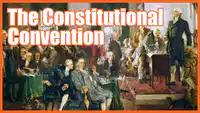
3.3 More Debate and Compromise

Presentation
•
Social Studies
•
12th Grade
•
Practice Problem
•
Medium

Amy Schneider
Used 2+ times
FREE Resource
15 Slides • 5 Questions
1


More Debate and Compromise
2
Multiple Choice

Which plan called for a bicameral legislature?
Virginia Plan
New Jersey Plan
3
Multiple Choice

Which plan wanted states represented equally with one vote each?
Virginia Plan
New Jersey Plan
4
Multiple Choice

Which answer best describes the difference between the Articles of Confederation and the U.S. Constitution?
The number of the people who participated in government under each system
The number of people who were given the right to vote
the strength of the national government
5

Lesson Overview
• Students Will Be Able To:
• Identify the roles of the branches of government
• Identify the reasons the Framers organized the branches the way they did
• Explain how the separation of powers and checks and balances affect the branches
of government
• Explain how the Framers organized how many members of the three branches were
determined
• Vocabulary:
• Advice and Consent
• Checks and Balances
• Electoral College
• Popular Vote
• Suffrage
• Universal Manhood Suffrage
6


Essential Question- How did the Framers build limits
into the framework of the Constitution?
What are
the three
branches
and what
do they
do?
7


Compromising and
Sharing Power
• The Great Compromise allowed this type of federalism to
exist-
• Small states got equal representation in the Senate
• Large states got proportional representation in the
House of Representatives
• The process of voting for the legislature would remain intact
for 120 years before changes occurred
• In 1912 Congress added the 17th Amendment for the direct
election of Senators

8


Suffrage
• Benjamin Franklin proposed, Universal
Male Suffrage- voting rights for all free
adult males
• Other delegates worried that only
property owners were responsible
enough to vote
• They believed that only property owners and
educated people should be allowed to vote
or have suffrage
• Suffrage- voting rights, or the right to vote
Why do you suppose
that only male, white,
property owning at
first, but that would
change, voters were
allowed at first?


9
Multiple Choice

Why did many of the Framers object to Franklin's proposal for universal manhood suffrage? (3 answers are correct)
They feared it could lead to mob rule because there were far more uneducated people in the population
They believed common male citizens would be easily tricked by politicians because they were uneducated
They believed that only people who owned property were reasonable enough to participate in government
They believed that all male voters would eventually demand that women should vote
10
So Who Got to Decide?
• Ultimately the delegates allowed the states to determine who had voting rights, but if they could vote in the state they could vote in the national elections.
• No discussion about enslaved African Americans being allowed to vote
• They were still to be counted as 3/5 of a person for population and representation

11

Choosing the Executive Branch
• The delegates disagreed about how the Executive would be chosen
• They did agree that it had to be changed from the AOC, but they debated how to do it
• There were three options they discussed-
• The Virginia Plan called for the Executive to be selected by Congress
• The smaller states wanted to select the president
• The final option was to use the Popular Vote- the vote of those eligible (allowed) to cast ballots
12

Committee of Eleven
• The Committee of Eleven was chosen to decide this issue
• They said the president would serve a 4-year term
• They also created the Electoral College- process for the election of the president
• The states would choose the electors, members of the Electoral College, equal to the total number
of representatives it had in the House of Representatives and the Senate.
• The people would vote for the electors in their state, who then would then cast their vote for
president.
• Ties would be determined by a vote of the House of Representatives.
13
14

Electoral College Issues
• This new ides had a few issues/problems to sort out
• In the beginning it did not specify between the
vote count for president and vice-president
• So, if there was a tie in the votes - the House of
Representatives was to be the tiebreaker
• Example- in 1800 Thomas Jefferson (TJ)
and Aaron Burr both tied
• The HOR voted to make Thomas Jefferson the 3rd President of the United States
• Congress added the 12th Amendment in 1803 which said that there is a separate Electoral College vote for President and
Vice-President
15


The Judicial Branch
• They wanted an independent judicial branch, unlike what England had done to them
• They also wants judges to apply the law fairly and not be influenced by powerful interests
• Once again both the Virgina and New Jersey plan had ideas for judges-
• The Virginia Plan said that it should be independent and one "Supreme Tribunal"
• The New Jersey Plan called for the Executive to appoint the federal judges who would serve a lifetime appointment


16

Advice and Consent
• The Compromise was- the creation of Advice and Consent
• Advice and Consent- phrase in the Constitution that allows the Senate to approve nominations for the Judicial Branch
• The Executive Branch would pick a judge, but the Senate (Legislative Branch) would have to approve the choice
• As the Convention went on, they settled on creating One "Supreme Court"

17


Checks and Balances
• They agreed that the branches should be separate from one another
• They also wanted to make sure the power/authority was balanced amongst the three branches
• Checks and Balances- a system in which each
branch holds power over the others to ensure
(balance) that no branch is too powerful

18
Replace this with your body text.
Duplicate this text as many times as you would like.
All provided templates can be reused multiple times.
Replace this with a header

19
Multiple Choice

What did the Framers determine regarding who would be qualified to vote in national elections?
State governments would decide voter eligibility.
The federal government would determine who votes
Women would definitely be excluded from voting
County governments would decide voter eligibility
20
Essential Question- How did the Framers build limits into the
framework of the Constitution?
• The Framers left the question of voter qualification to the states although many Framers believed that only property-owning men would vote responsibly and avoid mob rule by those who did not own property.
• The Framers sought to limit the "tumult and disorder" they believed would result from the popular vote by creating the Electoral College system for the election of the president.
• The judicial branch was organized by compromise giving the executive the authority to nominate judges with the advice and consent of the Senate.
• Together with the separation of powers principle, the Framers created a system of checks and balances to ensure that no branch of government grew more powerful than the others.
More Debate and Compromise
Show answer
Auto Play
Slide 1 / 20
SLIDE
Similar Resources on Wayground

15 questions
Conditionals
Presentation
•
12th Grade
15 questions
The Impact of Policies and the Federal Budget
Presentation
•
12th Grade
13 questions
Credit Score
Presentation
•
12th Grade
16 questions
Federal Bureaucracy
Presentation
•
12th Grade
16 questions
USHC 7.4 HOLOCAUST
Presentation
•
11th Grade
13 questions
US Enters WWI
Presentation
•
12th Grade
16 questions
Creating America's Government - Introduction
Presentation
•
11th Grade
16 questions
Economics: Chapter 3: The American Free Enterprise System
Presentation
•
12th Grade
Popular Resources on Wayground
6 questions
Secondary Safety Quiz
Presentation
•
9th - 12th Grade
10 questions
MyPath Diagnostic Overview
Presentation
•
6th - 8th Grade
20 questions
Lab Safety Quiz

Quiz
•
6th Grade
21 questions
Continents and Oceans
Quiz
•
6th Grade
20 questions
Adding and Subtracting Decimals
Quiz
•
5th Grade
20 questions
Parts of Speech
Quiz
•
5th Grade
16 questions
Subject & Predicate
Quiz
•
5th Grade
21 questions
Lab Safety
Quiz
•
10th Grade
Discover more resources for Social Studies
28 questions
Govt. Unit 1 Exam Review
Quiz
•
12th Grade
14 questions
Fundamentals Test Review
Quiz
•
12th Grade
7 questions
Why study government

Interactive video
•
12th Grade
20 questions
WHG CFA 1 Absolutism
Quiz
•
9th - 12th Grade
39 questions
World History Unit 1 Summative Review
Quiz
•
9th - 12th Grade
21 questions
Economics: Unit 1 (23/24)
Quiz
•
12th Grade
53 questions
Economics basic concepts
Quiz
•
12th Grade
14 questions
Manifest Destiny to Texas Annexation 22-23
Quiz
•
9th - 12th Grade