

Cities and Trade in Mexican Texan

Presentation
•
Social Studies
•
7th Grade
•
Practice Problem
•
Hard

Ashley McIlravy
FREE Resource
64 Slides • 0 Questions
1


Cities and Trade in Mexican
Texas
Copyright © 2021 The Rittmann Group, LLC
2

3

4

5

6

7

8

9

10

11

12

13

14

15

16

17

18

19

20

21

22

23

24

25

26

27

28

29

30

31

32

33

34

35

36

37

38

39

40

41

42

43

44

45


Copyright © 2021 The Rittmann Group, LLC
The majority of those living in Mexican Texas lived on
isolated farms and ranches, or in small rural
communities
There were, however, a few larger
settlements and cities, including:
Where Texans Lived
Home to over 1,000 people,
primarily Tejanos
San Antonio
Nacogdoches
Goliad
46


Copyright © 2021 The Rittmann Group, LLC
Due to the complexities of governing larger
populations, these towns had formal government,
usually comprised of—
Governance in Texas Cities
ayunamiento :
also known as a city council
alcalde :
A member of the ayunamiento who was elected to be the
leader or mayor
47


Copyright © 2021 The Rittmann Group, LLC
The town ayunamiento had oversight of several
important responsibilities, which were outlined in the
Constitution of Coahuila y Texas
Governance in Texas Cities
These responsibilities included:
• establishment of a police force
• road maintenance
• food inspection
• sanitation projects
• health care
These services and projects were paid for via taxes paid by
those who lived in the settlements
• road maintenance
• road maintenance
48


Copyright © 2021 The Rittmann Group, LLC
These towns served as centers for both civic and
commercial activity
The Makeup of Texas Cities
In addition to housing governmental offices, towns also
contained shops and stores owned by craftsmen
blacksmiths:
Who created tools & equipment
valuable to farmers and
ranchers, like plows
carpenters:
Who crafted items, including
wagons and furniture
sawmills:
That processed lumber for use
by settlers and to send/sell
elsewhere
49


Copyright © 2021 The Rittmann Group, LLC
A lack of paper currency or coinage meant that most
commercial transactions in town were conducted via
barter , instead of cash payments
Commerce in Texas Cities
Bartering is the
practice of negotiating
goods or services in
trade for other goods or
services
Even stores often functioned on barter and/or
credit systems, as so little cash was available on the
frontier
50


Copyright © 2021 The Rittmann Group, LLC
Some of the items that were grown or made in Texas
were transported to be sold elsewhere– these goods
are known as exports
These exports were sent– often to the United States– via over land
trade routes, as well as via ships that sailed on the Gulf of Mexico
Imports and Exports
Notable items exported
from Texas included
• cattle
• corn
• timber
• furs
• horses
• pork
Cattle from Texas being driven by vaqueros, likely
to be sold to markets in the United States
51


Copyright © 2021 The Rittmann Group, LLC
Goods from other places (particularly those from the
U.S.) were imports , brought into Texas to be bought
and used by the settlers living there
• Notable items imported into
Texas included:
• Manufactured goods
• Luxury Goods
Imports and Exports
• These items were imported
because Texans did not have
the ability to manufacture–
or make them– themselves
at the time
Large ships were able to dock in some
Texas ports, allowing for goods to be
brought in from other places
52


Copyright © 2021 The Rittmann Group, LLC
The biggest obstacle to trade in Texas– for both
imports and exports– was transportation
The roads that connected the towns, settlements and ports of Texas
were often poorly maintained and extremely rough
The Trouble With Trade
Wagon ruts are still visible on parts of the
El Camino Real trail in East Texas (pictured
above)
An example of wagon ruts (pictured left)
• The wet conditions common
on the coastal plains (where
most towns and settlements
were located) meant that the
roads often became
impassible, filled with mud
and deep ruts
53


Copyright © 2021 The Rittmann Group, LLC
Other than roads, the main mode of transportation
available to Texans who wanted to move goods from
place to place, was via water– especially rivers
The Trouble With Trade
• Unfortunately, many of the rivers
in Texas are extremely shallow
• Their flow/depth varies greatly on
the amount of rain that has
recently fallen
• They are also often rocky and/or
filled with sandbars
This made it difficult for anything except small, flat bottomed boats
or rafts to navigate– which limited how much cargo could be sent via
water transportation routes
The Lavaca River, used by Texans to
move goods to Lavaca Bay
54


Copyright © 2021 The Rittmann Group, LLC
One advantage trade and transportation
did have, was
the availability of ports along the Gulf of Mexico,
including:
The Trouble With Trade
Galveston
Matagorda
Brazoria
The shallow bays and coastal barrier islands were well protected,
making them well-suited as sites for ports
55


Copyright © 2021 The Rittmann Group, LLC
In addition to housing craftsmen, merchants and
traders, towns in Mexican Texas were also home to
settlers
Living in Texas Settlements
• In towns like San Antonio and Victoria, town dwellers often
lived in houses built of adobe brick, or in small huts
constructed of sticks and mud (known as
jacales )
• In deep East Texas, homes were built of rough-hewn log cabins
An example of a jacale in
southeast Texas (left)
-and-
A log cabin in East Texas
(right)
56


Copyright © 2021 The Rittmann Group, LLC
Most of these homes had modest gardens built
alongside them, which were used to grow food by
these town dwellers
Living in Texas Settlements
• However, small gardens
were not enough to supply
all their needs
• What they couldn’t grow
themselves, they obtained
from the farms and ranches
nearby
• This provided farmers and
ranchers with a source of
income and a market for
their crops and livestock
Recreated gardens that are similar to those that
would have been found outside of frontier homes in
Texas
57


Copyright © 2021 The Rittmann Group, LLC
How did the environment and geography of the
subregions in which these settlers lived, effect how
they built their homes?
Living in Texas Settlements
CRITICAL THINKING QUESTION!
58


Copyright © 2021 The Rittmann Group, LLC
The town of San Antonio was by far the largest
settlement in Texas during the 1820s
Notable Settlements: San
Antonio
• San Antonio had originally
been founded in 1718, as a
series of missions and
presidios
Map of El Camino Real
• It would eventually grow
into a bustling settlement,
especially after becoming
a key stop on El Camino
Real, the road that
connected East Texas to
Mexico City
59


Copyright © 2021 The Rittmann Group, LLC
By the 1820s, San Antonio was home to approximately
2,000 people, and continued to grow
Notable Settlements: San
Antonio
• Those living there primarily made their living through farming
and ranching
• Still, many craftsmen,
store owners and
merchants also lived
there
• Some of these
businesses were even
owned/managed
independently by
women
An artist's depiction of a
San Antonio neighborhood
60


Copyright © 2021 The Rittmann Group, LLC
Despite its size and long history as an established
settlement, San Antonio was still a frontier town
Notable Settlements: San
Antonio
• The streets were unpaved and undeveloped, frequently
becoming a muddy rutted mess after any substantial rainfall
The acequias of
San Antonio
• Acequias– the massive irrigation canals constructed by the
Spanish, to divert the water of the San Antonio River– were
open to the air
• This made them vulnerable to
pollution (including dust, trash,
animal waste and more)
• Outbreaks of disease– in part due
to inadequate sanitation– were
very common
Notice the lack of
cover, which made it
easy for pollutants to
fall/blow in
61


Copyright © 2021 The Rittmann Group, LLC
In contrast with the long-established settlement of
San Antonio, Nacogdoches had been founded much
later, in the late 1700s
Notable Settlements:
Nacogdoches
• The first settlers there had been
former inhabitants of Bucareli, the
settlement that had been founded–
and then abandoned– by people who
had been displaced after the
evacuation of La Bahia
• Nacogdoches had been founded– and
primarily settled– by Tejanos
• In the later years of the Mexican War
of Independence, the town had been
all but abandoned
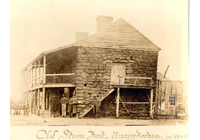
The Old Stone Fort of
Nacogdoches, built by
Antonio Gil Y’barbo and the
early settlers of
Nacogdoches
62


Copyright © 2021 The Rittmann Group, LLC
Notable Settlements:
Nacogdoches
• Like those living in San Antonio,
they primarily made their living by
farming
The town of Nacogdoches in the
1800s
However, between 1825 and 1835, the population
consistently increased, up to 1,000 settlers– and was
very diverse
• Those living in Nacogdoches
included a mix of Tejanos, Anglos
and enslaved peoples of African
descent
• A smaller number of craftsmen,
shops and merchants also
established themselves in the
settlement
63


Copyright © 2021 The Rittmann Group, LLC
In addition to San Antonio and Nacogdoches, several
other towns also blossomed during the 1820s and
early 1830s, including:
Other Notable Settlements
Goliad:
Originally the
settlement of La Bahia,
established as a
settlement and presidio
by Jose de Escandon in
1749, it was renamed
“Goliad” in honor of
Father Miguel Hidalgo
(Goliad is an anagram of
Hidalgo’s name, minus
the –H)
Mexican soldiers
remained stationed at
the presidio there
Victoria:
The capital of the
colony established by
Martin De Leon in 1824,
just 30 miles inland
from the Gulf of Mexico
Victoria is named after
the first president of the
Mexican Republic,
Guadalupe Victoria– it
grew to a population of
300 in just 10 years
San Felipe
(de Austin):
The capital of Austin’s
colony, San Felipe (as it
was usually referred to)
was established in 1823,
along the Brazos River
It grew to a population
of 600 by 1835, and was
second only to San
Antonio in terms of
commercial activity and
development
64


Exit Ticket
Copyright © 2021 The Rittmann Group, LLC
Why were the towns of Texas important to the
development of the Texas economy?
While most Texans did not live in these larger
settlements, they were nevertheless crucial to
the developing economy of the state
Cities and Trade in Mexican
Texas
Copyright © 2021 The Rittmann Group, LLC
Show answer
Auto Play
Slide 1 / 64
SLIDE
Similar Resources on Wayground

59 questions
CA 1 Review
Presentation
•
7th Grade
56 questions
สรุปบทเรียนการแทรกสอดและการเลี้ยวเบนของแสง
Presentation
•
KG
59 questions
Physical Features
Presentation
•
8th Grade
57 questions
Superminds Year 1 Revision
Presentation
•
7th Grade
58 questions
Kansas History World War I to Now
Presentation
•
7th Grade
53 questions
WWII and Texas Lesson Part 2
Presentation
•
7th Grade
60 questions
Government Review
Presentation
•
8th Grade
58 questions
Moon Phases/Lunar Cycle Guided Lesson
Presentation
•
6th - 8th Grade
Popular Resources on Wayground
10 questions
Safety Day 2026 – Student Review

Quiz
•
9th Grade
21 questions
Continents and Oceans
Quiz
•
6th Grade
20 questions
Parts of Speech
Quiz
•
5th Grade
16 questions
Subject & Predicate
Quiz
•
5th Grade
25 questions
Multiplication Facts
Quiz
•
5th Grade
12 questions
Map Skills
Quiz
•
3rd Grade
22 questions
Continents and Oceans
Quiz
•
5th Grade
15 questions
Rounding Decimals
Quiz
•
5th Grade
Discover more resources for Social Studies
19 questions
Foundations of America
Quiz
•
6th - 8th Grade
10 questions
Exploring the Age of Exploration: Key Events and Figures

Interactive video
•
6th - 10th Grade
15 questions
Middle Ages of the Middle East Vocab List (CFA #2)
Quiz
•
6th - 8th Grade
10 questions
13 Colonies: Comparing Regions
Quiz
•
7th Grade
26 questions
SW Asia History
Quiz
•
7th Grade
16 questions
Causes of the Texas Revolution
Quiz
•
7th Grade
14 questions
Types of Government Overview (SW Asia)
Presentation
•
7th Grade
8 questions
DLT 1: Citizen Participations
Quiz
•
7th Grade