

Feudalism

Presentation
•
History
•
10th Grade
•
Practice Problem
•
Hard

Cody Thompson
Used 1+ times
FREE Resource
14 Slides • 0 Questions
1

Feudalism and Manorialism
2

How did the Carolingian kingdom end?
- the empire fell apart
soon after
Charlemagne's death
and was divided up
among his grandsons
- local nobles gained
control in many areas
- the empire was also
invaded by three main
people groups
1. Magyars- people from
western Asia
2. Vikings- people from
Scandinavia
3. Muslim armies
3


Why did feudalism develop?
- invasions made it difficult
for governments to protect
their subjects
- people began to turn to
local landed aristocrats
(nobles) to protect them
- people needed to find
powerful lords to protect
them in order to survive
- this led to a new political
and social system called
feudalism
4



What was the relationship between lords and
vassals?
- a warrior swore an oath of loyalty (called
homage) to a lord, who agreed to take
care of the warrior's needs
- by the 8th century, a man who served a
lord as a warrior was called a vassal
- the Frankish army originally had mostly
foot soldiers, but in the 8th century began
to ride large horses while wearing coats
of chainmail and used long lances as
weapons
5


- these men became known
as knights and dominated
warfare and were given a
higher social status
- over time as kingdoms
broke down, powerful
nobles gained more land
- they often gave a piece of
land to their vassals
6

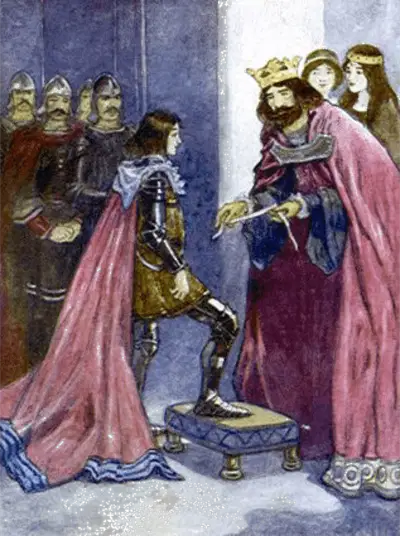
- feudal contracts
made the
relationship
between a lord
and vassal official
- a public ceremony
in which the
vassal proclaimed
his loyalty to the
lord
- feudal contracts
were a set of
unwritten rules
between lords
and vassals
7

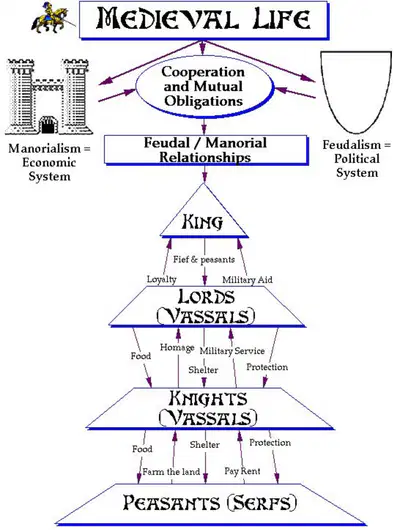
Why were feudal contracts important?
-responsibilities of the
vassal: provide military
service, provide advice to
the lord, specific financial
payments
- responsibilities of the
lord: give land to vassal,
defend vassal when
necessary, like in a court
of law
8


What did the feudal system become more
complicated over time?
- land given to a vassal was
called a fief
- vassals generally had
authority over the areas
included in their fiefs
- the vassals of a king might
have their own vassals who
they would give part of their
fief to in exchange for military
service
- those vassals might also
have vassals who had small
pieces of land that provided
barely enough to make a
living
9

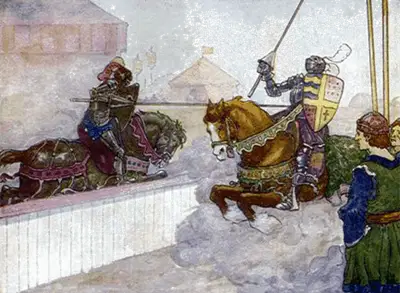
Describe aristocratic society during this time period.
- nobles, bishops, counts, and others formed the
aristocracy of feudal Europe
- the aristocracy had political, economic, and social
power
- lords and knights, like the Japanese samurai, loved war
- knights often held tournaments where they showed of
their military skills
10

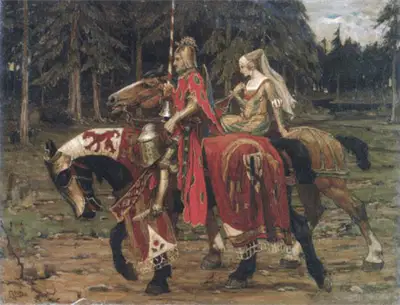
- a code of behavior for knights developed that was
called chivalry
- knights were supposed to defend the Church and
defenseless people
- were supposed to treat prisoners well
- were not supposed to fight for material rewards, only
for glory
Video
Clihttps://
www.yout
ube.com/
watch?v=
OfXholnO
S9E
11

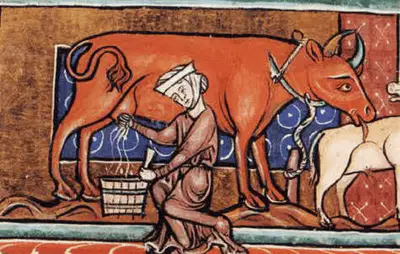
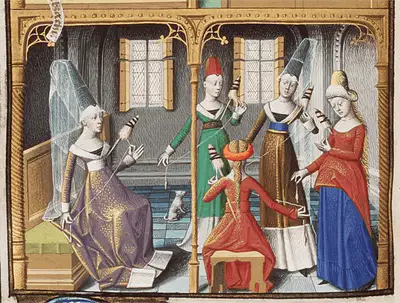
What was the role of aristocratic women?
- aristocratic women were often given the opportunity
to manage the family estates because their husbands
were often at war
- women were expected to be subordinate to their
husbands, but many strong-willed women influenced
their husbands in the areas such as politics
12

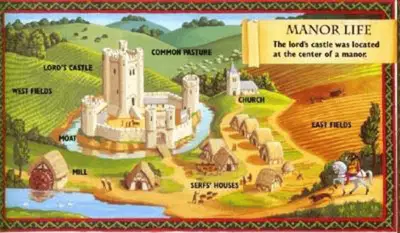
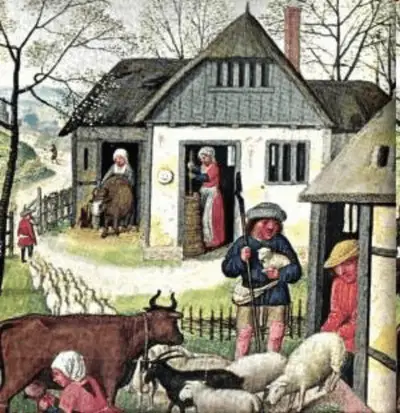
What was the manorial system?
- manor was an agricultural estate owned by a lord and
worked by peasants
- increasing number of free peasants became serfs
(peasants legally tied to the land)
- serfs had to provide labor, pay rent, and be under the
lord's control in exchange for the lord's protection
- by 800, 60% of Europeans were serfs
13

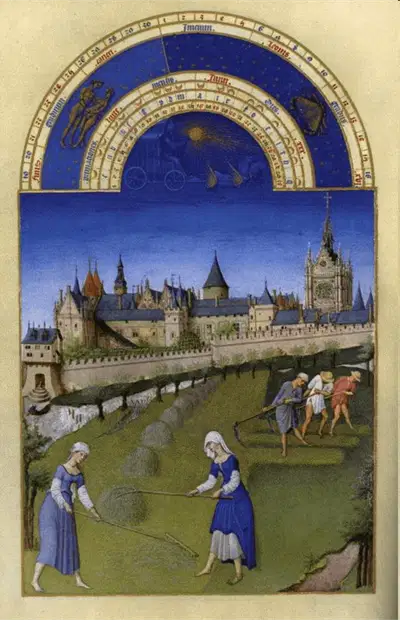
- 1/3 to ½ of land was for the
lord, serfs usually worked
about 3 days a week for him
-rest of the land and their time
was for farming for their
families
- Lord's restrictions over serfs
1. couldn't leave manor
without his permission
2. couldn't marry someone
outside of the manor
3. could be tried for crimes by
the lord
14

4. had to pay for
certain services
like having grain
ground into flour
- serfs’ land
couldn't be taken
away and
responsibilities to
the lord couldn't
change much
Feudalism and Manorialism
Show answer
Auto Play
Slide 1 / 14
SLIDE
Similar Resources on Wayground

13 questions
Olmec and Zapotec
Presentation
•
10th Grade
11 questions
Ming Review 10.29.2024
Presentation
•
10th Grade
10 questions
WH Day 1- 1 Semester
Presentation
•
10th Grade
10 questions
Judaism Develops
Presentation
•
10th Grade
11 questions
WHII 08: Napoleon and Nationalism SOL Prep
Presentation
•
10th Grade
10 questions
Geometry Medians and Altitudes
Presentation
•
9th - 10th Grade
11 questions
Federalist Vs. Anti-Federalist
Presentation
•
10th Grade
11 questions
Inverse Functions
Presentation
•
10th Grade
Popular Resources on Wayground
20 questions
Math Review

Quiz
•
3rd Grade
15 questions
Fast food
Quiz
•
7th Grade
20 questions
Context Clues
Quiz
•
6th Grade
20 questions
Inferences
Quiz
•
4th Grade
19 questions
Classifying Quadrilaterals
Quiz
•
3rd Grade
20 questions
Figurative Language Review
Quiz
•
6th Grade
20 questions
Equivalent Fractions
Quiz
•
3rd Grade
10 questions
Identify Fractions, Mixed Numbers & Improper Fractions
Quiz
•
3rd - 4th Grade
Discover more resources for History
21 questions
The Cold War
Quiz
•
8th - 11th Grade
31 questions
Final Exam Review
Quiz
•
10th Grade
50 questions
WH Final Review
Quiz
•
9th - 12th Grade
10 questions
Exploring the Byzantine Empire: Key Events and Milestones

Interactive video
•
6th - 10th Grade
10 questions
Exploring the American Civil War: Key Events and Figures
Interactive video
•
6th - 10th Grade
60 questions
Practice Final
Quiz
•
9th - 12th Grade
35 questions
Spring Final Exam
Quiz
•
10th Grade
30 questions
Spring 2026 Final Practice Exam
Quiz
•
10th Grade