M6 Phy 2ndSem Midterm Chapter 1
Presentation
•
Science
•
8th Grade
•
Practice Problem
•
Medium
Lady Alias
Used 6+ times
FREE Resource
64 Slides • 50 Questions
1
Electromagnetic Waves
2
3
4
5
6
7
8
9
10
11
12
13
14
15
16
17
18
19
20
21
22
23
24
25
26
27
28
29
30
31
32
33
34
35
Open Ended
click the link : https://ophysics.com/l1.html
36
37
38
39
40
41
Open Ended
click the link : https://ophysics.com/l2.html
42
43
44
45
Open Ended
click the link : https://ophysics.com/l3.html
46
47
48
Multiple Choice
49
Multiple Choice
The lower the frequency the ______ the energy.
higher
lower
neither, stays the same
50
Multiple Choice
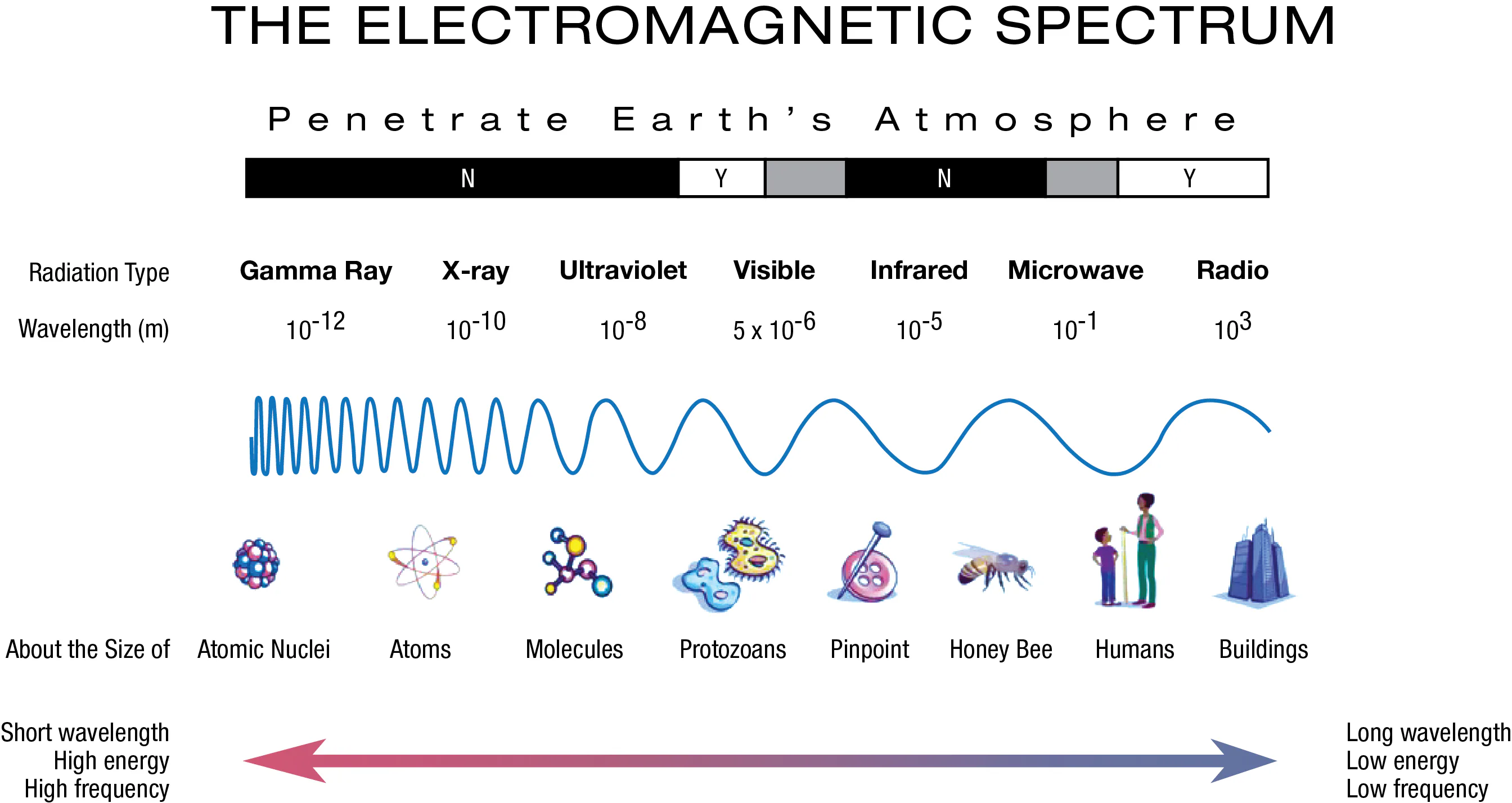
What do you have at 103?
Wavelength Not Frequency
51
Multiple Choice
What do you have at 10-5?
Wavelength Not Frequency
52
Multiple Choice
What do you have at 10-2?
Wavelength Not Frequency
53
Multiple Choice
What do you have at 10-10?
Wavelength Not Frequency
54
Multiple Choice
What do you have at 10-8?
Wavelength Not Frequency
55
Multiple Choice
56
Multiple Choice
57
Multiple Choice
58
Multiple Choice
59
Multiple Choice
60
Multiple Choice
61
Multiple Choice
62
Multiple Choice
63
Multiple Choice
64
Multiple Choice
65
Multiple Choice
66
Multiple Choice
67
Multiple Choice
All waves carry...
Energy
Matter
Light
Particles
68
Multiple Choice
Which section of the spectrum is the ONLY one we can see?
X-Rays
Gamma Rays
Visible Light
Ultraviolet Rays
69
Multiple Choice
Which has the longest wavelength and, therefore, the LOWEST frequency/energy
Gamma Rays
Visible Light Waves
Radio Waves
Infrared Waves
70
Multiple Choice
Which of the following electromagnetic waves has the lowest energy?
Gamma Ray
Visible Light
Infrared
Microwave
71
Multiple Choice
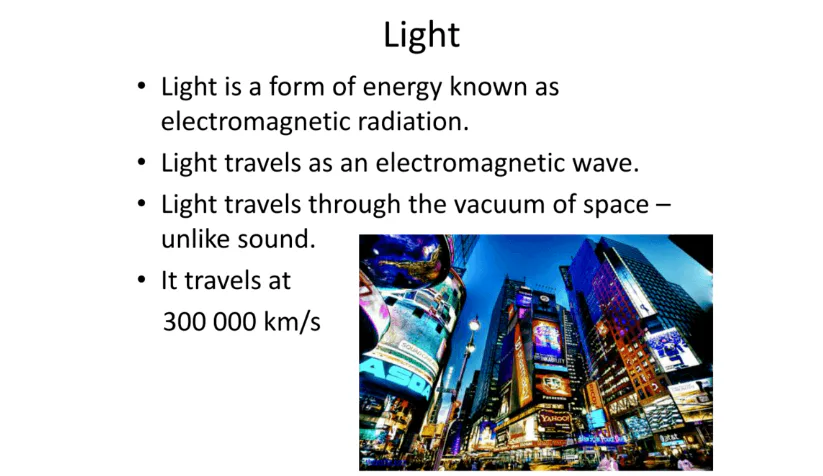
At what speed do electromagnetic waves travel through a vacuum?
3 x 10¹⁸ m/s
or
3,000,000,000,000,000,000
3 x 10⁷ m/s
or
30.000,000
3 x 10⁸ m/s
or
300,000,000
72
Multiple Select
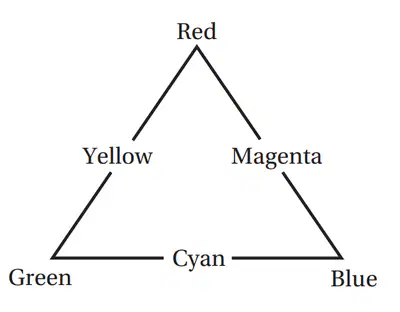
What are the secondary colors?
Magenta
Blue
Yellow
Cyan
73
Multiple Select
What are the primary colors?
Green
Blue
Yellow
Red
74
Multiple Choice
Combining red light with green light creates _________.
Red
Blue
Yellow
Green
75
Multiple Choice
Combining red light with blue light creates _________.
Red
Magenta
Yellow
Green
76
Multiple Choice
Combining green light with blue light creates _________.
Cyan
Magenta
Green
Red
77
Multiple Choice
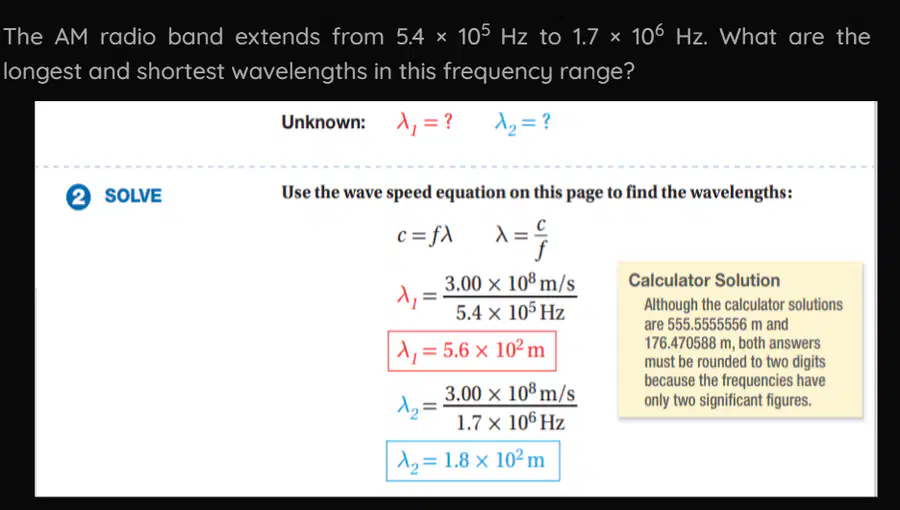
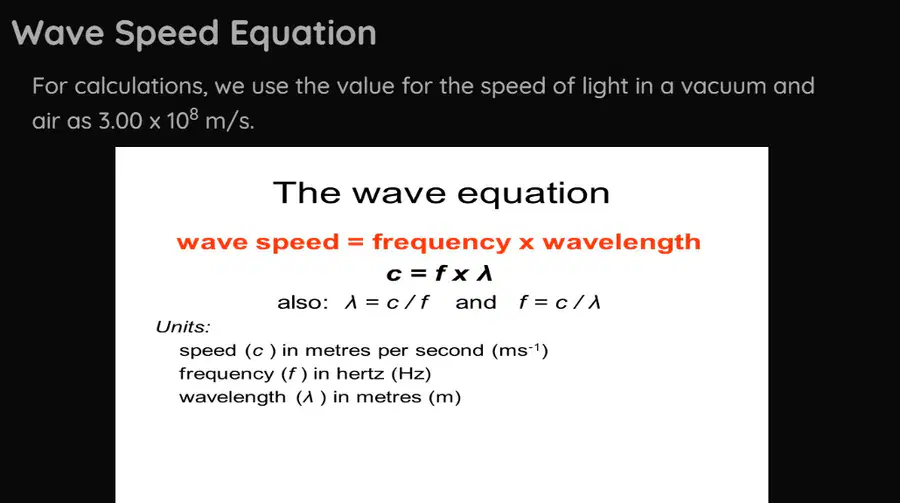
What is the wave speed equation?
λ = fc
f = λc
c = λf
78
Multiple Choice
What formula you will use in finding the wavelength of a certain EM Wave?
λ = fc
f = λc
c = λf
79
Multiple Choice
What formula you will use in finding the frequency of a certain EM Wave?
λ = fc
f = λc
c = λf
80
Multiple Choice
What formula you will use in finding the frequency of a certain EM Wave?
λ = fc
f = λc
c = λf
81
Multiple Choice
As the frequency of an electromagnetic wave increases, the amount of energy in that wave...
Increases
Stays the same
Decreases
82
83
The Electromagnetic (EM) Spectrum
84
85
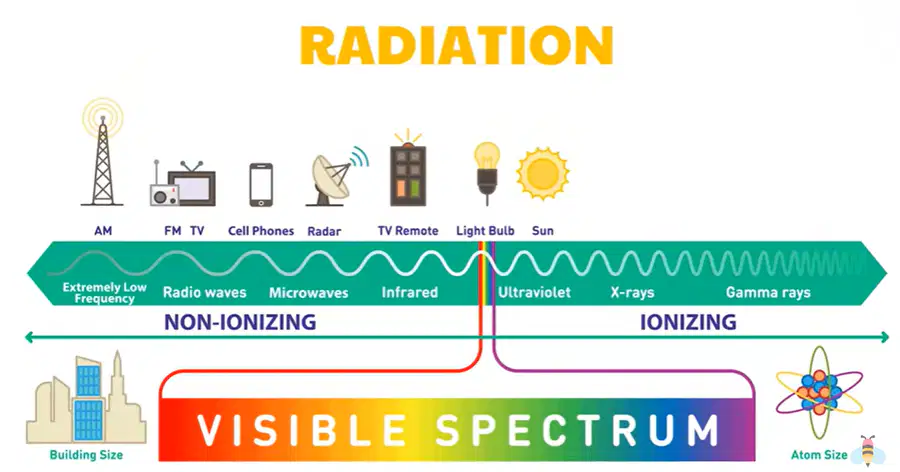
Radiation is the transmission of energy through space or materials, and it can take many forms.
Most of these, like visible light and radio waves, are considered non-ionizing radiation and aren’t harmful in small amounts.
But when we get into ionizing radiation like X-rays and gamma rays, we’re talking about higher energy levels that can interact with matter in different ways. These are more powerful and can even produce ions, which is why they’re often used in medicine or science.
Can anyone think of an example of ionizing radiation that we encounter in everyday life?
86
87
Radio Waves in Communication
These have the longest wavelengths in the spectrum, and they’re everywhere! Thanks to radio waves, we can transmit sounds and images over long distances, enabling things like radio, TV, and even cell phone communication.
Who among you here have listened to AM or FM radio? Can anyone explain the difference between AM and FM?
AM, or Amplitude Modulation, works by varying the amplitude of the waves, while FM, or Frequency Modulation, varies the frequency.
This gives FM higher sound quality—think of the difference in clarity between an AM news station and an FM music station.
88
89
90
Microwaves and Satellite Communication
Did you know they’re not just for heating food? Microwaves are used in satellite communications too! Satellites receive and amplify microwave signals, then transmit them across the globe, which is how we stay connected internationally.
Has anyone thought about how their cell phone works? How are microwaves involved in mobile communication?
Cell phones use microwaves to send and receive signals. Each phone tower covers a specific area called a “cell,” creating an overlapping network that allows mobile devices to stay connected as we move around.
91
92
93
Infrared and Visible Light
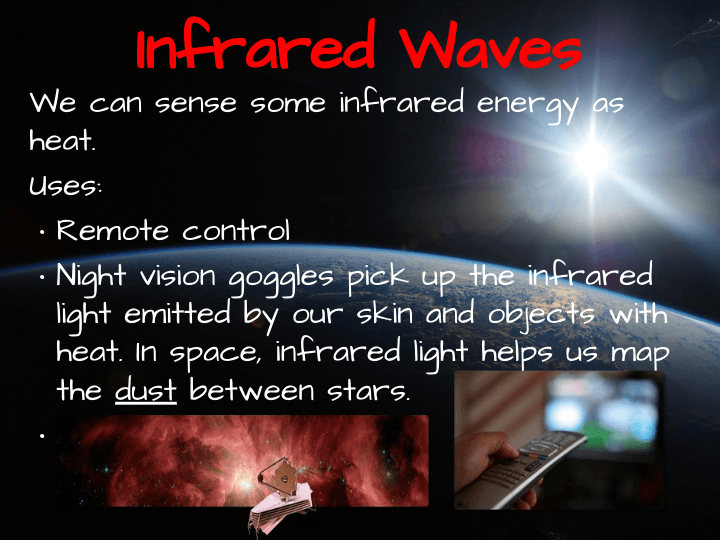
Infrared waves are used in things like remote controls and night vision goggles. Shorter wavelength infrared waves are perfect for low-heat applications like remote controls, while longer wavelengths, which carry more heat, are seen in things like fires or even the warmth from the sun.
Does anyone know how a remote control uses infrared?
When you press a button on the remote, it emits a pulse of infrared light. Though we can’t see it, many digital cameras can pick up this infrared light as a flashing signal.
94
95
96
97
Ultraviolet Light, X-Rays, and Gamma Rays
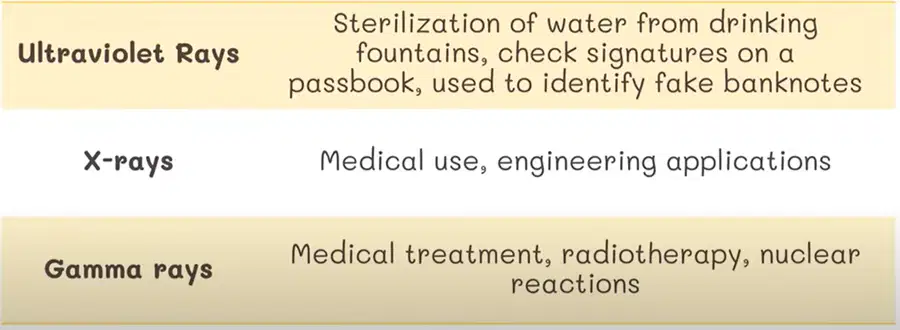
We get UV radiation from the sun, which helps our bodies produce vitamin D. But it’s also powerful enough to help us identify fake banknotes or sanitize water.
X-rays and gamma rays are even higher in energy; X-rays, for instance, are commonly used in medicine to see inside the body.
Has anyone had an X-ray before? What was it for?
X-rays pass through soft tissues but not bones, which is why they’re useful for seeing fractures.
Gamma rays, which are even more powerful, are sometimes used to treat cancer through a process called radiotherapy.
98
99
100
101
102
Multiple Choice
It is the transmission of energy through space or materials, and it can take many forms.
Can't determine
Ionizing
Radiation
Non-ionizing
103
Multiple Choice
104
Multiple Choice
Which of the following electromagnetic waves is given off as heat?
Radio Waves
Visible Light
Infrared Rays
Gamma Rays
105
Multiple Choice
Which one has the highest frequency?
gamma rays
radio waves
106
Multiple Choice
Which one has the longest wavelength?
radio waves
gamma rays
107
Multiple Choice
Ultraviolet radiation would most likely lead to...
skin cancer
blindness
heart attack
108
Reorder
Reorder the following according to the spectrum
red
orange
yellow
green
blue
109
Multiple Choice
Communicating with satellites is an application of gamma rays.
True
False
110
Multiple Choice
This type of wave are considered non-ionizing radiation and aren’t harmful in small amounts.
Gamma
Xray
Ultraviolet
Visible light
111
Multiple Choice
This type of wave are considered ionizing radiation and harmful in small amounts.
Gamma rays
radiowaves
microwaves
Visible light
112
Fill in the Blanks
Type answer...
113
Fill in the Blanks
Type answer...
114
Multiple Choice
These waves are used in things like remote controls and night vision goggles.
gamma rays
Radiowaves
Microwaves
Infrared
Electromagnetic Waves
Show answer
Auto Play
Slide 1 / 114
SLIDE

Similar Resources on Wayground
95 questions
Lesson 2: Atmospheric and Oceanic Circulation
Presentation
•
6th Grade
94 questions
GP - Jul 26
Presentation
•
7th - 8th Grade
112 questions
C5 Unit 3 Landslide
Presentation
•
9th Grade
99 questions
Map Science Review
Presentation
•
8th Grade
120 questions
Light Unit C - Lesson 2 ????
Presentation
•
8th Grade
109 questions
human eye
Presentation
•
11th Grade
96 questions
8.ch3.1-4
Presentation
•
8th Grade
95 questions
EMW Whis/Dan
Presentation
•
8th Grade
Popular Resources on Wayground
15 questions
Grade 3 Simulation Assessment 1
Quiz
•
3rd Grade
22 questions
HCS Grade 4 Simulation Assessment_1 2526sy
Quiz
•
4th Grade
16 questions
Grade 3 Simulation Assessment 2
Quiz
•
3rd Grade
19 questions
HCS Grade 5 Simulation Assessment_1 2526sy
Quiz
•
5th Grade
17 questions
HCS Grade 4 Simulation Assessment_2 2526sy
Quiz
•
4th Grade
20 questions
Equivalent Fractions
Quiz
•
3rd Grade
24 questions
HCS Grade 5 Simulation Assessment_2 2526sy
Quiz
•
5th Grade
20 questions
Math Review
Quiz
•
3rd Grade
Discover more resources for Science
20 questions
8th Grade Science STAAR Review
Quiz
•
8th Grade
16 questions
Interactions within Ecosystems
Presentation
•
6th - 8th Grade
20 questions
Earth Day
Quiz
•
3rd - 12th Grade
30 questions
GMAS Physical Science Review
Quiz
•
8th Grade
100 questions
GMAS Science Review
Quiz
•
8th Grade
5 questions
History of Earth Day
Passage
•
6th - 8th Grade
100 questions
STAAR Review
Quiz
•
8th Grade
10 questions
Exploring Earth's Seasons and Their Causes
Interactive video
•
6th - 8th Grade