

UNIT 7- LISTENING+ SPEAKING

Presentation
•
English
•
12th Grade
•
Practice Problem
•
Hard
+3
Standards-aligned

International American
Used 1+ times
FREE Resource
13 Slides • 1 Question
1
Listening: PHOTOGRAPHY
How does photographing nature differ from photographing people?
>>>
Movement and Predictability: People often have more control over their movements and expressions. Nature, especially wildlife, is unpredictable and can be challenging to capture in specific poses or actions.
Timing and Patience: Nature photography often requires patience to wait for the perfect moment, like a sunrise or a particular animal behavior. People photography can be more scheduled and controlled.
Composition and Elements: Nature photography often focuses on landscapes, elements, and patterns. People photography often centers around individuals or groups and their interactions.
2
Listening: PHOTOGRAPHY
What makes a ‘good’ nature photograph?
>>>
Composition: The arrangement of elements within the frame is crucial. The rule of thirds, leading lines, and framing can enhance a nature photograph.
Light: The quality and direction of light significantly impact the mood and atmosphere of a nature photo. Golden hour and blue hour often provide dramatic lighting.
Focus: Ensuring the subject is in sharp focus is essential. This can be challenging with moving subjects like wildlife.
Storytelling: A good nature photograph should tell a story or evoke emotions. It might capture a unique moment, a beautiful landscape, or the behavior of an animal.
3
Listening: PHOTOGRAPHY
Have you ever tried photographing animals? How easy or difficult was it?
>>>
Yes, I've tried photographing animals. It can be both rewarding and challenging.
+ Patience is Key: Animals can be elusive and unpredictable. It often requires patience and observation to capture them in their natural habitat.
+ Respect for Wildlife: It's important to maintain a safe distance and avoid disturbing animals. Using telephoto lenses can be helpful in this regard.
+Camouflage and Blending In: Camouflage and blending into the environment can increase your chances of capturing wildlife without scaring them away.
+Timing and Behavior: Understanding animal behavior and knowing when they are most active can improve your chances of successful photography.
4
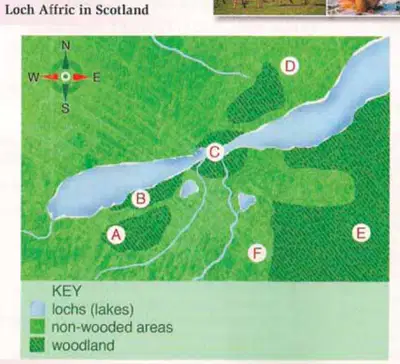
Match
Match the following
Oldest Scots pine trees
Red deer
Red squirrels
Oldest Scots pine trees
Red deer
Red squirrels
5

6
7

8

Well, |'m gaing to talk about elephants, because they're an integral part of Thai culture and history.
In the past, every Thai king had white elephants. Also, they used to be on our national flag and on our coins and bank notes, So Thai people are very fond of elephants. We even have an Elephant Day on March 13! Um, what else? Um, some Thai Buddhist temples have been built on the spot where an elephant died and, er, these temples contain things like an elephant shrine and elephant statues.
As you can tell, elephants are everywhere! You can find them in the wild in Thailand, but also in cities and although the elephants were in captivity, they used to be an important part of the workforce in the forests — that was their primary occupation - but as a result of conservation programmes, there's less logging nowadays. Workers now bring them into the city, as this is the only way they can make a living.
Basically, elephant numbers are falling these days, and | think that's why there’s been a lot of publicity about them recently. Cities aren't really the ideal environment for animals ... they're full of pollution, On the other hand,elephants can damage roads and they can be dangerous for humans. So the government has cracked down on this, and some elephants have been moved out. In order to protect them, we now have an elephant conservation centre.
Also, every year, there's a special event to help raise awareness and money to look after our elephants because they are such important creatures to us.
9
How is population growth likely to affect the world’s flora and fauna?
Habitat Destruction: As human populations expand, natural habitats are cleared for agriculture, urbanization, and infrastructure development. This leads to loss of biodiversity and fragmentation of ecosystems.
Overexploitation of Resources: Increased demand for food, resources, and energy can lead to overfishing, deforestation, and unsustainable hunting practices, depleting natural populations.
Pollution: Industrial activities, waste disposal, and agricultural runoff can contaminate water sources and degrade ecosystems, harming plant and animal life.
Climate Change: Rising greenhouse gas emissions contribute to global warming, altering climate patterns and affecting the distribution and survival of species.
10
What are the potential benefits to people of animal conservation programmes?
Scientific Research: Studying animals in their natural habitats provides valuable insights into biology, medicine, and conservation strategies.
11
Is there any justification for continuing to keep animals in captivity?
Conservation: Some captive breeding programs aim to reintroduce endangered species into the wild or maintain a genetically diverse population.
Education and Research: Zoos and aquariums can educate the public about wildlife and support scientific research.
Welfare: Well-managed facilities can provide adequate care for animals and contribute to their conservation.
12
What benefits do you think will come from preserving the world’s rainforests?
Climate Regulation: absorb vast amounts of carbon dioxide, helping to mitigate climate change. >>act as natural carbon sinks, preventing excessive greenhouse gas buildup in the atmosphere.
Biodiversity Hotspots: home to an incredible diversity of plant and animal species, many found nowhere else on Earth>> essential for ecosystem balance and scientific research.
Medicinal Resources: Many plants found in rainforests have medicinal properties and have been used for centuries to treat various ailments>> ensures a continued source of potential new medicines.
Water Cycle Regulation: play a vital role in the water cycle, regulate rainfall patterns, prevent soil erosion, and maintain water quality.
Natural Resources: provide valuable resources like timber, fruits, and nuts.
Cultural and Spiritual Significance: hold cultural and spiritual significance for indigenous communities. >>protect these cultural heritage sites and the livelihoods of indigenous people.
13
Is wildlife preservation a global or national issue?
Interconnected Ecosystems: Many wildlife species migrate across borders, and ecosystems are often interconnected. Protecting wildlife in one country can have positive or negative impacts on populations in neighboring countries.
International Trade: The illegal trade in wildlife products, such as ivory, rhino horns, and exotic pets, often involves international networks and requires global efforts to combat it.
14
What future role do governments have to play
in the preservation of their country’s wildlife?
>> Enacting and enforcing strict laws to protect wildlife species and their habitats.
>>Implementing and enforcing regulations to control hunting and poaching activities.
>>Developing sustainable land use plans to minimize the negative impacts of urbanization, agriculture, and infrastructure development on wildlife.
>>Raising public awareness about the importance of wildlife conservation and the consequences of illegal activities
Listening: PHOTOGRAPHY
How does photographing nature differ from photographing people?
>>>
Movement and Predictability: People often have more control over their movements and expressions. Nature, especially wildlife, is unpredictable and can be challenging to capture in specific poses or actions.
Timing and Patience: Nature photography often requires patience to wait for the perfect moment, like a sunrise or a particular animal behavior. People photography can be more scheduled and controlled.
Composition and Elements: Nature photography often focuses on landscapes, elements, and patterns. People photography often centers around individuals or groups and their interactions.
Show answer
Auto Play
Slide 1 / 14
SLIDE
Similar Resources on Wayground

11 questions
TOEIC Preparation
Presentation
•
University
10 questions
Reporting Verbs
Presentation
•
12th Grade
10 questions
ORDER OF THE ADJECTIVES
Presentation
•
University
10 questions
SIMPLE PAST
Presentation
•
KG - University
12 questions
Prepositions
Presentation
•
3rd Grade
12 questions
Verb Patterns
Presentation
•
12th Grade
12 questions
Cover Letter
Presentation
•
12th Grade
11 questions
Present passive
Presentation
•
12th Grade
Popular Resources on Wayground
10 questions
Safety Day 2026 – Student Review

Quiz
•
9th Grade
21 questions
Continents and Oceans
Quiz
•
6th Grade
20 questions
Parts of Speech
Quiz
•
5th Grade
16 questions
Subject & Predicate
Quiz
•
5th Grade
25 questions
Multiplication Facts
Quiz
•
5th Grade
12 questions
Map Skills
Quiz
•
3rd Grade
22 questions
Continents and Oceans
Quiz
•
5th Grade
15 questions
Rounding Decimals
Quiz
•
5th Grade
Discover more resources for English
16 questions
Complete Sentences vs Fragments and Run-Ons
Presentation
•
5th - 12th Grade
28 questions
AP Vocab Group 7
Quiz
•
9th - 12th Grade
20 questions
Appositives & Commas
Quiz
•
9th - 12th Grade
20 questions
The Crucible Act 1 and 2 Quiz
Quiz
•
9th - 12th Grade
40 questions
Of Mice & Men Major Test Ch. 1-6
Quiz
•
9th - 12th Grade
20 questions
Ethos Pathos Logos
Quiz
•
9th - 12th Grade
21 questions
Evaluating Arguments 10th grade
Presentation
•
9th - 12th Grade
20 questions
SWBST (Summarizing)
Quiz
•
9th - 12th Grade