

2.2.5 Important People and Places of the Constitution

Presentation
•
Social Studies
•
4th Grade
•
Practice Problem
•
Medium

Sierra Scaggs
Used 3+ times
FREE Resource
10 Slides • 3 Questions
1
Important People and Places of the Constitution
Learners can:
identify at least one important figure and their contribution to the creation of the Constitution
explain the importance of Philadelphia, Pennsylvania, in the history of the United States
2
Engage
In May of 1787, 55 men from all 13 states except for Rhode Island gathered in Philadelphia, Pennsylvania, for the Constitutional Convention.
The delegates gathered to make small changes to the Articles of Confederation, which was the government plan that was already in place. Instead, they ended up making a new plan for government called the United States Constitution.
The writers of the Constitution created a democratic system of government that gave power to the American people.
EDIO VIDEO PAGE 2
3
Framers of the Constitution
During the hot summer months of 1787 at Independence Hall in Philadephia, Pennsylvania, 55 delegates gathered at a secret meeting called the Constitutional Convention. They debated, argued, and compromised about a new plan for government.
The Framers, or writers, of the Constitution, came from different states and backgrounds, but they shared many characteristics. They were all well-educated, wealthy, white men who held people in slavery, fought in the American Revolution, and served in Congress.
The average age of the delegates was 42 years.
The youngest delegate, at the age of 26, was Jonathon Dayton, who represented New Jersey.
The oldest delegate, at the age of 81, was Benjamin Franklin, who represented Pennsylvania.
While all of the delegates had an important part in the creation of the Constitution, six men stood out at the convention for contributing specific ideas about the role of government in the new nation.
Many of the delegates continued to have an impact on the United States government after the Constitution was approved. Some served as senators, members of the House of Representatives, justices on the Supreme Court, or even as the president of the United States!
4
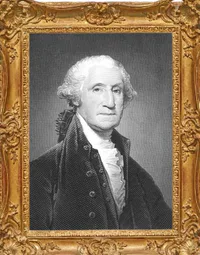
George Washington, 55, was a delegate who represented Virginia at the Constitutional Convention.
Washington was a trusted military leader who led America to independence in 1783.
In 1787, when the 55 delegates gathered, it was without question that Washington would be elected as the president of the convention. They looked to him to guide them through debates and compromises. With his leadership, the Constitution was officially ratified, or approved, in 1788, introducing a new system of government for the United States of America. After the ratification of the Constitution, Washington became America's first president from 1789-1797
George Washington
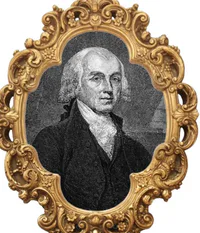
James Madison, 36, was a delegate who represented Virginia at the Constitutional Convention.
Madison is known as the “Father of the Constitution" because he contributed in many ways, including:
developing the Virginia Plan, which supported representation in Congress for large states; writing the Federalist Papers (along with Alexander Hamilton and John Jay); and writing the first 10 amendments to the Constitution, also known as the Bill of Rights.
He also took detailed notes during the convention that historians still look at today. Served as Secretary of State from 1801-1809 and fourth President from 1809-1817.
James Madison
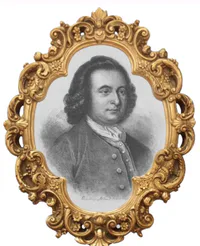
George Mason, 62, was a delegate who represented Virginia at the Constitutional Convention.
Mason was not a signer of the Constitution because he did not believe in signing a document that did not state the individual rights of the American people.
His influence laid the groundwork for the first 10 amendments, or the Bill of Rights, that was put into place in 1791, two years after the Constitution was ratified. He did not hold any positions in government after the Constitution was signed.
George Mason
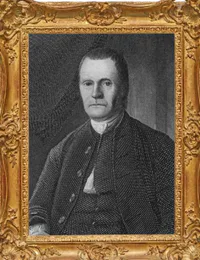
Roger Sherman, 66, was a delegate who represented Connecticut at the Constitutional Convention.
At the convention, Sherman, along with Oliver Ellsworth, proposed the Connecticut Compromise, or the Great Compromise. It provided for fair representation for both large and small states in Congress.
After the signing of the Constitution, Sherman served in Congress in both the House of Representatives from 1789–1791 and as a senator from 1791–1793.
He was one of the only delegates to sign all important documents during the American Revolution, including the Declaration of Independence, the Articles of Confederation, and the Constitution.
Roger Sherman
5
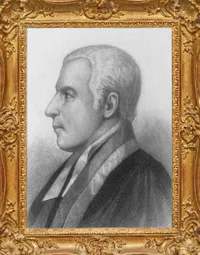
William Paterson, 41, was a delegate who represented New Jersey at the Constitutional Convention.
At the convention, he introduced the New Jersey Plan in support of giving each state an equal number of representatives, or delegates, in Congress.
The New Jersey Plan laid the groundwork for the Great Compromise, which stated that the Senate would have equal representation, meaning two senators per state, in Congress. After the Constitution was signed, Paterson served in the United States Senate from 1789–1790 and then on the United States Supreme Court from 1793–1806.
William Paterson
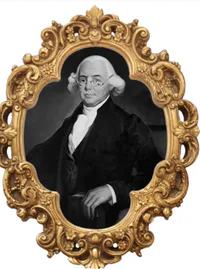
James Wilson, 45, was a delegate who represented Pennsylvania at the Constitutional Convention.
His contributions to the convention included support for a presidential figure who:
could veto laws; and
was elected, or voted on, by the people of the United States.
He was one of the first justices of the Supreme Court.
James Wilson
6
Match
Match each statement to the delegate it describes
James Madison
William Patterson
George Mason
James Wilson
Father of the Constitution
Proposed the New Jersey Plan
Advocate for individual rights
Supported the Great Compromise
Father of the Constitution
Proposed the New Jersey Plan
Advocate for individual rights
Supported the Great Compromise
7
George Washington
At the start of the Constitutional Convention on May 25, 1787, all 55 delegates agreed that George Washington should be their leader. As a result, he was voted unanimously as the president of the Constitutional Convention.
While he did not want to help write the Constitution, Washington agreed to lead the delegates as the convention's president so that he could oversee the progress and the creation of the United States Constitution. Washington was known as a leader throughout the nation's history.
He was first recognized for his ability to lead when he was given command of Virginia's military force during the French and Indian War.
Then, during the American Revolution, he took the role of Commander-in-Chief of the United States military and led the nation to independence from Great Britain.
Washington supported a strong central government and, as the leader of the convention, he was able to guide the delegates to help bring his vision of a stronger nation into reality.
After the Constitution was signed, it became the official plan for the United States government in 1788. George Washington also became the country's first president in 1789.
George Washington's significant role as the leader of the Revolutionary War, the Constitutional Convention, and the president of the United States gained him the unofficial title of the “Father of His Country."
His contributions are remembered in many ways. He is honored with monuments like the Washington Monument in Washington, D.C., and his birthday is a national holiday, known as Presidents' Day, where he is celebrated along with other presidents and their contributions to the country.
EDIO VIDEO PAGE 4
8
Multiple Choice
What was George Washington's role at the Constitutional Convention
He helped to write Constitution
He was a Supreme Court Justice
He was the president of the Constitutional Convention
He led the military in the victory of the American Revolution
9
Benjamin Franklin
Benjamin Franklin, at the age of 81, was the oldest member to attend the Constitutional Convention. At the time, his health was poor, and he suffered from a lot of pain.
However, his history as a Founding Father made him a valuable member of the Constitutional Convention. A Founding Father was someone who helped lead the United States toward independence.
Not only was Franklin an inventor, writer, and scientist, but he was a highly respected political leader, too.
During the French and Indian War, he attended many meetings and created political cartoons that encouraged the colonies to work together.
During the American Revolution, he helped to write and sign the Declaration of Independence.
Then, in 1783, he signed the Treaty of Paris, which officially ended the Revolutionary War and recognized America's independence from Great Britain.
Benjamin Franklin played an important role in American history!
He is remembered in many ways. His image is found on the $100 bill, and places such as the Franklin Institute in Philadelphia are named after him as lasting tributes.
Franklin also lived in Philadelphia, Pennsylvania. Throughout his life, he contributed to the city of Philadelphia. He started one of the earliest teams of volunteer firefighters, played a role in the founding of the first hospital, and started Philadelphia's first lending library.
Philadelphia had a lot of firsts in American history, including many of the decision and documents that shaped America's government.
EDIO VIDEO PAGE 5
10
Multiple Select
What documents did Benjamin Franklin help to write?
Common Sense
The Federalist Papers
The United States Constitution
The Declaration of Independence
11
Philadelphia
In 1682, William Penn founded the city of Philadelphia in the colony of Pennsylvania. He named the city Philadelphia because it means “brotherly love" from the Greek words philos, which means “love," and adelphos, which means “brother."
It was the perfect place to settle in colonial America. It was a port city where ships could dock and goods could be traded.
Over time, Philadelphia became a very successful city. During the colonial period, it became the most populated city.
Its success made it the perfect city for the capital of the United States for most of the colonial period and during most of the American Revolution.
After the Constitution was signed, Philadelphia remained the nation's capital for about 10 years while Washington, D.C., was being constructed to serve as the nation's new capital.
Philadelphia is known as the nation's birthplace. It is the city where many of the nation's most important documents, including the Constitution, were created and signed.
Today, the United States of America is known as a free and independent nation. Its government is strong because of the rules written in the Constitution over 200 years ago.
But, if you wanted to learn how America became the land of the free and the home of the brave, one place you would want to visit is Philadelphia, Pennsylvania. Philadelphia is an important place in American history!
12
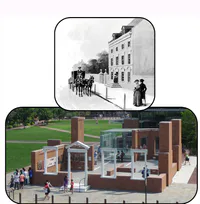
After the Constitution was ratified, George Washington became the United States' first president in 1790. At the time, Philadelphia was the nation's capital.
The President's House in Philadelphia was the first official home of the United States president from 1790–1800.
In 1800, when the U.S. capital was moved to Washington, D.C., the second president, John Adams, and his wife moved into the White House.
The President's House in Philadelphia was destroyed in 1832, but the site where it once stood is now an exhibit that you can visit in Philadelphia.
The President's House
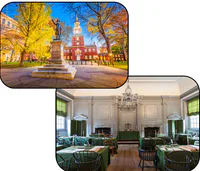
Independence Hall in Philadelphia was where the Second Continental Congress met for the first time in May 1775.
Congress would continue to meet in Independence Hall several times after that.
It would become an important building where many documents were written and signed including:
the Olive Branch Petition;
the Declaration of Independence; and
the Constitution.
Independence Hall
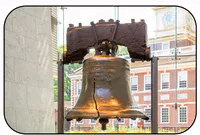
The Liberty Bell first rang on July 8, 1776, after the Declaration of Independence was read in public for the first time in Philadelphia.
It rang for the last time on February 22, 1846, on George Washington's birthday. The bell cracked and was never played again.
It became a proud symbol of American independence and is still on display in Philadelphia, not far from Independence Hall.
The Liberty Bell
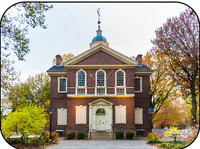
Carpenters' Hall in Philadelphia is where colonists met for the First Continental Congress from September 5, 1774 to October 26, 1774.
This is where America's first Congress attempted to get King George III to agree to stop unfair taxes on the colonists and to prevent a war.
Carpenters' Hall
13
Today, you learned about important people who contributed to the creation of the United States Constitution, such as George Washington, Benjamin Franklin, and James Madison.
Without their contributions, the Constitution would not have been, and continue to be, the guiding document of the United States government for over 200 years.
You also learned about Philadelphia, Pennsylvania, which is also known as the birthplace of the nation! It was the city where the Founding Fathers created and signed many of the nation's most important documents, including the Constitution.
Important People and Places of the Constitution
Learners can:
identify at least one important figure and their contribution to the creation of the Constitution
explain the importance of Philadelphia, Pennsylvania, in the history of the United States
Show answer
Auto Play
Slide 1 / 13
SLIDE
Similar Resources on Wayground

9 questions
Argumentative Text
Presentation
•
4th Grade
11 questions
Branches of Government
Presentation
•
3rd Grade
11 questions
New France
Presentation
•
5th Grade
10 questions
Greek and Latin Words Parts
Presentation
•
4th Grade
10 questions
Theme Review Lesson
Presentation
•
4th Grade
10 questions
Latin/ Greek Roots
Presentation
•
4th Grade
9 questions
Subtraction with Regrouping
Presentation
•
4th Grade
9 questions
Customary Units of Length
Presentation
•
4th Grade
Popular Resources on Wayground
28 questions
US History Regents Review

Quiz
•
11th Grade
36 questions
Biology Regents Review
Quiz
•
9th - 10th Grade
20 questions
Math Review
Quiz
•
3rd Grade
38 questions
Regents Life Science General Review
Quiz
•
9th Grade
20 questions
Math Review
Quiz
•
6th Grade
21 questions
EOY Grade 6 Benchmark Assessment - Content Skills
Quiz
•
6th Grade
20 questions
Inferences
Quiz
•
4th Grade
20 questions
Figurative Language Review
Quiz
•
6th Grade
