

Embalming Theory : Week 12

Presentation
•
Science
•
University
•
Hard

Tina Belt
Used 2+ times
FREE Resource
27 Slides • 0 Questions
1
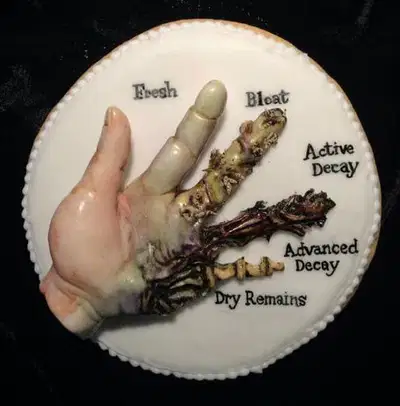
Decomposition
Dehydration
Edema
Week 12: Special Cases
2
3
4
Protein and moisture levels within the body
Cause and manner of death, including any underlying conditions
Diseases or traumatic injuries affecting the body’s condition
Medical treatments and medications administered prior to death
Postmortem environmental factors, such as refrigeration or lack thereof
Time interval between death, preparation, and final disposition
Conditions That Contribute to Early Onset of Decomposition
5
Nonuniform fluid distribution throughout the body
Tissues prone to swelling during embalming
Greater preservative demand required
Cooler temperatures and pH levels below 7.4 slow tissue fixation,
→ requiring a higher concentration of arterial solution
Time Delays Between Death and Preparation
6
Careful chemical selection
Use of mechanical, operative, and manual techniques
Controlled injection and drainage procedures
Sectional vascular injection for targeted distribution
Sectional hypodermic injection to treat resistant areas
Treatment of Bodies Prone to Early Onset of Decomposition
7
Pre-Embalming Observations and Treatments
Assess for the presence of gases
Note abdominal or facial distension caused by decomposition gases.
Release trapped gases carefully to reduce swelling and pressure.
Treatment of Bodies with Evident Decomposition
8
Inspect for insect activity
Look for maggots or eggs in natural body openings, wounds, or moist areas.
Remove all visible insect activity prior to embalming to prevent interference with preservation.
Examine body orifices
Clean and disinfect all orifices thoroughly.
Use appropriate sealing powders, packs, or sutures after treatment to control purge and odor.
Treatment of Bodies with Evident Decomposition
9
Restricted Cervical Injection – Targets the head and upper body while minimizing fluid loss.
Multi-Point Arterial Injection – Uses multiple injection sites to ensure thorough distribution of embalming solution throughout the body.
Embalming Procedures
10
Choosing Arterial and Special Chemicals with a High Index
Select strong preservative solutions for bodies showing advanced decomposition or delayed preservation.
Waterless Embalming
Use concentrated arterial fluids without dilution to enhance preservation and reduce tissue swelling.
Chemical Selection
11
Specialized Instruments
Large and small diameter arterial cannulas for precise injection
Tools to control flow rate and pulsation
Manual Techniques
Massage, flexion, and elevation to promote fluid distribution
Operative Procedures
Channeling, wicking, incising, and excising tissue as needed
Application of surface compresses and neck collars for preservation and appearance
Mechanical, Operative, and Manual Aids
12
Primary Flaccidity
Rigor is beginning to develop and is barely noticeable
Greatest preservative absorption occurs during this stage
Active Rigor
Body is stiff, muscles contracted
Little preservative absorption takes place
Secondary Flaccidity
Rigor has passed, muscles relax
Greatest preservative demand occurs during this stage
Important: Always break rigor before arterial injection to ensure proper preservative distribution.
Stages of Rigor Mortis
13
Eight Gases Contributing to Decomposition Odor
Indole – odor of mothballs
Skatole – odor of feces
Putrescine – odor of rotting fish
Cadaverine – odor of rotting fish
Dimethyl disulfide – odor of foul garlic
Dimethyl trisulfide – odor of foul garlic
Hydrogen sulfide – odor of rotting eggs
Methanethiol – odor of rotten cabbage
14
Refrigeration
Embalming
Emaciation
See page 304 for a full list
Predisposing Conditions to Dehyration
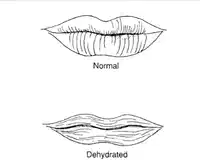
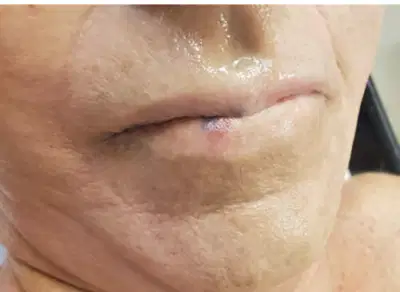
Good Moisture Content in lips!
15
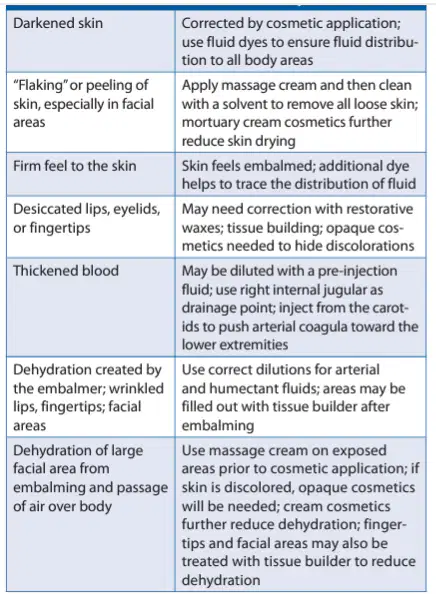
Dehydration Challenges:
16
Strength, Type, and Quantity of Chemicals
Moderate, hypotonic solutions recommended
Use of co-injection fluids and humectants
Mechanical, Operative, and Manual Aids
Massage, flexion, elevation, and specialized instruments
Injection and Drainage Techniques
Maintain a slow rate of flow
Use of drain tubes
Consider alternative or intermittent drainage as needed
Treatment of Dehydration
17
Alcoholism
Burns
Cirrhosis of the liver
Carbon monoxide poisoning
Congestive heart failure
Allergic or inflammatory reactions
Extended drug therapy
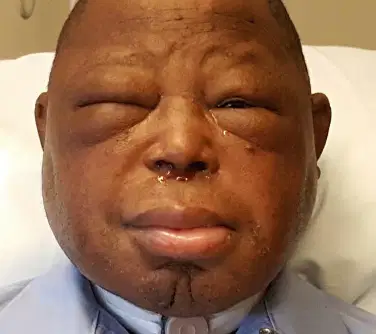
Conditions Associated with Edema
18
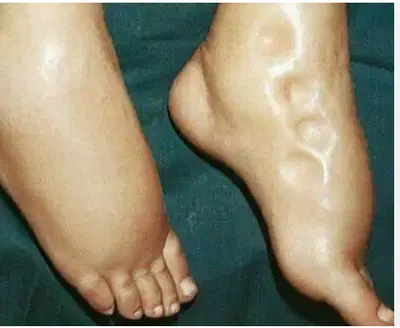
Anasarca – generalized edema in the subcutaneous tissue
Intracellular (solid) edema – occurs when water and sodium accumulate inside cells, causing them to swell
Intercellular (pitting) edema – abnormal accumulation of fluid between cells in the body’s tissues
Edema According to Body Location
19
Peritoneum – Ascites: Fluid accumulation in the abdominal cavity
Hydrothorax: Collection of serous fluid in the pleural cavities
Hydropericardium: Fluid buildup in the sac surrounding the heart
Hydrocephalus: Abnormal accumulation of cerebrospinal fluid (CSF) in the brain; most common in infants
Hydrocele: Fluid collection in the scrotum
Edema According to Body Location
20
Tissue Distention – swelling of tissues due to gas or fluid buildup
Increased Secondary Dilution – greater preservative demand caused by tissue changes
Desquamation (Skin-Slip) – separation of the epidermis from underlying layers
Leakage – escape of fluids from natural orifices or incisions
Embalming complications with Edema
21
Body Cavities
Extravascular Resistance – May limit the distribution and drainage of embalming fluids
Unaspirated Edema – Can dilute cavity fluid and reduce preservation effectiveness
Embalming complications with Edema
22
Embalming Procedures by Fluid Type, Strength, and Quantity
Injection of Astringent or Waterless Arterial Solutions – for advanced tissue preservation
Physical Removal of Edema – followed by injection of a normal arterial solution
Injection of Edema-Reducing Co-Injection Chemicals – to minimize tissue swelling
Injection of Hypertonic Solutions – to draw out excess fluids and enhance preservation
Embalming Treatments : Edematous Tissues
23
Injection Procedures
Restricted Cervical Injection – targets head and neck with minimal fluid loss
Sectional Embalming – treating specific body regions individually
Embalming Treatments : Edematous Tissues
24
Mechanical, Operative, and Manual Aids – techniques to enhance fluid distribution, including:
Elevation of extremities
Wicking – absorbent materials to draw out fluids
Channeling – creating pathways for fluid movement
Manual pressure – to aid fluid penetration
Embalming Treatments : Edematous Tissues
25
Disease-Related
Skeletal deformities
Rheumatoid arthritis
Trauma-Related
Compound fractures and other injuries
Congenital
Deformities present from birth
Documentation: Always record deformities, but it is especially important when they may affect embalming or case handling.
Deformities and Malformations: Predisposing Conditions
26
Treatments
Mechanical, Operative, and Manual Aids
Use carefully; obtain written authorization when appropriate
Arterial Fluids
Adjust strength, type, and quantity based on body condition
Sectional Arterial Injection
Apply as needed for thorough distribution
Deformities and Malformations: Predisposing Conditions
27
Hypodermic or Surface Embalming
Use for areas requiring supplemental preservation
Protective Measures
Plastic garments for containment
Absorbent or preservative powders to manage leakage
Deformities and Malformations: Predisposing Conditions
Decomposition
Dehydration
Edema
Week 12: Special Cases
Show answer
Auto Play
Slide 1 / 27
SLIDE
Similar Resources on Wayground

21 questions
Writing process
Presentation
•
11th - 12th Grade
17 questions
Blood Circulation
Presentation
•
Professional Development
22 questions
Unit 315 session 6 Storage cisterns
Presentation
•
Professional Development
25 questions
12R Transport Systems
Presentation
•
University
20 questions
MRTS 2231 Ch 11
Presentation
•
University
19 questions
Genetics, RA & Connective Tissue Diseases
Presentation
•
University
23 questions
Strawberry Field Session
Presentation
•
University
24 questions
EXAMEN BASES FISIOPATOLOGIA 2
Presentation
•
Professional Development
Popular Resources on Wayground
10 questions
HCS SCI 03 Summer School Review 4

Quiz
•
3rd Grade
11 questions
HSMS - Standard Response Protocol
Quiz
•
6th - 8th Grade
16 questions
1.1-1.2 Quiz Review
Quiz
•
9th - 12th Grade
12 questions
Exponent Expressions
Quiz
•
6th Grade
20 questions
Adding and Subtracting Integers
Quiz
•
6th - 7th Grade
11 questions
Northeast States
Quiz
•
3rd - 4th Grade
10 questions
Characterization
Quiz
•
3rd - 7th Grade
10 questions
Common Denominators
Quiz
•
5th Grade