Search Header Logo
Unit 4 Test Review: Properties of matter, density, IMF

Unit 4 Test Review: Properties of matter, density, IMF

Assessment

Presentation

Physics

11th Grade

Medium

NGSS
HS-PS1-3, MS-PS1-2, HS-LS1-6

+2

Standards-aligned

Created by

Leslie Dunham

Used 4+ times

FREE Resource

9 Slides • 31 Questions

1

media

Unit 4 Review: Properties of matter, density, IMF

2

media

IntrAmolecularforces

  • Type of Bond (weakest to strongest)

    • Nonpolar covalent

    • Polar covalent

    • Ionic

3

media
  • Polar

    • Unequal sharing of electrons

    • Electronegativity difference >0.4 and <1.7

  • ​Nonpolar

    • Equal sharing of electrons

    • Electronegativity difference 0.0 - 0.4

Polar vs Nonpolar

4

Multiple Choice

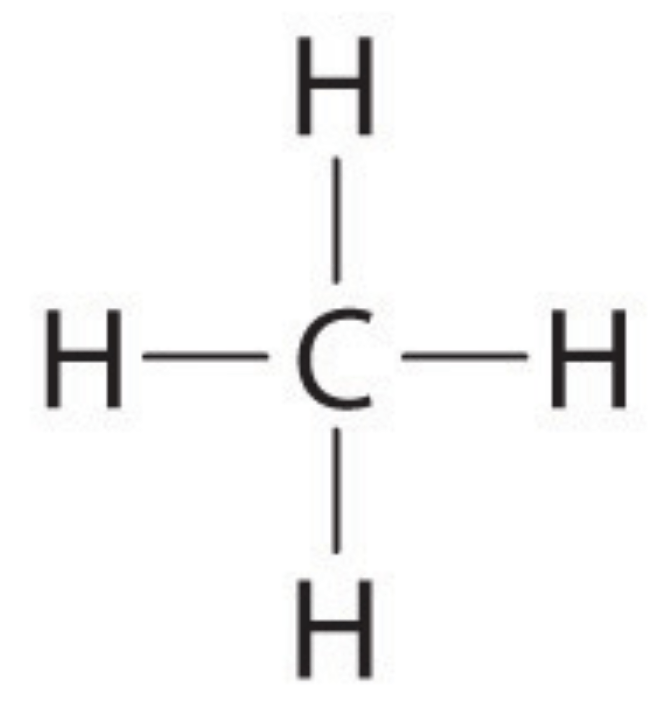
Question image

Classify the following molecule.

1

polar

2

nonpolar

5

Multiple Choice

What kind of solute will dissolve in a nonpolar solution? (Select all that apply)

1

polar covalent solvent

2

nonpolar covalent solvent

3

ionic solvent

4

metallic solvent

6

Multiple Select

What kind of solute will dissolve in a polar solution? (Select all that apply)

1

polar covalent solvent

2

nonpolar covalent solvent

3

ionic solvent

4

metallic solvent

7

Multiple Choice

... bonds happens when electrons are shared EVENLY between the two bonded atoms.

1

Covalent polar

2

Covalent nonpolar

3

Ionic

4

Metallic

8

media
  • London Dispersion

  • ​Dipole-dipole

  • Hydrogen Bond

  • Ion Dipole

IntErmolecular forces

9

IMF and physical properties

STRONGER IMFs lead to:

  • Higher viscosity (thickness of a liquid, molecules sticking to each other)

  • Higher boiling point (change from liquid to gas)

  • Higher melting point (change from solid to liquid)

10

Multiple Choice

Substance A is a liquid, Subtance B is a solid. Which has higher intermolecular forces?

1

Substance A

2

Substance B

11

Multiple Choice

If a substance has stronger intermolecular forces, what would be true of its viscosity?

1

Viscosity would be lower

2

Viscosity would be higher

3

Viscosity is not affect by intermolecular forces

12

Multiple Choice

The stronger the intermolecular forces of a substance the _____________ the boiling point

1

higher

2

lower

13

Multiple Select

Select all of the Intermolecular Forces that water has.

1

London dispersion forces

2

Dipole-dipole

3

Hydrogen bond

4

Ion dipole

14

Multiple Choice

Which substance has the weakest intermolecular forces?

1

Substance A, boiling point of 75 °C

2

Substance B, boiling point of 105 °C

3

Substance C, boiling point of 25 °C

4

Substance d, boiling point of 45 °C

15

Multiple Choice

Which of the following will NOT have hydrogen bonding?

1
2
3
4

16

Multiple Choice

Which of the following will have the lowest melting point?

1
2
3
4

17

Multiple Choice

Hydrogen bonding is a special type of what force?

1

London dispersion forces

2

ion-dipole forces

3

dipole-dipole forces

4

covalent force

18

Multiple Choice

Which of these is not an intermolecular force?

1

covalent bonding

2

London dispersion forces

3

hydrogen bonding

4

dipole-dipole forces

19

Multiple Choice

Does CH4 have hydrogen bonding?
1
yes
2
no

20

Multiple Choice

Type of intermolecular force present in I2, Br2, and Cl2.

1

dipole dipole

2

H-bond

3

London dispersion

4

metallic

21

Multiple Choice

Which of the following factors plays an important role in the identification of specific intermolecular forces in a molecule?
1
bond type
2
density
3
solubility
4
molecular polarity

22

media

Physical - can be observed without changing the substance
Chemical - describe the ability to change into different substances

Physical and Chemical Properties

23

media
  • Intensive - doesn't change based on how much of a substance you have

  • Extensive - does change based on how much you have

INtensive vs EXtensive physical properties

24

Multiple Choice

Physical properties....

1

change the matter when studied

2

can be observed and measured without changing the matter being studied

3

include the ability to burn and rust

4

are useless unless studied in a lab

25

Multiple Choice

______________________ can only be recognized when substances react or do not react chemically with one another.

1

Physical properties

2

Chemical properties

3

Flammable properties

4

Colorful properties

26

Multiple Choice

Which of the following is not a chemical property? 
1
rusting 
2
boiling 
3
rotting 
4
burning 

27

Multiple Choice

All of the following are examples of physical properties EXCEPT

1

Density

2

Heat conductivity

3

pH (acidic or basic)

4

Boiling point

28

Multiple Choice

This property changes as the amount of matter changes.

1

Intensive

2

Extensive

3

Chemical

4

Dense

29

Multiple Choice

Which of the following is an extensive property?

1

Color

2

Mass

3

Odor

4

Luster

30

Multiple Choice

8) Intensive or Extensive Property: Volume

1

Intensive

2

Extensive

31

Multiple Choice

9) Intensive or Extensive Property: Density

1

Intensive

2

Extensive

32

Multiple Choice

9) Intensive or Extensive Property: Malleability

1

Intensive

2

Extensive

33

Multiple Choice

What kind of physical property is this? Length

1

intensive

2

extensive

34

media

Density in an intensive physical property of matter

Density

35

media
  • Water displacement for volume of a solid

  • Mass of a liquid

  • Measuring lxwxh of a solid

Ways to find density

36

Multiple Choice

A bar of copper has a mass of 216g and a volume of 24 cm3. What is the density of copper?

1

9g/cm3

2

5184g/cm3

3

.11g/cm3

4

322mL

37

Multiple Choice

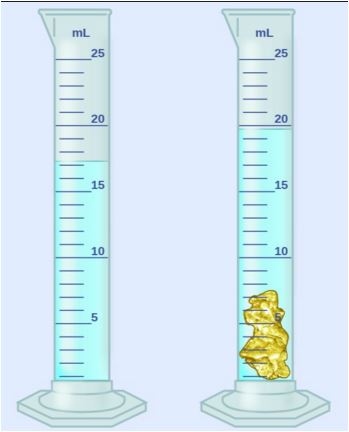
Question image
An irregularly shaped piece of gold was lowered into a graduated cylinder holding a volume of water equal to 17 ml. The height of the water rose to 20 ml. If the mass of the gold was 27 g, what was its density?
1
9 g/mL
2
10.5 g/mL
3
6.5 g/mL
4
8 g/mL

38

Multiple Choice

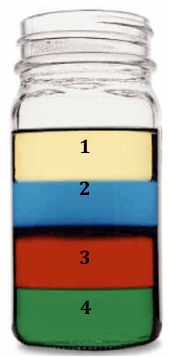
Question image
Put the liquids in order from most dense to least dense?
1
4, 3, 2, 1
2
1, 2, 3, 4
3
3, 4, 2, 1, 
4
4, 3, 1, 2

39

Multiple Choice

Question image

Calculate the density of the rectangular prism

1

2 g/cm3

2

4 g/cm3

3

6 g/cm3

4

8 g/cm3

40

Multiple Choice

Question image

Use the density chart to identify the substance. If the substance has a volume of 5 cm3 and a mass of 52.5.

1

lead

2

aluminum

3

silver

4

water

media

Unit 4 Review: Properties of matter, density, IMF

Show answer

Auto Play

Slide 1 / 40

SLIDE

Discover more resources for Physics