

Mr Moore's Year 7 Participants in the Legal System

Presentation
•
Social Studies
•
7th Grade
•
Practice Problem
•
Medium

James Moore
Used 1+ times
FREE Resource
6 Slides • 13 Questions
1
Participants in the Australian Legal System
Learning Intention:
By the end of this lesson, students will understand the roles of different participants in the Australian legal system, including juries, witnesses, judges, and legal practitioners.
Success Criteria:
I can describe the role of a jury and explain how citizens participate in the legal system.
I can identify the roles of judges, witnesses, solicitors, and barristers in the court process.
I can understand how these participants contribute to a fair legal system.
2

The jury plays an important role in Australia's legal system. A jury is a group of 12 citizens randomly chosen to help decide the outcome of a court case. They listen to all the evidence presented in a trial and then discuss the case together to reach a decision. The jury's job is to decide if the accused person is guilty or not. In criminal cases, the jury decides on the guilt of the accused, whereas in civil cases, they decide whether someone owes money or compensation.
Juries are selected from the electoral roll, which means any Australian over the age of 18 can be chosen for jury duty. You do not need to be an expert in law to be part of a jury—you just need to listen carefully to the evidence and make a fair decision based on what you have heard. The process of jury selection is called empanelment, where potential jurors are asked questions to ensure they do not have biases that could affect the trial outcome.
The Jury
3
Multiple Choice
How many people are usually on a jury in Australia?
10
12
15
18
4
Multiple Choice
What is the main job of a jury in a criminal case?
To decide on the punishment
To listen to the judge
To provide legal advice
o decide if the accused is guilty
5
Reorder
Put the steps of jury selection in the correct order:
Potential jurors are selected from the electoral roll.
Jurors are called to court.
Empanelment process takes place.
Jurors are asked questions to check for biases.
Jurors are chosen and sworn in.
6
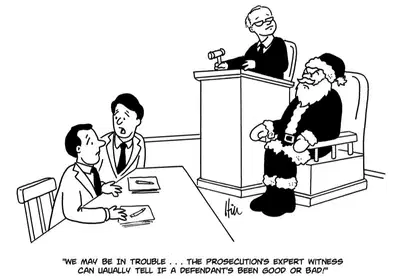
Witnesses are also very important in court cases. A witness is someone who has seen or heard an event related to a case. They provide evidence by telling the court what they saw or heard. This can be crucial in helping the judge or jury decide whether someone is guilty or innocent. Witnesses must promise to tell the truth when they give their evidence.
There are also expert witnesses. These are people who might not have seen the event but have special knowledge that helps the court. For example, a doctor might explain medical evidence, or an accountant might help explain financial documents. Expert witnesses are often used in cases where the evidence is complex, and their testimony helps clarify technical information for the judge and jury.
Witnesses
7
Fill in the Blanks
8
Fill in the Blanks
9
Open Ended
Explain why it is important for witnesses to swear an oath before giving evidence in court.
10
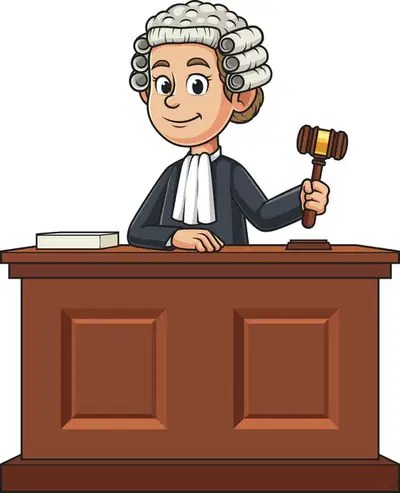
Judges are extremely important in the legal system. They ensure that court procedures are followed properly, maintain order in the courtroom, and make decisions about a case if there is no jury. Judges also make sure that the trial is conducted fairly, and they provide instructions to the jury about how to interpret the law. In criminal cases, judges decide on the appropriate sentence if someone is found guilty. Judges must act fairly, without any bias, to make sure that everyone gets a fair trial.
Judges must also apply the law without fear or favour, which means they cannot let their personal beliefs or relationships influence their decisions. In Australia, judges are appointed based on their experience and knowledge of the law to ensure they are well-qualified to make fair decisions.
Judges
11
Match
Match the description to the correct term:
Decides if an accused person is guilty
Ensures order in the courtroom
Provides evidence of what they saw or heard
An expert who explains complex information
Jury
Judge
Witness
Expert Witness
Jury
Judge
Witness
Expert Witness
12
Multiple Choice
What is one of the roles of a judge in a courtroom?
To maintain order in the courtroom
To provide legal advice to the jury
To decide if someone should be a witness
To investigate the crime scene
13
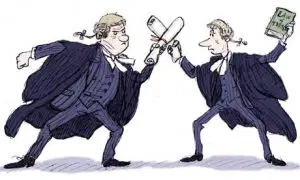
Legal practitioners are people who represent others in court. Solicitors are lawyers who prepare cases and advise their clients. They do most of their work outside of the courtroom, like filling in legal documents, talking to clients, and negotiating settlements. Solicitors help their clients understand the legal process and prepare them for court.
Barristers, on the other hand, are lawyers who specialise in arguing cases in court. They work closely with solicitors but are the ones who stand up and argue the case during a trial. Barristers have specialised knowledge of courtroom procedures and often focus on specific areas of law, such as criminal law or family law. Some barristers may earn the title of Senior Counsel (SC) if they are highly experienced and respected within the legal community.
Legal Practitioners - Solicitors and Barristers
14
Categorize
Prepares legal documents
Advises clients
Works mainly in court
Specialises in courtroom arguments
Represents clients in negotiations
Conducts legal research
Handles property transactions
Provides legal advice on various matters
Drafts contracts and agreements
Assists in dispute resolution
Represents clients during trials
Gives legal opinions on complex cases
Prepares legal arguments for court
Cross-examines witnesses
Advises solicitors on case strategy
Participates in appeals and reviews
Sort the following statements into "Solicitor" or "Barrister":
15
Fill in the Blanks
16
Fill in the Blanks
17
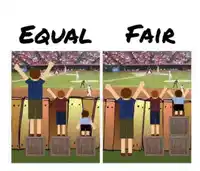
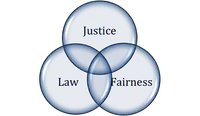
All these participants—juries, witnesses, judges, solicitors, and barristers—play a role in making sure our legal system is fair. The jury helps by making decisions as members of the community. Witnesses provide crucial evidence. Judges ensure that the law is followed fairly, and legal practitioners make sure that both sides of a case are heard.
The Australian legal system aims to be impartial and give everyone a fair chance. The participation of different people, each with specific roles, helps ensure that justice is served effectively. However, there are still challenges, such as ensuring all people have equal access to legal representation and that juries remain unbiased.
Reflection on Fairness in the Legal System
18
Poll
Do you think the Australian legal system is fair?
Yes, it is fair because everyone gets to participate.
No, it needs to be improved.
19
Draw
Draw a picture of one participant in the legal system (e.g., a judge, a jury, a witness) and show what they do. Label your drawing to explain their role in the legal system.
Participants in the Australian Legal System
Learning Intention:
By the end of this lesson, students will understand the roles of different participants in the Australian legal system, including juries, witnesses, judges, and legal practitioners.
Success Criteria:
I can describe the role of a jury and explain how citizens participate in the legal system.
I can identify the roles of judges, witnesses, solicitors, and barristers in the court process.
I can understand how these participants contribute to a fair legal system.
Show answer
Auto Play
Slide 1 / 19
SLIDE
Similar Resources on Wayground

15 questions
The History of Voting Rights in America
Presentation
•
7th Grade
17 questions
Age of Jackson
Presentation
•
7th Grade
15 questions
Middle East Geography
Presentation
•
7th Grade
14 questions
Specialization & Trade in Africa
Presentation
•
7th Grade
14 questions
Knights During Feudal Times
Presentation
•
7th Grade
16 questions
Influences on Japan
Presentation
•
7th Grade
14 questions
Economic Systems
Presentation
•
7th Grade
14 questions
Han Dynasty
Presentation
•
7th Grade
Popular Resources on Wayground
10 questions
Factors 4th grade

Quiz
•
4th Grade
10 questions
Cinco de Mayo Trivia Questions

Interactive video
•
3rd - 5th Grade
13 questions
Cinco de mayo
Interactive video
•
6th - 8th Grade
20 questions
Math Review
Quiz
•
3rd Grade
20 questions
Main Idea and Details
Quiz
•
5th Grade
20 questions
Context Clues
Quiz
•
6th Grade
20 questions
Inferences
Quiz
•
4th Grade
19 questions
Classifying Quadrilaterals
Quiz
•
3rd Grade
Discover more resources for Social Studies
64 questions
Civics PMA 3
Quiz
•
7th - 8th Grade
48 questions
2024 Civics EOC Released Practice Test
Quiz
•
7th Grade
48 questions
Reporting Category 1: Origins and Purposes of Law and Government
Quiz
•
7th Grade
48 questions
Civics EOC Review 2025
Quiz
•
7th Grade
50 questions
US Capitals - All 50 States
Quiz
•
7th Grade
25 questions
Civics EOC Review 01
Quiz
•
7th Grade
48 questions
CIVICS EOC PRACTICE TEST 3
Quiz
•
7th Grade
10 questions
Exploring the 50 States and Capitals of the USA
Interactive video
•
6th - 10th Grade