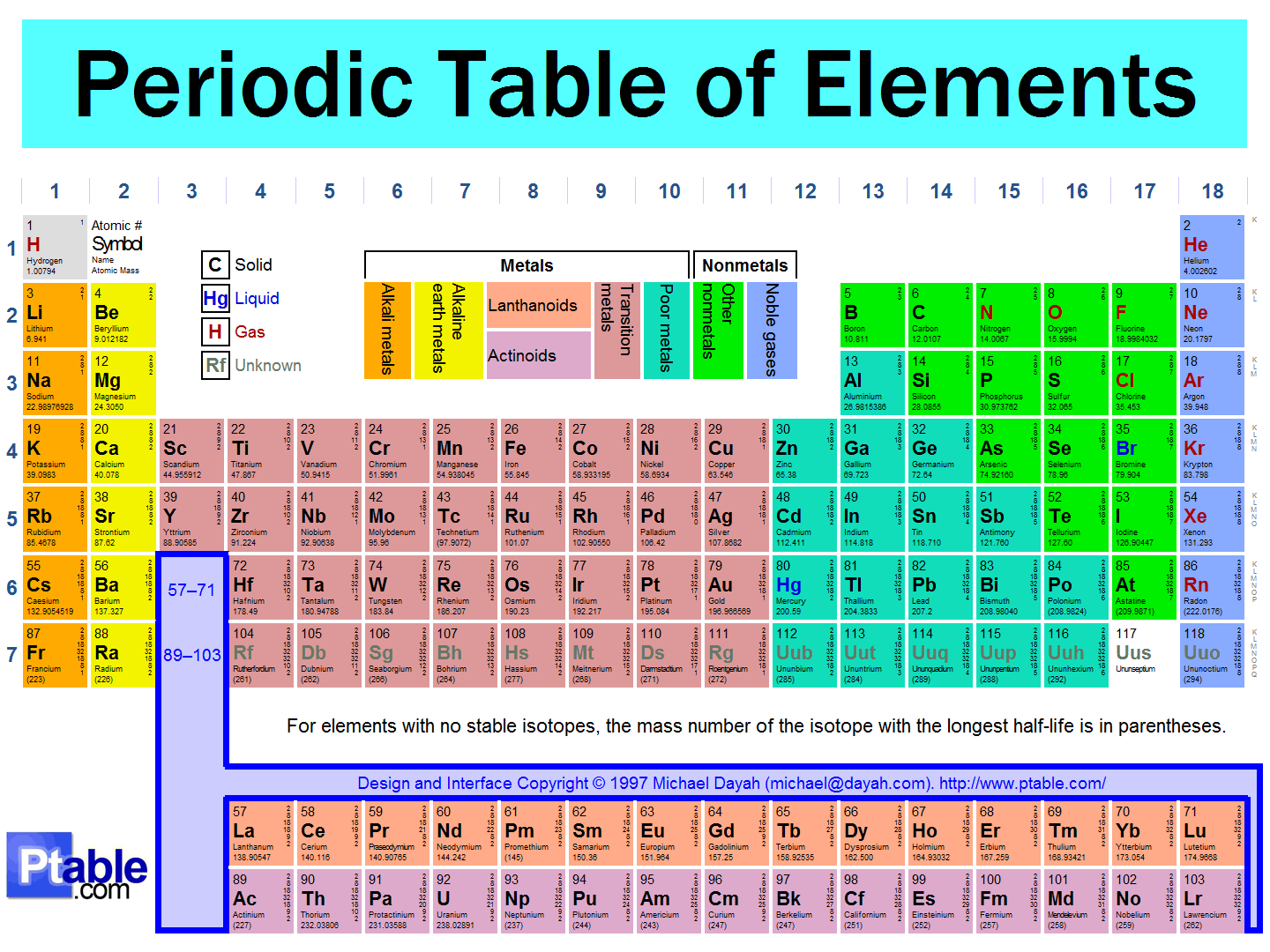
Families and periodic table
Presentation
•
Science
•
6th - 8th Grade
•
Medium
+12
Standards-aligned
Jesus Hernandez
Used 6+ times
FREE Resource
13 Slides • 18 Questions
1
Families of the
Periodic Table
2
Multiple Choice
The group number tells us the:
atomic number
number of electron shells the atom uses
umber of outer electons the atom has
3
Multiple Choice
Each vertical column on the periodic table is called a...
group
tower
period
crew
4
Multiple Choice
The period number tells us
Atomic number
number of electron shells the atom uses
number of electrons the atom uses
5
Multiple Choice
The horizontal rows on the periodic table are called
groups
families
periods
atomic numbers
6
Multiple Choice
The periodic table is arranged in vertical columns called:
columns
groups
periods
7
8
9
Multiple Choice
10
Multiple Choice
Alkali Metal have 1 valence electron can can create what kind of ion?
11
Multiple Choice
What element is not an Alkali Metal??
Hydrogen
12
13
Multiple Choice
14
Multiple Choice
Alkaline Earth Metal have 2 valence electron can can create what kind of ion?
15
16
Multiple Choice
17
BCNO Group
The BCNO family is found on the right side of the Periodic Table between the transition elements (Group 3-12) and the halogens (Group 17). The BCNO family is a very large family with 25 members. Some of the more common members of this family include carbon, nitrogen, oxygen, aluminum, silicon, sulfur, arsenic, tin, and lead. The BCNO family is sometimes divided into two or even four separate families. This is by far the most diverse family of elements.
The BCNO family is given its name because of the symbols of the lightest elements in each column of the family: boron (B), carbon (C), nitrogen (N), and oxygen (O). The members of this family are metals, nonmetals, or metalloids. Some members of this family are gases at room temperature (nitrogen and oxygen), but most are solids. They are reactive but are selective with which elements they will bond. Most will bond with oxygen. Oxygen will even bond with itself. There are no hard and fast rules that fit all the elements of this family except that the members of each column tend to bond with other elements in a similar fashion.
18
19
Multiple Choice
Boron Family have 3 valence electron can can create what kind of ion?
20
21
Multiple Choice
Carbon Family have 4 valence electron can can create what kind of ion?
22
23
Multiple Choice
Nitrogen Family have 5 valence electron can can create what kind of ion?
24
25
Multiple Choice
Oxygen Family have 6 valence electron can can create what kind of ion?
26
27
Multiple Choice
Halogen Family have 7 valence electron can can create what kind of ion?
28
Multiple Choice
What is the name of Group 17?
29
30
Multiple Choice
What is the name of Group 18?
31
Families of the
Periodic Table
Show answer
Auto Play
Slide 1 / 31
SLIDE

Similar Resources on Wayground
26 questions
Circuits and Symbols
Presentation
•
9th - 12th Grade
22 questions
Human Impact Video Refection
Presentation
•
6th - 8th Grade
20 questions
Earth's Spheres Interactions
Presentation
•
6th - 8th Grade
20 questions
What is a science fair project?
Presentation
•
5th - 7th Grade
25 questions
Metals, Nonmetals, Metalloids
Presentation
•
6th - 8th Grade
26 questions
Acids and Bases
Presentation
•
6th - 8th Grade
27 questions
Electricity and Magnetism
Presentation
•
6th - 8th Grade
25 questions
TCAP Review #1: Atomic Structure
Presentation
•
6th - 8th Grade
Popular Resources on Wayground
10 questions
HCS SCI 03 Summer School Assessment 1
Quiz
•
3rd Grade
15 questions
HCS SCI 05 Summer School Assessment 1 Review
Quiz
•
5th Grade
22 questions
Day 9 Equations and Inequalities Review
Quiz
•
9th Grade
10 questions
Writing and Identifying Ratios Practice
Quiz
•
5th - 6th Grade
7 questions
PYRAMID PERSPECTIVES part 1
Presentation
•
9th - 12th Grade
12 questions
Understanding the Fourth of July
Quiz
•
9th Grade
15 questions
Soccer World Cup Quiz Questions
Quiz
•
7th Grade