

MINDSET FOR IELTS 3 UNIT 4 READING

Presentation
•
English
•
9th - 12th Grade
•
Practice Problem
•
Easy

Ánh Ngọc
Used 2+ times
FREE Resource
8 Slides • 8 Questions
1
UNIT 4 READING
2
Open Ended
Do you think it's important to save money? Why or why not?
What do you usually spend your money on?
Have you ever saved up to buy something special? If so, what was it?
Do you think young people today are good at managing their money?
How do you feel about borrowing money from friends or family?
3
Open Ended
Exercise 1 - page 73
4
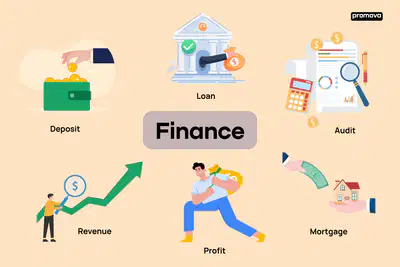
2 A loan is an amount of money borrowed for any purpose. A mortgage is an amount of money borrowed specifically to buy a property.
3 Regulations are the procedures or rules set by any authority or person in charge in order for an organisation/business to function properly. Laws are instructions that are put in place by the
government and apply to everyone in the country, and regulations can be part of them.
4 There is little effective difference in meaning. Go bust is more informal and used in spoken communication rather than written.
5 A lender provides a borrower with the money that they have asked for. In other words, a borrower receives a loan and a lender gives a loan.
6 Savings are money that is put into a safe place so that it cannot easily be spent, and may even make some profit in interest. Investments are money that is put into a less safe place, such as
shares in a company, in the hope that it will make a profit.
5
Open Ended
Exercise 3 - page 73:
Look at the reading passage on page 75. How can you identify which is:
1 the name of a writer the first time they are mentioned?
2 the name of the writer when they are next mentioned?
3 the title of a book/ article/ academic paper?
4 the exact words written in a book/ article/ academic paper?
6
1 the name of a writer the first time they are mentioned?
2 the name of the writer when they are next mentioned?
3 the title of a book/ article/ academic paper?
4 the exact words written in a book/ article/ academic paper?
-> 1 Their full name is given.
2 Usually just a surname is given.
3 It is in italics. Sometimes titles may appear in 'quotation marks'.
4 The exact words written appear in 'quotation marks'.
7
Open Ended
Exercise 4 - page 73:
Look at the exam task and focus on the options below. Scan the passage and put a box around the names where they are mentioned in the text
8
Open Ended
Read paragraphs Discuss 1-3. The with opinions a partner below who is come responsible from either for each Alice argument, Pillory or Charles Vane
and explain where in the text you found the answer.
1 The plan to make a greater number of people wealthy from mortgage
repayments was foolish.
2 The credit ratings agencies did not fulfil their essential reason for existing.
3 Investment banks are not solely responsible for the problems that caused
the crash.
9
1 A (Alicia Pillory) paragraph 2: The grand, misguided theory was that any repayments would have to be made to the companies or people who now owned the mortgages, and everyone would get rich.
2 C (Charles Vane) paragraph 3: The main purpose of these organisations is to evaluate in a neutral way the amount of risk an individual or company might face in a potential investment. [ ... ] these credit rating agencies were actually paid by the investment banks themselves,[ ... ] which is actually very far from being neutral.
3 C (Charles Vane) paragraph 3: We have to take that into consideration before isolating and criticising the investment banks
too harshly
10
Open Ended
Referring to paragraphs 4 and 5, decide whose opinion is being paraphrased here.
4 The bankers' careless way of working was essentially a form of exploitation from
which they got more wealthy.
5 Accepting the false assurance of AAA credit ratings without question badly
damaged the global economy.
6 Government failure to bring the problem to an end led to a new
profit-driven industry becoming involved.
11
4 A (Alicia Pillory) paragraph 4: 'So many people were taken advantage of(= exploited),' writes Pillory, and 'this irresponsible lending behaviour(= careless way of working) was never made to stop, with no ultimate consequences for the bankers, who simply became very, very rich(= got more wealthy)'.
5 B (Dr Alfred Moran) paragraph 5: 'The AAA ratings gave everyone a dishonest guarantee(= false assurance) that the system could not collapse. Unfortunately for the world's economy(= global economy), the insurance companies followed those ratings blindly (= accepted [those ratings] without question).
6 A (Alicia Pillory) paragraph 4: She maintains that the authorities (= government) could, and should, have put a stop to it(= brought [the problem] to an end) earlier. Instead, 'at this point, another industry saw the potential for profit(= a new profit-driven industry) and greedily stepped in(= became involved)'
12
THE FINANCIAL CRASH - WHO WAS TO BLAME
13
Open Ended
Exercise 13 - page 77:
Questions 1-7 Look at the following statements and the list of studies below. Match each statement with the correct
study, A-C.
1 Unlike in previous years, a willingness to experiment with a wide range of possible roles is visible in all groups of job-seekers.
2 Younger people are being denied the chance to develop the social skills necessary for the modern office environment.
3 Many modern positions can be more easily terminated than ever before.
4 Claims of economic expansion are demonstrably incorrect.
5 An unforeseen problem has led to an increase in the number of people available to work.
6 Much of today's workforce do not feel constrained by a lack of familiarity with a new p
14
1 C (paragraph 5: Furthermore, although younger people are traditionally thought to be more willing to try any number of routes into work before deciding on an industry in which they want to develop, such an approach to employment no longer excludes workers of a more advanced age.)
2 B (paragraph 3: 'Older people are taking opportunities away from their grandchildren. Post-education, those new to the world of work are not able to earn any sort of living wage, nor are they getting the opportunity to develop the 'soft skills', e.g. social intelligence, that will enable them to flourish in the job market.')
3 B (paragraph 4: The 'zero-hours' worker . .. can be instantly dismissed without any hope of recourse. Employment laws[. . .] do not protect the new breed of worker from being unfairly dismissed at a moment's notice by their manager.)
15
4 A (paragraph 2: This has a number of debilitating long-term effects, not feast because this assurance of a growing economy is based more in myth than fact. Thomas explains, 'Without tax income, the economy cannot grow; if the economy stays weak, new jobs will not be created.')
5 A (paragraph 3: ... created a problem for a huge number of retired workers, who are starting to find that the sum of money they have saved for their retirement does not stretch far enough to provide the financial security that they had expected.[. . .] there has been a widespread return of these workers to the job market)
6 A (paragraph 5: Thomas agrees: 'Most of today's self-starters believe that the job market offers a vast array of potential opportunities from which they can learn and gain experience. Whether they have a wide range of existing experience, or none at off, is irrelevant to them.')
7 C (paragraph 5: A 2015 study by William Haroldson, How the Market Adjusts to Opportunity, advocated a definition of a new type of mufti-skilled worker: the model employee who not only refuses to age, but also does not want to work in the same office every day, or even to be an employee in the first place. In such a progressive, forward-looking environment ..
16
Multiple Choice
Question 8
What is the best title for this passage?
A The Conflict between Young and Old in the Workplace
B Modern Employment: the Need for Adaptability
C The Changing Face of Working Life
D What Today's Workforce Really Wants
UNIT 4 READING
Show answer
Auto Play
Slide 1 / 16
SLIDE
Similar Resources on Wayground

12 questions
Figurative Language Review
Presentation
•
8th - 12th Grade
13 questions
Argumentative Text
Presentation
•
9th - 12th Grade
10 questions
Faulty Parallelism
Presentation
•
9th - 12th Grade
9 questions
Fallacy of the Day: Strawman
Presentation
•
9th - 12th Grade
13 questions
Direction
Presentation
•
9th - 12th Grade
11 questions
Long & Short Term Goals
Presentation
•
9th - 12th Grade
13 questions
Theme Review
Presentation
•
9th - 12th Grade
12 questions
Inferencing
Presentation
•
9th - 12th Grade
Popular Resources on Wayground
10 questions
How much do you know about our Portrait of an Eagle?

Quiz
•
10th Grade
10 questions
Fast Food Slogans
Quiz
•
6th - 8th Grade
21 questions
Continents and Oceans
Quiz
•
6th Grade
20 questions
Parts of Speech
Quiz
•
5th Grade
16 questions
Subject & Predicate
Quiz
•
5th Grade
25 questions
Multiplication Facts
Quiz
•
5th Grade
12 questions
Map Skills
Quiz
•
3rd Grade
22 questions
Continents and Oceans
Quiz
•
5th Grade
Discover more resources for English
15 questions
Simple, compound, and complex sentences
Quiz
•
9th Grade
16 questions
Ethos, Pathos, Logos Practice
Quiz
•
9th Grade
20 questions
Context clues
Quiz
•
10th Grade
20 questions
Parts of Speech Review
Quiz
•
9th Grade
15 questions
ENG 10 Grammar: 18.1 Prepositions or Adverbs P. 34
Quiz
•
10th Grade
10 questions
Making Inferences and Drawing Conclusions

Interactive video
•
6th - 10th Grade
10 questions
Crafting an Effective Thesis Statement
Interactive video
•
6th - 10th Grade
10 questions
Exploring Coordinating Conjunctions with FANBOYS
Interactive video
•
6th - 10th Grade