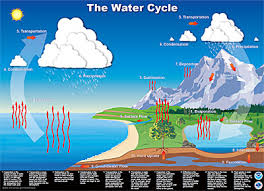
water cycle plus changing states
Presentation
•
Science, Other Sciences
•
3rd - 5th Grade
•
Practice Problem
•
Easy
Alia Tarek
Used 3+ times
FREE Resource
5 Slides • 88 Questions
1
Multiple Choice
2
Changing States of Matter
3
4
Multiple Choice
Which arrow shows melting?
A
B
5
6
Multiple Choice
Which arrow shows freezing?
A
B
7
8
Multiple Choice
Which arrow shows evaporating?
A
B
9
10
Multiple Choice
Which arrow shows condensing?
A
B
11
Multiple Choice
12
Multiple Choice
13
Multiple Choice
14
Multiple Choice
15
Multiple Choice
16
Multiple Choice
17
Multiple Choice
18
Multiple Choice
19
Multiple Choice
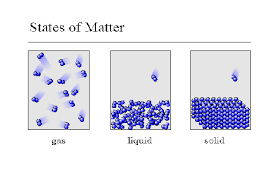
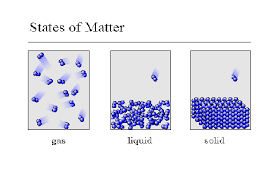
___________ is anything that has mass and takes up space.
Molecules
Matter
Volume
20
Multiple Choice
________ is the amount of space an object takes up.
Mass
Matter
Volume
21
Multiple Choice
Which state of matter does not have a definite shape but does have a definite volume?
Solid
Liquid
Gas
22
Multiple Choice
What is the process called when a gas turns into a liquid?
Condensation
Melting
Freezing
Evaporation
23
Multiple Choice
What is the process called when a solid changes to a liquid?
Freezing
Evaporation
Melting
Condensation
24
Multiple Choice
What is the process called when a liquid changes into a gas?
Freezing
Evaporation
Melting
Condensation
25
Multiple Choice
When a substance is heated, particles will
Move further apart
Get larger
Move closer together
Be unaffected
26
Multiple Choice
At higher temperatures.....
particles in an object have less energy
a gas contracts
particles in an object move faster
thermal contraction occurs
27
Multiple Choice
What is happening when my ice cream changes from a solid to a liquid?
freezing
boiling
condensing
melting
28
Multiple Choice
Particles of a liquid....
are tightly packed together and stay in a fixed position
are free to move around one another but still touch
move quickly and are far apart
29
Multiple Choice
What is condensation?
gas to solid
gas to liquid
solid to gas
liquid to solid
30
Multiple Choice
The bathroom mirror has fogged up while you took a shower. Which explains what happened?
radiation
condensation
conduction
the water was too hot
31
Multiple Choice
What is the term given to the temperature at which a solid turns into a liquid?
Boiling point
Melting point
Freezing point
Heating point
32
Multiple Choice
What is the term given to the temperature at which a liquid changes to a solid?
Melting point
Boiling point
Sublimation point
Freezing point
33
Multiple Choice
34
Multiple Choice
Q.
You stir sugar into a glass of warm water. What happens to the sugar?
A.
All the sugar sinks to the bottom of the glass.
B.
It freezes in the water.
C.
It dissolves in the water.
35
Multiple Choice
Q.
How does an ice cube change when placed in the sunlight?
A.
It freezes.
B.
It melts.
C.
It dissolves.
36
Multiple Choice
Q.
Which will become a solid in a freezer?
A.
A metal nail
B.
Juice
C.
a plate
37
Multiple Choice
Q.
John stirs sand into a glass of warm water. He knows the sand is NOT dissolving in the water. How does he know?
A.
All the sand sinks to the bottom of the glass.
B.
The sand spreads out and mixes completely with the water.
C.
The sand melts in the water
38
Multiple Choice
Q.
Which word means to completely mix a solid with a liquid?
freeze
burning
melt
dissolve
39
Multiple Choice
What is the freezing point of water?
32°C
100°C
-10°C
0°C
40
Multiple Choice
When water vapor gets cold, it turns to a...
liquid
ice
gas
solid
41
Multiple Choice
An uncovered pot of soup is simmering on a stove, and there are water droplets on the wall above the back of the stove. What sequence can you infer has occurred?
evaporation, then condensation
condensation, then evaporation
melting, then boiling
freezing, then boiling
42
Multiple Choice
Why does a liquid take the shape of its container?
Because it has changed from another state to a liquid
Because this is a chemical property of liquids.
Because the particles are not moving.
Because the particles can slide past and around each other.
43
Multiple Choice
Which state(s) of matter takes the shape of the container they are placed in?
Liquid and solid
Liquid and gas
Liquid only
Gas only
44
Multiple Choice
Look at the picture shown. Which change of state occurs when particles in a solid begin to move slowly past each other?
Melting
Boiling
Freezing
Condensing
45
Multiple Choice
Which one of the following diagrams best represents a model of the particles in a gas?
46
Multiple Choice
Look at the picture shown.
Where is water evaporating into the air?
from D to A
from C to D
from A to B
from B to C
47
Multiple Choice
Look at the picture shown. Which change of state occurs when particles in a solid begin to move slowly past each other?
Melting
Boiling
Freezing
Condensing
48
Multiple Choice
On a hot summer day chocolate bar can melt in your pocket. How can you get the chocolate to return to a solid?
leave it outside
cool it in the refrigerator
leave it in your pocket
heat it on a pan
49
Multiple Choice
What happens to the movement of the particles in a substance when we heat them?
particles will move faster
particles will move slower
particles will stop to move
nothing happen to the particles
50
Multiple Choice
What happens to the arrangement of particles when we cool the substance?
The particles get farther apart.
The particles get closer together.
The particles will be broken.
The particles will be gone.
51
Multiple Choice
The steam coming off the pot of boiling water is an example of ________________.
a solid becoming a liquid
a liquid becoming a solid
a liquid becoming a gas
a gas becoming a liquid
52
Multiple Choice
What is the melting point (temperature) of ice cube (water)?
100°C
0°C
32°C
-10°C
53
Multiple Choice
What is the boiling point (temperature) of water?
100°C
0°C
32°C
-10°C
54
Multiple Choice
55
Multiple Choice
True or False: Matter can changes states by adding or removing heat.
True
False
56
Multiple Choice
How do the atoms behave in a solid?
Atoms slide against each other at different speeds.
Atoms are far apart and move very quickly.
Atoms are close together and vibrate.
57
Multiple Choice
How do the atoms behave in a liquid?
Atoms move very fast in all directions.
Atoms vibrate in place.
Atoms slide past each other at different speeds
58
Multiple Choice
How do the atoms behave in a gas?
Atoms move very fast in all directions.
Atoms vibrate in place.
Atoms move at different speeds past each other.
59
Multiple Choice
What is required to change a solid to a liquid?
freezing
nothing
energy
condensation
60
Multiple Choice
What are the drops of water on the outside of the coke can
water vapor
condensation
evaporation
61
Multiple Choice
Clouds are made of tiny droplets of water. Clouds are
melting
boiling
water vapor
condensation
62
Multiple Choice
Mrs. Liechti filled a paper cup all the way to the top with water. She then put the cup in the freezer. When she looked at it the next day she saw that _______________.
the paper cup was empty; all the water had evaporated during the night.
the paper cup was filled with ice cubes that formed during the night
the paper cup held a solid chunk of ice that was smaller then the amount it started with
the paper cup was filled with ice that bulged up above the top of the cup like a muffin
63
Multiple Choice
When it rains, liquid water falls to the ground. Some water is absorbed into the soil, and some runs into rivers. Some water evaporates into the air by the sun's heat. The invisible water is called ________________.
water vapor
fog
clouds
moisture
64
Multiple Choice
When water freezes it will:
sink
condense
contract
expand
65
Multiple Choice
Melting ice is a _________________ change.
solid
chemical
physical
liquid
66
Multiple Choice
Which state of matter is this image?
Solid
Liquid
Gas
67
Multiple Choice
Which state of matter is this image?
Solid
Liquid
Gas
68
Multiple Choice
Which state of matter is this image?
Solid
Liquid
Gas
69
Multiple Choice
The molecules/atoms in condensation...
Slow down
Stay the same
Speed up
70
Multiple Choice
71
Multiple Choice
72
Multiple Choice
73
Multiple Choice
74
Multiple Choice
75
Multiple Choice
76
Multiple Choice
77
Multiple Choice
78
Multiple Choice
79
Multiple Choice
ice forming on a lake
dew forming on grass
80
Multiple Choice
Water is changing from a gas to a solid.
81
Multiple Choice
82
Multiple Choice
83
Multiple Choice
What effect does the sun have on surface water?
It causes it to boil
It causes it to rain
It causes it to sink
It causes it to evaporate
84
Multiple Choice
Which of the following options depicts precipitation?
85
Multiple Choice
86
Multiple Choice
87
Multiple Choice
88
Multiple Choice
89
Multiple Choice
90
Multiple Choice
91
Multiple Choice
Water forms on the outside of iced tea on a hot day. What process causes the water to form?
Condensation
Evaporation
Precipitation
Transpiration
92
Multiple Choice
On Earth, what process generates most of the water vapor?
Condensation
Evaporation
Precipitation
Transpiration
93
Multiple Choice
Show answer
Auto Play
Slide 1 / 93
MULTIPLE CHOICE

Similar Resources on Wayground
90 questions
Scale Factor Lesson
Presentation
•
7th Grade
80 questions
Ecosystems - Food Chains/Webs
Presentation
•
6th - 8th Grade
87 questions
Influência dos fatores abióticos
Presentation
•
5th - 6th Grade
86 questions
Checking Account and Debit Card
Presentation
•
6th - 8th Grade
85 questions
Simply The Past
Presentation
•
4th - 6th Grade
92 questions
COT Q2 Bias & Propaganda
Presentation
•
6th Grade
88 questions
Main Idea and Supporting Details
Presentation
•
7th Grade
85 questions
Citizenship Part Two
Presentation
•
7th Grade
Popular Resources on Wayground
20 questions
STAAR Review Quiz #3
Quiz
•
8th Grade
20 questions
Equivalent Fractions
Quiz
•
3rd Grade
6 questions
Marshmallow Farm Quiz
Quiz
•
2nd - 5th Grade
20 questions
Main Idea and Details
Quiz
•
5th Grade
20 questions
Context Clues
Quiz
•
6th Grade
20 questions
Inferences
Quiz
•
4th Grade
19 questions
Classifying Quadrilaterals
Quiz
•
3rd Grade
12 questions
What makes Nebraska's government unique?
Quiz
•
4th - 5th Grade
Discover more resources for Science
12 questions
Ecosystems
Quiz
•
3rd - 5th Grade
10 questions
Exploring Light (Video & Questions)
Interactive video
•
1st - 5th Grade
6 questions
CA4 Science
Presentation
•
1st - 5th Grade
10 questions
Exploring Air Masses and Weather Fronts
Interactive video
•
1st - 5th Grade
10 questions
Exploring Food Webs and Energy Flow
Interactive video
•
1st - 5th Grade
15 questions
Electricity TCAP Review
Presentation
•
1st - 5th Grade