Search Header Logo
Circulation and Gas Exchange

Circulation and Gas Exchange

Assessment

Presentation

•

Biology

•

11th Grade

•

Medium

Created by

Aleisha Bliesner

Used 4+ times

FREE Resource

42 Slides • 19 Questions

1

media

2

media

3

media

4

media

5

media

6

7

media

8

media

9

media

10

media

11

media

12

media

13

Multiple Choice

The right side of the heart receives:

1

oxygenated blood from the circulation

2

deoxygenated blood from the lungs

3

oxygenated blood from the left side of the heart

4

deoxygenated blood from the circulation

14

Multiple Choice

Question image
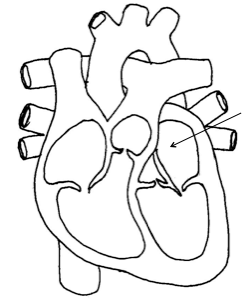
Name this part.
1
Right atrium
2
Left ventricle
3
Right ventricle
4
Left atrium

15

Multiple Choice

Question image
4?
1
Superior Vena Cava
2
Right Pulmonary Artery
3
Right Pulmonary Vein
4
Inferior Vena Cava

16

Multiple Choice

Question image
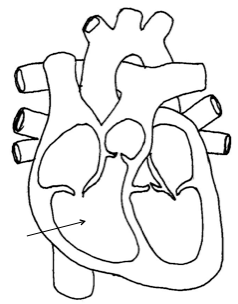
Name this part.
1
Right ventricle
2
Pulmonary artery
3
Left ventricle
4
Right atrium

17

Multiple Choice

Question image

What component of the heart is number 9

1

Left Ventricle

2

Left Atrium

3

Right Ventricle

4

Right Atrium

18

Multiple Choice

Question image

What is the part of the heart labelled ‘A’?

1

Pulmonary vein

2

Pulmonary artery

3

Superior vena cava

4

Inferior vena cava

19

media

20

media

21

Multiple Choice

Where does the electrical current in the heart start?

1

The ventricle

2

The apex

3

The sinoatrial node

4

The coronary artery

22

Multiple Choice

Systole is...

1

the word used to describe the heart and its functions

2

when the heart contracts, the blood is forced out of the heart

3

the name of the blood leaving the body

4

when the heart relaxes, blood enters the heart

23

media

24

media

25

media

26

media

27

Multiple Choice

Large, thick walled blood vessels are:

1

Veins

2

Capillaries

3

Arteries

4

Haemoglobin

28

Multiple Choice

The role of capillaries is to:

1

Carry oxygen and nutrients to cells, and take carbon dioxide away from the cells

2

Carry deoxygenated blood and waste away from body cells and to the heart

3

Take oxygenated blood to the heart

4

Maintain oxygen levels in blood

29

Categorize

Options (14)

Thick muscular walls

Carries blood away from the heart

Carries blood under high pressure

Carries blood towards the heart

Has valves

Narrow lumen

Very narrow

lumen

Walls are one cell thick

Substances diffuse easily across the wall

Carries blood under low pressure

Wide lumen

Question image
Question image
Question image

Organize these options into the right categories

Artery
Vein
Capillary

30

media

31

media

32

media

33

media

34

media

35

36

media

37

media

38

media

39

media

40

media

41

media

42

media

43

Multiple Choice

Please choose the correct pathway air travels though into the lungs

1

Nasal passage, pharynx, larynx, trachea, bronchiole, bronchi, alveoli

2

Nasal passage, pharynx, larynx, trachea, bronchi, bronchiole, alveoli

3

Nasal passage, pharynx, larynx, trachea, bronchi, alveoli, bronchiole

4

Nasal passage, trachea, pharynx, larynx, bronchi, bronchiole, alveoli

44

Multiple Choice

Which part of the human respiratory system is a thin, moist membranous structure where gas exchange occurs?

1

trachea

2

bronchus

3

epiglottis

4

alveolus

45

Multiple Choice

Question image

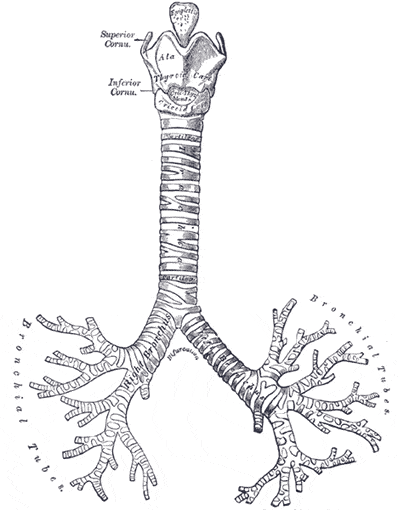
What is the tube that is also known as your windpipe?

1

esophogus

2

bronchi

3

trachea

4

alveoli

46

Multiple Choice

What is the purpose of the epiglottis?

1

Filtering incoming air

2

Producing sound during speech

3

Preventing food from entering the trachea

4

Producing mucus

47

Multiple Choice

known as the voice box
1
windpipe
2
larynx
3
pharynx
4
epiglottis

48

media

49

media

50

media

51

media

52

media

53

media

54

media

55

media

56

Multiple Choice

During inhalation, which muscle contracts to expand the chest cavity?

1

Diaphragm

2

Intercostal muscles

3

Abdominal muscles

4

Pectoral muscles

57

Multiple Choice

Pulmonary gaseous exchange...

1

Is the exchange of O2 and CO2 between the alveoli and capillaries

2

Is the diffusion of gases at the muscles

3

Is Oxygen moving from low concentration to high concentration

4

Is where blood becomes deoxygenated

58

media

59

Multiple Choice

Vital capacity is...

1

The volume of air that can be held in the lungs after maximum inspiration

2

Equal to Tidal Volume

3

The maximum amount of air that can be breathed out after maximum inspiration

4

Maximal oxygen uptake (VO2 max)

60

web page not embeddable

BioMan Biology

You can open this webpage in a new tab.

61

media
media

Show answer

Auto Play

Slide 1 / 61

SLIDE