Search Header Logo
Human Body Tissues

Human Body Tissues

Assessment

Presentation

Biology

10th - 12th Grade

Medium

NGSS
HS-LS1-4, HS-LS1-2, HS-LS1-3

+2

Standards-aligned

Used 20+ times

FREE Resource

20 Slides • 37 Questions

1

Human Body Tissues

To understand all the organs and systems of the body you must have a basic understanding of tissues.
Slide image

2

Slide image

3

4

Epithelial tissues

Epithelial tissues are widespread throughout the body. They form the covering of all body surfaces, line body cavities and hollow organs, and are the major tissue in glands. They perform a variety of functions that include protection, secretion, absorption, excretion, filtration, diffusion, and sensory reception.

The cells in epithelial tissue are tightly packed together with very little intercellular matrix. Because the tissues form coverings and linings, the cells have one free surface that is not in contact with other cells. Opposite the free surface, the cells are attached to underlying connective tissue by a non-cellular basement membrane. This membrane is a mixture of carbohydrates and proteins secreted by the epithelial and connective tissue cells.

Epithelial cells may be squamous, cuboidal, or columnar in shape and may be arranged in single or multiple layers.

5

Slide image

6

Epitheleal Tissues cont...

Simple cuboidal epithelium is found in glandular tissue and in the kidney tubules. Simple columnar epithelium lines the stomach and intestines. Pseudostratified columnar epithelium lines portions of the respiratory tract and some of the tubes of the male reproductive tract. Transitional epithelium can be distended or stretched. Glandular epithelium is specialized to produce and secrete substances.

7

8

Multiple Choice

The pancreas is both an endocrine and exocrine gland.

1

True

2

False

9

Multiple Choice

Sweat glands are not exocrine glands.

1

True

2

False

10

11

Multiple Choice

Psuedostratified ciliated columnar tissue make the air we breath more pure and clean.

1

true

2

false

12

13

Connective Tissues

Connective tissues bind structures together, form a framework and support for organs and the body as a whole, store fat, transport substances, protect against disease, and help repair tissue damage. They occur throughout the body. Connective tissues are characterized by an abundance of intercellular matrix with relatively few cells. Connective tissue cells are able to reproduce but not as rapidly as epithelial cells. Most connective tissues have a good blood supply but some do not.

14

Connective Tissues continued

Numerous cell types are found in connective tissue. Three of the most common are the fibroblast, macrophage, and mast cell. The types of connective tissue include loose connective tissue, adipose tissue, dense fibrous connective tissue, elastic connective tissue, cartilage, osseous tissue (bone), and blood.

15

Slide image

16

17

Muscle Tissues

Muscle tissue is composed of cells that have the special ability to shorten or contract in order to produce movement of the body parts. The tissue is highly cellular and is well supplied with blood vessels. The cells are long and slender so they are sometimes called muscle fibers, and these are usually arranged in bundles or layers that are surrounded by connective tissue. Actin and myosin are contractile proteins in muscle tissue.

Muscle tissue can be categorized into skeletal muscle tissue, smooth muscle tissue, and cardiac muscle tissue.

18

Muscle Tissue cont...

Skeletal muscle fibers are cylindrical, multinucleated, striated, and under voluntary control. Smooth muscle cells are spindle shaped, have a single, centrally located nucleus, and lack striations. They are called involuntary muscles. Cardiac muscle has branching fibers, one nucleus per cell, striations, and intercalated disks. Its contraction is not under voluntary control.

19

Slide image

20

21

22

Multiple Choice

What type of epithelial tissue would make up salivary, sweat, oil, and mammary glands?
1
Simple cuboidal
2
Simple columnar
3
Simple squamous
4
Transitional

23

Multiple Choice

What type of muscle tissue is VOLUNTARILY controlled
1
Skeletal Only
2
Skeletal and Cardiac
3
Smooth and Cardiac
4
Cardiac Only

24

Multiple Choice

Location: Under skin; around kidney and eyeballs; in bones and within abdomen; in breasts.

1

bone

2

areolar

3

simple columnar

4

adipose

25

Multiple Choice

Muscles are located in all the following EXCEPT

1

in the digestive tract

2

in the heart

3

attached to bones

4

inside bones

26

Multiple Choice

Epithelial tissue is NOT classified by shape.

1

True

2

False

27

Multiple Choice

The neuron is part of the

1

nervous tissue

2

connective tissue

3

epithelial tissue

4

muscular tissue

28

Multiple Choice

Question image
Name this tissue
1
Bone
2
Cartilage
3
Blood
4
Adipose

29

Multiple Choice

Question image
What tissue type is this?
1
Skeletal muscle
2
Nervous tissue
3
Adipose tissue
4
'Specialised' connective tissue

30

Multiple Choice

Question image
1
smooth muscle
2
bone
3
nerve
4
blood

31

Multiple Choice

Question image
Identify:
1
Smooth Muscle
2
Columnar
3
Transitional
4
Pseudostratified

32

Multiple Choice

Many layers of cells
1
stratified
2
simple
3
cuboidal
4
squamous

33

Multiple Choice

Which 2 tissues work together to aid in the digestion, absorption & movement of food?
1
epithelial & nerve
2
muscle & connective tissue
3
muscle & nerve
4
epithelial & muscle

34

Multiple Choice

Question image
The muscle tissue shown is called ______.
1
Skeletal
2
Cardiac
3
Smooth

35

Multiple Choice

True or False- Connective tissue is found everywhere in the body
1
True 
2
False wrong

36

Multiple Choice

The three types of muscle tissue are
1
skeletal, smooth, and cardiac
2
dense, loose, and striated
3
squamous, cuboidal, and columnar
4
skeletal, smooth, and connective

37

Multiple Choice

Cartilage is a type of connective tissue.
1
True
2
False

38

Multiple Choice

Question image
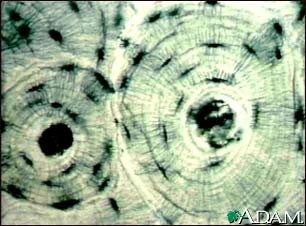
What kind of tissue is BONE made of? 
1
Epithelium
2
Connective
3
Nerve
4
Muscle

39

Multiple Choice

Question image
What is the function of Epithilial Tissue? 
1
Conduct Impulses
2
Help body movement
3
Protect, Absorb, & Filter
4
Cushion & Protect or Provide Strength

40

Multiple Choice

Question image
What is the function of Connective Tissue? 
1
Conduct Impulses
2
Help body movement
3
Protect, Absorb, & Filter
4
Cushion & Protect or Provide Strength

41

Multiple Choice

TISSUES are groups of _______ with a common structure & function. 
1
organelles
2
cells
3
organs
4
organisms

42

Multiple Choice

How many types of tissue exist in the human body? 
1
1
2
4
3
5
4
11

43

Multiple Choice

which muscle tissue contains intercalated discs for communication?
1
skeletal muscle
2
cardiac muscle
3
smooth muscle

44

Multiple Choice

which muscle tissue is voluntary?
1
skeletal muscle
2
cardiac muscle
3
smooth muscle

45

Multiple Choice

Question image
Identify:
1
Areolar
2
Smooth Muscle
3
Transitional
4
Simple Squamous

46

Multiple Choice

Question image
Identify:
1
Pseudostratified
2
Smooth Muscle
3
Transitional
4
Stratified Squamous

47

Multiple Choice

Where is epithelial tissue found?
1
glands
2
covering body surfaces
3
lines organs
4
all of the above

48

Multiple Choice

What are the four main tissues found in the body?
1
Epithelial, Connective, Bone, Blood
2
Muscle, Connective, Blood, Epithelial
3
Nervous, Muscle, Connective, Epithelial
4
Nervous, Muscle, Connective, Bone

49

Multiple Choice

What type of tissue contains WBC, RBC, and platelets?
1
epithelial 
2
bone
3
blood
4
cartilage 

50

Multiple Choice

Question image

where would you find this tissue in the body?

1

lungs

2

kidneys

3

bladder

4

heart

51

Multiple Choice

Question image

what general kind of tissue is this

1

muscle

2

nerve

3

epithelial

4

connective

52

Multiple Choice

Question image

what kind of tissue is this

1

epithelial

2

connective

3

muscle

4

nerve

53

Multiple Choice

Question image

what specific tissue is this

1

Bone

2

adipose

3

cardiac muscle

4

dense fibrous

54

Multiple Choice

Question image

What tissue is this

1

epithelial

2

connective

3

muscle

4

nerve

55

Multiple Choice

Question image

What type of Tissue is this?

1

epithelial

2

Muscle

3

connective

4

nerve

56

Nervous tissue

Nervous tissue is found in the brain, spinal cord, and nerves. It is responsible for coordinating and controlling many body activities. It stimulates muscle contraction, creates an awareness of the environment, and plays a major role in emotions, memory, and reasoning. To do all these things, cells in nervous tissue need to be able to communicate with each other by way of electrical nerve impulses. The cells in nervous tissue that generate and conduct impulses are called neurons or nerve cells. These cells have three principal parts: the dendrites, the cell body, and one axon. The main part of the cell, the part that carries on the general functions, is the cell body. Dendrites are extensions, or processes, of the cytoplasm that carry impulses to the cell body. An extension or process called an axon carries impulses away from the cell body.


57

Slide image

There are 5 neurons in this nervous tissue slide. Nervous tissue is always found in another tissue except the brain and spinal cord. This is connective tissue that the nervous tissue is in.

Human Body Tissues

To understand all the organs and systems of the body you must have a basic understanding of tissues.

Slide image

Show answer

Auto Play

Slide 1 / 57

SLIDE