
4.1.4 Geological Hazards

Presentation
•
Science
•
8th Grade
•
Easy
Standards-aligned

Megan Horvat
Used 6+ times
FREE Resource
22 Slides • 2 Questions
1

4.1.3
2
Objectives
Learners can:
describe the formation of a volcano
differentiate between different types of volcanic eruptions
identify the processes that lead to an earthquake
evaluate systems used to measure the impact of an earthquake
3
lava
magma
plate tectonics theory
Prerequisite Vocab
earthquake
landslide
magnitude
tsunami
volcano
New Vocab
4
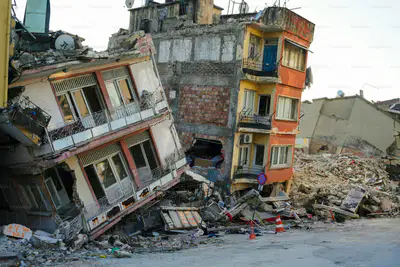
a sudden shaking of the ground caused by the movement of rock underground
Earthquake
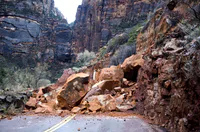
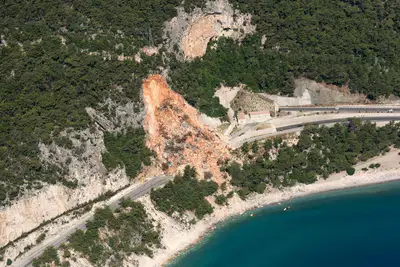
sudden movement of rocks or soil down a hill or mountainside
Landslide
5
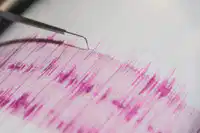
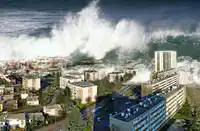
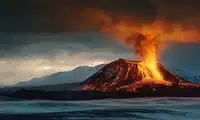
strength of an earthquake
Magnitude
a large ocean wave caused by an underwater disturbance
Tsunami
a mountain formed by lava and pyroclastic material
Volcano
6
Match
Match the vocabulary word to its definition.
magma
lava
plate tectonics theory
melted rock located beneath Earth
melted rock on Earth's surface
individual plates that gradually move
melted rock located beneath Earth
melted rock on Earth's surface
individual plates that gradually move
7
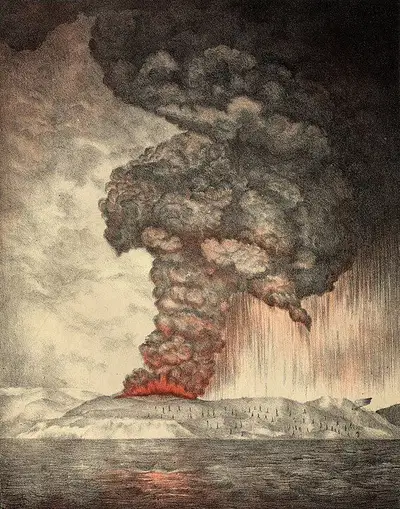
Krakatoa is a volcanic island group located in Indonesia. The island has a long history of volcanic activity. One of the most famous eruptions occurred in 1883.
The eruption caused widespread destruction. Nearly 36,000 people died as entire villages were destroyed. The Krakatoa eruption also had far-reaching impacts, as the debris from the explosion caused global average temperatures to drop for many years.
Krakatoa
8
9
10

An earthquake is a sudden shaking of the ground caused by the movement of rocks underground.
As Earth's crust moves, the rocks near the plate boundaries will bend and eventually break. The breaking of rock releases the energy that causes earthquakes.
The bending and breaking of rock are similar to the process of breaking a pencil.
Earthquakes
11
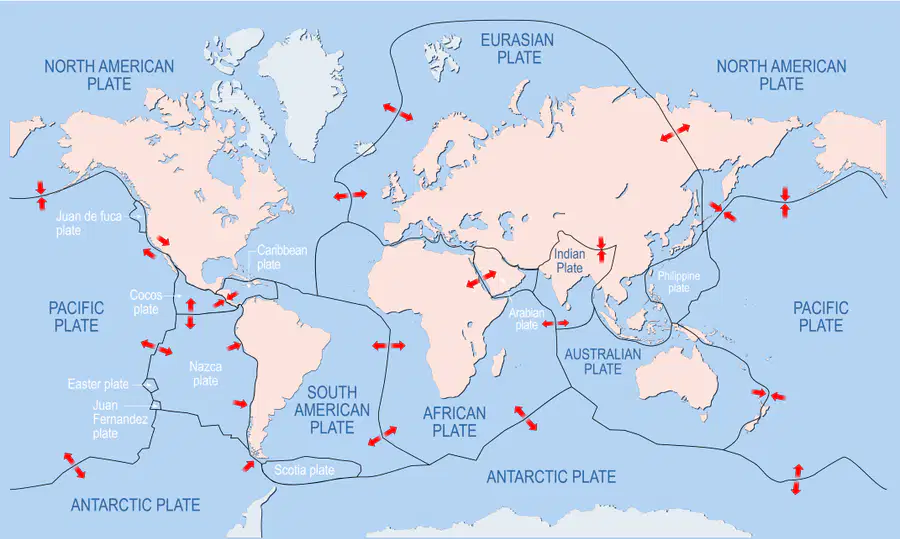
Earthquakes are most likely to happen in areas where two plates meet. The red arrows in the map show where two plates are pushing together, pulling apart, or sliding past each other. These movements have the potential to release the energy that causes earthquakes.
12
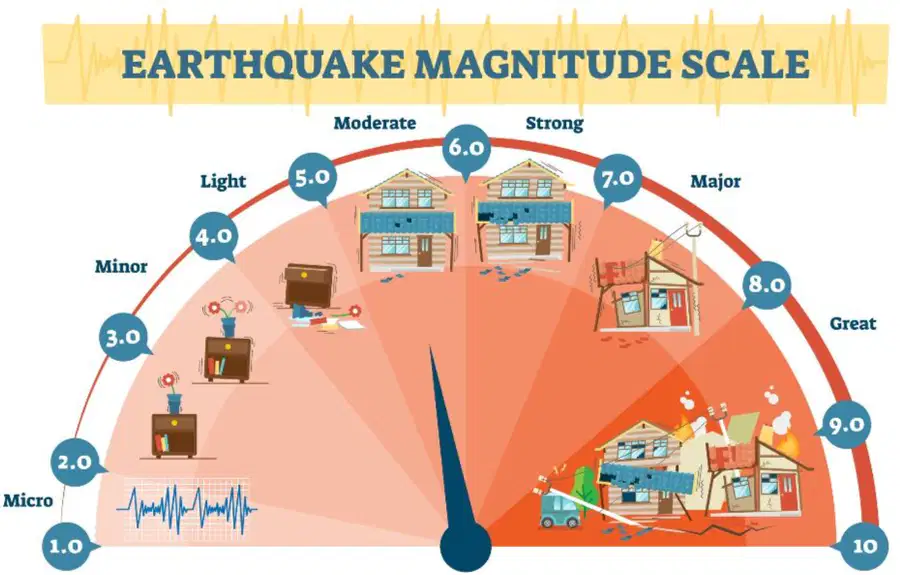
Magnitude is the strength of an earthquake. bout 30,000 earthquakes occur every year that are measurable. Only a few of these earthquakes are great enough in magnitude to cause significant destruction. An increase of one magnitude on the scale means that the earthquake is 10 times as powerful.
13
14
15
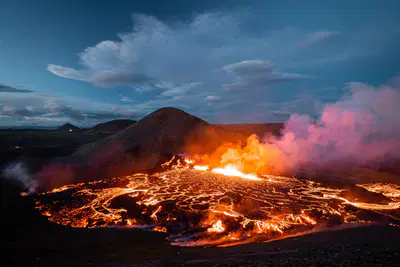
A volcano is a mountain formed by lava and pyroclastic material. There are approximately 500 active volcanoes worldwide. Many of these volcanoes are found along tectonic plate boundaries.
A volcanic eruption occurs as magma rises to Earth's surface. Volcanic eruptions often result in the release of lava, gases, and pyroclastic material. Pyroclastic material includes rocks and ash that erupt from the volcano.
Volcanic Eruptions
16
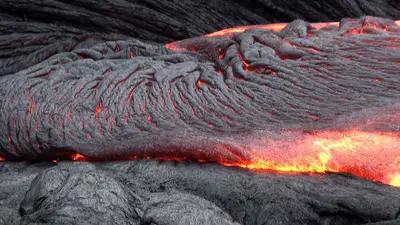
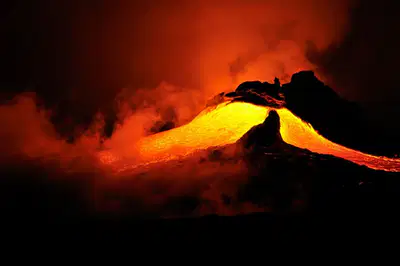
high percentage of silica
high thickness
large quantity of dissolved gases
violent and explosive
Felsic
a lower percentage of silica
thinner magma
low quantity of dissolved gases
gentle and quiet
Mafic
17
18
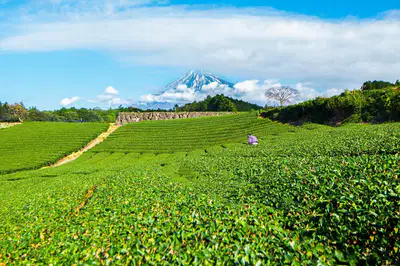
Due to the pyroclastic material from eruptions, the soil around volcanoes tends to be fertile. Nutrients from the blast, such as phosphorus, potassium, and nitrogen, provide the necessary nutrients for plant growth.
Sometimes it is greener on the other side
19
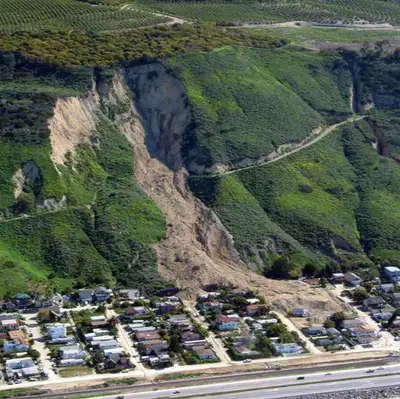
Landslides are sudden movements of rocks or soil down a hill or mountainside. When large amounts of materials break loose from a cliff or hillside, they move quickly and with tremendous force. Landslides can move as fast as 150 miles per hour.
Landslides
20
21
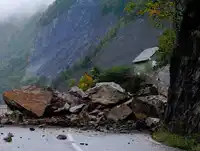
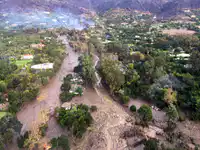
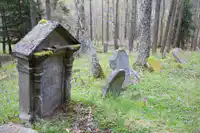
Rockfalls occur when rocks or boulders break from a cliff or slope and tumble down.
Rockfall
A mudflow is a mixture of soil, rocks, and water that rushes down a slope.
Mudflow
A creep is a slow, gradual movement of soil or rock downhill.
Creep
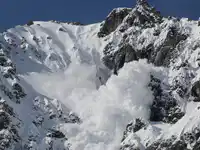
An avalanche is a rapid type of landslide that involves snow, ice, and rock.
Avalanche
22
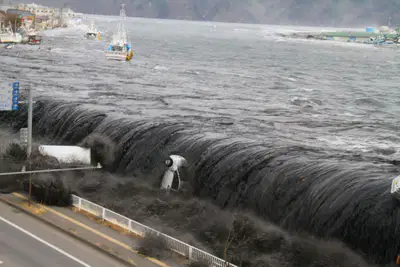
A tsunami is a large ocean wave caused by an underwater disturbance. Unlike most ocean waves that form from wind movement, tsunamis usually form due to underwater volcanic eruptions, earthquakes, or landslides.
Tsunami
23
24
Open Ended
Choose one geological hazard and briefly describe the impact that hazard can have on humans and the environment.
4.1.3
Show answer
Auto Play
Slide 1 / 24
SLIDE
Similar Resources on Wayground

20 questions
Light-years and the Milky Way Galaxy
Presentation
•
8th Grade
20 questions
Biotechnology
Presentation
•
8th Grade
19 questions
Rockets and Satellites
Presentation
•
8th Grade
21 questions
8.L.5 Review
Presentation
•
8th Grade
21 questions
8.8A Components of the Universe, H-R Diagram Review
Presentation
•
8th Grade
21 questions
Motion, Forces, Electricity & Magnetism
Presentation
•
8th Grade
19 questions
Why Earth's Tilt Matters
Presentation
•
8th Grade
20 questions
Newton's Laws Extended Day
Presentation
•
8th Grade
Popular Resources on Wayground
10 questions
Safety Day 2026 – Student Review

Quiz
•
9th Grade
21 questions
Continents and Oceans
Quiz
•
6th Grade
20 questions
Parts of Speech
Quiz
•
5th Grade
16 questions
Subject & Predicate
Quiz
•
5th Grade
25 questions
Multiplication Facts
Quiz
•
5th Grade
12 questions
Map Skills
Quiz
•
3rd Grade
22 questions
Continents and Oceans
Quiz
•
5th Grade
15 questions
Rounding Decimals
Quiz
•
5th Grade
Discover more resources for Science
20 questions
Newton's Laws of Motion
Quiz
•
8th Grade
15 questions
potential and kinetic energy
Quiz
•
8th Grade
21 questions
Newton's Laws of Motion
Quiz
•
8th Grade
20 questions
Elements, Compounds and Mixtures
Quiz
•
8th Grade
10 questions
Exploring Chemical and Physical Changes

Interactive video
•
6th - 10th Grade
20 questions
Physical vs Chemical Changes
Quiz
•
8th Grade
20 questions
Conduction, convection, and Radiation Practice
Quiz
•
8th Grade
21 questions
Waves and Wave Properties
Quiz
•
6th - 8th Grade