Search Header Logo
  1. Resource Library
  2. Science
  3. Biology
  4. Eukaryotic Cell
  5. Unit 4 Section 3: Eukaryotic Cells And Structures
Unit 4 Section 3: Eukaryotic Cells and Structures

Unit 4 Section 3: Eukaryotic Cells and Structures

Assessment

Presentation

Science

9th Grade

Medium

NGSS
MS-LS1-1, MS-LS1-2, 3-ESS3-1

+1

Standards-aligned

Created by

Abby Fancsali

Used 6+ times

FREE Resource

12 Slides • 17 Questions

1

​Science Root of the Day:

DO NOW: Write what you think the example words mean in your lab manual.

media

2

3

Unit 4 Section 3: Eukaryotic Cells and their Structures

media

4

Multiple Choice

Which of the following is not a characteristic of living things?

1

Use energy

2

Maintain themselves

3

Have the Capacity to Reproduce

4

Are part of populations that remain constant from one generation to the next

5

Multiple Choice

Question image

What tool do you use to view the cells?

1
metric ruler
2
centrifuge
3
microscope
4
telescope

6

Multiple Choice

Which Macromolecules store genetic information in organisms?

1

Nucleic Acids

2

Carbohydrates

3
Proteins
4
Lipids

7

Multiple Choice

Question image

What type of microscope do we use in this science classroom?

1

compound light microscope

2

scanning electron microscope

3

tunneling electron microscope

4

magnifying glass

8

Multiple Choice

Which of the following is the smallest unit of life that can carry out all life functions?
1
the mitochondria
2
the vacuoles
3
the nucleus
4
the cell

9

Drag and Drop

Biologists divide all life into three major ​
: ​ Bacteria and
which are ​
, and ​
Drag these tiles and drop them in the correct blank above
domains
Archea
Eukarya
kingdoms
animalia
prokarya
phyllum
plantea
prokaryotes

10

Multiple Choice

What is the total magnification of a microscope with an eyepiece of 2X and a high power objective of 40X?

1

6x

2

2x

3

40x

4

80X

11

Multiple Choice

Question image

What type of cell is in the diagram?

1

Prokaryote

2

Eukaryote

12

Labelling

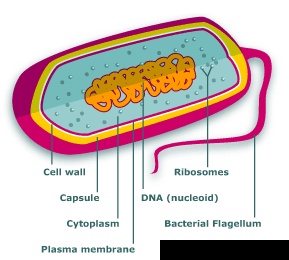
Label the parts of the Bacteria

Drag labels to their correct position on the image

Capsule

Cell Wall

Nuclear Material

Pilli

Ribosome

Flagella

13

media

Lesson Objectives

  • Describe the Structures of Eukaryotic cells and their functions

  • Describe Eukaryotic Life

14

The Domain Eukarya

  • The third domain of life is eukarya

  • Includes all organisms that are made up of eukaryotic cells

  • Divided into four kingdoms

    • Fungi

    • Plants

    • Animals

    • Protists: Anything that doesn't fit in the other three kingdoms

media

15

Eukaryotic cells

  • Eukaryotic Cells cells have a nucleus as well as some additional structures

    • Organelles: Different Structures in the cell that do different tasks

      • Surrounded by a membrane

    • They are larger than prokaryotic cells and on average measure 10 to 100 micrometers

      • Ostrich egg yolk is a single cell that measures 10-15 centimeters

  • Eukaryotes: Organisms made of Eukaryotic Cells

    • It can be made up of one cell or many cells

16

Multiple Choice

What is the trait that determines if a cell is prokaryotic or eukaryotic?

1

The Size of the Cell

2

The Shape of the Cell

3

The Presence of A Nucleus

4

How Old the Cell is

17

Multiple Choice

Question image

Is the following a prokaryote or eukaryote: A Pepper plant

1

Prokaryote

2

Eukaryote

18

Multiple Choice

Question image

Is the following a prokaryote or eukaryote: The Bacteria that causes tuberculosis

1

Prokaryote

2

Eukaryote

19

Multiple Choice

Question image

Is the following a prokaryote or eukaryote: A humpback whale

1

Prokaryote

2

Eukaryote

20

Tour of Eukaryotic cells- The Cell Membrane

  • Cell Membrane: The structure that separates the inside of the cell from the outside of the cell

    • Allows materials in and out of the cell

media

21

Eukaryotic cells- Cell Wall

  • Cell wall: A Rigid permeable layer that surrounds the cell membrane in some cells

    • Found in:

      • Bacteria

      • Plants

      • Fungi

    • Not found in Animal Cells

media

22

Tour of Eukaryotic cells- Inside the Cell

  • Cytoplasm: The portion of the cell inside the membrane that surrounds the nucleus

    • Made up of crisscrossed fibers called Cytoskeleton that help the cell hold its shape

    • Hold other organelles in place

media

23

Tour of Eukaryotic cells- Protein Synthesis

  • Ribosomes: Organelles that assemble proteins for the cell

  • Rough Endoplasmic Reticulum: Assembles proteins destined to go through the cell membrane

    • It has ribosomes inside of it

  • Smooth Endoplasmic Reticulum: Assembles membranes and may perform functions in specialized cells

media

24

Tour of Eukaryotic cells- Storing and Processing

  • Golgi Apparatus: Receives products from the endoplasmic reticulum and packages them for transport

    • The "post office" of the cell

  • Lysosomes: Break down organic materials like damaged/worn-out organelles

  • Vacuoles: sacs surrounded by the membrane that can store materials

media
media

25

Tour of Eukaryotic cells- Energy Organelles

  • Mitochondria: Organelles that break down organic molecules to obtain energy in a form that cells can use

  • Chloroplasts: capture energy from sunlight and use it to build organic molecules

    • Only found in plant cells

media

26

Multiple Choice

Which part of the cell holds organelles in place?

1

The Nucleus

2

The Cell Membrane

3

The Cytoplasm

4

The Mitochondria

5

The Chloroplasts

27

Categorize

Options (11)

Cell Membrane

Cytoplasm

Cell Wall

Smooth Endoplasmic Reticulum

Rough Endoplasmic Reticulum

Ribosomes

Chloroplasts

Mitochondria

Golgi Apparatus

Lysosomes

Vacuoles

Organize the cell structures by their functions

Provide Structure
Synthesize Proteins
Generate/Obtain Energy
Store & Process information

28

Multiple Select

What parts of a eukaryotic cell are only found in plant cells?

1

Cell Membrane

2

Cell Wall

3

Mitochondira

4

Chloroplast

5

Vacuoles

29

Multiple Select

Which structures can be found in both prokaryotic and eukaryotic cells?

1
Mitochondria
2

Nucleus

3
Cell wall
4

Ribosomes

5

Chloroplasts

​Science Root of the Day:

DO NOW: Write what you think the example words mean in your lab manual.

media

Show answer

Auto Play

Slide 1 / 29

SLIDE