
Imperialism in Latin America Tuesday, January 14

Presentation
•
Social Studies
•
11th Grade
•
Practice Problem
•
Hard

Shelly Tinsley
FREE Resource
20 Slides • 7 Questions
1
Imperialism in Latin America
Tuesday, January 14
2
The United States in Latin America
In the late nineteenth century, the United States became more involved in Latin American affairs to protect its interests and gain additional sources of raw materials.
3
The United States in Latin America
The United States gained control of Cuba and Puerto Rico as a result of victory in the Spanish-American War.
The U.S. controlled the area where the canal was built after helping Panama gain independence from Colombia. The Panama Canal connected the Atlantic and Pacific and greatly reduced travel time for ships.
4

Steam shovels load rocks blasted away onto twin tracks that remove the earth from the Panama Canal bed circa 1908. It took the United States 10 years to build the canal at a cost of $375 million (which equals about $8.6 billion today).
5
How did the United States gain the right to construct the Panama Canal? Why was construction of the canal significant?
The United States under President Theodore Roosevelt supported a rebellion in Colombia that allowed Panama to form its own country. In return, Panama gave the United States control over a 10-mile strip of land across the isthmus of Panama. The construction of the Panama Canal was important for two key reasons. First, it greatly shortened the time required to transport goods via ship. Prior to the canal, ships transporting goods from the Atlantic to the Pacific had to sail around the tip of South America. The canal shortened this trip from months to just eight to ten hours. Second, the Panama Canal gave the United States unprecedented influence in Latin America. By controlling the Panama Canal, the United States influenced the regional economy and could use the canal for its own economic and military purposes.
6
The United States in Latin America
“Dollar diplomacy” meant that the United States invested in Latin American development as a way to increase its influence over the Latin American region, which it did by gaining control over the region’s finances and raw materials.
7
8
What is “dollar diplomacy,” and how did it contribute to increased American influence in Latin America?
“Dollar diplomacy” was a U.S. foreign policy that increased American influence in Latin America through investments in developing countries. Outwardly, dollar diplomacy appeared to benefit Latin American countries, but in reality, it increased U.S. control over regional finances and raw materials. By replacing Europe as the source of loans and investments for Latin America, the United States established itself as the dominant power. As American investments grew, the United States increased its military presence in Latin America to defend its economic interests. This led to years-long expeditions and occupations, as well as the assumption of administrative control in the Dominican Republic.
9
The United States in Latin America
The U.S. invested billions of dollars throughout Latin America, and military forces were sent to protect those investments by occupying different countries.
10
Consequences of Imperialism in Latin America
American imperialism in Latin America had positive and negative effects for Latin American people.
11
Consequences of Imperialism in Latin America
U.S. imperialism helped increase demand for Latin American resources, which helped the region become integrated into trade networks, and it helped strengthen economic connections among Latin American countries.
12
Consequences of Imperialism in Latin America
Venezuela’s vast oil reserves mainly helped the country’s dictator, General Juan Vicente Gómez, who encouraged foreign investment and then used the profits to ensure the strength of his military regime.
13
Consequences of Imperialism in Latin America
Producing single cash crops prevented Latin American countries from developing their own economies and manufacturing sectors, made them dependent on foreign nations for imports, and placed them in a vulnerable position.
14
Consequences of Imperialism in Latin America
U.S. imperialism increased the gap between the rich and the poor in Latin American countries and prevented the establishment of truly representative governments, most often resulting in dictatorships and oligarchies.
15
Revolution in Mexico
The Mexican Revolution was a long struggle that eventually resulted in a new constitution and a more democratic and politically stable Mexico.
16
17
Revolution in Mexico
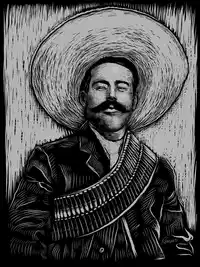
Francisco Madero wanted to bring about reforms to fix the problems caused by the reign of Porfirio Díaz, such as low wages and lack of land ownership.
18
Revolution in Mexico
Many Mexicans were displeased by a coup that put an end to a period of reform.
19
Revolution in Mexico
Pancho Villa, Emiliano Zapata, and Venustiano Carranza were generals who fought in the revolution. Villa and Zapata were more radical reformers and joined together to fight Carranza, who was more politically moderate, but Carranza’s forces were victorious, and he became Mexico’s president.
20
Revolution in Mexico
The constitution set up a government with a president who was elected by universal male suffrage, and it limited foreign investors, allowed workers to form unions, set a minimum wage, and set limits on working hours.
21
Multiple Choice
As a result of the Spanish-American War, the United States annexed
Haiti.
Cuba.
Colombia.
Puerto Rico.
22
Multiple Choice
How did the monopolies of American companies, like the United Fruit Company, disadvantage Latin American nations?
By increasing their reliance on foreign goods
By increasing the demand for cash crops
By decreasing their control over the military
By decreasing the domestic income gap
23
Multiple Choice
How did American imperialism contribute to dictatorships and oligarchies in Latin America?
By supporting democratic rebellions
By increasing the wealth of elites
By excluding access to foreign powers
By funneling profits to the military
24
Multiple Choice
Compared to Pancho Villa, Venustiano Carranza wanted to
redistribute land to peasants.
overthrow the campesinos.
take a moderate approach to reform.
create a conservative government.
25
Multiple Choice
Through the Roosevelt Corollary to the Monroe Doctrine, the United States claimed the right to
intervene in any Latin American nation.
establish military bases in Cuba and Guam.
collect debts from European economic rivals.
build schools in the Dominican Republic.
26
Multiple Choice
The 1917 Mexican Constitution pushed back against imperialism by
giving workers the right to unionize.
establishing universal male suffrage.
creating a federal system of government.
placing limits on foreign investments.
27
Match
Match the leaders with their correct description.
the dictator of Venezuela from 1908 until 1935, reputed to have been the wealthiest man in South America.
Mexican revolutionary and president of Mexico, who successfully ousted the dictator Porfirio Diaz
Mexican revolutionary and guerrilla leader who fought against the regimes of both Porfirio Díaz and Victoriano Huerta
Led the Liberating Army of the South during the Mexican Revolution
General Juan Vicente Gomez
Francisco Madero
Pancho Villa
Emiliano Zapata
General Juan Vicente Gomez
Francisco Madero
Pancho Villa
Emiliano Zapata
Imperialism in Latin America
Tuesday, January 14
Show answer
Auto Play
Slide 1 / 27
SLIDE
Similar Resources on Wayground

21 questions
Theme in Literature
Presentation
•
11th Grade
19 questions
Vietnam: Moving Toward Conflict
Presentation
•
10th Grade
21 questions
SS 20-2 THE FRENCH REVOLUTION!
Presentation
•
11th Grade
21 questions
ยุคภูมิธรรม
Presentation
•
11th Grade
20 questions
Intro to Legislative Branch
Presentation
•
10th - 12th Grade
22 questions
Standard 5-US Imperialism
Presentation
•
11th Grade
22 questions
Review of the Renaissance
Presentation
•
10th Grade
20 questions
Mixed Numbers
Presentation
•
4th - 5th Grade
Popular Resources on Wayground
10 questions
HCS SCI 03 Summer School Assessment 1

Quiz
•
3rd Grade
15 questions
HCS SCI 05 Summer School Assessment 1 Review
Quiz
•
5th Grade
22 questions
Day 9 Equations and Inequalities Review
Quiz
•
9th Grade
10 questions
Writing and Identifying Ratios Practice
Quiz
•
5th - 6th Grade
7 questions
PYRAMID PERSPECTIVES part 1
Presentation
•
9th - 12th Grade
12 questions
Understanding the Fourth of July
Quiz
•
9th Grade
15 questions
Soccer World Cup Quiz Questions
Quiz
•
7th Grade