

Social factors & L2 acquisition

Presentation
•
English
•
University
•
Hard

Agnieszka Babiec
Used 2+ times
FREE Resource
21 Slides • 8 Questions
1
Social Factors and Second Language Acquisition:
Ethnic Identity
Socio-economic background

2
Social factors and Sociolinguistics:
Sociolinguistics is the branch of linguistics which determines the relationship between language development and society.
Social factors are also those variables which come from a society; they influence the attitudes held by different groups of learners, and hence they determine the level of proficiency in SL learning.
3
'Every person… has an accent. Your accent carries the story of who you are—who first held you and talked to you when you were a child, where you have lived, your age, the schools you attended, the languages you know, your ethnicity, whom you admire, your loyalties, your profession, your class position: traces of your life and identity are woven into your pronunciation, your phrasing, your choice of words.
Your self is inseparable from your accent. Someone who tells you they don’t like the way you speak is quite likely telling you that they don’t like you.' (Matsuda, 1991, p. 1329)
4

Ethnic identity is defined as a sense of belonging based on one's ancestry, cultural heritage, values, traditions, rituals, and often language and religion.
ETHNIC IDENTITY
Ethnic identity can be broadly defined as
a subjective experience of being a part of an ethnic group (Ashmore, Deaux, & McLaughlin-Volpe, 2004)
5

Ethnic identity is determined by the social contexts in which learners find themselves.
From an interactional perspective, ethnic identity is seen as something that is constantly negotiated by learners and as a result is an ambivalent, contested, and dynamic phenomenon.
Identity is endlessly created a new, according to various social constraints (historical, institutional, economic, etc.) social interactions, encounters, and wishes that may happen to be very subjective and unique (Tabourer-Keller 1997)
6


1 the way individuals locate themselves within
a particular social and cultural framework
2 the orientation of representatives of dominant groups to individuals and groups who display expected lifestyle differences
3 official characterizations
Ethnic identity can be essentially defined by an interaction involving three aspects:
7
Ethnic identity is both a social and individual construct and for that reason alone it is of special importance in SLA
Acquiring an L2 is likely to involve some change or addition to the learner's sense of identity
A change or addition to the learner's identity may involve the learner overcoming a number of social obstacles ant the extent to which this is achieved will affect how successfully the L2 is acquired.
Relationship between Ethnic Identity and L2 learning
8
a) Positive learning outcomes
One common finding across several learning contexts is that L2 users can successfully maintain the ethnic identity of their primary (home) group while acquiring an L2, suggesting that they can adopt a new cultural identity as part of L2 learning.
b) Negative learning outcomes
In some cases, issues of ethnic identity seem to contribute negatively to L2 learning, implying that language users may not achieve the level of L2 performance that might otherwise be possible.
c) No association
It might come as no surprise that ethnic identity might bear little relationship with L2 performance, at least in certain contexts and for some L2 speakers.
Relationship between Ethnic Identity and L2 learning
9


Cultural identity plays an important role in the language learning process.
We should examine cultural differences across student population
We should provide more opportunities (activities, workshops, field trips) to strenghten the sense of identification of foreign culture
Findings and implications for language teachers:
10
SES is an individual or group’s social standing (APA, 2021), usually divided into high, middle, and low categories of economic differences
• Low SES is typically associated with low educational achievement, poverty, and poor health (2021)
Research defines SES in many ways, including: • Whether the primary caregiver of the household received a high school diploma or not (Levine et al., 2020) • Level of education of the primary caregiver (Luo, 2021) • Hollingshead Four Factor Index of Socioeconomic Status determines weighted average of both parents’ education and occupation (Fernald, 2013)
Socio-economic background/Socioeconomic status
11
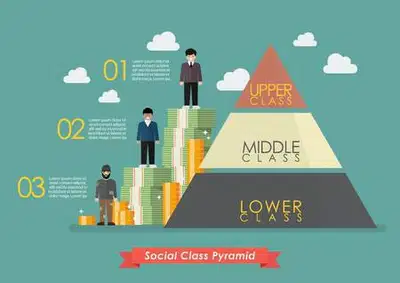
an indivivdual social class is typically determined by means of a composite measure that takes account of income, level and education, and occupation.
It is customary to distinguish 4 groups:
- Lower class
- Working class
- Upper class
Upper middle class
Socio-economic background
12
Relationship between Social class and L2 achievement
Burstall (1975) found that children from middle-class homes regularly outperformed those from lower and working-class home in learning French.
Working class children tended to drop French after their second year in secondary school, while middle class children were likely to continue.
Olshtain, Shohamy, Kemp, Chatow (1990) investigated the levels of proficency in L2 English reached by 196 Grade 7 learners in israel.
The learners were divided into advantaged and disadvantaged group on the basis of socioeconomic status.
13
CALP: Olsthain et al. found that children duffer significantly in Cognitive Academic Level Proficency (CALP). CALP consists language skills that allow people to communicate using academic language.
FAMILY BACKGROUND: the correlation between family background and L2 achievement is very vital and hance give rise to diverse results like middle class children outperforming lower-class ones.
BICS: Early immersion programme placed greater emphasis on Basic Interpersonal Communication Skills (BICS). The develpoment of these skills is also a reason for children of middle-class perform better than others.
14
Relationship Between Low SES and Language Development
• Research shows low socioeconomic status has a negative impact on language development.
• Six-month disparity in vocabulary size and language processing proficiency between children of higher and lower SES (Fernald, 2013).
• 24-month-olds of lower SES performed at the same language processing level overall as 18- month-olds of higher SES (2013)
• Children ages 3-5 of low socioeconomic status did much worse on vocabulary product, syntax product, and language learning process evaluations than children of high SES (Levine, 2020)
• Infants of low SES scored lower on Total Language, Auditory Communication, and Expressive Communication composites (Betancourt, 2015).
Socio-economic background
15
Thesis
• Low socioeconomic status negatively affects language development because certain aspects of living in low socioeconomic status provide an unfit environment for learning and acquiring necessary language skills.
• These aspects include less input from caregivers, lower quality of interaction with their children, poor physical conditions of households, and less access to resources.
Socio-economic background
16
Factors of Low SES that Impact Language Development Impact of Caregivers:
• Infants of lower SES had lower expressive vocabularies because their caregivers engaged them in less contingent talk (McGillion, 2017).
• Twenty-month-old children with well-educated mothers demonstrated better language production skills compared to those whose mothers were not as well-educated (Eghbalzad, 2021).
• Children in higher SES households have a higher home literacy environment that children in low SES households (2021). Physical Conditions of Low SES Households
• Household chaos is negatively related to the development of language skills, and socioeconomically disadvantaged families have greater household chaos overall (Lecheile, 2020).
• A general lack of stability and disorder within the home may impact a child’s ability to learn language. Access to Resources
• Lower SES families have less access to necessary resources or health support.
• Children in families that have adequate resources and consistent support are more likely to reach their developmental potential because they are more likely to be sheltered from adverse circumstances (Fernald, 2013).
17
• Speech-Language Pathologists help children with speech or language difficulties, but the parent may not be able to afford these services or have the time or means to get their child there. • School systems in low SES communities are often under resourced, which negatively impacts students’ academic progress (APA, 2021). • Lack of healthy food options results in negative impacts on learning, memory, and cognitive development (Wilder Research, 2014). Dual-Language Learning • Children learning two languages commonly live in low socioeconomic status households (Luo, 2021). • A study using the Quick Interactive Language Screener: English and Spanish (QUILS:ES) revealed that children of a higher SES learned new language items better than children of low SES (2021). • This gap exists between both languages. Effects of low SES are prominent across all languages.
18
Mitigating the Effects of Low SES on Language Development
• Caregivers must give their children lots of input by engaging in conversation and reading with them.
• Caregivers who received language interventions saw their children’s expressive vocabulary increase (McGillion, 2017).
• Effortful control (self-regulation) can help children focus beyond the chaos of their environment (Lecheile, 2020).
19
Conclusion
• Low socioeconomic status has negative effects on a child’s development of language.
• Many qualities of low SES, such as less attention and lesser quality input, poor physical conditions in the household, and lack of access to resources impact the ability to learn and acquire language.
• If caregivers utilize whatever interventions they can or if the child utilizes statistical learning and effortful control, they may be able to mitigate some effects.
• Overall, language is a crucial part of the human existence, and we must study the negative impacts of low SES so that people can achieve success and have equal opportunities to do so.
20
Warning
However, it is importnat to heed Milroy and Milroy's (1997) warning regarding the correalation that might be found between social class and L2 achievement: ' =There may be many aspects of social behaviour that are not accounted for in a sinle social variable and also underlying social factors that are subsumed under a label such as social class.'
In other words, it is particular experience of the world which members of the dofferent social classes are likely to have that are important for L2 Achievement.
21
What is the relationship between ethnic identity and second language learning?
What is the role of social class in second language learning process?
Study questions:

22
Multiple Select
Social factors that influence SL acquisition are:
age
sex and gender
social class
ethnic identity
23
Multiple Select
Ethnic identity can have only positive impact on SLA
TRUE
FALSE
HARD TO SAY
IT DEPENDS
24
Multiple Choice
Ethnic identity is a simple, fixed process.
TRUE
FALSE
HARD TO SAY
IT DEPENDS
25
Multiple Choice
Ethnic identity and language proficiency interact with each other.
TRUE
FALSE
HARD TO SAY
IT DEPENDS
26
Multiple Choice
SES stands for:
State Emergency Service
Special Education Service
Socio-economic Status
Socio-economic Service
27
Multiple Choice
What are the components of SES?
If you live in a rural or city area.
Insurance, city of residence, college education, income.
Housing, education, income, occupation.
No components of SES.
28
Multiple Choice
How does SES affect education?
Schools will receive more students.
It does not affect education.
Children from low SES households will develop academic skills slower than children from higher SES households.
Schools will receive more funded.
29
Multiple Select
What is a way to make your students feel equal?
Promote empathy and understanding.
Emphasize common goals and shared experiences.
Ignore students' socioeconomic status.
Avoid topics involving SES.
Social Factors and Second Language Acquisition:
Ethnic Identity
Socio-economic background
Show answer
Auto Play
Slide 1 / 29
SLIDE
Similar Resources on Wayground

20 questions
H-L6U6: Articles
Presentation
•
University
24 questions
8.1 level 222
Presentation
•
University
22 questions
Simple past vs Present perfect
Presentation
•
University
22 questions
Tone and Mood
Presentation
•
KG
23 questions
Grammar
Presentation
•
University
24 questions
BBB3103 BBB3033 Action / Power / Vivid Verbs in Describing Job Responsibilities
Presentation
•
University
19 questions
Simple Present vs Present Continuous
Presentation
•
University
21 questions
Oro A2 Entrance Test
Presentation
•
KG
Popular Resources on Wayground
10 questions
HCS SCI 03 Summer School Review 4

Quiz
•
3rd Grade
11 questions
HSMS - Standard Response Protocol
Quiz
•
6th - 8th Grade
16 questions
1.1-1.2 Quiz Review
Quiz
•
9th - 12th Grade
12 questions
Exponent Expressions
Quiz
•
6th Grade
20 questions
Adding and Subtracting Integers
Quiz
•
6th - 7th Grade
11 questions
Northeast States
Quiz
•
3rd - 4th Grade
10 questions
Characterization
Quiz
•
3rd - 7th Grade
10 questions
Common Denominators
Quiz
•
5th Grade