
6.5 Notes: Energy of Phase Changes

Presentation
•
Chemistry
•
9th - 12th Grade
•
Practice Problem
•
Medium
Standards-aligned

Katherine Fehrenbach
Used 2+ times
FREE Resource
15 Slides • 6 Questions
1

2
Multiple Choice
3

4

5

6

7

8

9

10

11

12

13

14

15

16

17
Multiple Choice

A sample of CHCl3 (s) was exposed to a constant source of heat for a period of time. The graph shows the change in temperature of the sample as heat is added. Which of the following best describes what occurs at the particle level that makes segment D longer than segment B?
18
Multiple Choice

The following questions relate to the graph below. The graph shows the temperature of a pure substance as it is heated at a constant rate in an open vessel at 1.0 atm pressure. The substance changes from the solid to the liquid to the gas phase.
The substance is at it's normal freezing point at what time?
19
Multiple Choice

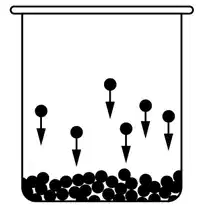
A 2.00mol sample of C2H5OH undergoes the phase transition illustrated in the diagram above. The molar enthalpy of vaporization, ΔHvap, of C2H5OH is +38.6kJ/mol. Which of the following best identifies the change in enthalpy in the phase transition shown in the diagram?
20
Multiple Choice

A sample of ice at 0°C is added to 100.g of water at 33°C. The mixture is stirred gently until the temperature of the water is 0°C. All the remaining ice is quickly removed. Based on the information in the table above, the mass of ice that melted is closest to
21
Multiple Choice

The following questions relate to the graph below. The graph shows the temperature of a pure substance as it is heated at a constant rate in an open vessel at 1.0 atm pressure. The substance changes from the solid to the liquid to the gas phase.
Which of the following best describes what happens to the substance between t4 and t5?
Show answer
Auto Play
Slide 1 / 21
SLIDE

