Introduction to Ecology
Presentation
•
Science
•
7th Grade
•
Easy
+4
Standards-aligned
Trenecia Brocks
Used 4+ times
FREE Resource
19 Slides • 20 Questions
1
2
3
4
5
6
7
Multiple Choice
8
Multiple Choice
9
Multiple Choice
10
11
12
13
Multiple Choice
Abiotic means
living
nonliving
14
Multiple Choice
What is the difference between the biotic and abiotic factors?
Biotic factors are living things and abiotic factors are nonliving things.
Biotic factors are nonliving things and abiotic factors are living things.
15
Multiple Choice
16
Multiple Choice
What is a example of a ABIOTIC factor?
Panda
Bacteria
Butterfly
Weather
17
Multiple Choice
18
Multiple Choice
19
Multiple Select
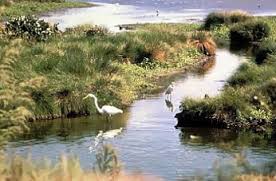
What are the ABIOTIC factors in this image?
water
sunlight
birds
grasses
mud
20
21
22
23
24
25
Multiple Choice
26
Multiple Choice
Which is the simplest level of organization within the environment?
cell
organism
population
community
27
28
29
Multiple Choice
an area that consists of biotic and abiotic factors.
ecosystem
community
population
30
31
32
Multiple Choice
All the alligators in the same area are an example of a(n) _______________.
organism
community
population
group
33
Multiple Choice
Which is the simplest level of organization within the environment?
cell
organism
population
community
34
Multiple Choice
Which of the following is the highest level of organization within the environment?
population
organism
ecosystem
biosphere
35
Multiple Choice
36
Reorder
Reorder the following from least to greatest (from left to right).
organism
population
community
ecosystem
biome
37
Multiple Choice
Which of the following describes #2?
An ecosystem is the interaction between biotic and biotic factors.
A community is a group of different populations in the same area.
An organism is one living thing.
A population is a group of the same organisms.
38
Multiple Choice
Which of the following describes #4?
An ecosystem is the interaction between biotic and biotic factors.
A community is a group of different populations in the same area.
An organism is one living thing.
A population is a group of the same organisms.
39
Show answer
Auto Play
Slide 1 / 39
SLIDE

Similar Resources on Wayground
36 questions
Review Unit 1-What is life?
Presentation
•
7th Grade
35 questions
8.3 Investigating acids and alkalis
Presentation
•
7th Grade
28 questions
Ecological Succession
Presentation
•
7th Grade
36 questions
Ecological Succession & Human Impact on Ground&Surface water
Presentation
•
7th Grade
36 questions
Levels of Organization - Cells to Biome
Presentation
•
KG
35 questions
Interactions in Ecosystems
Presentation
•
7th Grade
34 questions
Carbon, Nitrogen, and Oxygen Cycles
Presentation
•
8th Grade
32 questions
2023 TCi Adaptations Lesson 4: Observing Natural Selection...
Presentation
•
6th - 8th Grade
Popular Resources on Wayground
10 questions
5.P.1.3 Distance/Time Graphs
Quiz
•
5th Grade
10 questions
Fire Drill
Quiz
•
2nd - 5th Grade
20 questions
Equivalent Fractions
Quiz
•
3rd Grade
22 questions
School Wide Vocab Group 1 Master
Quiz
•
6th - 8th Grade
20 questions
Main Idea and Details
Quiz
•
5th Grade
20 questions
Context Clues
Quiz
•
6th Grade
20 questions
Inferences
Quiz
•
4th Grade
12 questions
What makes Nebraska's government unique?
Quiz
•
4th - 5th Grade
Discover more resources for Science
19 questions
Introduction to Properties of Waves
Presentation
•
6th - 8th Grade
16 questions
Interactions within Ecosystems
Presentation
•
6th - 8th Grade
10 questions
Exploring the Layers of the Earth
Interactive video
•
6th - 10th Grade
16 questions
Photosynthesis and Cellular Respiration Review
Quiz
•
7th Grade
20 questions
Abiotic & Biotic Factors
Quiz
•
7th Grade
10 questions
Exploring the Evolution of Cell Theory
Interactive video
•
7th Grade
17 questions
Human body systems
Quiz
•
7th Grade
20 questions
Energy Transformations
Quiz
•
6th - 8th Grade