
GA People & Events in the Civil Rights Movement

Presentation
•
Social Studies
•
8th Grade
•
Practice Problem
•
Easy

Anna Moore
Used 12+ times
FREE Resource
9 Slides • 8 Questions
1
Georgia People, Groups, & Events in the Civil Rights Movement
SS8H11b
I can describe the role of Martin Luther King, Jr. and John Brown, the SNCC and the SCLC, and the Albany Movement and March on Washington in the Civil Rights Movement.
2
Martin Luther King, Jr. & the SCLC
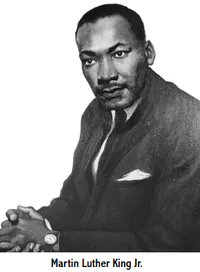
Martin Luther King, Jr. was born in Atlanta, and he became a minister & national leader in the battle for civil rights in the U.S.
MLK believed in using nonviolent methods, such as marches, demonstrations & boycotts, to make social change
MLK helped to form a civil rights group called the Southern Christian Leadership Conference (SCLC)
he wanted to lead anti-discrimination marches & protests throughout the South
3
Southern Christian Leadership Conference
The SCLC was formed shortly after the Montgomery Bus Boycott, where Rosa Parks refused to give up her seat on a bus to a white passenger
this boycott showed that nonviolent protests could work
Martin Luther King, Jr. became the first president
Originally, the SCLC wanted to do more bus boycotts across the South
the group wanted to do more, so they decided to focus on ending all forms of segregation
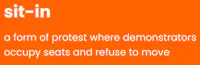
The SCLC began using sit-ins at lunch counters in the South, expanded its efforts to other public places, and promotoed Black voter registration
The SCLC struggled to gain attention in the beginning because people were afraid to be associated with the group due to fear of attacks from the Ku Klux Klan or angry mobs
The group slowly gained members and momentum, and eventually joined protests across the nation
4
Southern Christian Leadership Conference Sit-ins
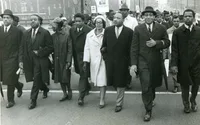
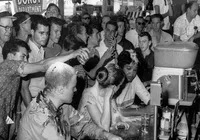
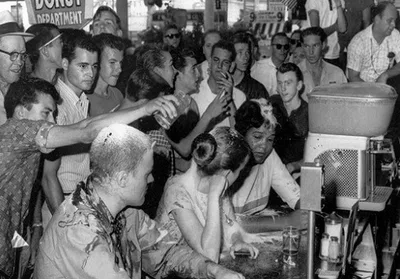
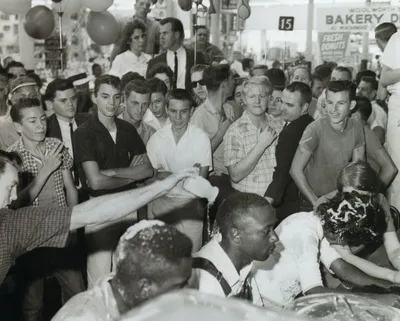
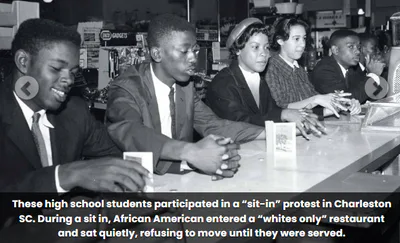
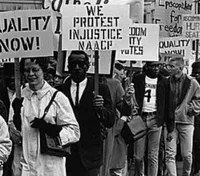
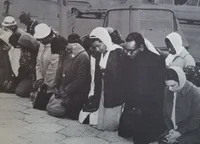
Look at these two pictures from sit-ins done during the Civil Rights Movement.
Did white Americans agree with these sit-ins? How can you tell?
How were African Americans treated during them?
5
John Lewis
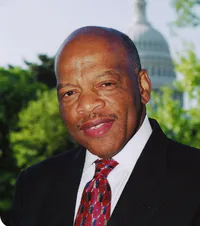
John Lewis was born & raised in segregated Alabama
From a young age he realized change needed to happen
He listened to speeches made by MLK and this influenced him to join the Civil Rights Movement
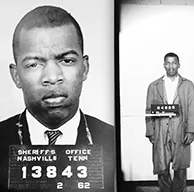
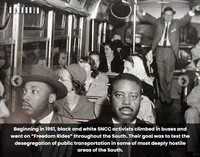
While in college, he organized a sit-in in Nashville, Tennessee & even volunteered to be part of the Freedom Rides, which was a series of nonviolent protests where white whites & blacks rode together on buses throughout the South
he was beaten several different times by angry mobs
He was arrested more than 40 times during the Civil Rights Movement, but he never gave up & continued advocating for nonviolence as a way to create change
6
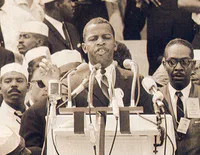
John Lewis
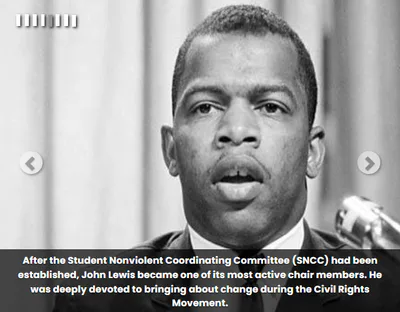
Lewis served as chairmen for the Student Nonviolent Coordinating Committee (SNCC)
Even after the Civil Rights Movement ended, Lewis continued to stand up for those who needed someone to be their voice
He had a career in politics, where he was able to use his voice to help others
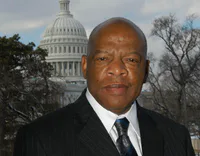
He represented Georgia's 5th Congressional District in the U.S. House of Representatives from 1987 until his death in 2020
he represented metro Atlanta
7
Open Ended
How did BOTH Martin Luther King, Jr. and John Lewis contribute to the Civil Rights Movement?
8
Match
Match the following
refusing to buy, sell, or use something
influenced by MLK, participated in the Civil Rights Movement & was a representative for GA in Congress
protest where a demonstrator refuses to move from where they are sitting
national leader for civil rights in the U.S. & involved with the SCLC
civil rights group that marched and protested throughout the South; MLK was first president
boycott
John Lewis
sit-in
Martin Luther King, Jr.
Southern Christian Leadership Conference
boycott
John Lewis
sit-in
Martin Luther King, Jr.
Southern Christian Leadership Conference
9
The Student Nonviolent Coordinating Committee
In 1960, high school & college students formed the Student Nonviolent Coordinating Committee (SNCC)
They often worked alongside the SCLC to organize peaceful protests
Beginning with sit-ins at lunch counters in the South, the SNCC continued to expand its efforts to stop segregation through boycotts, marches, and freedom rides
The group was often met with extreme violence at its protests, but its members did not let fear stop them
10
The Albany Movement
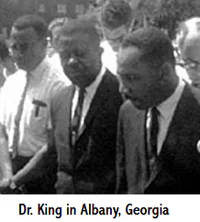
From fall 1961 - summer 1962, a desegregation movement took place in Albany, GA, called the Albany Movement
It involved several civil rights organizations, including the NAACP and the SNCC
Ultimately, the goal of the Albany Movement was to end all types of segregation in the city, from buses and trains to libraries, hospitals, and juries
to reach this goal, the Albany Movement used mass demonstrations, sit-ins, and boycotts
Many protestors were arrested, even MLK when he came to Albany to bring national attention to the cause
Even with MLK, the desegregation efforts failed
MLK said they tried to do too many things instead of focusing on one apsect of segregation
11
Multiple Choice
Which civil rights group was NOT involved in the Albany Movement?
NAACP
SCLC
SNCC
12
Multiple Choice
Why was the Albany Movement unsuccessful in desegregating Albany?
it tried to do too many things instead of focusing on one aspect of segregation
it had too many leaders with conflicting motives
it was too peaceful in its protests and needed more force
the police were too mean to African American protestors
13
The March on Washington
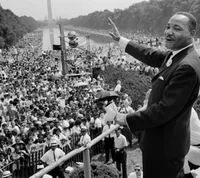
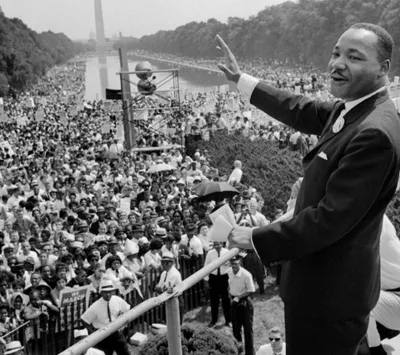
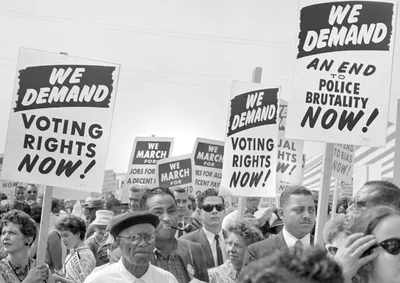
Civil rights activists were active in many states across the South, but in 1963 leaders set their sights on Washington, D.C.
To truly gain their civil rights, African American and Black citizens needed to get Congress involved in making federal legislation
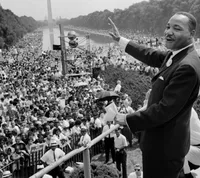
In August 1963, more than 250,000 people, both blacks & whites, converged on the nation’s capital to demand equal rights for African American and Black citizens
a clear message was sent to Congress: vote "yes" on civil rights legislation
The March on Washington sent shock waves through America, largely due to its peaceful methods.
At the march, MLK delivered his famous “I Have a Dream” speech, encouraging Americans to strive for a world where Black and white children could play and live together in peace.
14
Multiple Choice
What was the reason for the March on Washington?
to show huge numbers of Americans supported equal rights for African American citizens
to intimidate Congress with the masses of people willing to fight
to start a lengthy sit-in and demand an immidate change from Congress
15
Multiple Choice
Who gave the "I Have a Dream" speech at the March on Washington?
John Lewis
Martin Luther King, Jr.
Herman Taldmadge
Ernest Vandiver
16
Multiple Choice
True or False: A peaceful march is less effective than using violence because most people are willing to participate in and support violent protests.
True
False
17
Multiple Choice
Martin Luther King, Jr., John Lewis, the SCLC, the SNCC, the Alabany Movement, and the March on Washington believed in using or used which method of protests?
violence - riots, destroying property
peaceful - boycotts, sit-ins, marches
Georgia People, Groups, & Events in the Civil Rights Movement
SS8H11b
I can describe the role of Martin Luther King, Jr. and John Brown, the SNCC and the SCLC, and the Albany Movement and March on Washington in the Civil Rights Movement.
Show answer
Auto Play
Slide 1 / 17
SLIDE
Similar Resources on Wayground

16 questions
SS8H4b
Presentation
•
8th Grade
11 questions
10.2 Greek Society and Economy
Presentation
•
8th Grade
16 questions
Global Economics & Development
Presentation
•
8th Grade
13 questions
Beginnings of the Mongol Empire
Presentation
•
7th Grade
12 questions
LESSON 51: The Monroe Doctrine
Presentation
•
8th Grade
13 questions
African Geography
Presentation
•
8th Grade
14 questions
Causes: War of 1812
Presentation
•
8th Grade
11 questions
Vietnam War: (Part 2) U.S. Early Involvement
Presentation
•
8th Grade
Popular Resources on Wayground
10 questions
Impact of 9/11 and the War on Terror

Interactive video
•
10th - 12th Grade
21 questions
Continents and Oceans

Quiz
•
6th Grade
5 questions
9/11
Interactive video
•
9th Grade
20 questions
Parts of Speech
Quiz
•
5th Grade
16 questions
Subject & Predicate
Quiz
•
5th Grade
10 questions
Riddles Riddles fun Riddles
Quiz
•
6th - 12th Grade
21 questions
Lab Safety
Quiz
•
10th Grade
6 questions
PRIDE in the Hallways and Bathrooms
Presentation
•
12th Grade
Discover more resources for Social Studies
10 questions
Exploring the Age of Exploration: Key Events and Figures
Interactive video
•
6th - 10th Grade
11 questions
SS8H2 & Review SS8H1 & SS8G1
Quiz
•
8th Grade
13 questions
September 11
Quiz
•
6th - 8th Grade
17 questions
SS8H2
Quiz
•
8th Grade
10 questions
Exploring Types of Maps for Middle Schoolers
Interactive video
•
6th - 10th Grade
14 questions
Georgia's Economy SS8E1
Quiz
•
8th Grade
15 questions
Compromises in the U.S. Constitution
Quiz
•
8th Grade
14 questions
Unit 1 Major
Quiz
•
8th Grade