

Electricity and Magnetism

Presentation
•
Biology
•
9th Grade
•
Medium
+7
Standards-aligned

Christopher Powers
Used 8+ times
FREE Resource
29 Slides • 38 Questions
1

ELECTRICITY &
MAGNETISM
2


Introduction
AGENDA
01
03
04
02
05
06
07
08
09
10
What is
Electricity?
Law of
Electric
Charges
Static
Electricity
Electric
Currents
Conductors &
Insulators
Electric
Circuits
What is
Magnetism?
Magnetic
Fields
Electro-magn
ets
3

MAGNETISM CAN CREATE ELECTRICITY
ELECTRICITY &
MAGNETISM
ELECTRICITY CAN PRODUCE MAGNETISM
When charges from one piece of
matter interact with those from
another piece of matter, they
produce both electric and magnetic
forces.
4


ELECTRICITY IS THE INTERACTION OF ELECTRIC
CHARGES.
WHAT IS ELECTRICITY?
Electric charges are a fundamental property of protons and
electrons, which make up every atom. Positive and negative
charges are the two types of electric charges. Protons possess
a positive charge, whereas electrons carry a negative charge.
5
Multiple Choice
What is electricity?
an object that electrons do not flow through
energy created by moving charged particles
when two objects repel each other
a circuit that has only one path for electricity to flow
6


LAW OF ELECTRIC
CHARGES
LIKE CHARGES REPEL
UNLIKE CHARGES ATTRACT
THE ELECTRIC FORCE IS THE ATTRACTION OR
REPULSION BETWEEN CHARGED OBJECTS.
The size of charges and the distance between
them are both key factors in determining the
strength of the electric force between charged
objects.
COULOMB'S LAW
7
Multiple Choice
Which two particles are attracted to each other?
Two neutrons
A proton and an electron
Two protons
An electron and a neutron
8
Multiple Choice
A repulsive force exists between which two particles?
Two neutrons
An electron and a neutron
An electron and a proton
Two protons
9
Multiple Choice
As two oppositely charged particles approach each other, what happens to the electrical force between them?
The attractive force increases
The magnitude of the electric force decreases
The repulsive force increases
The magnitude of their charges increases
10


STATIC
ELECTRICITY
THE BUILD UP OF ELECTRIC CHARGES ON AN OBJECT
When you rub a balloon against your hair, electrons
from the atoms that make up your hair transfer to the
balloon, which makes your hair positively charged due
to electron loss. The balloon becomes negatively
charged due to electron gain. When you hold the balloon
several centimeters from your head, your hair stands
up due to the attraction between the two opposite
charges.
11


ELECTRIC DISCHARGE
Have you ever received a shock when you touch a metal
doorknob after shuffling your feet on the carpet? That is
an example of electric discharge on a small scale.
Can you think of an example of electric discharge on a larger scale?
The charges that build up on an object do eventually move off
the object. This sudden and brief flow of electrons is called:
12
Multiple Choice
13
Multiple Choice
14
Multiple Choice
15
Multiple Choice
16
Multiple Choice
17


ELECTRIC CURRENT
CURRENT ELECTRICITY IS A CONTINUOUS FLOW OF ELECTRIC
CHARGE
Current is defined as the quantity of charge that flows past a given point per
unit of time. The standard unit of measurement for current is the ampere (A).
DIRECT CURRENT (DC)
ALTERNATING CURRENT (AC)
A type of electric current where the charges flow in one
direction only. Batteries are an example of a direct current
source.
A type of electric current that flows in one direction, then the reverse
direction, repeatedly. The electric current supplied by power
companies to homes is an example of AC.
18
Multiple Choice
19
Multiple Choice

20
Multiple Choice
21

CONDUCTORS &
INSULATORS
Conductors are materials that allow
an electric current to flow through
them easily, while insulators are
materials that resist the flow of
electric current.
• Rubber
• Glass
• Plastic
Examples of Insulators:
• Air
• Wood
• Paper
22


CONDUCTORS &
INSULATORS
Conductors are materials that allow an
electric current to flow through them
easily, while insulators are materials that
resist the flow of electric current.
• Metals such as copper, aluminum, silver, and gold
• Water (when it contains dissolved salts or other
charged particles)
• Graphite (found in pencils)
• Human body (can conduct small amounts of electric
current)
Examples of Conductors:
23
The main difference between conductors and insulators is that conductors allow the flow of electricity, while insulators do not.
24
Multiple Choice
What is the main difference between conductors and insulators?
Conductors allow the flow of electricity, while insulators do not.
Conductors are always solid, while insulators can be liquid or gas.
Conductors are always transparent, while insulators are always opaque.
Conductors allow the flow of water, while insulators do not.
25
Metals have free electrons that can move easily through the material, allowing electricity to flow.
26
Multiple Choice
Explain why metals are good conductors of electricity.
Metals have no free electrons to conduct electricity.
Metals are good conductors because they are insulators.
Metals have a high resistance to the flow of electricity.
Metals have free electrons that can move easily through the material, allowing electricity to flow.
27
Electrons facilitate the flow of electric current by carrying the charge through the conducting material.
28
Multiple Choice
What is the role of electrons in conducting materials?
They facilitate the flow of electric current.
They repel electric current
They have no effect on electric current
They absorb electric current
29
Insulators do not conduct electricity because their electrons are tightly bound, preventing the flow of electric current.
30
Multiple Choice
Why do insulators not conduct electricity?
Tightly bound electrons
Low resistance
Loose electrons
High conductivity
31
Conductors such as electrical wiring, metal utensils, and metal pipes are commonly used in everyday life for various purposes.
32
Multiple Choice
What are some common uses of conductors in everyday life?
Electrical wiring, metal utensils, metal pipes
Glassware, ceramic plates, cardboard boxes
Plastic utensils, rubber pipes, wooden furniture
Paper clips, rubber bands, plastic bags
33
Understanding conductors and insulators helps in identifying materials that can conduct electricity and pose a risk of electric shock, as well as materials that can insulate and prevent electrical hazards.
34
Multiple Choice
Discuss the importance of understanding conductors and insulators in electrical safety.
Understanding conductors and insulators is only important for environmental protection
It helps in identifying materials that can conduct electricity and pose a risk of electric shock, as well as materials that can insulate and prevent electrical hazards.
Conductors and insulators are only relevant in mechanical safety
It has no impact on electrical safety
35


ELECTRIC
CIRCUITS
ENERGY SOURCE
LOAD
SWITCH
WIRES
PARTS OF A CIRCUIT
• Energy source: An electric field created by a
battery's positively and negatively charged
terminals attracts and repels charges,
providing the push to keep them moving
through a closed circuit.
• Load: A component in a circuit that consumes
electrical energy to perform a function, such
as generating light or motion, and resists the
flow of electric current, causing a voltage
drop.
36


ELECTRIC
CIRCUITS
ENERGY SOURCE
LOAD
SWITCH
WIRES
PARTS OF A CIRCUIT
• Wires: A low-resistance conductor that carries
current in a circuit, connecting components.
Material and thickness are selected based on
distance, current, and voltage for efficient and
safe operation.
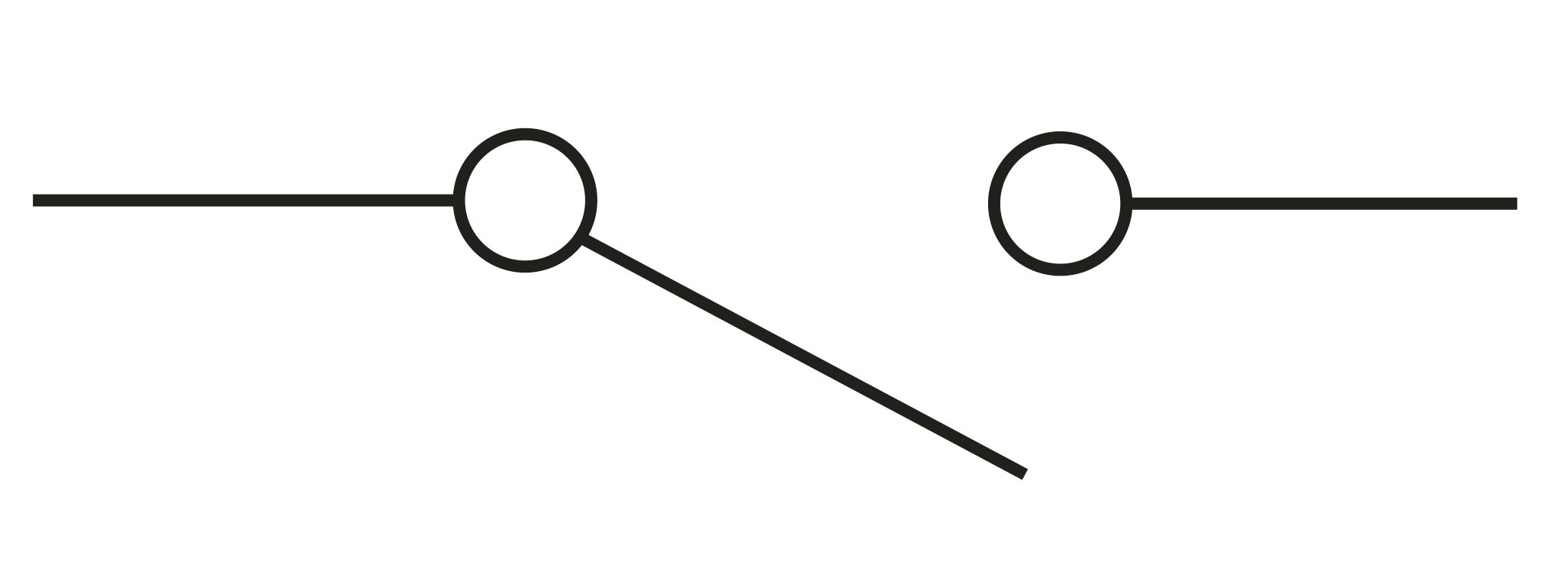
• Switch: A switch controls a circuit by connecting
or disconnecting two metal pieces. When the
pieces touch, the circuit closes; when they
separate, the circuit opens.
37


TYPES OF CIRCUITS
CURRENT FLOWS THROUGH A CLOSED
CIRCUIT, A LOOP WITH NO BREAKS, BUT AN
OPEN CIRCUIT HAS A BREAK AND STOPS THE
CURRENT FLOW.
There are several options for connecting multiple
loads in a circuit. Here are the two of the most
common approaches:
• Series circuit: This involves connecting the loads in
a line or series, allowing the current to flow from
one load to the next in a single path.
SERIES
38


TYPES OF CIRCUITS
CURRENT FLOWS THROUGH A CLOSED
CIRCUIT, A LOOP WITH NO BREAKS, BUT AN
OPEN CIRCUIT HAS A BREAK AND STOPS THE
CURRENT FLOW.
PARALLEL
There are several options for connecting multiple loads
in a circuit. Here are the two of the most common
approaches:
• Series circuit: This involves connecting the loads in
a line or series, allowing the current to flow from one
load to the next in a single path.
• Parallel circuit: Here, the loads divide the current
amount of the different devices, creating a parallel
connection.
39
Multiple Choice

40
Multiple Choice

41
Multiple Choice
42
Multiple Choice

43
Multiple Choice

44
Multiple Choice

45
46


V
I
R
OHM'S LAW
Ohm's Law describes the relationship between
electric current and voltage in a conductor, stating
that the amount of electric current flowing through a
conductor is directly proportional to the voltage
that is causing the current to flow.
• I is the current (measured in
amperes)
• V is the voltage (measured in volts)
• R is the resistance of the conductor
(measured in ohms)
Divide V by R to find the current.
Divide V by I to find resistance.
47


A force that can attract or repel certain
materials, such as iron, and is caused by the
movement of electric charges within certain
objects, like magnets or electric currents.
WHAT IS MAGNETISM?
Magnets attract iron and have two poles, a negative
and a positive pole, where the magnetic force is
strongest. All magnets share these properties.
LIKE CHARGES REPEL
UNLIKE CHARGES ATTRACT
N
S
N
N
N
N
N
S
S
S
S
S
48
49


MAGNETIC FIELD
THE REGION AROUND A MAGNET THAT IS AFFECTED BY
MAGNETIC FORCES.
N
S
WHAT DO YOU THINK IT MIGHT LOOK LIKE?
50


N
S
MAGNETIC FIELD
THE REGION AROUND A MAGNET THAT IS AFFECTED BY MAGNETIC
FORCES.
51


Earth's magnetic field is what makes compasses
work? The needle of a compass is a tiny magnet
that aligns with the Earth's magnetic field, pointing
north-south. This is possible because the Earth
itself acts as a giant magnet thanks to its magnetic
core, which generates a magnetic field that extends
far into space. This field is what protects us from
the solar wind and other harmful particles that
constantly bombard our planet. Without it, life on
Earth as we know it would not be possible.
DID YOU KNOW?
52
Multiple Choice
Where is the force of a magnet the strongest?
at the magnet's poles
in the middle of the magnet
far away from the magnet
53
Multiple Choice
What is a magnetic domain?
a region in a magnetic material in which the magnetic fields of atoms all point in the same direction
a region in a magnetic material in which the magnetic fields of atoms all point in different directions
54
Multiple Choice
What does the strength of a magnetic force depend on?
how close an object is to the magnet
the size of the magnet
what the magnet is made of
all of the above
55
Multiple Choice

Which of the following shows the magnetic field correctly around a bar magnet?
Diagram A
Diagram B
Diagram C
Diagram D
56
Multiple Choice

We know the substance in the image is magnetized because ___.
All the domains are at right angles to each other.
All the domains are aligned.
All the arrows are drawn in red.
All the domains are not aligned.
57
Multiple Choice

This substance is ___.
magnetized
positively charged
negatively charged
unmagnetized
58
Multiple Choice
How do magnetic field lines move?
always from the south pole towards the
north pole
always from the north pole towards the
south pole
always from the pole to the middle
depends of the type of magnet
59
Multiple Choice

Which answer describes the pictures correctly?
Both drawings show attraction of magnetic forces.
The left drawing shows repulsion and the right drawing shows attraction of magnetic forces.
Both drawings show repulsion of magnetic forces.
The left drawing shows attraction and the right drawing shows repulsion of magnetic forces.
60

To produce a strong magnetic field, wrap coils of wire around an
iron rod. Current passing through the coils of wire magnetizes the
rod, producing a powerful magnet, called an electromagnet. The
more loops in the coil the stronger the magnetic field.
ELECTROMAGNETISM
Physicist Hans Christian Oersted was the first to discover
that electric current produces a magnetic field around a
wire.
Electromagnets are used in
electric motors, loudspeakers,
television sets, doorbells, trains,
and many other devices.
The process of creating an electric
current by moving a conductor
through a magnetic field or by
varying the magnetic field around
it.
The majority of the electricity
supplied to homes is generated
using electromagnetic induction.
Faraday's
Electromagnetic
Induction
61
Multiple Choice

When running a current through a wire, what do the blue lines represent?
The wire spinning
A magnetic field that was created
Electrons leaving
Electricity
62
Multiple Choice
63
Multiple Choice
A _______________ is a current-carrying coil of wire with many loops.
magnet
electromagnet
solenoid
compass
64
Multiple Select
What is/are the difference(s) between a magnet and an electromagnet? (two correct choices)
An electromagnet can be turned on/off.
A magnet can be turned off.
An electromagnet is stronger.
65
Multiple Choice
How can a magnet be used to produce an electric current?
Hold a magnet next to a piece of wire.
Wrap wire around a magnet.
Spin the magnet around inside a coil of wire.
66
Multiple Choice
Which of the following is not a good conductor?
Copper
Silver
Aluminium
Plastic
67

UNIT TEST ON
Friday, Feb. 14th
ELECTRICITY &
MAGNETISM
Show answer
Auto Play
Slide 1 / 67
SLIDE
Similar Resources on Wayground

58 questions
Grade 9 General Listening Revision
Presentation
•
9th Grade
63 questions
SUB SAHARAN AFRICA
Presentation
•
9th Grade
62 questions
French Revolution and Napoleon
Presentation
•
10th Grade
62 questions
World Religions
Presentation
•
10th Grade
64 questions
Year 9 End of Semester Exam
Presentation
•
9th Grade
64 questions
Cell Cycle and Mitosis
Presentation
•
9th Grade
59 questions
Biology Interim Review Fall 23
Presentation
•
10th Grade
60 questions
Y9T3W1L4 Biology Checkpoint Revision-Organ Systems
Presentation
•
9th Grade
Popular Resources on Wayground
10 questions
Safety Day 2026 – Student Review

Quiz
•
9th Grade
21 questions
Continents and Oceans
Quiz
•
6th Grade
20 questions
Parts of Speech
Quiz
•
5th Grade
16 questions
Subject & Predicate
Quiz
•
5th Grade
25 questions
Multiplication Facts
Quiz
•
5th Grade
12 questions
Map Skills
Quiz
•
3rd Grade
22 questions
Continents and Oceans
Quiz
•
5th Grade
15 questions
Rounding Decimals
Quiz
•
5th Grade
Discover more resources for Biology
20 questions
Cell Transport
Quiz
•
9th - 12th Grade
25 questions
photosynthesis and cellular respiration
Quiz
•
9th Grade
20 questions
Cell Cycle
Quiz
•
9th Grade
8 questions
DNA vs. RNA
Presentation
•
9th - 12th Grade
14 questions
Ecological Succession: Primary and Secondary
Quiz
•
9th Grade
20 questions
Characteristics of Life
Quiz
•
9th - 10th Grade
12 questions
Cell Cycle
Quiz
•
9th Grade
20 questions
Cell Organelles
Quiz
•
9th Grade