

5.2.2 WW Quiz, "People on the Move," Conjunctions

Presentation
•
English
•
6th - 8th Grade
•
Practice Problem
•
Medium
+8
Standards-aligned

Victoria Massack
Used 8+ times
FREE Resource
13 Slides • 3 Questions
1
Word Work Quiz, "People on the Move" Close Read, Conjunctions

Lesson 5.2.2
2
Reading:
"People on the Move" Close Read
Learners can:
identify a text's structure
identify the main idea and key details in select passages
3
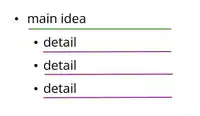
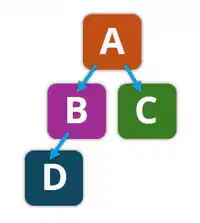
When a text is structured by description, it will introduce the topic in the first sentence and then give examples and data to support it
This structure can be also called "Definition" if a word is defined in the topic sentence.
Text Structures
Description
Chronological
Chronological or sequence organization refers to a text structure in which events are told in time order or in a step-by-step process.

4
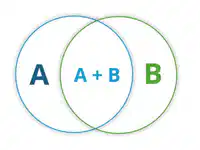
In a compare-and-contrast structure, a text highlights how two topics are similar and different.
Compare and Contrast
In a problem-and-solution structure, the author first starts the text by describing an issue and whom it affects
Then, by the end of the text, they talk about ways to solve the problem.
Problem and Solution
Text Structures Cont.
When a text is organized by cause and effect, it means that it shows how one event creates or impacts the next one.
Cause and Effect
5
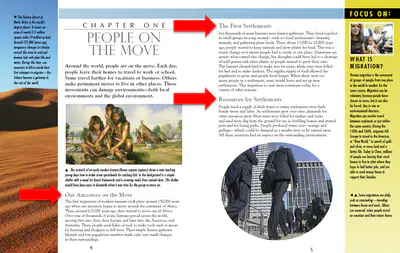
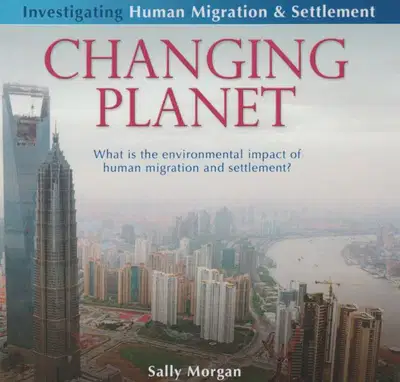
Look at the headings from Chapter 1
Each of the headings, “Our Ancestors on the Move,” “The First Settlements,” and “Resources for Settlements,” addresses an aspect of human migration
Each of these sections works to give more detail about the main topic, so this chapter's structure would be considered description-based
Structure
6
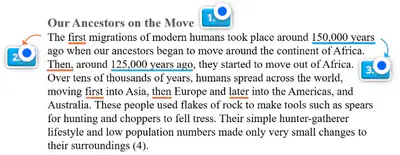
Just like there is an overall structure for a text, each paragraph has its own structure, too. Take a look at the first section of Chapter 1. Because the text is set up in time order, it can be classified as having a chronological structure.
Paragraph Structure
The heading "Our Ancestors on the Move" helps readers identify the general topic of the section. This section will be about the history of people moving from place to place.
Notice how words like "first," "then," and "later" are used to show the order of events.
Notice how the text uses specific dates to help you follow important events and the order in which they occur.
7
Multiple Choice

Which of the following is the best classification for this paragraph's structure?
cause and effect
chronological
compare and contrast
description
8
Main and Supporting Details
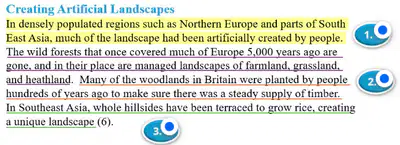
The highlighted section is the main idea because it is the overall topic of this paragraph. This main idea is directly or explicitly stated. The text says, "In densely populated regions . . . much of the landscape had been artificially created by people."
Then, the paragraph includes three supporting details. The first detail explains how long people in Europe have been modifying the landscape, the second detail explains why people changed the landscape, and the third detail gives another example of an artificial landscape.
It is important to notice that each of the supporting details connects back to the main claim about the landscape's modification over time.
If you are writing and notice that not all of your details connect back to your main idea, you might have included irrelevant information that can be eliminated.
9
Multiple Choice

What is the main idea of the following excerpt?
"Today in China, millions of people are leaving their rural homes to live in cities where they hope to find better jobs, and are able to send money home to support their families."
"Migration can be voluntary because people have chosen to move, but it can also be forced, due to war or environmental disasters."
"Human migration is the movement of groups of people from one place in the world to another for the same reason."
"During the 1500s and 1600s, migrants left Europe to travel to the Americas, or 'New World,' in search of gold and silver, or more land and a better life."
10
Writing: Conjunctions
Learners can:
identify coordinating and subordinating conjunctions
combine clauses to create compound and complex sentences
11
If you wrote short, independent clauses all the time, your writing might look like this:
I like soccer. My friend likes lacrosse. My sister likes lacrosse, too.
While using simple sentences can be effective, using too many in a row can make your reader uninterested in what you are writing.
One way to fix this is by connecting your ideas:
I like soccer, but my friend and my sister like lacrosse.
This sentence includes the same information, but the connecting words “but” and “and” help blend the sentences together.
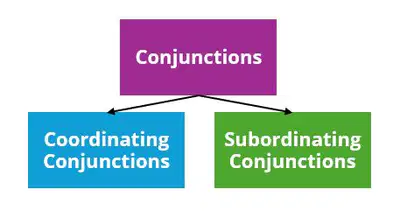
These connecting words are called conjunctions.
Conjunctions
12
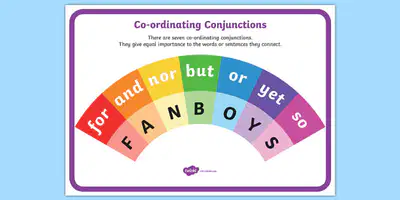
Coordinating conjunctions connect two equally structured pieces of information.
Example: My friend and my sister like lacrosse.
Here, “and” is used to connect the two similar phrases, “my friend” and “my sister”
Coordinating conjunctions can also be used to connect two independent clauses.
One way to remember them is to think of the acronym FANBOYS.
Coordinating Conjunctions
13
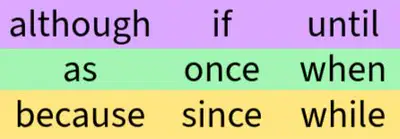
Subordinating conjunctions connect two clauses that are not equal, and they appear at the beginning of a dependent clause.
Example: Even though Harry is going to the movies, Charlotte is going to the park.
Here, “even though” makes the first clause dependent
When you connect a dependent clause and an independent clause, that is called a complex sentence.
Subordinating Conjunctions
14
Categorize
for
or
so
because
until
if
Sort the conjunctions according to how they function.
15
Word Work: Quiz!

You CANNOT submit this section of the edio lesson blank today!!!
16
The rest of class is independent work time to complete your Word Work Quiz
Once you have completed and submitted your quiz, the rest of class is choice time. You can be working on:
iReady Reading Practice
Silent Reading
Overdue Edio Lessons
Quiz and Choice Time!

Word Work Quiz, "People on the Move" Close Read, Conjunctions
Lesson 5.2.2
Show answer
Auto Play
Slide 1 / 16
SLIDE
Similar Resources on Wayground

12 questions
Subject & Predicate
Presentation
•
6th - 8th Grade
10 questions
Fact and Opinion
Presentation
•
6th - 8th Grade
12 questions
Writing a Business Letter
Presentation
•
6th - 8th Grade
13 questions
Learning Author's Purpose through Text Structure
Presentation
•
6th - 8th Grade
11 questions
Using Commas in a Series
Presentation
•
5th - 8th Grade
14 questions
Making Inferences
Presentation
•
6th - 8th Grade
10 questions
Greek and Latin Roots
Presentation
•
7th - 8th Grade
11 questions
Teenager 5 Session 22: Pronunciation & Speaking
Presentation
•
KG
Popular Resources on Wayground
20 questions
Math Review

Quiz
•
3rd Grade
15 questions
Fast food
Quiz
•
7th Grade
20 questions
Context Clues
Quiz
•
6th Grade
20 questions
Inferences
Quiz
•
4th Grade
19 questions
Classifying Quadrilaterals
Quiz
•
3rd Grade
20 questions
Figurative Language Review
Quiz
•
6th Grade
20 questions
Equivalent Fractions
Quiz
•
3rd Grade
10 questions
Identify Fractions, Mixed Numbers & Improper Fractions
Quiz
•
3rd - 4th Grade
Discover more resources for English
20 questions
Context Clues
Quiz
•
6th Grade
20 questions
Figurative Language Review
Quiz
•
6th Grade
14 questions
Context Clues
Quiz
•
4th - 6th Grade
50 questions
The Giver Ch 1-23
Quiz
•
6th Grade
34 questions
7th Grade ELA EOG Review
Quiz
•
7th Grade
27 questions
Context Clues
Quiz
•
6th - 7th Grade
43 questions
EOG Review 6th Grade ELA
Quiz
•
6th Grade
40 questions
Esperanza Rising Final Review
Quiz
•
6th Grade