

Pathological Lung Sounds

Presentation
•
Biology
•
University
•
Practice Problem
•
Easy

Micah Char
Used 1+ times
FREE Resource
7 Slides • 3 Questions
1
2
Learning Objectives
Define tactile fremitus and egophony and explain their physiological basis in normal lung function.
Describe how sound waves travel through different lung tissues and differentiate between normal and abnormal findings.
Compare and contrast the expected findings of tactile fremitus and egophony in various pulmonary conditions (e.g., pneumonia, pleural effusion, pneumothorax, COPD).
3
Poll
In which condition is fremitus increased?
Pleural Effusion
Atelectasis
Simple pneumothorax
Consolidation
Tension Pneumothorax
4
Sound vibrations that travel from the vocal cords through the bronchi and into the lungs
Typically, sound vibrations get dampened between the lungs and where you feel it on the patient's back
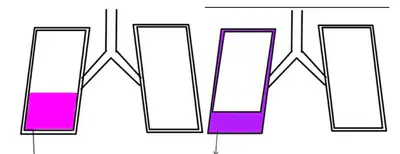
Consolidation
Fluid/Air
5
Answers to Question 1
Pleural Effusion
Fluid in the pleural cavity increases the distance between the lungs and the chest wall
Fluid in the pleural cavity absorbs the sound vibrations and dampens the sound
Atelectasis/Simple/Tension Pneumothorax
The collapsed lung increases the distance between the lungs and the chest wall
Air is a poor conductor of sound vibrations
Consolidation
Dense tissue and fluid in the alveoli allow sound vibrations to be conducted to the chest wall
6
Poll
In which of the following condition(s) can egophony be present?
Pleural Effusion
Pneumothorax
Consolidation
COPD
7
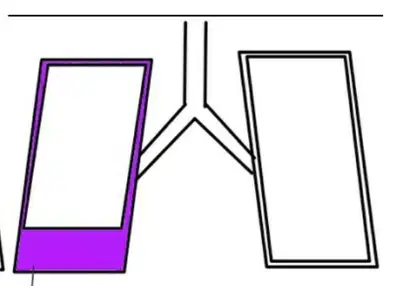
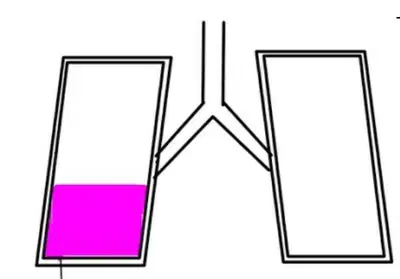
Typically, E gets dampened between the lungs and where you hear it
AAA
EEE
AAA
EEE

8
Answers to Question 2
Pneumothorax
The increase in air in the pleural cavity disrupts the transmission and increases the dampening of sound through the lungs.
COPD
The increase in alveolar volume leads to more air in the lung and an increase in sound dampening throughout the lung.
Pleural Effusion
Egophony is not heard where the pleural effusion is but rather where the lung and the effusion meet.
Compression of the lung increases the density of the tissue and allows for better transmission of high-frequency sound more clearly , leading to an E to A change.
Consolidation
The consolidation of fluid within the alveoli increases the transmission of high-frequency sound more clearly, leading to an E to A change.
9
Open Ended
Whats the difference between tactile fremitus and egophony?
10
1. Bender K. Loud, annoyed goat mistaken for human screaming for help by Oklahoma police - watch! People.com. May 10, 2023. Accessed February 19, 2025. https://people.com/pets/annoyed-goat-mistaken-for-human-screaming-for-help-police/.
2. Bohadana A, Izbicki G, Kraman SS. Fundamentals of lung auscultation. N Engl J Med. 2014;370(8):744-751. doi:10.1056/NEJMra1302901
3. Modi P. Egophony. StatPearls [Internet]. July 3, 2023. Accessed February 19, 2025. https://www.ncbi.nlm.nih.gov/books/NBK518991/.
4. Shellenberger RA, Balakrishnan B, Avula S, Ebel A, Shaik S. Diagnostic value of the physical examination in patients with dyspnea [published correction appears in Cleve Clin J Med. 2018 Apr;85(4):332.]. Cleve Clin J Med. 2017;84(12):943-950. doi:10.3949/ccjm.84a.16127
5. Modi P. Vocal Fremitus. StatPearls [Internet]. July 4, 2023. Accessed February 19, 2025. https://www.ncbi.nlm.nih.gov/books/NBK499838/.
Show answer
Auto Play
Slide 1 / 10
SLIDE
Similar Resources on Wayground

7 questions
Pathology
Presentation
•
University
10 questions
Haiku
Presentation
•
University
8 questions
Mutation
Presentation
•
12th Grade - University
8 questions
Variables and Expressions
Presentation
•
University
10 questions
Epigenética del cáncer
Presentation
•
University
10 questions
микробиология
Presentation
•
University
9 questions
Huminter 2: Sumber & Subjek Hukum Internasional
Presentation
•
University
Popular Resources on Wayground
10 questions
How much do you know about our Portrait of an Eagle?

Quiz
•
10th Grade
10 questions
Fast Food Slogans
Quiz
•
6th - 8th Grade
21 questions
Continents and Oceans
Quiz
•
6th Grade
20 questions
Parts of Speech
Quiz
•
5th Grade
16 questions
Subject & Predicate
Quiz
•
5th Grade
25 questions
Multiplication Facts
Quiz
•
5th Grade
12 questions
Map Skills
Quiz
•
3rd Grade
22 questions
Continents and Oceans
Quiz
•
5th Grade