Search Header Logo
Atoms and Elements

Atoms and Elements

Assessment

Presentation

Science

10th Grade

Hard

Created by

James Gonzalez

FREE Resource

20 Slides • 35 Questions

1

Atomic Structure (subatomic particles)

2

media

3

media

4

media

5

media

6

media

7

media

8

media

9

media

10

media

11

media

12

media

13

media

14

Multiple Choice

All matter is made of what 

1

energy 

2

electrons 

3

atoms 

4

compounds 

15

Multiple Choice

The central region of an atom where its neutrons and protons are is its 

1

nucleus 

2

core 

3

energy shell

4

center

16

Fill in the Blanks

Type answer...

17

Multiple Choice

Question image

What are the 3 particles that make-up the atom?

1

protons, neutrons, and isotopes

2

positives, negatives, and electrons

3

neutrons, isotopes, and electrons

4

protons, neutrons, and electrons

18

Fill in the Blanks

Type answer...

19

Multiple Choice

Which subatomic particles have no charge (they are neutral)?

1

protons

2

electrons

3

neutrons

4

ions

20

Multiple Choice

The cloud-like space that electrons travel around:

1

nucleus

2

shell

3

neutrons

4

oort cloud

21

Multiple Choice

Which 2 particles are found in the nucleus of an atom?

1

proton and electron

2

neutron and proton

3

electron and neutron

22

Multiple Choice

Why do the electrons surround the nucleus?

1

the negative electrons are attracted to the neutral neutrons

2

the negative electrons are repelled by the neutral neutrons

3

the negative electrons are repelled by the positive protons

4

the negative electrons are attracted to the positive protons

23

Multiple Choice

What subatomic particle is represented by this symbol (+):

1

neutron

2

proton

3

electron

24

Multiple Choice

What is the definition of an atom?

1

The smallest unit of matter that retains the properties of an element

2

The total number of protons and neutrons in an atom

3


The number of protons in an atom determines its atomic number

4

Each element is characterized by the number of protons in its nucleus

25

Multiple Choice

What is the purpose of the Periodic Table?

1

To organize elements based on their properties and atomic numbers

2

To describe the behavior and interactions of elements

3

To break down elements into simpler substances

4

To explain the atomic structure of elements

26

media

27

media

28

media

Number of Protons = Atomic number (Z)
Number of Electrons = number of protons
Number of Nuetrons = Mass number (A) - Atomic number (Z)

29

Multiple Choice

What is atomic number?

1

proton number

2

electron number

30

Multiple Choice

Question image

The fluorine atom has an atomic number of

1

F

2

9

3

19

4

10

31

Multiple Choice

Question image

What is the mass number and atomic number ?

1

Mass number = 7, atomic number = 14

2

Mass number = 14.007, atomic number = 7

3

Mass number = 14, atomic number = 7

4

Mass number = 7, atomic number = 14.007

32

Multiple Choice

Question image

How many neutrons are there in one atom of magnesium?

1

12

2

24

3

6

4

24.305

33

Multiple Choice

Which element has an atomic number of 11?

1

Sodium

2

Lithium

3

Aluminum

4

Carbon

34

Multiple Choice

Question image

What is the atomic mass of Neon?

1

10

2

10.18

3

20.18

4

20

35

Multiple Choice

Question image

What is the mass number of Neon?

1

10

2

10.18

3

20.18

4

20

36

Multiple Choice

Question image

How many electrons does an Iodine atom have?

1

53

2

73

3

126

4

179

37

Multiple Choice

Question image

How many neutrons does an Oxygen atom have?

1

8

2

24

3

16

4

7.999

38

Multiple Choice

Question image

What is the atomic mass of Iron?

1

26

2

56

3

55.845

4

30

39

Multiple Choice

In an atom, what is the number of protons equal to?

1

The number of electrons.

2

The number of molecules.

3

The number of neutrons.

4

The number of nuclei.

40

Multiple Choice

Which of the following determines the type of element that an atom makes?

1

The size of the nucleus.

2

How much the atom weighs.

3

The number of protons.

4

The number of neutrons.

41

Multiple Choice

The number of neutrons equals...

1

atomic number - mass number

2

Electrons - protons

3

Protons - neutrons

4

mass number - atomic number

42

Isotopes

43

Always remember this:​

Proton = Atomic number (Z)
Electron = number of protons
Nuetron = Mass number (A) - Atomic number (Z)

44

media

45

media

​Isotopes of each other.

46

Multiple Choice

What is an isotope?

1

A charged atom

2

Two atoms of the same element with different amounts of neutrons

3

Two atoms of the same element with different amounts of protons

4

A neutral atom

47

Multiple Choice

What quantities vary between isotopes of an element?

1

Neutrons and mass number

2

Neutrons and electrons

3

Protons, electrons, and atomic number

4

Protons, electrons, and atomic mass

48

Multiple Choice

A neutral atom with atomic number 6 would have how many electrons?

1

3

2

6

3

1

4

49

Multiple Choice

Which two components of an atom contribute to the mass?

1

Neutrons and electrons

2

Protons and electrons

3

Protons and neutrons

50

Multiple Choice

How many neutrons are in carbon-14?

1

6

2

8

3

10

4

12

51

Multiple Choice

Different isotopes have...

1

different protons

2

different atomic numbers

3

different electrons

4

different masses

52

Multiple Choice

How many neutrons does a Sodium-24 isotope have?

1

13

2

12

3

11

4

10

53

Multiple Choice

How many neutrons does a Calcium48 isotope have?

1

28

2

16

3

12

4

20

54

Multiple Choice

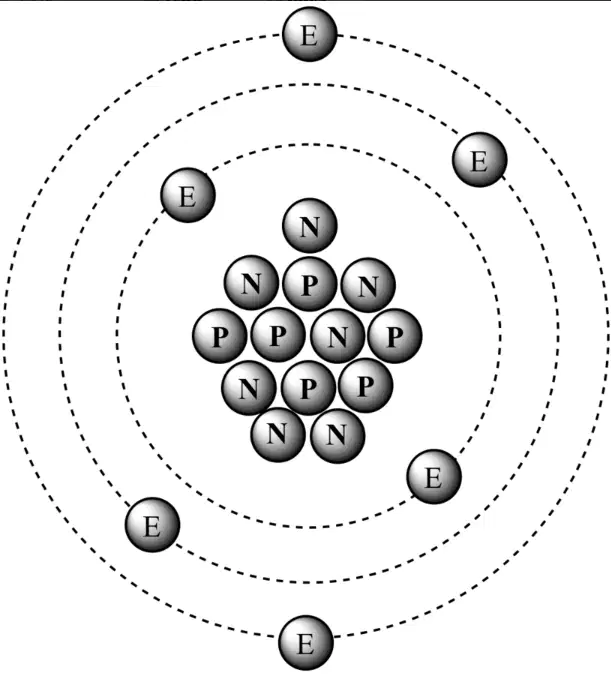
Question image

What is the name of the pictured isotope?

1

Carbon-15

2

Carbon-12

3

Carbon-14

4

Carbon-13

55

Multiple Choice

How many neutrons does a carbon-13 atom have?

1

6

2

5

3

7

4

8

Atomic Structure (subatomic particles)

Show answer

Auto Play

Slide 1 / 55

SLIDE