

Nonrenewable Sources

Presentation
•
Science
•
8th Grade
•
Hard

James Gonzalez
FREE Resource
21 Slides • 4 Questions
1
Nonrenewable Resources

3.1.2
2
Objectives
recognize the importance of many nonrenewable resources
explain the processes required to form nonrenewable resources
examine how people use nonrenewable resources in their daily lives
3
nonrenewable resource
weathering
Prerequisite Vocab
fossil fuel
New Vocab
Vocabulary
4

energy source formed from dead organisms
Fossil Fuel
5
Match
Match the vocabulary word to its definition.
nonrenewable resource
climate
weathering
natural resource that cannot be replaced
the average weather conditions
physical and chemical breakdown of rocks
natural resource that cannot be replaced
the average weather conditions
physical and chemical breakdown of rocks
6
7

Fossil Fuels
8

Fossil fuels are nonrenewable resources that have formed deep within Earth for millions of years. These resources are extracted from the ground and burned to produce energy.
Fossil Fuels
9
10
Match
Match the description to the fossil fuel that is being described.
oil
natural gas
coal
a thick black liquid that makes gasoline
odorless vapor used for heat and cooking
solid rocky material that is burned
a thick black liquid that makes gasoline
odorless vapor used for heat and cooking
solid rocky material that is burned
11
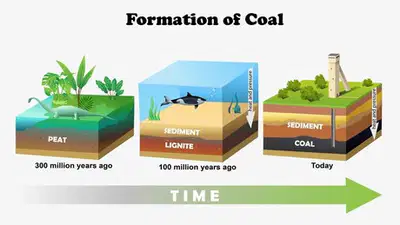
Over time, sediment layers build on the dead plants and animals. The increased heat and pressure slowly convert the organic remains into coal. The amount of heat and pressure determines the type of coal. Anthracite coal is the highest quality coal and the rarest form of coal.
Coal Formation
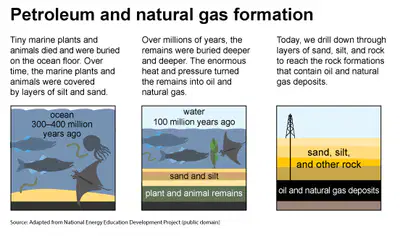
Oil and gas form from the remains of organisms. Many of these fossil fuel sources originate in areas that were once oceans. Over millions of years, sediment builds up and alters the organic remains with extreme heat and pressure.
Oil and Gas Formation
Fossil Fuel Formation
12
Multiple Choice
Which of the following describes the materials from which fossil fuels form?
trees that are harvested in swamp and marsh areas
rocks that have been compressed by heat and pressure
recently deceased organisms that are found on the ocean floor
ancient organisms buried and compressed by layers of sediment
13
Photosynthesis and Fossil Fuels
Plants use photosynthesis to convert light energy into chemical energy. This chemical energy remains stored in plants even when converted into fossil fuels. This means that the energy released from burning coal, oil, and natural gas originally came from the sun.
Fossil fuels are not the only nonrenewable resource that comes from the ground. Minerals are also essential nonrenewable resources.
14

Minerals
15
Minerals
Minerals are naturally occurring substances found in the ground. These minerals are not exactly the same as the minerals like iron and potassium you find in food products. Earth's minerals are the components that form rocks. Minerals appear individually as single minerals, or rocks may be composed of various minerals. Metallic minerals include metals, such as iron and gold. Nonmetallic minerals do not contain metals.
16

Gold, silver, aluminum, copper, and iron are some of the most recognizable metallic minerals. Metallic minerals have unique properties, such as good conductivity, that make them useful for heat and electricity.
Metallic Minerals
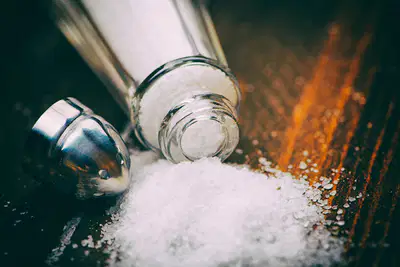
Nonmetallic minerals serve various purposes, either being used in their raw unaltered state or as components for other materials. An example of a nonmetallic mineral used with minor alteration is halite in the form of table salt.
Nonmetallic Minerals
17

Mineral Formation
18
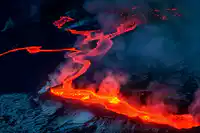
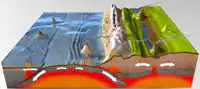
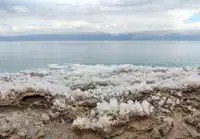
Some minerals require extreme conditions to form, such as the high temperatures that melt rock into magma and lava.
Extreme Conditions
Minerals may form under high-pressure conditions as Earth's tectonic plates move around and collide.
High Pressure
Mineral formation occurs when mineral-rich solutions, such as ocean water, evaporate. This process leaves behind mineral crystals, such as salt.
Evaporation
19
Regardless of the formation, Earth only has a limited quantity of any mineral. The process of forming new minerals can take millions of years. However, many metallic minerals are recyclable and reusable. Reusing nonrenewable resources helps extend the availability of limited materials.
20
Multiple Choice
Why are minerals considered a nonrenewable resource?
minerals are replaced every few years
minerals take a long time to form
mineral use alters their form but does not deplete them
minerals are all metals and reusable
21
Soil
22
Soil
Soil is a foundational component of agriculture. It is a mixture of rock and mineral particles, decayed organic material, air, and water. Without good soil, humans would be unable to produce the food necessary for survival. However, soil is a type of nonrenewable resource. Protecting the limited amount of soil is essential to ensure it is available for future farming. Soil is considered a nonrenewable resource because of the time it takes to develop into usable means, such as growing crops.
23
Soil Formation
24
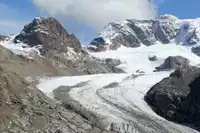
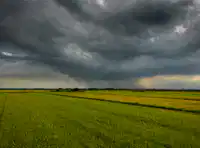
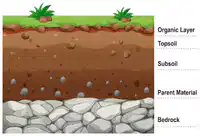
Weathering is the breaking down of rocks over time. A significant component of soil is fragmented pieces of rock and minerals. Weathering takes a long time to build enough soil for plants to grow.
Weathering
A climate's characteristics, such as temperature and rainfall, impact how quickly soil forms. In areas where soil forms slower, soil depletion has a much longer impact.
Climate
The processes that form the bedrock, the solid layer of rock beneath the soil, can take thousands of years. It takes several millions of years for that solid layer of parent rock to push toward the surface, where it slowly breaks down into different soil layers.
Bedrock
25
Soil is damaged when it is not correctly managed and maintained. Planting too many crops in the soil causes the soil to lose nutrients that do not replenish quickly. Also, wind and rain erosion quickly remove soil if plants are not present to stabilize the ground and block the wind.
Nonrenewable Resources
3.1.2
Show answer
Auto Play
Slide 1 / 25
SLIDE
Similar Resources on Wayground

18 questions
Wave Interactions
Presentation
•
8th Grade
18 questions
The Rock Cycle
Presentation
•
8th Grade
21 questions
Cell Mitosis
Presentation
•
8th Grade
18 questions
Life Science Why Do Organisms Look the Way They Do?
Presentation
•
8th Grade
21 questions
Ecosystem Stability
Presentation
•
8th Grade
19 questions
Prokaryotic and Eukaryotic
Presentation
•
8th Grade
19 questions
Radioactive Dating
Presentation
•
8th Grade
18 questions
Plants
Presentation
•
6th - 8th Grade
Popular Resources on Wayground
6 questions
Secondary Safety Quiz
Presentation
•
9th - 12th Grade
10 questions
Afterschool Activities & Sports

Quiz
•
6th - 8th Grade
19 questions
ROAR Week 2026
Quiz
•
9th - 12th Grade
20 questions
Lab Safety Quiz
Quiz
•
6th Grade
15 questions
Cool Tool:Chromebook
Quiz
•
6th - 8th Grade
22 questions
would you rather
Quiz
•
3rd - 11th Grade
21 questions
Continents and Oceans
Quiz
•
6th Grade
20 questions
Parts of Speech
Quiz
•
5th Grade
Discover more resources for Science
10 questions
Lab Safety
Quiz
•
8th Grade
20 questions
Lab Safety review
Quiz
•
8th Grade
20 questions
Lab Safety
Quiz
•
5th - 8th Grade
10 questions
Lab Safety Essentials

Interactive video
•
6th - 10th Grade
20 questions
Scientific Method and Variables
Quiz
•
8th Grade
20 questions
Scientific method and variables
Quiz
•
8th Grade
20 questions
Semester 1: Unit 1: Characteristics of Life
Quiz
•
6th - 8th Grade
22 questions
Scientific Method and Variables
Quiz
•
8th Grade