Analyzing Graphs
Presentation
•
Mathematics
•
6th - 11th Grade
•
Hard

Joseph Anderson
FREE Resource
7 Slides • 22 Questions
1
Math 1: Analyzing Graphs
by Kaitlin Murphy
2
Characteristics of Graphs
All graphs are different!
So, we have a lot of ways to describe what they look like and mean.
This lesson will go over some of the vocab used to describe characteristics of graphs.
3
y-intercept
The y-intercept is the place where the graph of the function crosses the y-axis.
The function to the right has a
y-intercept of -6.
Sometimes we use b as the variable for the y-intercept.
4
Multiple Choice
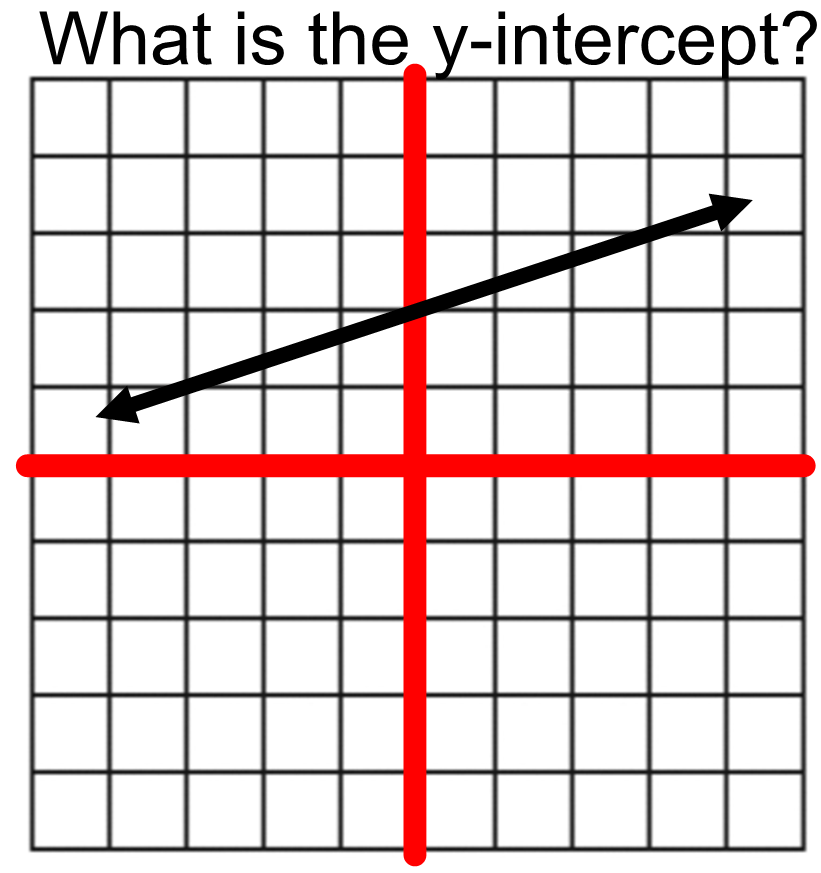
What is the y-intercept shown on the graph?
(0, -2)
(3, 0)
(0, 3)
None of these.
5
Multiple Choice
b=2
m=3
b=-3
m=-2
6
Fill in the Blanks
Type answer...
7
x-intercept(s)
An x-intercept is any place at which the graph of a function crosses the x-axis. It is possible for functions to have more than one x-intercepts (or zero!).
The function to the right has three
x-intercepts at -3, -2, and 1.
X-intercepts can also be called roots, solutions, or zeroes.
8
Fill in the Blanks
Type answer...
9
Fill in the Blanks
Type answer...
10
Multiple Choice
What are all the x-intercepts?
(-2.55, 0), (2.55, 0)
(-3,0), (-2,0), (2,0), (3,0)
(0, 36)
(-∞,∞)
11
Multiple Choice
Find the zeros.
x = 0 and 4
x = 0 and -4
x = 0
x = -4
12
Multiple Select
What are the zeros for the given polynomial? (Check all that apply)
HInt: where does the graph cross the X-axis
-4
-3
-2
-1
2
13
Positive/Negative Intervals
It can be interesting to tell when a function is positive (above the x-axis) vs. when it is negative (below the x-axis). Remember to read the graph from left to right!
The function to the right is negative on the intervals (-infinity, -3) and (-2,1).
It is positive from (-3,-2) and (1, infinity).
14
Multiple Choice
Write the interval that represents the negative portion of the function?
(-2,1)
(-0.5,-3.5)
(−∞,−2); (1,∞)
(-3,0)
15
Multiple Choice
Where is the function positive?
(-∞,5]
(0, ∞)
(-∞,2]
(-∞,0)
16
Multiple Choice
Where is the function negative?
(-∞,1)
(-∞,∞)
(1,∞) and (-∞,1)
(-1,∞)
17
Increasing/Decreasing Intervals
Besides positive and negative, it can be interesting to tell when a function is increasing vs. decreasing.
The function to the right is increasing from (-infinity, -2.5ish) and (0, infinity).
It is decreasing (sloping downward) from (-2.5, 0).
18
Multiple Choice
What is the increasing interval for the function below?
(−∞,∞)
(−∞,2]
(−∞,6]
(−6,6)
19
Multiple Choice
What is/are the increasing interval(s) for the function shown?
(−3, 1)
(4, 8)
(−∞,1) and (−3, 1)
20
Multiple Choice
What is the decreasing interval on the function shown?
(−∞, 1)
(−∞, 2)
(2, ∞)
(1, ∞)
21
Multiple Choice
How many increasing and decreasing intervals are there in this graph?
2 increasing, 2 decreasing
1 increasing, 2 decreasing
2 increasing, 1 decreasing
1 increasing, 1 decreasing
22
Multiple Choice
Over what interval is this function constant?
-5 < x < ∞
-3 < x < 4
4 < x < ∞
-5
23
maximum and minimum
Often we want to know when the graph reaches a maximum or minimum value.
The graph to the right has a local max at -2.5 with a value of about 1.
It also has a local minimum at 0 with a value of about -6.
A global max/min would be the highest or lowest point of the entire graph. This graph does not have those since it keeps going down forever to the left and up forever to the right.
24
Multiple Choice
Does this graph have a minimum or maximum? What point?
minimum at (-3, -5)
minimum at (3, 5)
maximum at (-3, -5)
maximum at (3, 5)
25
Multiple Choice
Does this graph have a minimum or maximum? What point?
Minimum at (0, 0)
Minimum at (0, 2)
Maximum at (0, 0)
Maximum at (0, 2)
26
Multiple Choice
Which ordered pair identifies the *absolute minimum* point on this function?
(-1, 0)
(0, -3)
(1, -4)
(4, 0)
27
Multiple Choice
Which coordinate would qualify as the *absolute maximum* of this function?
∞
(0, 4)
3
(4, 0)
28
Multiple Choice
What is the minimum value (y-values only)?
0
-5
-3
-1
29
Multiple Choice
What is the maximum value (y-value only)?
2
5
-1
0
Math 1: Analyzing Graphs
by Kaitlin Murphy
Show answer
Auto Play
Slide 1 / 29
SLIDE

Similar Resources on Wayground
23 questions
Measures of Center and Spread
Presentation
•
6th - 11th Grade
24 questions
Symetrie kl 8
Presentation
•
8th Grade
22 questions
Dilations
Presentation
•
7th - 10th Grade
21 questions
Solving Inequalities Basics
Presentation
•
7th - 10th Grade
22 questions
Magnetism Basics
Presentation
•
6th - 11th Grade
20 questions
Get Smart Plus 3 Topic 8 was/were
Presentation
•
1st - 4th Grade
20 questions
One Step Equations
Presentation
•
KG - University
20 questions
Lesson 4.3 Scatter Plot
Presentation
•
KG
Popular Resources on Wayground
19 questions
Naming Polygons
Quiz
•
3rd Grade
10 questions
Prime Factorization
Quiz
•
6th Grade
20 questions
Math Review
Quiz
•
3rd Grade
15 questions
Fast food
Quiz
•
7th Grade
20 questions
Main Idea and Details
Quiz
•
5th Grade
20 questions
Context Clues
Quiz
•
6th Grade
20 questions
Inferences
Quiz
•
4th Grade
19 questions
Classifying Quadrilaterals
Quiz
•
3rd Grade
Discover more resources for Mathematics
10 questions
Prime Factorization
Quiz
•
6th Grade
48 questions
8TH GRADE MATH FAST REVIEW
Quiz
•
8th Grade
20 questions
summer trivia
Quiz
•
8th Grade
14 questions
Volume of rectangular prisms
Quiz
•
7th Grade
20 questions
Math Review
Quiz
•
6th Grade
22 questions
Simple Probability
Quiz
•
7th Grade
23 questions
6th Grade Math Review
Quiz
•
6th Grade
21 questions
Math Review
Quiz
•
7th Grade